Dave Chalmers’ Amherst lecture.

Dave Chalmers’ Amherst lecture.
Ignatius looked sternly at the young boy who had placed himself in the wagon’s path. His valve protested against the pimples, the surly face that seemed to hang from the long well-luricated hair, the cigarette behind the ear, the aquamarine jacket, the delicate boots, the tight trousers that bulged offensively in the crotch in violation of all the rules of theology and geometry.
“What’s matter with me? What’s the matter with you? Are you unnatural enough to want a hot dog this early in the afternoon? My conscience will not let me sell you one. Just look at your loathsome complexion. You are a growing boy whose system needs to be surfeited with vegetables and orange juice and whole wheat bread and spinach and such. I, for one, will not contribute to the debauchery of a minor.”
“Someone with decency grab that juvenile delinquent. That filthy little minor. Where is his respect? That little guttersnipe must be lashed until he collapses!”
“Is my paranoia getting completely out of hand,” Ignatius asked the group, “or are you mongoloids really talking about me?”
“My entire nervous system is on the brink of revolt against me for subjecting it to such trauma. Ignore me if I suddenly go into a state of shock.”
They probably derive some sort of pleasure from the spectacle of a poor and struggling vendor’s being publicly humiliated. They probably respect the boy’s initiative.”
“Money? No money was stolen. After all, there was no money to steal, for I had not been able to vend even one of these delicacies. He stole the hot dogs . . .
“Perhaps he was hungry. Perhaps some vitamin deficiency in his growing body was screaming for appeasement. The human desire for food and sex is relatively equal. If there are armed rapes, why should there not be armed hot dog thefts? I see nothing unusual in the matter.”
“You are full of bullshit.”
“I? The incident is sociologically valid. The blame rests upon our society. The youth, crazed by suggestive television programs and lascivious periodicals had apparently been consorting with some rather conventional adolescent females who refused to participate in his imaginative sexual program. His unfulfilled physical desires therefore sought sublimation in food. I, unfortunately, was the victim of all of this. We may thank God that this boy has turned to food for an outlet. Had he not, I might have been raped right there on the spot.”
Of course no one would help me up. My white smock stamped me as a vendor, an untouchable.”
“How about making another try?”
“What? In my present condition, do you seriously expect me to take to the streets again and hustle? My ten cents is going to be deposited in the hands of St. Charles streetcar conductor. The remainder of the day I intend to spend in a hot tub trying to recapture some semblance of normality” (pp. 139-143).

A new article in the latest issue of the PNAS entitled “Predicting risky choices from brain activity patterns“ (h/t to Shannon Selin).
This study reminds me of Daniel Kahneman and Amos Tversky’s work:
Prospect theory concerns the psychophysics of wealth utility: that is, the perceived tradeoffs between potential outcomes and the probability of some outcome occurring. Kahneman and Tversky reworked Bernoulli’s long established orthodoxy of wealth utility that supposedly explained loss aversion through quantifiable states of wealth. Instead, they took the view that by asking subjective questions rather than propositional (or abstract) questions regarding terms of loss and gain, they presented a richer explanation for loss aversion. They found that that though agents like winning and dislike losing, they in effect are orientated to dislike losing more. Kahneman and Tversky (1979) initially articulated decisions under risk (as opposed to decisions under uncertainty) involving at most two non-zero outcomes. Later as cumulative prospect theory (1992) they accommodated decisions under uncertainty and risky conditions that employs cumulative, rather than separable decision weights with any number of outcomes.
Kahneman, D., & Tversky, A. 1979. Prospect theory: An analysis of decisions under risk. Econometrica, Vol. 47, No. 2: 263-291.
Kahneman, D., & Tversky, A. 1992. Advances in prospect theory: Cumulative representation of uncertainty. Journal of Risk and Uncertainty 5 (4): 297–323.

Latest issue of EPISTEME. Some freebies and I think the first review (critical notice) for the jnl, fittingly the target book being Hilary Kornblith’s On Reflection.

Truthfully, it is the fear of exposing my own ignorance which constrains me from mentioning the object of my search. For, to begin with, I cannot even answer this, the simplest and most basic of all questions: Am I, in my search, a hundred miles ahead of my fellow Americans or a hundred miles behind them? That is to say: Have 98% of Americans already found what I seek or are they so sunk in everydayness that not even the possibility of a search has occurred to them? (p. 14).

Alan Sokal weighs in again thanks to Nick Brown who was troubled by the conclusion that
The mysteries of love, happiness, fulfilment, success, disappointment, heartache, failure, experience, random luck, environment, culture, gender, genes, and all the other myriad ingredients that make up a human life could be reduced to the figure of 2.9013.
It’s quite astonishing that Walker Percy, whom I’m currently reading, caught this in 1983, predating the Sokal Hoax by some 13 years.
By the 1970s and 1980s, self-help had mushroomed into a vast literary genre that encompassed everything from the secrets of material achievement to the new age promises of chakras, reiki and self-realisation.
In Lost in the Cosmos: The Last Self-Help Book Percy writes:
Carl Sagan is right in ridiculing the absurd pseudosciences now so popular. He is admirable in his defense of science as a reliable and self-correcting method of attaining truth.
Yet the fact is that nowadays there is no piece of nonsense that will not be believed by some and no guru or radio preacher, however corrupt, who will not attract a following (p. 172).

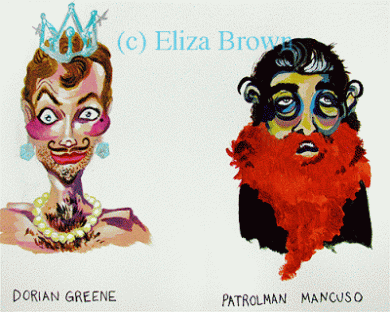
She described to Ignatius the courage of Patrolman Mancuso, who against heavy odds, was fighting to retain his job, who wanted to work, who was making the best of his torture and exile in the bathroom at the bus station. Patrolman Mancuso’s situation reminded Ignatius of the situation of Boethius, when he was imprisoned by the emperor before being killed. To pacify his mother and to improve conditions at home, he had given her The Consolation of Philosophy, an English translation of the work that Boethius had written while unjustly imprisoned and had told her to give it to Patrolman Mancuso so that he might peruse it while seated in his booth. “The book teaches us to accept that which we cannot change. It describes the plight of a just man in an unjust society. It is the very basis for medieval thought. No doubt it will aid your patrolman during his moments of crisis,” Ignatius had said benevolently (p. 139).
Well of course, but in close support is alcohol, dancing and yes . . . rumpy pumpy.
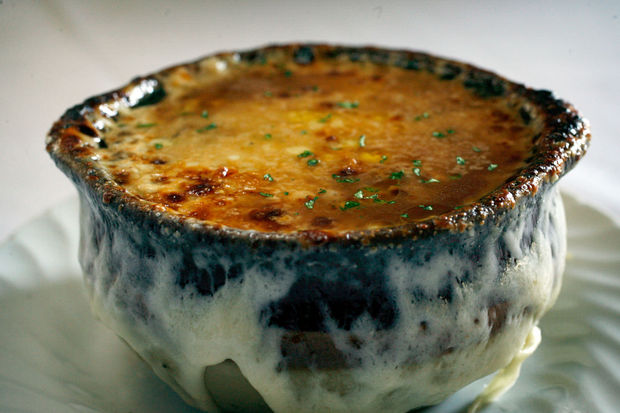
This from Footnote1 (H/T to Rob Wilson for this).

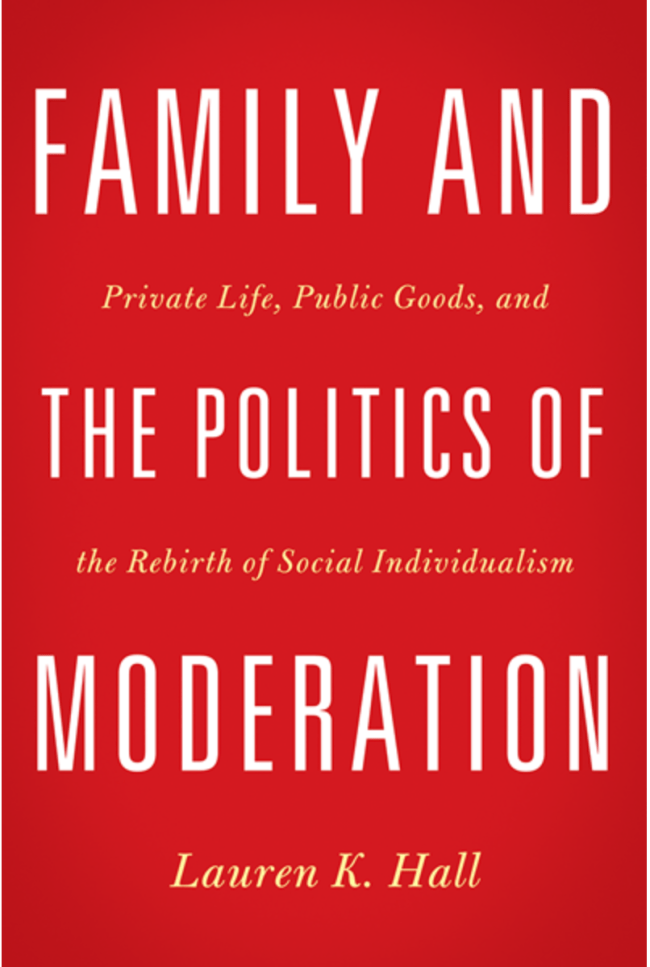
Coming soon from Lauren who is also contributing to Propriety and Prosperity: New Studies on the Philosophy of Adam Smith.