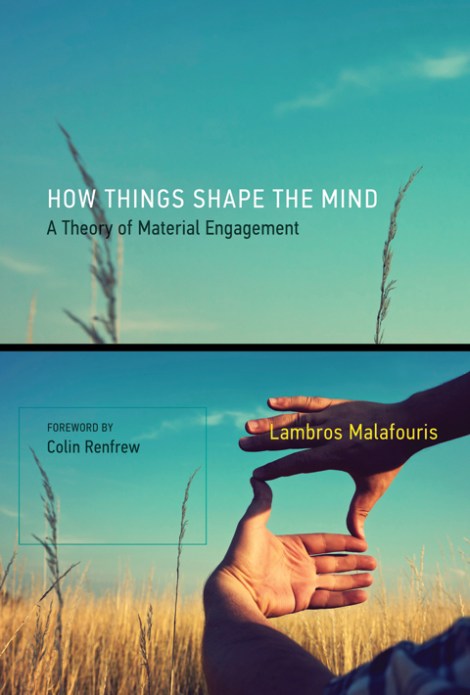
How Things Shape the Mind: A Theory of Material Engagement

Here’s a just published review in JMB, endorsed by some heavy hitters such as Edwin Hutchins and Kevin Warwick.

How Things Shape the Mind: A Theory of Material Engagement represents a synthesis of the positions that the author, Lambros Malafouris, has developed over the course of his career, supplemented by the addition of new explanatory examples and unpublished chapters. The main objective of the book is to provide a unitary account of material engagement theory, the actual keystone that binds the multiple streams of argument presented by the author in his previous works. The book is organized in three main sections, which respectively take into account epistemological aspects, theoretical tenets, and empirical applications of material engagement theory.

Image

The San Andreas Fault in the Modern Mind

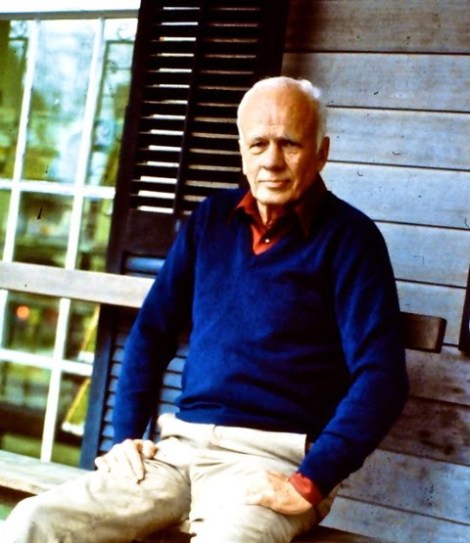
Percy delivering the 18th Jefferson Lecture in the Humanities.

Three items:

First a filmed record of the lecture

Second, an amended transcript of the lecture

Third, the very excellent Patrick Samway, SJ overviews Percy’s lifelong concern with science.

By the way, the photo below was taken by artist George Rodrigue: check out Wendy’s blog (George’s widow) and her discussion of Percy.

Image


Review of Hutto and Myin’s Radicalizing Enactivism: Basic Minds without Content

The very excellent Tom Froese reviews (a final draft) Hutto and Myin for the Journal of Mind and Behavior.

9780262018548

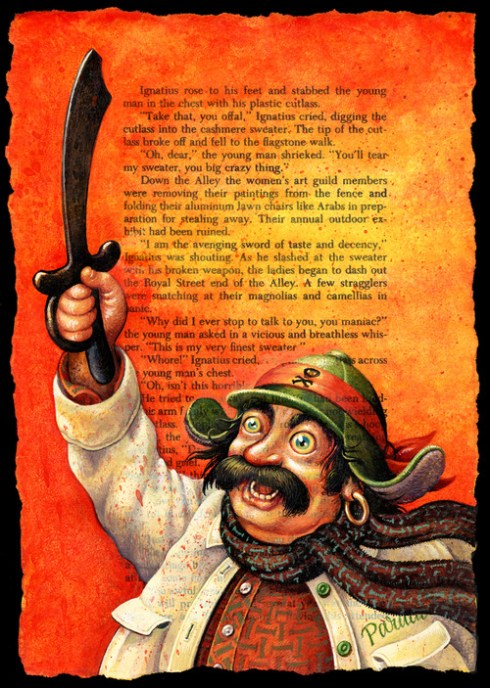
A Confederacy of Dunces – quotes and extracts – 57

“You get mostly the tourist trade in the Quarter.”

“That’s even worse. Only degenerates go touring. Personally, I have been out of the city only once. By the way, have I ever told you about that particular pilgrimage to Baton Rouge? Outside the city limits there are many horrors.”

 “. . . Fortunately, I’ve written it all down, and at some time in the future, the more alert among the reading public will benefit from my account of that abysmal sojourn into the swamps to the inner station of the ultimate horror” (pp. 181-182).

Image

Happy Birthday “Gatemouth”

A most versatile genius from a very special spot on the map, on the border of Louisiana and Texas. That explains his unique blend of big band, blues, country, cajun, blues, funk and swing. This sums up the man.

Image

Oliver Letwin Reviews Oakeshott’s Notebooks

Oliver Letwin makes some elegant comments in The Spectator. And no, I for one would cringe at a statue of MO. The quotes below, especially the first, sound as if they came from the pen of Walker Percy.

The Notebooks bring out this quality, letting us into some of the smouldering passions that lay behind the extreme delicacy of his conversational manner. There is much reflection on God, and on the history of man’s relation to the numinous in nature. In 1923, we find Oakeshott pondering (over successive days) on the ‘experience of the Red Sea in the history of the Jews’ and on the sea as the symbol of the ‘mightiness of God’. ‘The stars have lost much of their mystery — but who would dare to say that he had discovered the secret of the sea?’

He preferred instead to rest on what Housman (I think his favourite poet) once called the idle hill of summer. From this pleasing vantage point, he discerned with subtle charm significant features entirely missed by caravans of earnest travellers making their way solemnly but unseeingly across the landscape.

Image

Jesse Norman Reviews Oakeshott’s Notebooks

Image

The rights for this photo is attributed to Getty Images. Odd that since it was Simon Oakeshott, Oakeshott’s son, that gave me the photo “to do as I pleased.” I scanned it and returned it and then did a great deal of painstaking touch up work on it for the commemoration of Oakeshott’s centenary — and here is Getty claiming credit. Jesse’s Apollonian/Dionysian characterization (and more besides) is very dependent on Bob Grant’s essay for Paul and my Companion.

Anyway here is Jesse’s (hopefully the “new Disraeli” as I call him) New Statesman article.

We have seen Oakeshott as a thinker from another age, one who delights in metaphor and disdains the modern fashion for isms, and the minutiose and argumentative logic-chopping by which so much of today’s academic philosophy talks past itself. He has only one subject, and it is the subject: human experience, in all its pain and joy and glory.

. . . the Notebooks place Oakeshott in a European aphoristic tradition ranging from Martial to La Rochefoucauld and Nietzsche. They confirm his deep engagement with Plato and Aristotle, with personal heroes such as Spinoza, Cervantes, Montaigne and Pascal and with the novels of Tolstoy, Turgenev, James and Conrad, among many others. Again and again he returns to the themes of death and life, the enchantment and salvations of religion and poetry, and above all love.

Jazz and Baseball

The Smithsonian’s curator of American music explains how the history of two great American innovations—Jazz and baseball—are intertwined. H/T to Ricky Riccardi archivist who scanned the photos used. I especially like the one featured here — Pops with mask and smoke . . .

20063979_catchers_mask_1957.jpg__600x0_q85_subject_location-479,229_upscale