A most versatile genius from a very special spot on the map, on the border of Louisiana and Texas. That explains his unique blend of big band, blues, country, cajun, blues, funk and swing. This sums up the man.

A most versatile genius from a very special spot on the map, on the border of Louisiana and Texas. That explains his unique blend of big band, blues, country, cajun, blues, funk and swing. This sums up the man.
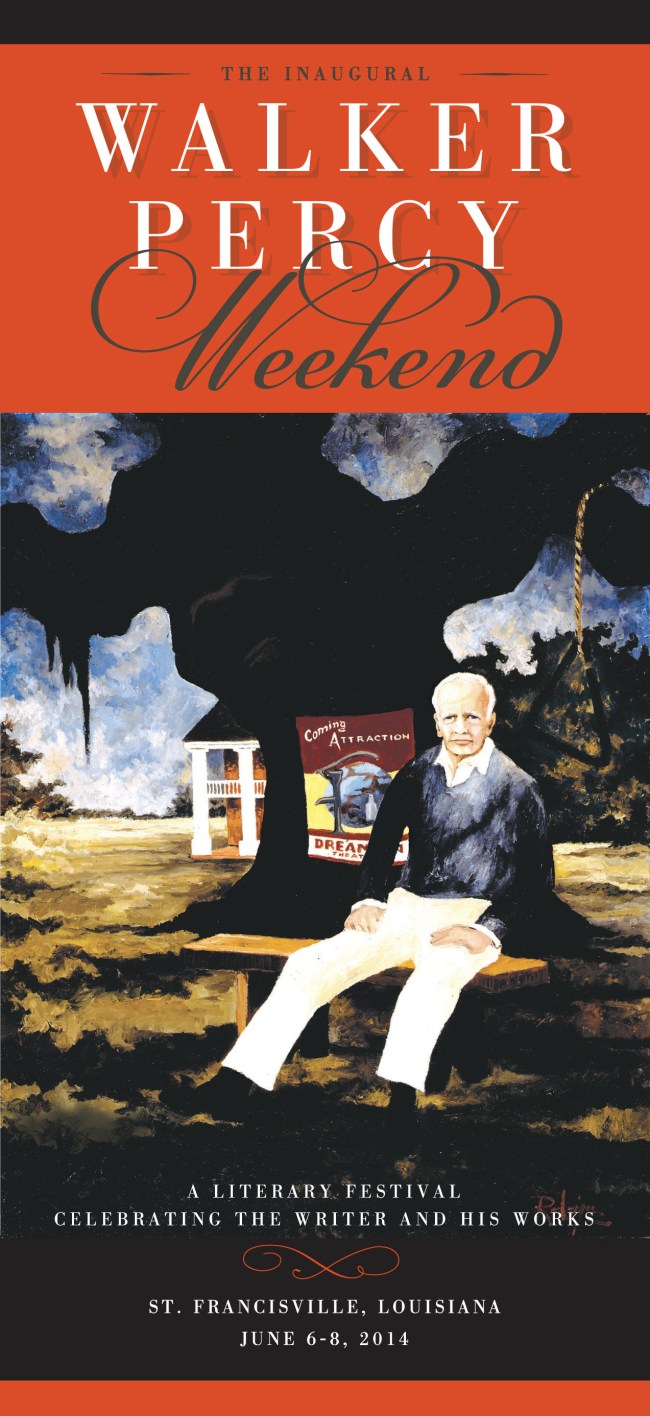
Oliver Letwin makes some elegant comments in The Spectator. And no, I for one would cringe at a statue of MO. The quotes below, especially the first, sound as if they came from the pen of Walker Percy.
The Notebooks bring out this quality, letting us into some of the smouldering passions that lay behind the extreme delicacy of his conversational manner. There is much reflection on God, and on the history of man’s relation to the numinous in nature. In 1923, we find Oakeshott pondering (over successive days) on the ‘experience of the Red Sea in the history of the Jews’ and on the sea as the symbol of the ‘mightiness of God’. ‘The stars have lost much of their mystery — but who would dare to say that he had discovered the secret of the sea?’
He preferred instead to rest on what Housman (I think his favourite poet) once called the idle hill of summer. From this pleasing vantage point, he discerned with subtle charm significant features entirely missed by caravans of earnest travellers making their way solemnly but unseeingly across the landscape.

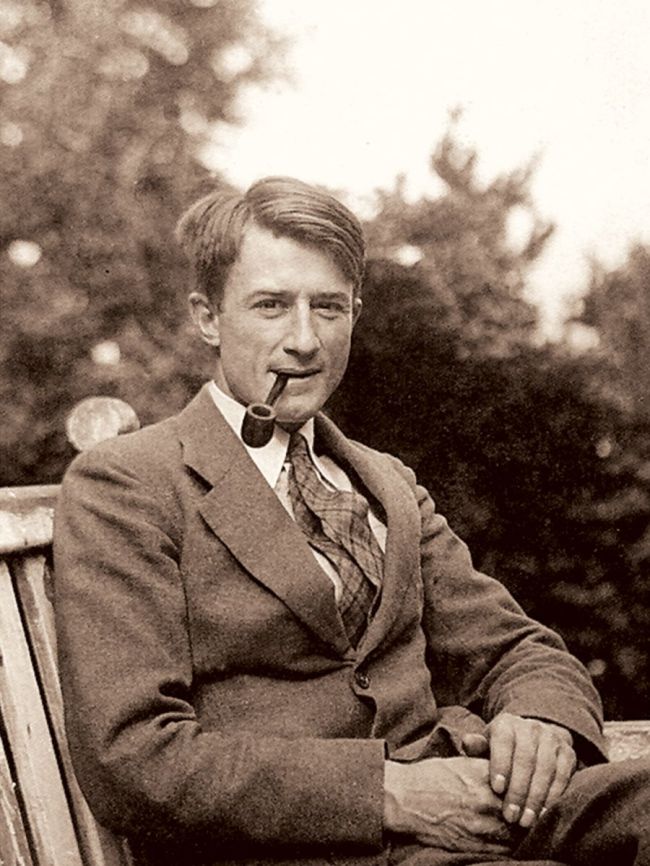
The rights for this photo is attributed to Getty Images. Odd that since it was Simon Oakeshott, Oakeshott’s son, that gave me the photo “to do as I pleased.” I scanned it and returned it and then did a great deal of painstaking touch up work on it for the commemoration of Oakeshott’s centenary — and here is Getty claiming credit. Jesse’s Apollonian/Dionysian characterization (and more besides) is very dependent on Bob Grant’s essay for Paul and my Companion.
Anyway here is Jesse’s (hopefully the “new Disraeli” as I call him) New Statesman article.
We have seen Oakeshott as a thinker from another age, one who delights in metaphor and disdains the modern fashion for isms, and the minutiose and argumentative logic-chopping by which so much of today’s academic philosophy talks past itself. He has only one subject, and it is the subject: human experience, in all its pain and joy and glory.
. . . the Notebooks place Oakeshott in a European aphoristic tradition ranging from Martial to La Rochefoucauld and Nietzsche. They confirm his deep engagement with Plato and Aristotle, with personal heroes such as Spinoza, Cervantes, Montaigne and Pascal and with the novels of Tolstoy, Turgenev, James and Conrad, among many others. Again and again he returns to the themes of death and life, the enchantment and salvations of religion and poetry, and above all love.
The Smithsonian’s curator of American music explains how the history of two great American innovations—Jazz and baseball—are intertwined. H/T to Ricky Riccardi archivist who scanned the photos used. I especially like the one featured here — Pops with mask and smoke . . .

WAYNE CURTIS in the WSJ.
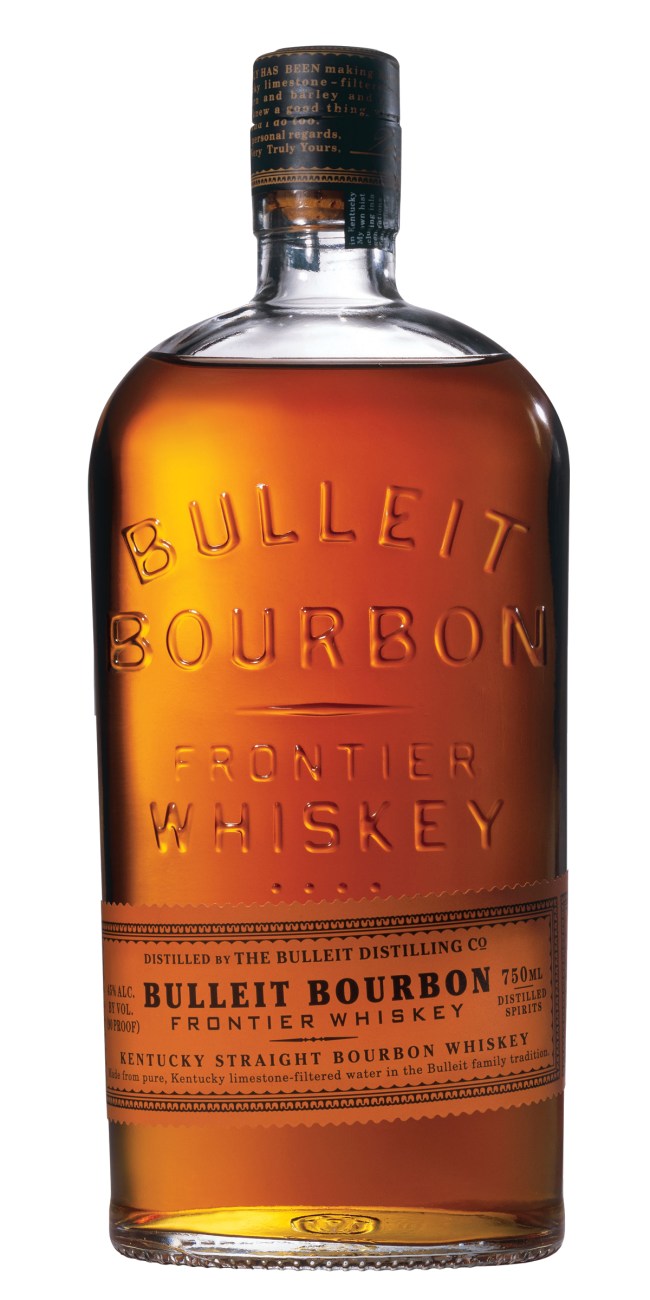
(An aside: In a recent home blind taste test the cheapest tied for first place. Here are the results: 1. Bulleit ($34.95)/Colonel E. H. Taylor Single Barrel ($67.99) 2. Rock Hill Farms ($52.99) 3. Angel’s Envy Barrel Selection ($46.99) 4. Parker’s Heritage Collection ($109.99)).
=================
Bourbon whiskey has long been linked to a don’t-tread-on-me, do-it-yourself lifestyle. “Give ’em the bird,” advises a recent ad for Wild Turkey. So it’s a little disconcerting to learn that bourbon, which had $8 billion in global sales last year, is arguably one of the most nanny-stated products in America. There’s little independent about it. Clipboard-toting agents of the federal bureaucracy drive their gray mid-sized cars to distilleries and tell bourbon makers what they should use to make their liquor (mostly corn), how to distill it (at a relatively low proof), how to age it (in new, charred oak barrels) and what they can put on the label.
That chasm between the marketing-driven perception and the reality of bourbon is, in part, what Dane Huckelbridge explores in his entertaining “Bourbon: A History of the American Spirit.”
There’s a long-running debate about where bourbon originated. Did it start in Bourbon County, Ky., as lore insists? Or maybe, as Michael Veach suggested in his 2013 “Kentucky Bourbon Whiskey: An American Heritage,” it earned its name from the appreciation of good whiskey on Bourbon Street in New Orleans, to which barrel-laden barges ceaselessly flowed from Louisville and other whiskey ports.
Mr. Huckelbridge, a fiction writer and essayist, is less interested in settling this debate than in painting a colorful context for bourbon’s evolution. And so he starts off in Europe with the rise of distillation in 13th-century Catalonia before crossing the Atlantic and putting forth the slightly heretical notion that bourbon actually was first made in coastal Virginia. He even pegs a date: Dec. 19, 1620. In support of this, he lays out the evidence that one George Thorpe, deputy governor at Jamestown, was known to make an “Indian corn” whiskey on the side. Barrels were present. He cites reports of considerable drinking among colonists. The phrase “it’s only logical” makes a cameo. There is not enough evidence to convict, but it’s fairly persuasive. (And not all that heretical: Thorpe was earlier credited for his pioneering efforts by Gerald Carson in “The Social History of Bourbon,” published more than 50 years ago.)
After sojourning in Jamestown, Mr. Huckelbridge resumes his high-speed, high-elevation survey, tracking the doughty Scotch-Irish settlers into the Appalachians and onward, and the rampant black markets for whiskey and fervent commitment to same on the part of a famed Louisiana brigade during the Civil War. Then, it’s the saloons of the Wild West, the speakeasies of Prohibition and back to Europe for World War II. He dwells not so much on the evolution of bourbon’s production (if you’re looking for that, track down the Veach book), but rather the history of bourbon’s consumption, its social iconography and uneasy relation with the law. Surprisingly little of the book is actually set in bourbon’s spiritual home of Kentucky.
Mr. Huckelbridge does focus on the amber gold itself when he delves into the Gilded Age in the most intriguing part of his book. The era of Vanderbilts and Newport “cottages” corresponded with one of the sorriest times for bourbon, plagued by what Mr. Huckelbridge calls the “shameful practices of compounding and adulterating.” To meet the demand for aged bourbon, “rectifiers” bought new whiskey (“white dog”) by the tanker, then made it taste old—or at least less raw—by mixing in ingredients like “sweet oil and sulphuric acid,” “a few drops of strong ammonia” or “black tea boiled thirty minutes.”
Legitimate whiskey producers were irked by the shortcut-taking and pleaded with the federal government to step in. Thus came the Bottled-in-Bond Act of 1897, followed by the Pure Food and Drugs Act of 1906, both of which helped delineate new categories for whiskey, separating blended and rectified whiskey from more pure variations. In essence, the revenuers rode in to save a product besieged by charlatans.
Mr. Huckelbridge is adept at conveying a lot in a little, and knows when to zoom in and when to zoom out. Still, he sometimes wanders a bit far astray from his subject, venturing into thickets from which he has trouble emerging. (The Civil War has rarely seemed so long.) His style is also plagued by a peppiness that can grate, especially when larded with gratuitous references to pop culture—he writes that Jamestown in 1620 “didn’t bear much resemblance to a contemporary spring break at Virginia Beach.” Of whiskey’s migration over the mountains, he writes of the need for “hog wild, weapon-slingin’, whiskey-lovin’, Anglo-Celtic cusses to come a-hootin’ and a-hollerin’ all doon’ the hill.”
Yet where Mr. Huckelbridge is strong, he’s very strong. His account of the “delicate compromise between modernization and legacy” that the spirit faced in the late 19th century nicely sets the stage for the present-day debates over American whiskey’s future. Demand for good bourbon is soaring; after decades of decline, sales have increased some 40% over the past five years and much of that demand has been in the super-premium category. With rising demand triggering shortages and delays—in aged whiskey, in barrels for aging, in getting new stills made to produce more to age—the new wave of craft distillers are once again undertaking a search for shortcuts. They’re using smaller barrels and barrels modified with shallow perforations to increase the wood-to-liquor ratio. They’re vibrating barrels to accelerate aging. And—if rumors are to be believed—some are even employing centrifuges to sort out the pleasing elements in bourbon from the unpleasing.
Bourbon’s tale is a complex and entertaining one, with surprising twists here and there. Mr. Huckelbridge doesn’t shrink from wandering down a dark alley or two, and leading us to some surprising conclusions. We may not know who made the first barrel of bourbon, but we know who made the bourbon industry: It was a lanky, churlish, bearded, hawk-faced dude. His name was Uncle Sam.
Mr. Curtis is the author of “And
a Bottle of Rum: A History of the
New World in Ten Cocktails.“

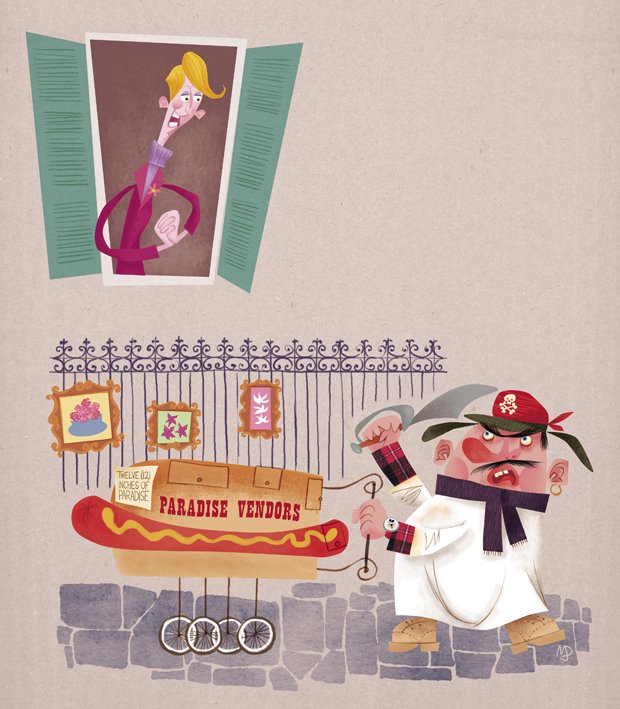
“We got a complaint on you from the Board of Health, Reilly.”
“Oh, is that all? From the expression on your face, I thought that you were having some sort of epileptic seizure,” Ignatius said to Mr. Clyde through his mouthful of hot dog and bun, bumping his wagon into the garage. “I am afraid to guess what the complaint could be or how it could have originated. I assure you that I have been the very soul of cleanliness. My intimate habits are above reproach. Carrying no social diseases, I don’t see what I could possible transmit to your hot dogs that they do not already have. Look at these fingernails.”
“Don’t gimme none of your bullshit, you fat bum.” Mr. Clyde ignored the paws that Ignatius extended for inspection. “You only been on the job a few days. I got guys working for me for years never been in trouble with the Board.”
“No doubt they’re more foxy than I.”
“They got this man checking on you.”
“Oh,” Ignatius said calmly and paused to chew on the tip of the hot dog that was sticking from his mouth like a cigar butt. “So that’s who that obvious appendage of officialdom was. He looked like an arm of the bureaucracy. You can always tell employees of the government by the total vacancy which occupies the space where most other people have faces.”
“Shut up, you big slob. Did you pay for that weenie you eating?”
“Well, indirectly. You may subtract it from my miserable wage.” Ignatius watched as r. Clyde jotted some numbers on a pad. “Tell me, what archaic sanitary taboo have I violated? I suspect that it’s some falsification on the part of the inspector.”
“The Board says they seen the vendor with Number Seven . . . that’s you . . .”
So it is. Thrice-blessed Seven! I’m guilty on that count. They’ve already pinned something on me. I imagined that Seven would ironically be an unlucky cart. I want another cart as soon as possible. Apparently I’m pushing a jinx about the streets. I am certain that I can do better with some other wagon. A new cart, a new start.”
“Will you listen to me?”
“Well, if I really must. I should perhaps warn you that I am about to faint from anxiety and general depression, though. The film I saw last night was especially grueling, a teen-age beach musical. I almost collapsed during the singing sequence on surfboard. In addition, I suffered through two nightmares last night, one involving a Scenicruiser bus. The other involved a girl of my acquaintance. It was rather brutal and obscene. If I described it to you, you would no doubt become frightened.”
“They seen you picking a cat out the gutter on St. Joseph Street.”
“Is that the best they can do? What an absurd lie,” Ignatius said and with a flip of his tongue pulled in the last visible portion of the hot dog.
“What was you doing on St. Joseph Street? That’s all warehouses and wharfs out there. They’s no people on St. Joseph? That’s not even on our routes.”
“Well, I didn’t know that. I had only feebly shambled out there to rest a while. Occasionally a pedestrian happened along. Unfortunately for us, they did not seem to be in hot dog moods.”
“So you was there? No wonder you not selling nothing. And I guess you was playing with that goddam cat.”
“Now that you mention it, I do seem to remember a domesticated animal or two in the vicinity.”
“So you was playing playing with the cat.”
“No, I was not ‘playing’ with the cat. I only picked it up to fondle it a bit. It was a rather appealing calico. I offered it a hot dog. However, the cat refused to eat it. It was an animal with taste and decency.”
“You realize what a serious violation that is, you big ape?”
“No, I am afraid I don’t,” Ignatius said angrily. “It has apparently been taken for granted that the cat was unclean. How do we know that? Cats are notoriously sanitary, continuously licking at themselves when they suspect that there is the slightest cause for offense. This cat hasn’t been given a chance.”
“We not talking about this cat!” Mr. Clyde said with such vehemence that Ignatius was able to see the purple veins swelling around the whitened scar on this nose. “We talking about you.”
“Well, I certainly am clean. We’ve already discussed that. I just wanted to see that the cat got a fair hearing. Sir, am I going to be endlessly harassed? My nerves are nearing total decay already. When you checked my fingernails a moment ago, I hope you noticed the frightening vibration of my hands. I would hate to sue Paradise Vendors, Incorporated, to pay the psychiatrist’s fees. Perhaps you do not know that I am not covered by any hospitalization plan. Pradise Vendors, of course, is too paleolithic to consider offering its workers such benefits. Actually, sir, I am growing quite dissatisfied with conditions at this disreputable firm” (pp. 178-180).
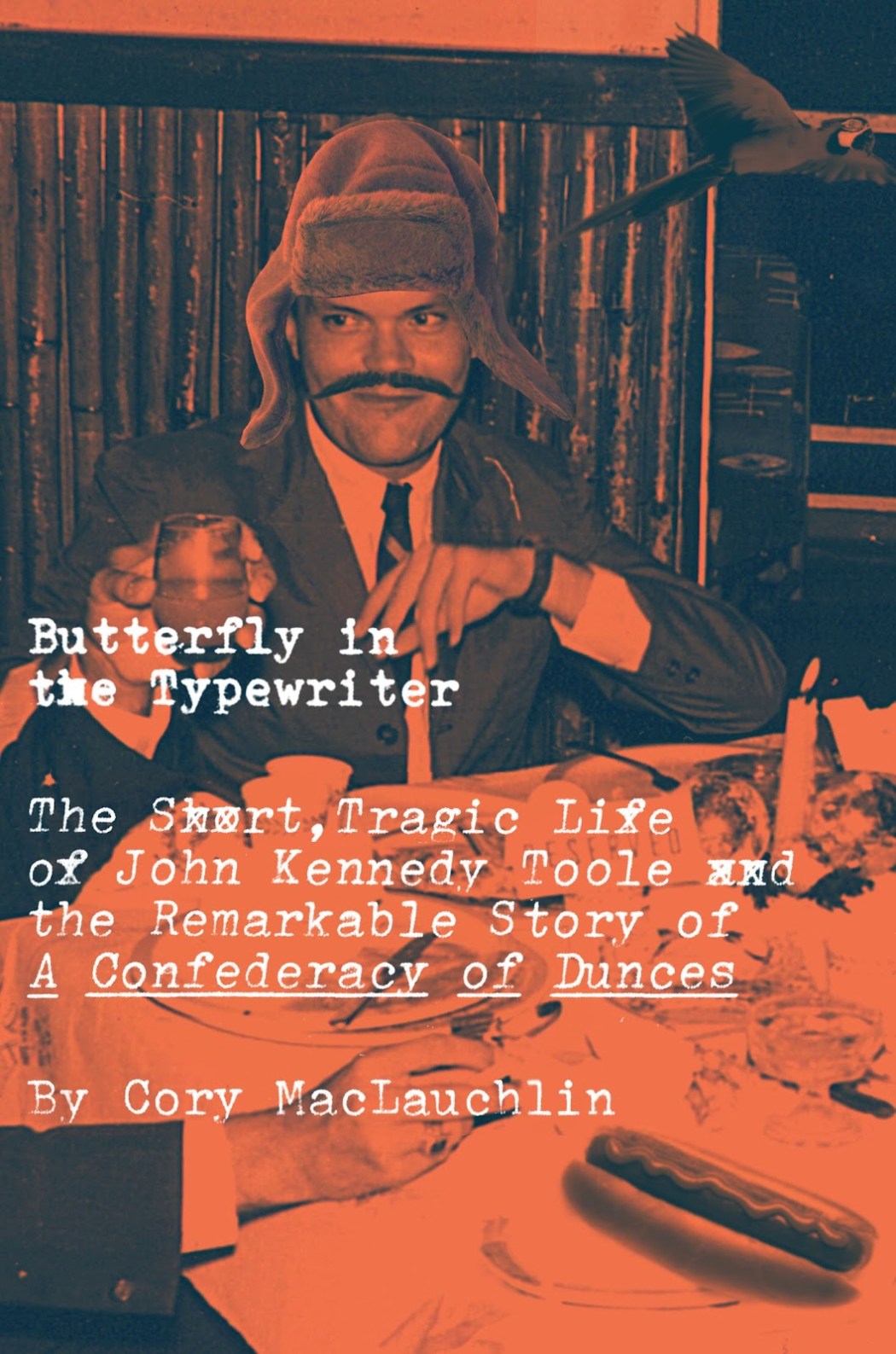
My review of Butterfly in the Typewriter is now listed on the JMB site.
An interesting piece since it references literature beyond the canonical extended mind hypothesis.

Another plug for what promises to be a fantastic couple of days. With two months to go already half the tickets have been sold.