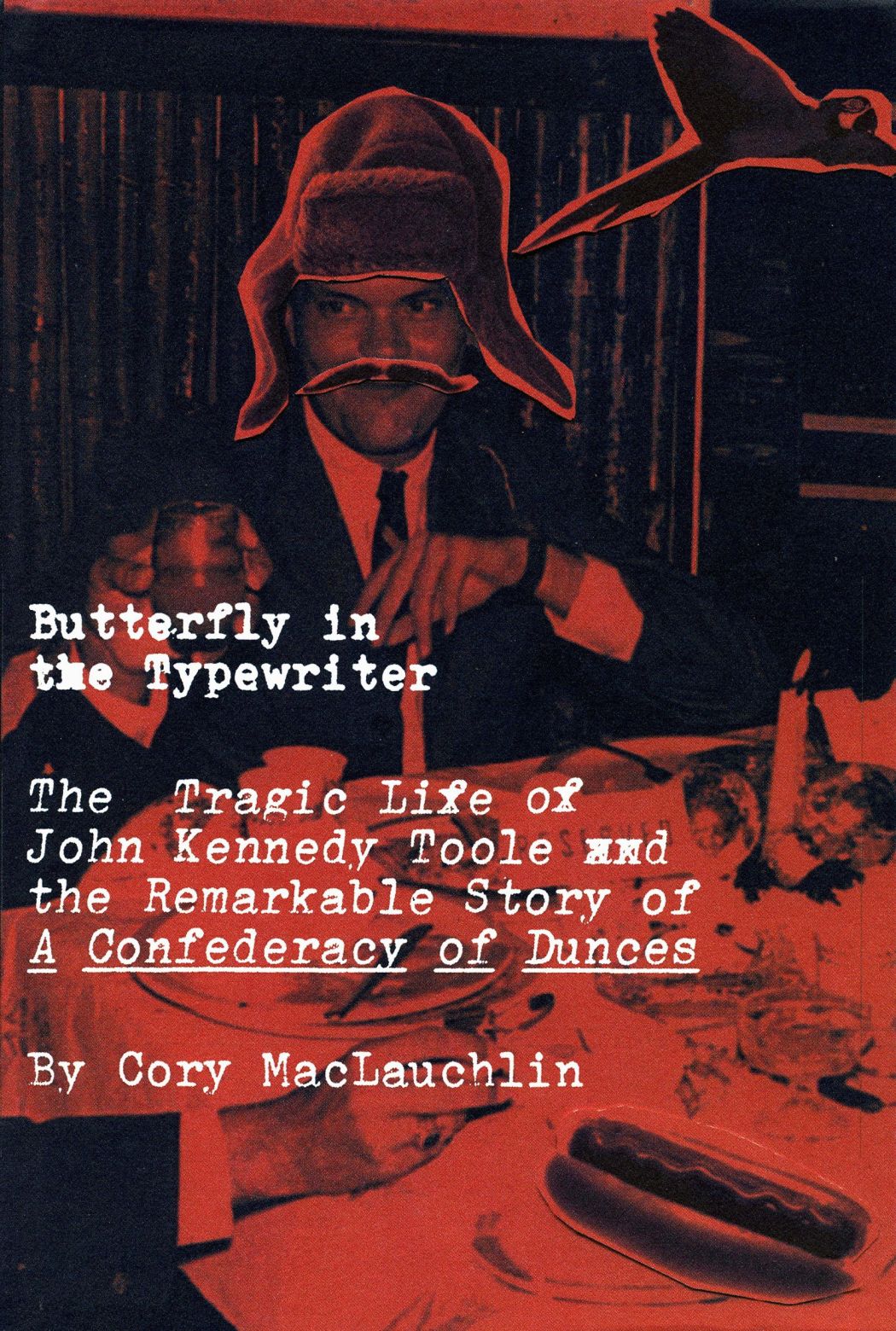
Just released. An extravagance, I know, but if you don’t already have the DVDs this might be the way to go. 
EPISTEME 11: 3

A Confederacy of Dunces – quotes and extracts – 66
“I suspect that the parties you attend must be true visions of the apocalypse. I knew that our society was coming to this. In a few years, you and your friends will probably take over the country.”
“Oh, we’re planning to,” the young man said with a bright smile. “We have connections in the highest places. You’d be surprised.”
“No, I wouldn’t. Hroswitha could have predicted this long ago.”
“Who in the world is that?”
“A sibyl of a medieval nun. She has guided my life.”
“Oh, you’re truly fantastic,” the young man said gleefully. “And although I didn’t think it would be possible, you’ve gained weight. Where will it ever end? There’s something so unbelievably tacky about your obesity.”
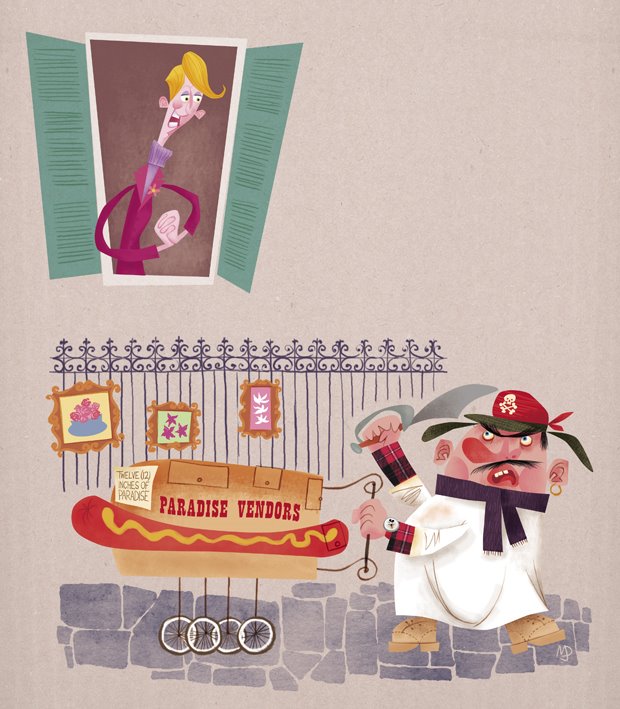
Ignatius rose to his feet and stabbed the young man in the chest with his plastic cutlass.
“Take that, you offal,” Ignatius cried, digging the cutlass into the cashmere sweater. The tip of the cutlass broke off and fell to the flagstone walk.
“Oh, dear,” the young man shrieked. “You’ll tear my sweater, you crazy thing.”
Down the Alley the women’s art guild were removing their paintings from the fence and folding their aluminum lawn chairs like Arabs in preparation for stealing away. Their annual outdoor exhibit had been ruined.
“I am the avenging sword of taste and decency,” Ignatius was shouting. As he slashed at the sweater with his broken weapon, the ladies began to dash out the Royal Street end of the Alley. (p. 213).
Walker Percy and Peter Handke
One of the many pleasures of publishing with Farrar, Straus, Percy had learned over the years, was receiving copies of their newly published books. Percy usually found a few titles on each season’s list that strongly grabbed his attention, but one book on the fall 1974 list, a collection of two novellas and a memoir by the Austrian writer Peter Handke, so greatly impressed him that he wrote a note of praise to Giroux: “The book by Peter Handke is a joy.” Percy liked all three pieces, “The Goalie’s Anxiety at the Penalty Kick,” “Short Letter, Long Farewell,” and “A Sorrow Beyond Dreams,” but the last in particular, which deals with the suicide of Hanke’s mother, deeply affected Percy. Percy’s interest in Hanke apparently got around the Farrar, Straus office, and one of the editors there sent Hanke a copy of Percy’s novel, The Moviegoer. The attraction proved reciprocal; later, Hanke would translate both The Moviegoer and The Last Gentleman for Suhrkamp Verlag, an experience that he would describe as a “voyage towards the center of my (our) existence, a voyage of images, spaces, inner situations. And it was good that I never reached the center, always felt it near, nearer and nearer, a warm thing.” Hanke’s reaction to Percy’s work was in many respects similar to Thomas Merton’s. To both of these close readers, the most powerful aspect of Percy’s fiction was the spell it wove, its atmosphere of enchantment. “No warmer and more secret books than these two,” Hanke continued about the two novels he translated. “And the secret is not made, cooked — it is not cheap mystery, it is felt and developed with writing, work.”
Pilgrim in the Ruines: A Life of Walker Percy, Jay Tolson, 1992, p. 394
Hanke brilliantly and so economically captures the deep subtleties of Percy. I confess that I haven’t read Hanke but I’ve always been a fan of his film work, notably with Wim Wenders — The Goalkeeper’s Fear of the Penalty and Wings of Desire. Given that despite several aborted efforts to get Percy novels filmed, before I was made aware of the Percy-Hanke connection, I thought that Wenders or Herzog might really be the only ones able to do some justice to Percy.

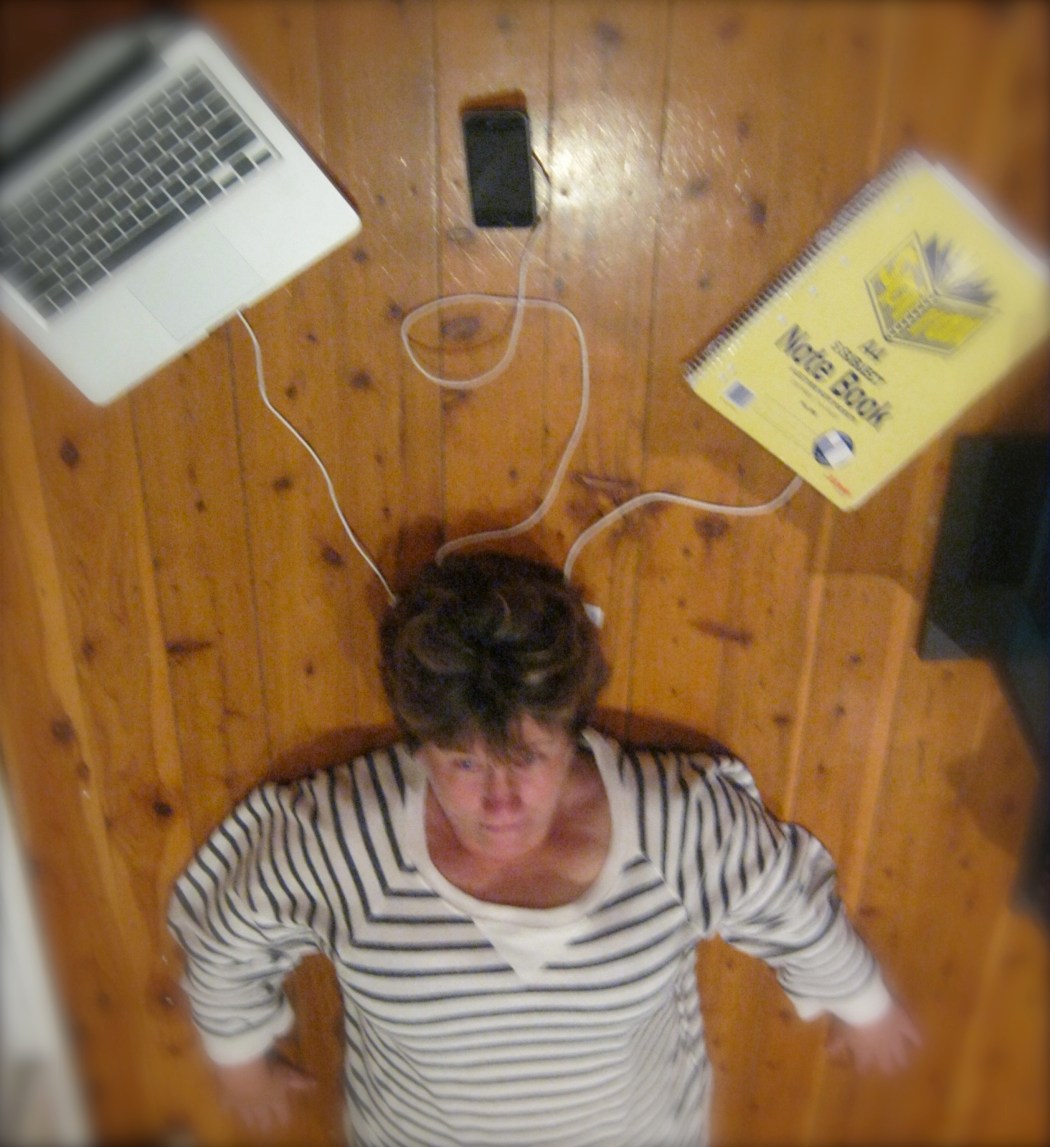
Secrets of the Creative Brain
This from The Atlantic

Extending the mind: a review of ethnographies of neuroscience practice
This from Frontiers in Human Neuroscience.
WOULD You Kill the Fat Man?
When moral dilemmas are posed in a foreign language, people become more coolly utilitarian

Lionel Ferbos (1911 – 2014)
It was just a couple of days ago that Lionel’s birthday was being commemorated. Here is the announcement.

One of my favorite albums is the one below, bridging the generations.

Robert Plant: new fall release
Why is it that we’re still hanging on every word Robert Plant sings? Why are his recordings so eagerly anticipated over 40 years into his career in pop music? Two reasons stand out above all others.
First: his voice. Surely the predominant element in reaching listeners, in making a connection with each individual, is a compelling voice. Plant’s vocals are compelling in spades: the tone, capable of everything from heartbreaking tenderness to a trademark edginess, the phrasing that lends a distinct urgency, and, perhaps most importantly, the sense of poetry, of mystery.
The second reason for Plant’s enduring ability to draw us in is that through all of these years, he’s remained curious – really curious. Not content to reconstruct one of the most successful bands in the history of rock or even to stay with a particular sound for too long, Plant seems to have an unquenchable thirst for music that moves him – whether it is to be found in Northern Africa or deepest Appalachia.
Robert Plant made his first commercial recordings in 1966. In 1967, he had also formed a group called the Band of Joy, with drummer John Bonham. Soon, Bonham, Plant, guitarist Jimmy Page, and bassist John Paul Jones assembled to become The New Yardbirds which became Led Zeppelin.
The Led Zeppelin era ended in 1980 when John Bonham died. Since that time, Plant has put his wide-ranging musical fascination to good use on solo albums, with Jimmy Page, and in recordings with bands like The Honeydrippers, Priory of Brion, and Strange Sensation. His performances have reflected his embrace of West Coast psychedelic rock, roots blues, African music, and traditional folk.
Plant continued to expand his horizons with 2007’s Raising Sand, a collaboration with Alison Krauss. Produced by T-Bone Burnett, the album’s unlikely but magnificent blend earned innumerable critical raves as well as six Grammy® Awards, including Album of the Year and Record of the Year (for “Please Read the Letter,” a Plant/Page song).
For Band of Joy, Plant enlisted his Raising Sand bandmate Buddy Miller as co-producer. “I approached Buddy Miller because he had been lighting every room that I played in when I was with Alison – and his knowledge and his gaze; he’s like a curator of a rock and roll museum packed away in three or four guitar cases and you could take these guitars out and tune them accordingly…and create some juju.”
Why give the album the name of one of his earliest bands? “In the Band of Joy, when I was seventeen, I was playing everybody else’s stuff and moving it around, and it’s kind of…time to reinvoke that attitude and sentiment.”
Plant’s overwhelming impulse was to make the music his own. “I wanted to bring my personality to other people’s songs and kick the door open a little bit…or edge it open with my hips. I mean…basically I sing the way I sing and to attack those songs in that particular way, I can only do them Plant-like, so I was thinking about Zeppelin III, I was thinking about the mixture of acoustic and powerful electric.”
The band – Darrell Scott (acoustic guitar, mandolin, octave mandolin, banjo, accordion, pedal steel and lap steel guitar), Byron House (bass), Marco Giovino (drums and percussion), and Miller (electric guitar, baritone, 6-string bass, mandoguitar) – goes right to work, providing an irresistible groove for the opening track, Los Lobos’ “Angel Dance.” The Middle Eastern melody that accompanies the chorus is a reminder of Plant’s far-flung influences. Richard Thompson’s “House of Cards” follows and updates the folk-rock sound of British bands like Fairport Convention and Pentangle. Plant calls Thompson “Another music nut,” and pronounces the song “so good and so finite; the lyric is superb.”
“Central Two-O-Nine” by Plant and Miller is an acoustic tune with a chant-like chorus. “It’s a bit like “Hats Off To Harper” on Led Zeppelin III – it’s a throwaway of every great blues line I could think of at the time.”“Silver Rider” and “Monkey” from the husband/wife group Low are the closest this album comes to replicating the ethereal blend of Raising Sand. This time Plant’s partner is Patty Griffin, whose voice meets his with a tone he describes as “something between This Mortal Coil and the Shangri-Las.” Whatever it is, it works, as Plant and Griffin use these two songs to create a delicate, enigmatic mood.
Plant found Barbara Lynn’s recording of “You Can’t Buy My Love” on a giveaway CD from the Oxford magazine compilation “and it was just cute. It is a pop song. So I just pushed in a kind of little ‘ooh ooh’ bridge and Patty just got her personality around it and we kicked ass. It comes out of a cupboard that your uncle might have closed up in 1963; you open the door and it comes roaring out.”
The same era gives us “I’m Falling in Love Again,” originally recorded by The Kelly Brothers. “I don’t know whether it was the Anglo-Saxon aspect in the room but it moved into a Honeydrippers country cousins song…and the thing that it does probably best of all is it brings in other voices. I really wanted this record to be A Band of Joy – you hear voices all around my voice. I’ve been spoiled I think in the past with Stuart Duncan and Buddy singing and Alison…I’ve gotten really used to hearing voices around the voice.” The voices around the voice here (Buddy Miller and Darrell Scott) sound like a Southern Gospel quartet and give the track a classic country feel.
“The Only Sound That Matters” has an easygoing feeling, but that doesn’t diminish how important its theme is to Robert Plant. “I think that the thrill of hearing people ‘mean it’ is one of the greatest gifts, just to be arrested by somebody, by some group of people who really, really mean it…you hear a great lyric and you go wow, (‘the only sound that matters,’ is what you need)…and the theory behind the lyric is great.”
Plant and Miller based their version of the classic folk song “Cindy I’ll Marry You Someday” on a recording by folklorist Bascom Lamar Lunsford. The song may be the most basic folk song on the album, but it played a pivotal role in achieving the right sound. “…We all found our common world, three hours into the session. I mean we started off probably in the toughest place by starting off with ‘Cindy I’ll Marry You Someday’…I had to bring Me into the performance, but at the same time I had to find out where the band might take it to…what might happen. So, once we were on a roll the personality and the character of the combination of musicians got stronger and stronger…”
Plant interprets Townes Van Zant’s reflective “Harm’s Swift Way” as an almost anthemic rock song. “I heard the version that Townes recorded and it was kinda like a demo. And again the lyric is dumbfounding – it just wipes you out completely. His delivery was quite disturbing, if you like. It was like the last demo you make before you put the guitar down and never pick it up again, ever. Was just like the end of everything. And it was very mournful and dirge-like and I just thought well there may be another way of doing this because the lyric is strong and maybe we can turn it into something that actually is, not a monument to him, but just another reflection of his work.”
To close out the album, the very spare arrangement and pleading vocal of the old-time country song “Satan, Your Kingdom Must Come Down” is followed by a driving, almost psychedelic version of a mid-19th century poem “Even This Shall Pass Away.” The two songs harken back – or should I say forward – to Robert Plant’s astonishing musical legacy.
It’s 2010 and we’re hanging on every word.
Interview with Toole biographer
Interview with Cory MacLauchlin. (See my review of “Butterfly”).