The very excellent Mark Rowlands. I’m very much looking forward to the handbook.

The very excellent Mark Rowlands. I’m very much looking forward to the handbook.
Why do the comic-strip Adventures of Tintin, about an intrepid boy reporter, continue to fascinate decades after their publication? “Tintin and I” highlights the potent social and political underpinnings that give Tintin’s world such depth, and delve into the mind of Hergé, Tintin’s work-obsessed Belgian creator, to reveal the creation and development of Tintin. Rare and surprisingly candid 1970s interviews reveal the profound insecurities and anxieties that drove Hergé to produce stories that have not only entertained millions of children (and adults) but also helped to satisfy a personal longing for self-expression. Herge is taped in a rare interview by journalist Numa Sadoul along with an interview with Tintin expert, the late Harry Thompson.

A poor man sets store by good boots.
******
For the world is broken, sundered, busted down the middle, self ripped from self and man pasted back together as mythical monster, half angel, half beast, but no man. Even now I can diagnose and shall one day cure: cure the new plague, the modern Black Death, the current hermaphroditism of the spirit, namely: More’s syndrome, or: chronic angelism-bestialism that rives soul from body and sets it orbiting the great world as the spirit of abstraction whence it takes the form of beasts, swans and bulls, werewolves, blood-suckers, Mr. Hydes, or just poor lonesome ghost locked in its own machinery.
******
Knowing, not women, said Sir Thomas, is man’s happiness.
******
Some stayed, mostly eccentrics who don’t fit in anywhere else. I stayed because it’s home and I like its easygoing ways, its religious confusion, racial hodgepodge, misty green woods, and sleepy bayous. People still stop and help strangers lying in ditches having been set upon by thieves or just plain drunk. Good nature usually prevails, even between enemies. As the saying goes in Louisiana: you may be a son of a bitch but you’re my son of a bitch.
*******
Past history: native of Nassau, graduate of U. of Conn. and Syracuse. He tells me it is his plan to “unite in his own life the objective truths of science with the universal spiritual insights of Eastern religion.”
******
“You want to know where it all began to go wrong?” Moon asks me, nodding toward a foursome of sepia golfers.
“Where?”
“It started when we abandoned the Latin mass.”
******
“I’m staggering with her, a noble, surprisingly heavy, Presbyterian armful.
“You’re drunk.”
“Yes.”
“Where do you think you’re going?”
“In here. Put the spoon down.”
She puts the spoon down and I put her down on her new $600 bed.
To bed we go for a long winter’s nap, twined about each other as the ivy twineth, not under a bush or in a car or on the floor or any such humbug as marked the past peculiar years of Christendom, but at home in bed where all good folk belong.
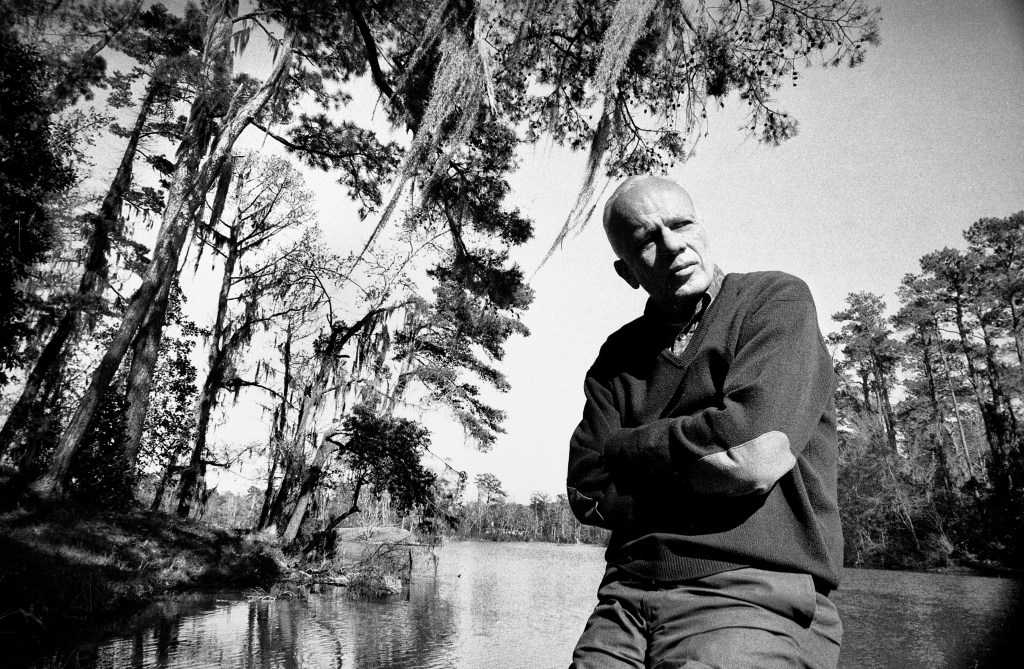
Born on this day.
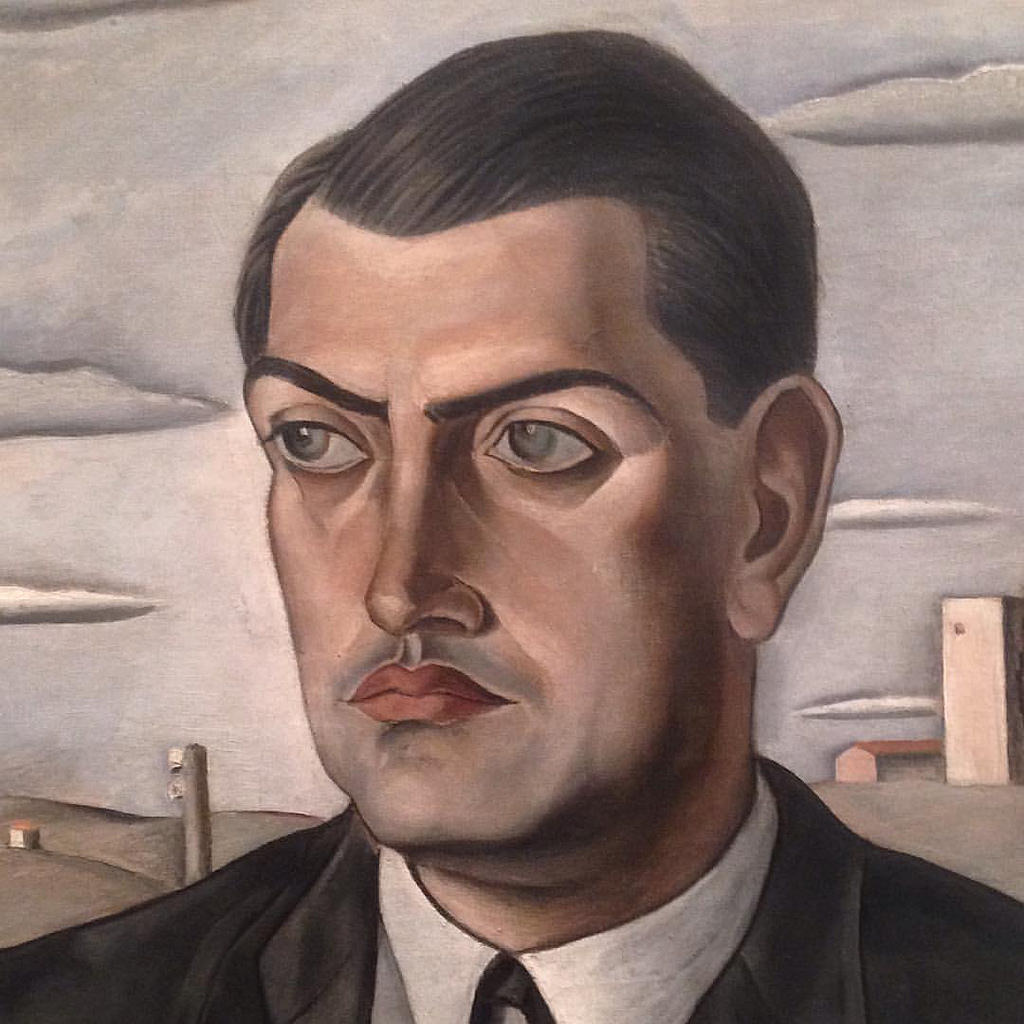
Memory may be omnipotent and indispensable, but it’s also terribly fragile. The menace is everywhere, not only from its traditional enemy, forgetfulness, but from false memories, like my often repeated story about Paul Nizan’s wedding in the 1930s. The Church of St.-Germain-des-Prés, where he was married, is crystal clear in my mind’s eye. I can see the congregation, myself among them, the altar, the priest~evenJe an-Paul Sartre, the best man. And then suddenly, one day last year, I said to myself-but that’s impossible! Nizan, a militant Marxist, and his wife, who came from a family of agnostics, would never have been married in a church! It was categorically unthinkable. Did I make it up? Confuse it with other weddings? Did I graft a church I know well onto a story that someone told me? Even today, I’ve no idea what the truth is, or what I did with it.
Our imagination, and our dreams, are forever invading our memories; and since we are all apt to believe in the reality of our fantasies, we end up transforming our lies into truths. Of course, fantasy and reality are equally personal, and equally felt, so their confusion is a matter of only relative importance.
In this semiautobiography, where I often wander from the subject like the wayfarer in a picaresque novel seduced by the charm of the unexpected intrusion, the unforeseen story, certain false memories have undoubtedly remained, despite my vigilance. But, as I said before, it doesn’t much matter. I am the sum of my errors and doubts as well as my certainties. Since I’m not a historian, I don’t have any notes or encyclopedias, yet the portrait I’ve drawn is wholly mine with my affirmations, my hesitations, my repetitions and lapses, my truths and my lies. Such is my memory.
(Italics added)
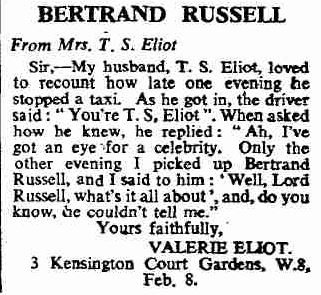
H/T to Jesse Norman and Nigel Warburton.
Julian Baggini on the meaning of life
What’s it all about, Alfie?
“Do you see, child, the exquisite beauty that Nature holds even in the handful of little flowers and animals we have here? For Nature is the minister of the God we believe in and worship. The greatest wonder of Nature that might astonish you was made by the Creator through a simple act of His supreme will. That fiery globe above our heads, which has burned for thousands of years without ever consuming itself, which maintains its flame with who-knows-what fuel, which not only gladdens but gives life to man, to beast, to plant, and to stone; that Sun, my child, that lamp of day, that eye of heaven, that soul of Nature, which has illuminated so many peoples with its beneficent brilliance, gaining worship for itself as a deity, is—so that you understand what I am saying— nothing more than a plaything of His supreme Omnipotence. Consider now how powerful, wise, and loving your great God is, for the Sun that astonishes you, this sky that gladdens you, these little birds that entertain you, these flowers that delight you, this man who teaches you, and everything that surrounds you in Nature, came from His divine hands without the least effort, all perfect and destined for your service. And you, are you too small a thing to recognize this? And if you do recognize it, could you be so low as not to give thanks to God for all these favors He has done you without your deserving them? I couldn’t think such a thing of you.
******
Perhaps you will find it striking, my children, that having been given such a bad nature by my physical and moral education, through no one’s ill will but rather my mother’s excessive love, and having been further corrupted by the perverse example of the children at my first school, I could have been transformed in an instant from bad to average (for I have never been good) under the direction of my true teacher; but don’t be so surprised, for a good education, guided by a superior talent and vigilant wisdom, and above all by a good example, is so powerful that it forms a standard by which children will almost always direct their actions.
******
This is a fable as far as crabs go, but as for men, it is an obvious truth; for, as Seneca says, “the road that leads to virtue by the way of rules is long and difficult; but the one that goes by the way of examples is brief and efficient.”

The third in a series of excerpts from Minds, Models and Milieux: Commemorating the Centennial of the Birth of Herbert Simon.
Gerd Gigerenzer
Herbert Simon left us with an unfinished task: a theory of bounded rationality. Such a theory should make two contributions. For one, it should describe how individuals and institutions actually make decisions. Understanding this process would advance beyond “as-if” theories of maximizing expected utility. Second, the theory should be able to deal with situations of uncertainty where “the conditions for rationality postulated by the model of neoclassical economics are not met” (Simon, 1989, p. 377). That is, it should extend to situations where one cannot calculate the optimal action but instead has to “satisfice,” that is, find either a better option than existing ones or one that meets a set aspiration level. This extension would make decision theory particularly relevant to the uncertain worlds of business, investment, and personal affairs.


Left to Right: Morris Altman, Leslie Marsh, Roger Frantz, Gerd Gigerenzer, Shu-Heng Chen, Shabnam Mousavi
San Francisco January 2016, photographs courtesy Reza Kheirandish
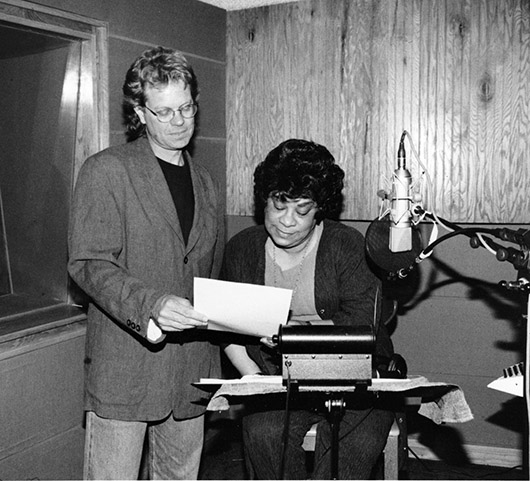
Scott Billington, producer extraordinaire of so many top-notch musicians (that typically that don’t get mainstream airplay — well, because they have genuine talent — for example “Gatemouth” Brown and James Booker, two of the GREATS — is writing a monthly “Letter from NOLA” column for Universal Music’s uDiscover website, sharing stories about the musicians he’s worked with (and others), and talking about Louisiana music in general. Here’s the first installment on Ruth Brown.
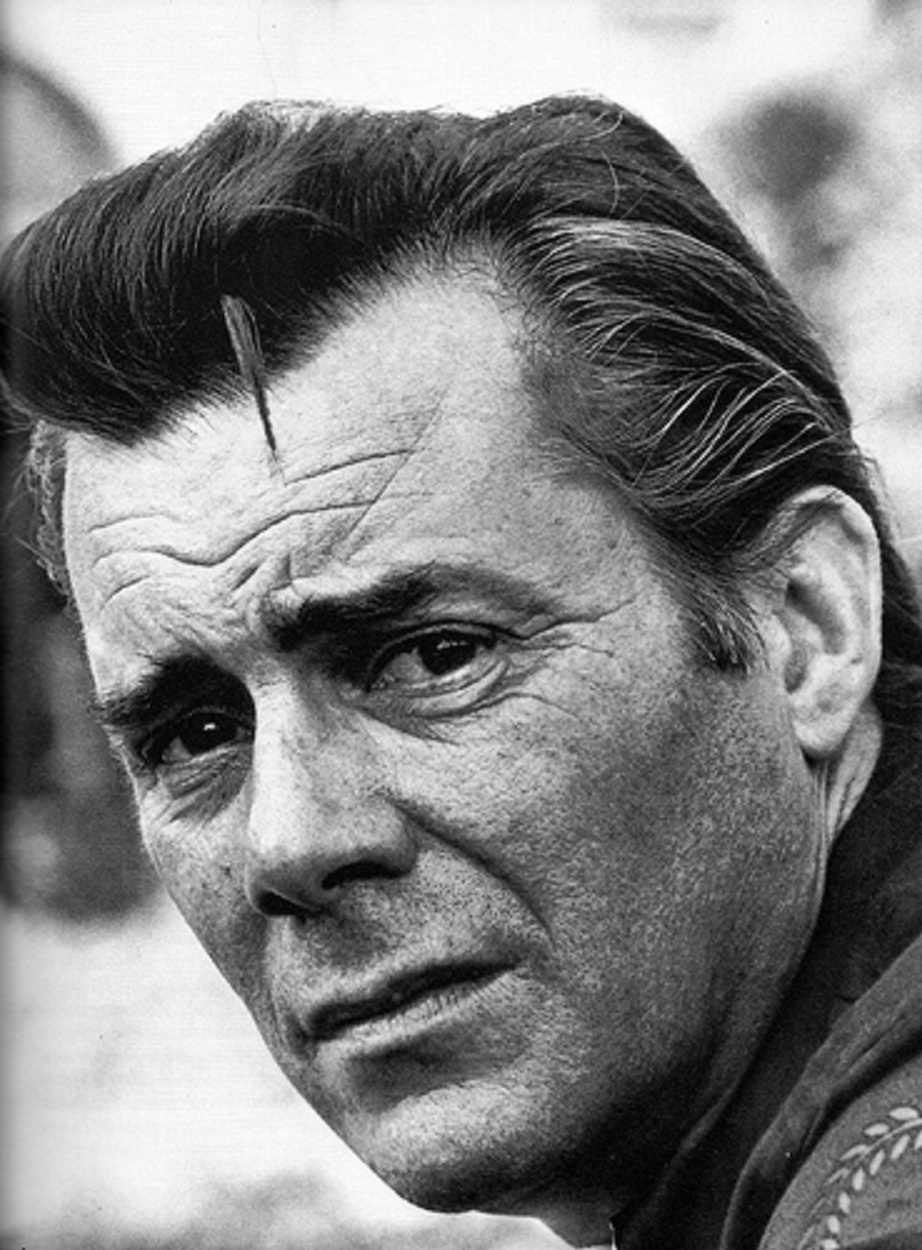
Dirk Bogarde (along with Klaus Kinski) ranks as one of the two greatest screen actors of the post-War era. I realize that this may be somewhat controversial given what Hollywood (I include the Brit luvvies) take to be its finest. Bogarde was very bright, literate, articulate, dignified, brave, philosophical, had integrity and importantly was very scathing — he didn’t suffer fools gladly especially Hollywood and TV interviewers. Below is the definitive Borgarde documentary enhanced by Anthony Forwood’s terrific home movies, supplemented by thoughtful and frank insights by DB’s family and colleagues. Especially notable, for me at least, was a glimpse of DB’s sketchbook which showed an artistic maturity very early on and is far superior to the usual actor-or-musician-turned-painter schlock. Also, I’d always wondered whatever happened to Björn Andrésen (Tadzio in Death in Venice) — great to see that despite the albatross that the role was, he’s alive and well and living a “normal” life.
The DB website claims that:
 Given the VERY modest sums involved in maintaining a website one would have thought that DB’s sizable estate would cover this in perpetuity since Brock Van den Bogaerde was the main beneficiary and indeed runs the website. Very odd.