Walker Percy Wednesday 72

percycovercroppea

Music ransoms us from the past, declares an amnesty, brackets and sets aside the old puzzles. Sing a new song. Start a new life, get a girl, look into her shadowy eyes, smile. Fix me a toddy, Lola, and we’ll sit on the gallery of Tara and you play a tune and we’ll watch evening fall and lightning bugs wink in the purple meadow.

*****

“A perfect example of Homo Americanensis politicus paranoicus, would you say, Max?”

*****

The Heavy Sodium ions hit his pineal body, seat of self, like a guillotine, sundering self from self forever, that ordinary self, the restless aching everyday self, from the secret self one happens on in dreams, in poetry, during ordeals, on happy trips—“Ah, this is my real self!” Forever after he’ll live like a ghost inhibiting himself. He’ll orbit the earth forever, reading dials and recording data and spinning theories by day, and at night seek to reenter the world of creatures by taking the form of beasts and performing unnatural practices.

I even fancy that I see his soul depart, exiting his body through the top of his head in a little corkscrew curl of vapor, as the soul is depicted in ancient woodcuts. Or was it no more than a wisp of smoke blown from the bunker?

Screen Shot 2015-06-30 at 8.38.47 PM

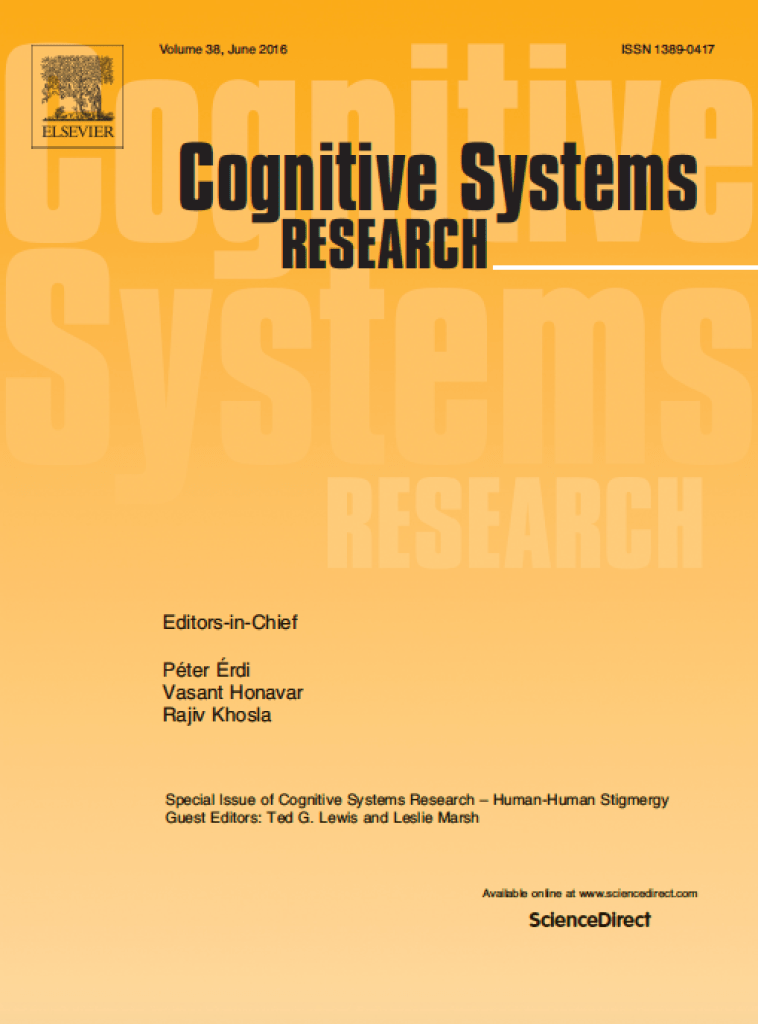
Special Issue of Cognitive Systems Research – Human-Human Stigmergy

This special issue of Cognitive Systems Research is intended as a follow-up and a companion to an earlier issue devoted to the theme of stigmergy, what we termed stigmergy 3.0 ( Doyle & Marsh, 2013). It reinforces the idea that the observation and the theorizing of the mechanism of stigmergy is no longer the sole preserve of eusocial insects (termites for example), eukaryotic cellular organisms (slime mold) and the flocking, herding, and schooling of organisms with much higher cognitive capacity than termites. Indeed, homo sapiens’ richly adaptive and dynamic behavior may well be the paradigm instantiation of stigmergy – think economies and markets, cultures, traditions and practices, urban development, and of course of late, the world-wide web – all highly complex emergent phenomena.

Screen Shot 2016-02-16 at 10.44.42 AM

Mardi Gras Gift Economy

“Throw Me Something, Mister!”: Mardi Gras is much more than a debaucherous party. The exchange of gifts in parades and parties binds New Orleans’ diverse communities together.

The importance of giving for its own sake, rather than for prestige or other benefits, is emphasized by krewe anonymity. Mardi Gras law requires that krewe members wear masks during their parades. This creates an important dynamic: the receiver does not know who the gift giver is. No personal reciprocity is expected.

01_Masked-riders-1076x588

“Storify” Version of Q+A

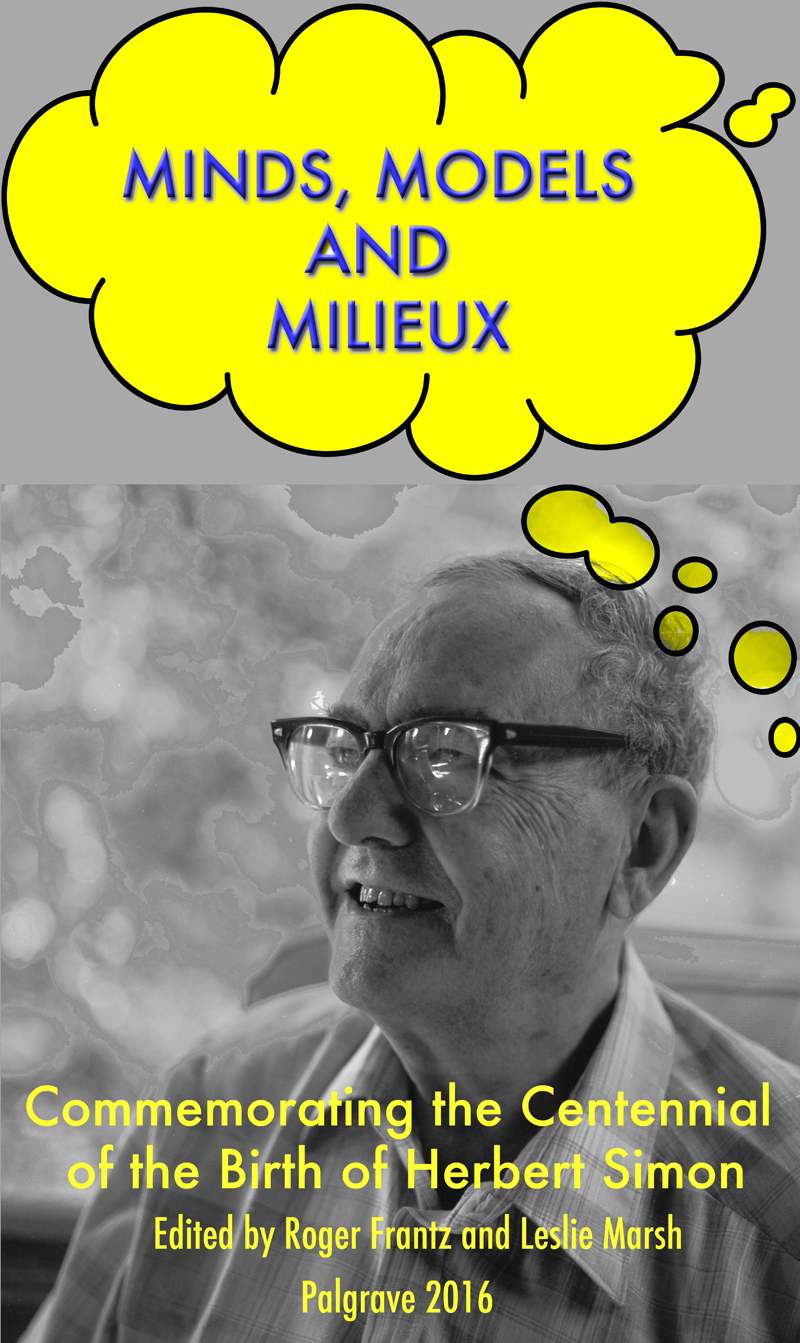
Minds, Models and Milieux: Commemorating the Centennial of the Birth of Herbert Simon

HS_POSTER

Minds, Models and Milieux: Twitter Q&A

A reminder about our Twitter Q&A tomorrow, Monday 15 February at 8am PST/4pm GMT. The list of participants below, along with the titles of their contributions to the collection — if you can’t join us, a link will provided soon after to an omnibus version:

@markpingle — Boundedly Rational Decision-Making under Certainty and Uncertainty: Some Reflections on Herbert Simon

@mmarconov — Simon’s (Lost?) Legacy in Agent-Based Computational Economics

@MilekPl — Models of environment

@FernandGobet — From Bounded Rationality to Expertise

HS_POSTER


Wittgenstein: A Wonderful Life

This 1989 BBC Horizon documentary (see below) is an absolute gem. I must have seen it in the day but viewing it again with the benefit of the intervening quarter century, is so rewarding. It’s television at its best — very tightly presented, it is neither pretentious nor dumbed down as so many programmes on LW are wont to be. Of course, the programme is replete with LW’s aphorisms and wonderful extracts from the Bertie-LW correspondence. It also features the immensely cultivated mind that is Michael Tanner who kindly kept me in snout at an early Nietzsche Society of GB meeting. Three things struck me about this programme. First, it’s very easy to see how the “cult” of LW arose. Second, whatever the vital foundations Russell (and Whitehead) laid in Principia Mathematica, Russell’s genius was that he recognized true genius in LW at the outset. According to the programme, Russell’s ego was somewhat bruised by being eclipsed by LW manifest by his pooh-poohing the Investigations. Last, but by no means least, LW’s existential commitment to philosophy shows just how shallow, ideological and intellectually dishonest “professional” philosophy has increasingly become over the past 40 or so years — of course there are exceptions. (The image that always springs to mind when considering the generic climbing-the-greasy-pole-academic-cum-public-intellectual, typically in the humanities and social sciences, is one of a kid traipsing about in their parents’ garb).

P.S. Here’s a bit of LW news that eluded me: Lost archive shows Wittgenstein in a new light.

The Mangy Parrot 2

As Plato said, “children’s passions should not always be restrained with severity, nor should they be habitually petted and caressed.” Wisdom consists in finding the medium between these extremes.

*****

How unstable is fortune in this life!

*****

Pliny rightly stated that “fear is a very unfaithful teacher.”

Mangy_Parrot

Embodied Functionalism and Inner Complexity: Simon’s 21st-Century Mind

The second in a series of excerpts from Minds, Models and Milieux: Commemorating the Centennial of the Birth of Herbert Simon.

Robert D. Rupert

One can hardly underestimate Herbert Simon’s influence on contemporary cognitive science and empirically oriented philosophy of mind. Working with collaborators at Carnegie Mellon and the Rand Corporation, he wrote Logic Theorist and General Problem Solver (GPS) and thereby helped to set the agenda for early work in Artificial Intelligence (AI) (Simon and Newell, 1971). These projects also provided AI with some of its fundamental tools: in their work in the 1950s on Logic Theorist and other programs, Simon and colleagues invented list processing (which, in John McCarthy’s hands, became LISP – McCarthy, 1960), while the conceptual framework of GPS gave birth to production systems (and became SOAR – Rosenbloom et al., 1991). In 1981, John Haugeland included Newell and Simon’s computationalist manifesto (“Computer science as empirical enquiry: Symbols and search” – Newell and Simon 1976) in his widely read anthology Mind Design (Haugeland, 1981). As a result, the names of Newell and Simon became, in the philosophical world, nearly synonymous with the computational theory of the mind – at the top of the list with Fodor’s (1975) and Pylyshyn’s (1984). Moreover, in their early work, Simon and the Carnegie-Rand group emphasized the relative independence of an information-processing-based characterization of thought from the material components of the system so engaged (Newell, Shaw, and Simon, 1958a, p. 51; Newell, Shaw, and Simon, 1958b, p. 163, cf. Vera and Simon, 1993, p. 9). Prominent philosophers, most notably Putnam (1960, 1963, 1967) and Fodor (1974), reified this distinctively functional level of description, thereby formulating the late-twentieth century’s dominant metaphysics of mind, functionalism, according to which mental states are, by their nature, multiply realizable functional states.

The list of Simon’s influential ideas extends much further than this, however. Arguably, Simon’s work on hierarchical structure and the near-decomposability of complex systems (1996, Ch. 8) planted the seeds of modularity-based thinking, which blossomed in the work of Marr (1982), Fodor (1983), and evolutionary psychologists (Barkow, Cosmides, and Tooby, 1992; Pinker, 1997). In addition, Simon’s (1996) emphasis on satisficing and the bounded nature of rationality set the stage for the fascinating research programs of such varied figures Gerd Gigerenzer (2000), Christopher Cherniak (1986), and Ron McClamrock (1995). In fact, in conjunction with Kahneman and Tversky’s heuristics and biases program (Kahneman, Slovic, and Tversky, 1982), Simon’s observations about the bounded nature of rationality yielded what is now the leading view of human cognition: it’s the work of a complex but nonoptimized system that manages surprisingly well by deploying its limited resources in a context-specific way – that is, in a way that exploits a grab-bag of relatively domain-specific shortcuts that are reasonably reliable given the environments in which they’re typically employed. At the same time, Simon sometimes emphasized adaptive rationality – the idea that, under a wide range of circumstances, intelligent human behavior is, given the subject’s goals, a straightforward function of the structure of the task at hand – a theme appearing in the work of such luminaries as Dan Dennett (1987) and John Anderson (1990). Simon also articulated a vision of intelligent behavior as the product of simple, internal mechanisms interacting with a complex external environment, and in doing so, inspired nearly two generations of philosophers and cognitive scientists who take intelligence to be the by-product of, or to emerge from, bodily interaction with the environment (Clark, 1997; Brooks, 1999). In addition, Simon (1996, pp. 88, 94, 110) was perhaps the earliest working cognitive scientist explicitly to place aspects of internal processing on cognitive par with aspects of the environment external to the organism, a central theme in Andy Clark and David Chalmers’s enormously influential essay “The Extended Mind” (Clark and Chalmers, 1998). There could scarcely be a more humbling list of one thinker’s achievements, and little has been said about Simon’s contributions to our understanding of search algorithms, economics, design, or management!

As impressive as this list is, one might nevertheless wonder whether Simon’s views can be integrated into a single overarching vision of human cognition – of its structure, workings, and relation to the environment. Motivated by this kind of concern, I focus, in what follows, on an apparent inconsistency in Simon’s thinking, one that stands out especially clearly against the backdrop of decades of accumulated empirical results in what is sometimes known as ‘embodied cognitive science’ (Varela, Thompson, and Rosch, 1991; Clark, 1997, 2008b; Lakoff and Johnson, 1999; Rowlands, 1999; Gallagher, 2005; Gibbs, 2006; Rupert, 2006, 2009; Shapiro, 2010; Wilson and Foglia, 2011). At first blush, embodied results seem to support certain strands of Simon’s thought at the expense of others. I argue, however, that even in cases in which Simon’s pronouncements about the mind were premature or his emphasis out of balance (e.g., not sufficiently oriented toward the body-based contributions to human cognition), many of his own views about the mind provide the necessary corrective and allow him to accommodate – even anticipate – embodiment-oriented insights. Simon wears an early, and perhaps slightly misshapen, version of the coat we should all gladly wear today, that of the embodied functionalist.
HS_POSTER

The Glance of Music: Ennio Morricone Documentary

I’m very much looking forward to viewing this documentary (first video) on the genius that is Ennio Morricone. At 87 he’s still going strong and is sharp as a whistle. To my mind, he’s the most Wagnerian of 20th Century composers. Beyond the Morricone-Leone collaboration only one other classic collaboration springs  to mind and that’s the Herzog-Popol Vuh-(Florian Fricke) collaboration — but that’s not even a close second.

Here’s a pedestrian BBC documentary from 21 years back.

Ennio Morricone, composer

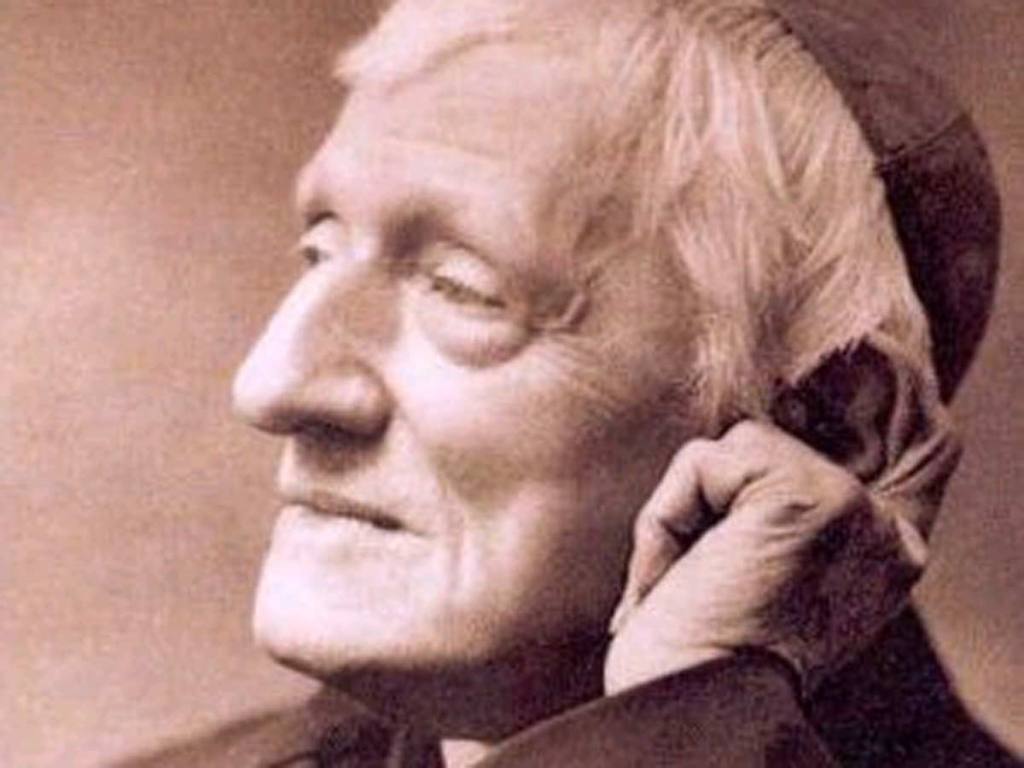
John Henry Newman and the Problem of Inductive Knowledge

I think that the neglect of Newman as a philosopher is lamentable; Newman is an original thinker, one whose philosophical thought warrants attention for its own merits. An indirect goal of this paper is to establish this claim.

Download here. Good on you Joe! Newman’s Essay in Aid of a Grammar of Assent to my mind is a classic but of course is overlooked/sneered at in the world of humanist sophisticates.

john-henry-newman-4x31