boogie woogieCosimo MatassaDave BartholomewFats Dominorock 'n roll
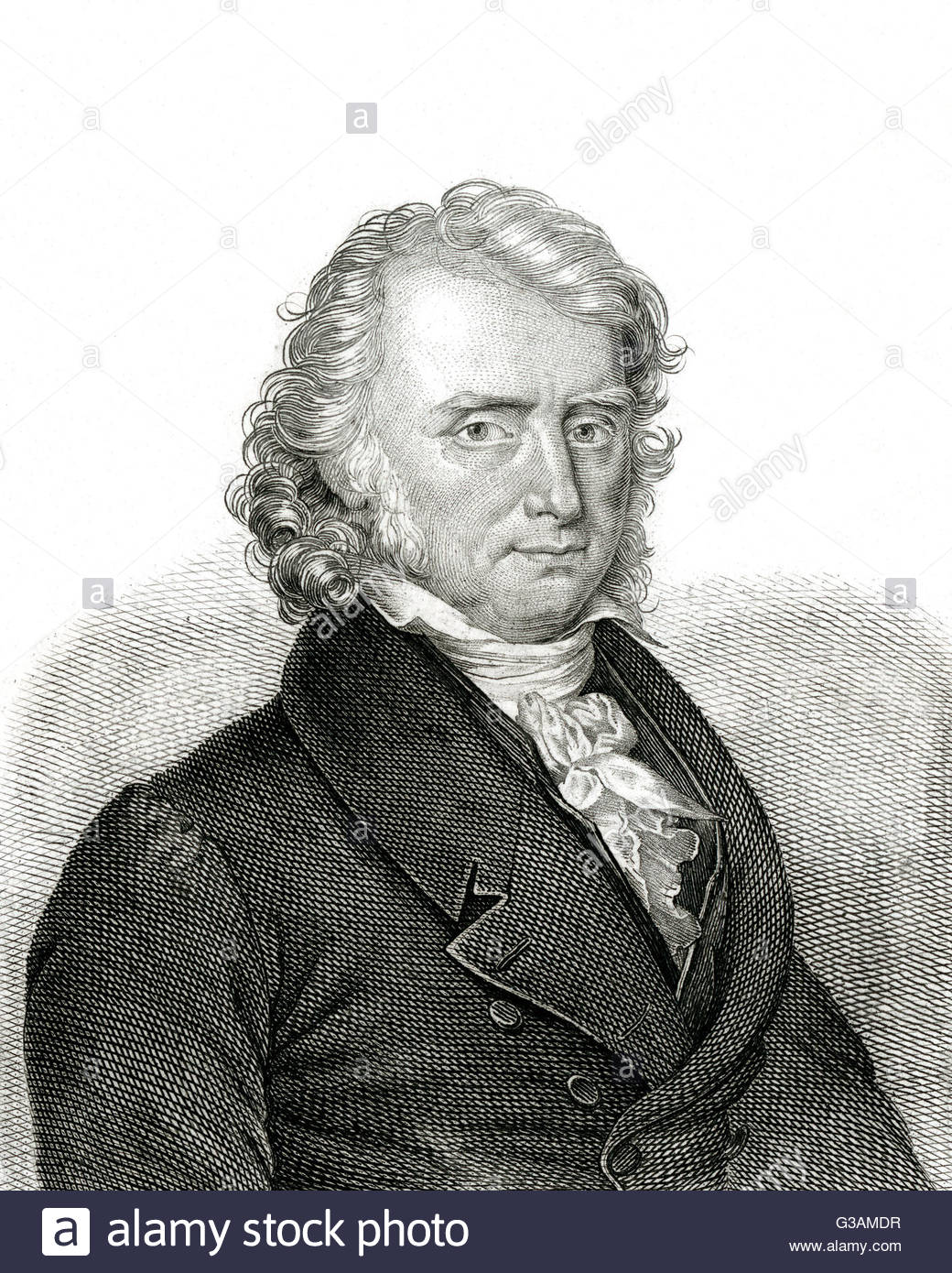
Benjamin Constant
Fats

Walker Percy Wednesday 156

Let us take an example in which the recovery of being is ambiguous, where it may under the same circumstances contain both authentic and unauthentic components. An American couple, we will say, drives down into Mexico. They see the usual sights and have a fair time of it. Yet they are never without the sense of m issing something. Although Taxco and Cuernavaca are interesting and picturesque as advertised, they fall short of “it. “What do the couple have in mind by “it”? What do they really hope for? What sort of experience could they have in Mexico so that upon their return, they would feel that “it” had happened? We have a clue: Their hope has something to do with their own role as tourists in a foreign country and the way in which they conceive this role. It has something to do with other American tourists. Certainly they feel that they are very far from “it” when, after traveling five thousand miles, they arrive at the plaza in Guanaj uato only to find themselves surrounded by a dozen other couples from the Midwest. Already we may distinguish authentic and unauthentic elements. First, we see the problem the couple faces and we understand their efforts to surmount it. The problem is to find an “unspoiled” place. “Unspoiled” does not mean only that a place is left physically intact; it means also that it is not encrusted by renown and by the familiar (as is Taxco), that it has not been discovered by others. We understand that the couple really want to get at the place and enjoy it. Yet at the same time we wonder if there is not something wrong in their dislike of their compatriots. Does access to the place require the exclusion of others? Let us see what happens. The couple decide to drive from Guanajuato to Mexico City. On the way they get lost. After hours on a rocky mountain road, they find themselves in a tiny valley not even marked on the map. There they discover an Indian village. Some sort of religious festival is going on. It is apparently a com dance in supplication of the rain god. The couple know at once that this is “it.” They are entranced. They spend several days in the village, observing the Indians and being themselves observed with friendly curiosity. Now may we not say that the sightseers have at last come face to face with an authentic sight, a sight which is charming, quaint, picturesque, unspoiled, and that they see the sight and come away rewarded? Possibly this may occur. Yet it is more likely that what happens is a far cry indeed from an immediate encounter with being, that the experience, while masquerading as such, is in truth a rather desperate impersonation. I use the word desperate advisedly to signify an actual loss of hope. The clue to the spuriousness of their enjoyment of the village and the festival is a certain restiveness in the sightseers themselves. It is given expression by their repeated exclamations that “this is too good to be true,” and by their anxiety that it may not prove to be so perfect, and finally by their downright relief at leaving the valley and having the experience in the bag, so to speak-that is, safely embalmed in memory and movie film. What is the source of their anxiety during the visit? Does it not mean that the couple are looking at the place with a certain standard of performance in mind? Are they like Fabre, who gazed at the world about him with wonder, letting it be what it is; or are they not like the overanxious mother who sees her child as one performing, now doing badly, now doing well? The village is their child and their love for it is an anxious love because they are afraid that at any moment it might fail them.
We have another clue in their subsequent remark to an ethnologist friend. “How we wished you had been there with us! What a perfect goldmine of folkways! Every minute we would say to each other, if only you were here! You must return with us.” This surely testifies to a generosity of spirit, a willingness to share their experience with others, not at all like their feelings toward their fellow Iowans on the plaza at Guanajuato! I am afraid this is not the case at all. It is true that they longed for their ethnologist friend, but it was for an entirely different reason. They wanted him, not to share their experience, but to certify their experience as genuine. “This is it” and “Now we are really living” do not necessarily refer to the sovereign encounter of the person with the sight that enlivens the mind and gladdens the heart. It means that now at last we are having the acceptable experience. The present experience is always measured by a prototype, the “it” of their dreams. “Now I am really living” means that now I am filling the role of sightseer and the sight is living up to the prototype of sights. This quaint and picturesque village is measured by a Platonic ideal of the Quaint and the Picturesque. Hence their anxiety during the encounter. For at any m inute something could go wrong. A fellow Iowan might emerge from adobe hut; the chief might show them his Sears catalogue. (If the failures are “wrong” enough, as these are, they might still be turned to account as rueful conversation pieces: “There we were expecting the chief to bring us a churinga and he shows up with a Sears catalogue!”) They have snatched victory from disaster, but their experience always runs the danger of failure. They need the ethnologist to certify their experience as genuine. This is borne out by their behavior when the three of them return for the next corn dance. During the dance, the couple do not watch the goings-on; instead they watch the ethnologist! Their highest hope is that their friend should find the dance interesting. And if he should show signs of true absorption, an interest in the goings-on so powerful that he becomes oblivious of his friendsthen their cup is full. “Didn’t we tell you?” they say at last. What they want from him is not ethnological explanations; all they want is his approval. What has taken place is a radical loss of sovereignty over that which is as much theirs as it is the ethnologist’s. The fault does not lie with the ethnologist. He has no wish to stake a claim to the village; in fact, he desires the opposite: he will bore his friends to death by telling them about the village and the meaning of the folkways. A degree of sovereignty has been surrendered by the couple. It is the nature of the loss, moreover, that they are not aware of the loss, beyond a certain uneasiness. (Even if they read this and admitted it, it would be very difficult for them to bridge the gap in their confrontation of the world. Their consciousness of the corn dance cannot escape their consciousness of their consciousness, so that with the onset of the first direct enjoyment, their higher consciousness pounces and certifies: “Now you are doing it! Now you are really living!” and, in certifying the experience, sets it at nought.) Their basic placement in the world is such that they recognize a priority of title of the expert over his particular department of being. The whole horizon of being is staked out by “them,” the experts. The highest satisfaction of the sightseer (not merely the tourist but any layman seer of sights) is that his sight should be certified as genuine. The worst of this impoverishment is that there is no sense of impoverishment. The surrender of title is so complete that it never even occurs to one to reassert title. A poor man may envy the rich man, but the sightseer does not envy the expert. When a caste system becomes absolute, envy disappears. Yet the caste of laymanexpert is not the fault of the expert. It is due altogether to the eager surrender of sovereignty by the layman so that he may take up the role not of the person but of the consumer. I do not refer only to the special relation of layman to theorist. I refer to the general situation in which sovereignty is surrendered to a class of privileged knowers, whether these be theorists or artists. A reader may surrender sovereignty over that which has been written about, just as a consumer may surrender sovereignty over a thing which has been theorized about. The consumer is content to receive an experience just as it has been presented to him by theorists and planners. The reader may also be content to judge life by whether it has or has not been formulated by those who know and write about life. A young man goes to France. He too has a fair time of it, sees the sights, enjoys the food. On his last day, in fact as he sits in a restaurant in Le Havre waiting for his boat, something happens. A group of French students in the restaurant get into an impassioned argument over a recent play. A riot takes place. Madame Ia concierge joins in, swinging her mop at the rioters. Our young American is transported. This is “it.” And he had almost left France without seeing “it”! But the young man’s delight is ambiguous. On the one hand, it is a pleasure for him to encounter the same Gallic temperament he had heard about from Puccini and Rolland. But on the other hand, the source of his pleasure testifies to a certain alienation. For the young man is actually barred from a direct encounter with anything French excepting only that which has been set forth, authenticated by Puccini and Rolland-those who know. If he had encountered the restaurant scene without reading Hemingway, without knowing that the performance was so typically, charmingly French, he would not have been delighted. He would only have been anxious at seeing things get so out of hand. The source of his delight is the sanction of those who know. This loss of sovereignty is not a marginal process, as might appear from my example of estranged sightseers. It is a generalized surrender of the horizon to those experts within whose competence a particular segment of the horizon is thought to lie. Kwakiutls are surrendered to Franz Boas; decaying Southern mansions are surrendered to Faulkner and Tennessee Williams. So that, although it is by no means the intention of the expert to expropriate sovereignty- in fact he would not even know what sovereignty meant in this context-the danger of theory and consumption is a seduction and deprivation of the consumer. In the New Mexican desert, natives occasionally come across strange-looking artifacts which have fallen from the skies and which are stenciled: Return to U.S. Experimental Project, Alamogordo. Reward. The finder returns the object and is rewarded. He knows nothing of the nature of the object he has found and does not care to know. The sole role of the native, the highest role he can play, is that of finder and returner of the mysterious equipment. The same is true of the layman’s relation to natural objects in a modern technical society. No matter what the object or event is, whether it is a star, a swallow, a Kwakiutl, a “psychological phenomenon,” the layman who confronts it does not confront it as a sovereign person, as Crusoe confronts a seashell he finds on the beach. The highest role he can conceive himself as playing is to be able to recognize the title of the object, to return it to the appropriate expert and have it certified as a genuine find. He does not even permit himself to see the thing-as Gerard Hopkins could see a rock or a cloud or a field. If anyone asks him why he doesn’t look, he may reply that he didn’t take that subject in college (or he hasn’t read Faulkner). This loss of sovereignty extends even to oneself. There is the neurotic who asks nothing more of his doctor than that his symptom should prove interesting. When all else fails, the po9r fellow has nothing to offer but his own neurosis. But even this is sufficient if only the doctor will show interest when he says, “Last night I had a curious sort of dream; perhaps it will be significant to one who knows about such things. It seems I was standing in a sort of alley-” (I have nothing else to offer you but my own unhappiness. Please say that it, at least, measures up, that it is a proper sort of unhappiness.)
Mises, The Movie
It will be interesting to see if this project actually gets off the ground. To my mind it should be either a fully-fledged theatrical story or a standard documentary — I find documentaries with interspersed reconstructed scenes tiresome and unconvincing.
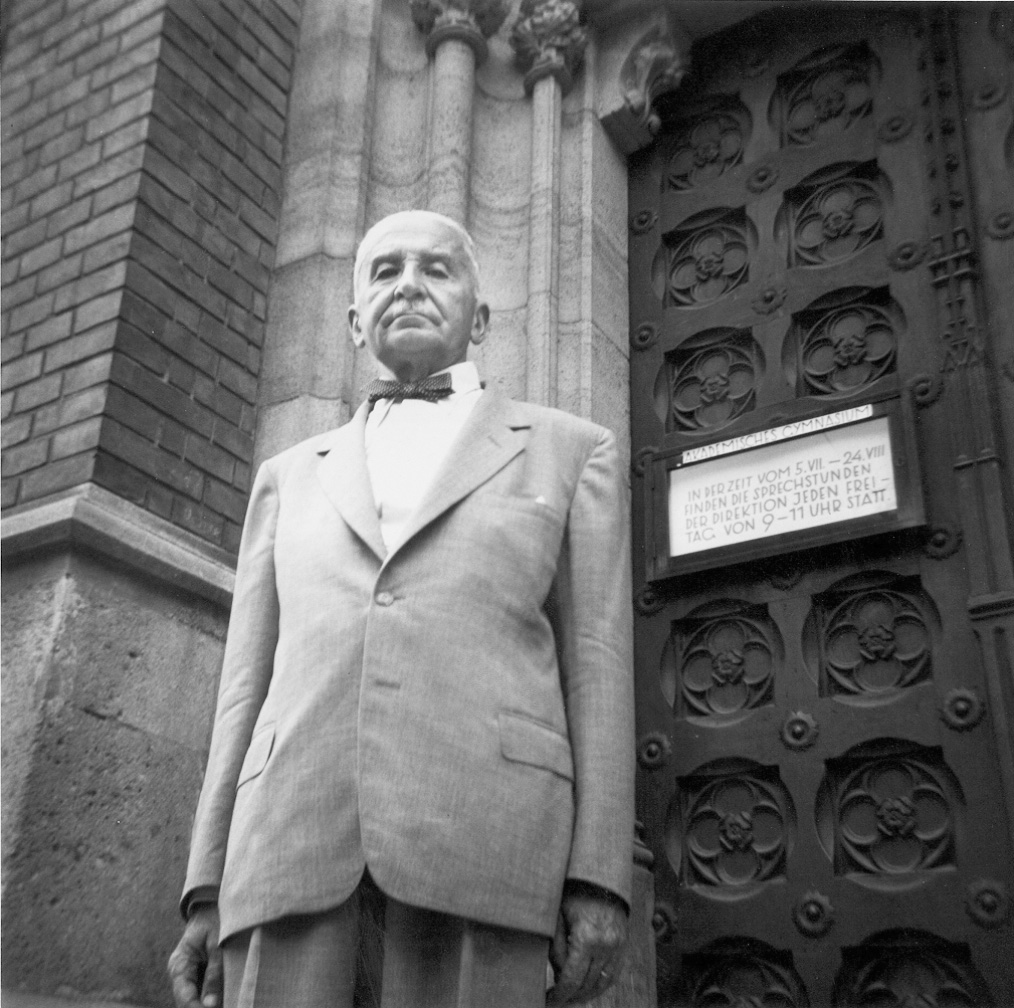
The Infidel and the Professor: David Hume, Adam Smith, and the Friendship That Shaped Modern Thought
I’m looking forward to this. Check out the introduction as well. THE review here.
Raymond Aron’s Memoirs
It’s been 34 years since the death of that independent-minded and incredibly lucid writer — Raymond Aron. I chanced upon his Memoirs: Fifty Years of Political Reflection which has been made freely available here.
Stove’s On Enlightenment
Ever the delicious philosophical provocateur David Stove has his book On Enlightenment freely available online (not posted by me gov!). My chum Andrew Irvine is the editor. Mention Stove in class or in a paper (assuming that there are those who have heard of him) and you’ll probably be sent to the gulag.
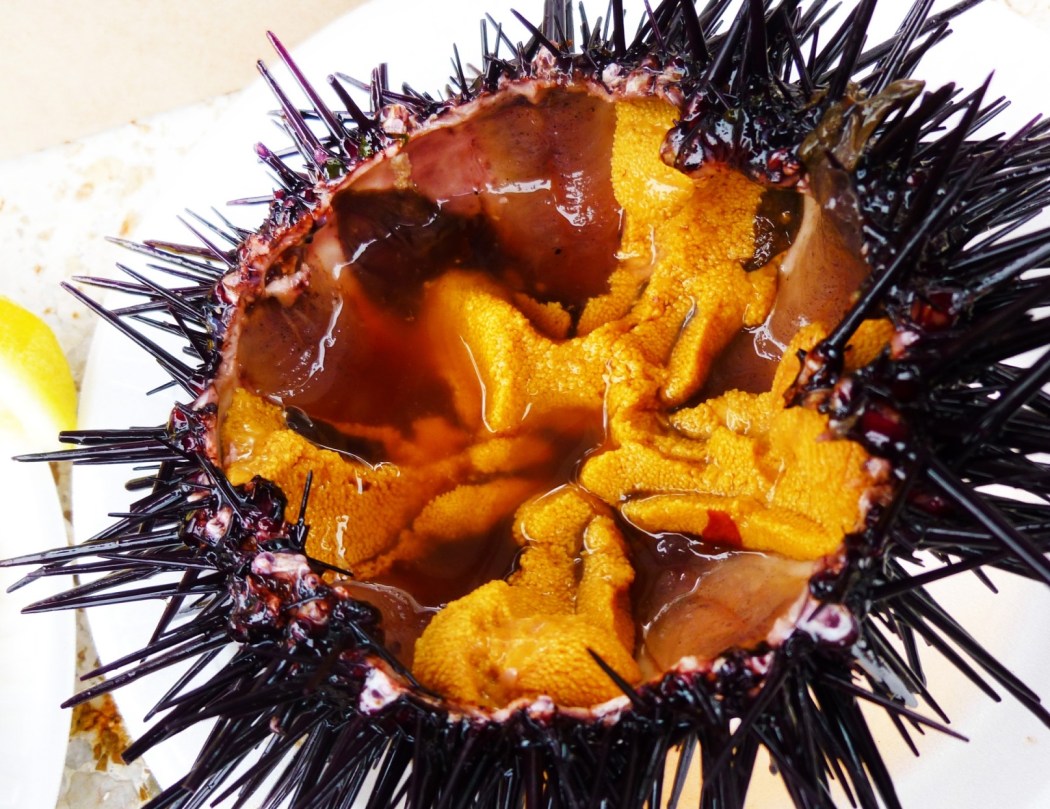
Sea Urchin Sashimi
Had I had tried Sea Urchin before then it would have been at Le Bernardin or The Willows Inn — but surely I’d have remembered the experience. Anyway, recently I tried Sea Urchin at a Japanese restaurant and it was one of the most compelling flavours I’ve had in several years. I can’t describe it but others can. Here is Smithsonian invertebrate zoologist Christopher Mah’s expert view along with another connoisseur’s opinion.
Ella Fitzgerald and Louis Armstrong Cheek to Cheek: The Complete Duets
The most excellent Ricky Riccardi is the co-producer and liner note author of the soon-to-be released four CD set Cheek To Cheek: The Complete Duet Recordings. Read all about it here.


