Reported in the Consequence of Sound.
Reported in the Consequence of Sound.
Below is an extract (the first section of Chapter 2) of Ralf Bader’s most excellent and crisp Robert Nozick (pp. 10-14).
Famously, Nozick begins his book Anarchy, State, and Utopia with the claim: ‘Individuals have rights, and there are things no person or group may do to them (without violating their rights)’ (p. ix). This claim constitutes the basis of Nozick’s political philosophy and moral outlook. His book is an attempt to examine the implications of this claim for our understanding of the legitimate functions of the state, while also providing support in favour of this moral outlook and criticisms of alternative views. He intends to assess whether the existence of a state can be justified at all and what functions it can legitimately perform. In particular, he takes the anarchist’s challenge seriously and raises the question whether the acceptance of individual rights leaves any room for legitimate governments. He argues against the anarchist’s claim that every form of government is illegitimate, that states are intrinsically immoral and that only anarchy constitutes a justified societal arrangement. Having defended the legitimacy of the state, he then challenges the dominant view by showing that only a minimal state is legitimate and that anything more extensive violates rights.
Nozick summarizes the main conclusions of his book by saying that ‘a minimal state, limited to the narrow functions of protection against force, theft, fraud, enforcement of contracts, and so on, is justified; that any more extensive state will violate persons’ rights not to be forced to do certain things, and is unjustified; and that the minimal state is inspiring as well as right’ (p. ix). That is, the state is not intrinsically immoral, but can arise in a legitimate manner. In other words, the anarchist’s challenge can be met insofar as we can fi nd room for a legitimate state that is compatible with individual rights. (This is what Nozick attempts to establish in Part I.) Nonetheless, rights place important constraints on any legitimate state, thereby ensuring that only a minimal state is justified. If a state transgresses the narrow boundaries defined by rights, then it becomes an illegitimate state since it violates the rights of individuals. (This is the conclusion of Part II.) Moreover, Nozick contends, a minimal state that complies with these moral restrictions constitutes an attractive ideal since it is a framework for utopia. Not only is a minimal state the only legitimate state, it is also an inspiring state. (This is argued for in Part III.)
This is a radical political philosophy that has many important implications. For example, it implies that the state is not permitted to coerce people to help others and is not allowed to coerce people for their own good. Neither altruistically nor paternalistically inspired intervention is justified. The welfare of other people or of oneself does not constitute an adequate ground for justifying interference. Rights are side constraints on actions and trump all competing considerations, such as considerations of equality or welfare. Redistributionist policies are consequently ruled out as illegitimate. The same holds for various regulations attempting to modify the behaviour of individuals by rendering actions that are deemed to be undesirable either more expensive or even outright illegal. Such prohibitions, regulations and paternalistic policies are ruled out by the rights of individuals. In short, there is no room for redistribution or paternalism within a Nozickian state.
This criticism and rejection of coercion and force is combined with an emphasis on voluntarism that is present throughout Nozick’s works. He wants to minimize the use of force and coercion, restricting its legitimate employment to the protection of individual rights. Governments, as well as individuals, are not permitted to restrain or constrain others for altruistic or paternalistic reasons. This does not, however, imply that non-coercive strategies for the achievement of these goals are ruled out. On the contrary, they can be praiseworthy and we might have nonenforceable duties to engage in them. The only thing that is problematic is the attempt to achieve these goals by coercive means, in particular by means of the coercive apparatus of the state.
Nozick does not deny that we have obligations to help others. He only denies that these obligations are enforceable, that we can be coerced to fulfi l them and that it is the role of the state to achieve these goals. ‘In no way does political philosophy or the realm of the state exhaust the realm of the morally desirable or moral oughts. . . . [R]ights are not the whole of what we want a society to be like, or of how we morally ought to behave toward one another’ (Nozick: 1981, p. 503). Accordingly, it is important to keep in mind that Nozick is restricting his focus in Anarchy, State, and Utopia to those obligations that are enforceable since they are the proper subject matter of political philosophy.
Thus, we can capture the key features of his political philosophy, by noting that it is (i) a theory based on individual rights, that (ii) allows that a minimal state is justified, while (iii) restricting state action such that nothing more than a minimal state can be legitimate, claiming that (iv) such a state is inspiring and right. These are the four key aspects of Nozick’s political philosophy. The present chapter will follow this progression, beginning with an outline of the moral theory that Nozick adopts, followed by his response to the anarchist’s challenge. We will then look at the limits of the state that Nozick identifies, which restrict legitimate state actions to those of a minimal state, before assessing his view that such a minimal state is an inspiring ideal. The chapter concludes with a brief analysis of the evolution of Nozick’s thought after the publication of Anarchy, State, and Utopia.
Accordingly, our discussion in this chapter will more-or-less follow the mode of presentation that Nozick makes use of in Anarchy, State, and Utopia. The only difference being that instead of dividing the discussion into three parts, we divide it into fi ve by adding a separate discussion of Nozick’s moral philosophy, as well as a description of his thought post-Anarchy, State, and Utopia. The reason for the former alteration is that Nozick does not provide a unifi ed and systematic account of morality. Instead, his discussion of such issues is spread throughout Anarchy, State, and Utopia as well as some of his other writings. It will be useful to try to synthesize these various statements since a systematic account of Nozick’s ethical thought will be important for evaluating and understanding the rest of his project.
A few methodological disclaimers are in order. Due to considerations of space, we will only focus on Nozick’s main line of argumentation in favour of the minimal state and against any more extensive state. This requires us to leave aside many of Nozick’s insightful and fascinating tangential discussions and intellectual excursions, such as his treatment of animal rights, his discussion of the Marxist theory of exploitation, and his account of demoktesis (‘ownership of the people, by the people and for the people’, cf. p. 290). Similarly, we will not consider in detail Nozick’s lengthy critique of Rawls’s A Theory of Justice as well as other sometimes technical discussions, but only integrate them into the systematic exposition of Nozick’s positive contribution when relevant. Moreover, Nozick’s discussions of ethics and politics in his other writings will be largely ignored, except when pertinent to the issues discussed in Anarchy, State, and Utopia.
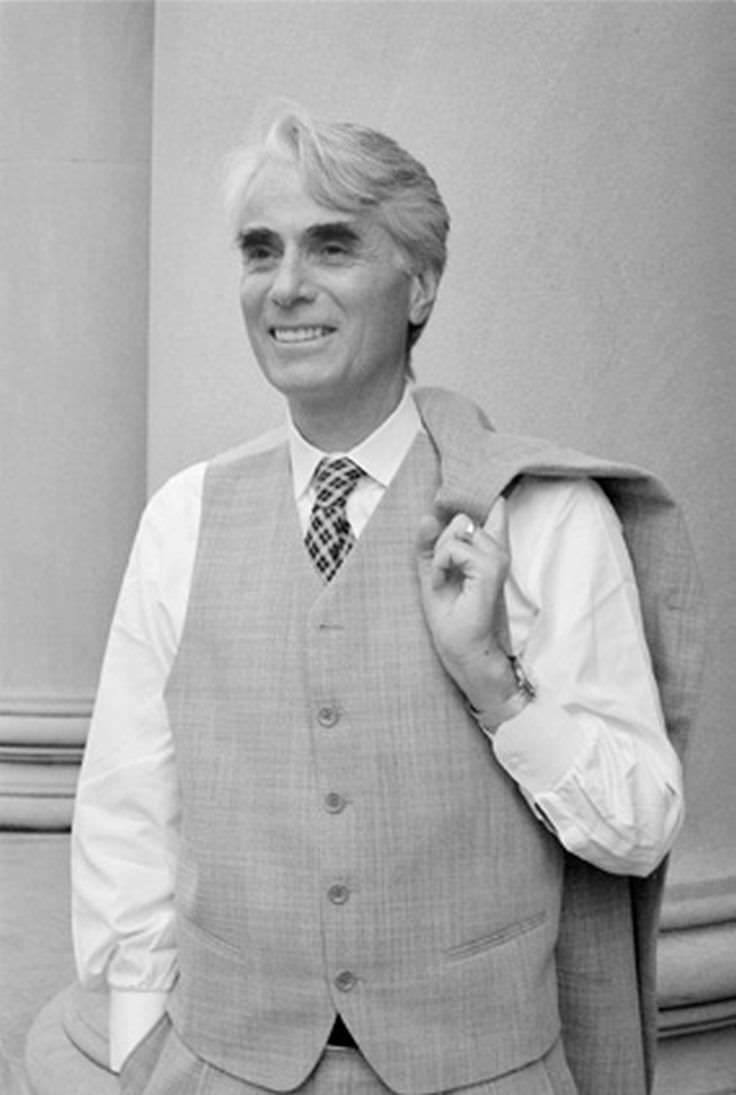
H/T Brian Smith. Charlie Clark in Fare Forward.
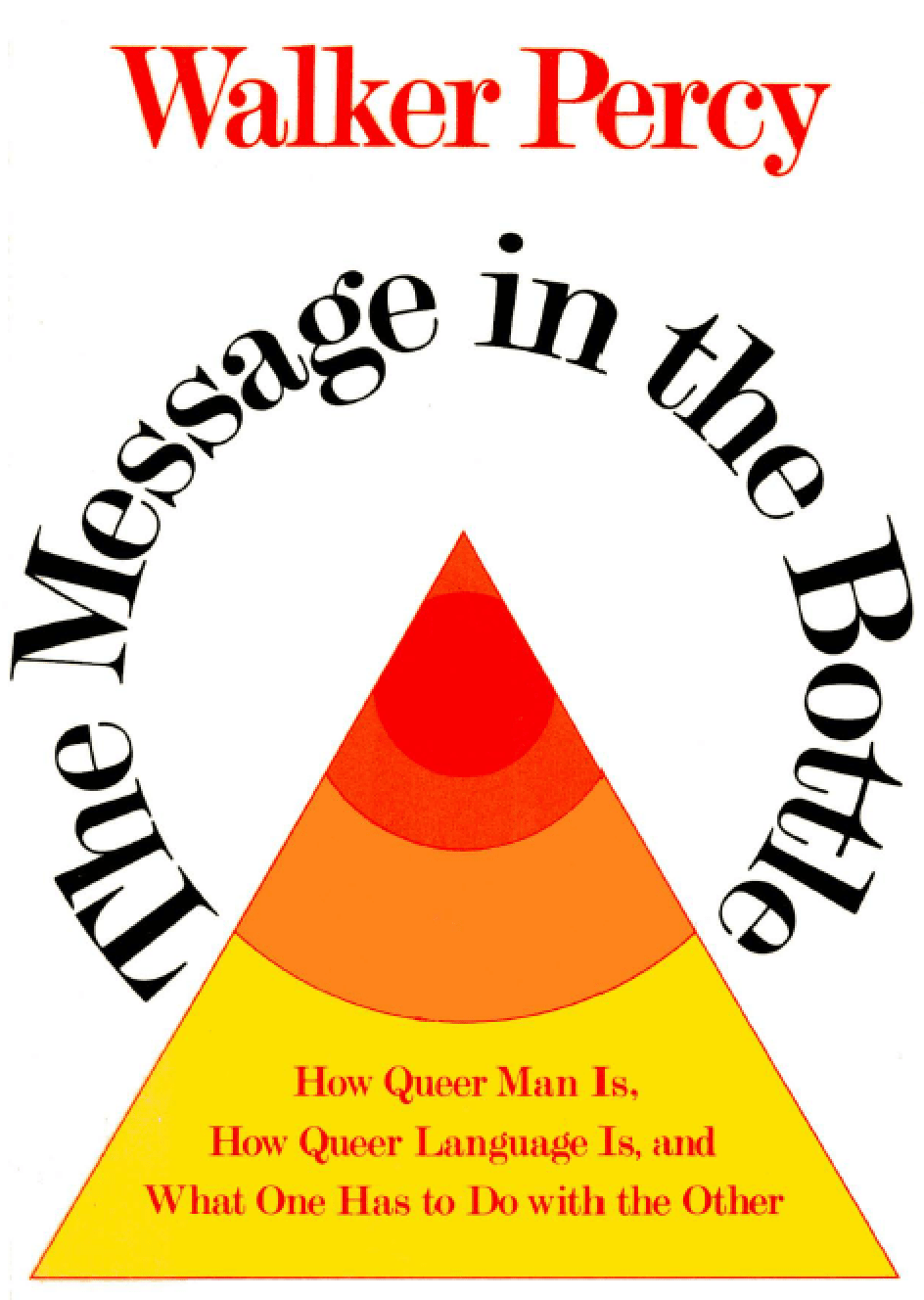
One of Percy’s most lost characters speaks more truly than he knows: “I like your banal little cathedral in the Vieux Carré. It is set down squarely in the midst of the greatest single concentration of drunks, drugheads, whores, pimps, queers, sodomists in the hemisphere. But isn’t that where cathedrals are supposed to be?”
One of the all-time bass greats. Glad to see that there are a few Thain aficionados out there. Audio Culture has a rough and ready page dedicated to the man. This YouTube comment pretty much sums up his status.


Details here.

The vulgar perhaps need a religion: if so, polytheism may well be better, as doing less harm. The sophisticated may well do without one: the trouble is that the religion they may be tempted to embrace may be even worse than the primitive one. Here also, and in some ways parallel, is a distinction that Hume makes between superstition and fanaticism.
Hume died on 25 August 1776, and his burial took place four days later. In the words of his biographer, E. C. Mossner: ‘A large crowd had gathered in St. David Street to watch the coffin being carried out. One of the crowd was overheard to remark, “Ah, he was an Atheist.” To which a companion returned: “No matter, he was an honest man.”’
Both statements, with the slightest of qualifications, seem to have been true. The qualification is to the first statement; if ‘atheist’, is taken to imply, as it often is today, ‘dogmatic atheist’, one who is prepared to assert with certainty that no sort of God or religious principle exists, this Hume was not. However, he fell not very far short of it, and was certainly an atheist by, say, Christian standards: about the non-existence of the Christian God, it seems clear that he felt no doubts. But there was some dimension of religious belief, in some pretty tenuous sense, about which he seems to have remained in a sceptical or agnostic position; and one problem in interpreting Hume on religion is to determine exactly how much or how little he was prepared to regard even as a matter of doubt.
The problem arises in part from the manner in which Hume approaches the subject—in the blend of irony and caution with which he writes about it. The caution was motivated by the religious temper of the times. Even in the liberal-minded Edinburgh of the 1750s and after, there were still certain conventions about the way in which religion, and in particular, of course, Christianity, could properly be discussed, and it was incumbent on those expressing doubts to cover their attacks with some semblance of conformity. Indeed, Hume was persuaded by his friends that his Dialogues concerning Natural Religion—which is his greatest work on religion—could not be prudently published in his lifetime at all; and it is interesting to find him in the last few weeks of his life anxiously making dispositions to ensure that it would in fact be published after his death. In this climate, the irony that was natural to Hume’s temper was of good service in assisting the demands of caution. He employs, as Kemp Smith has pointed out in his invaluable edition of the Dialogues, much the same methods of covering his tracks as did the French sceptic Bayle, from whom Hume learnt a lot. One such method was to claim that one was criticising not Christianity, but superstitious perversions of it; another was to claim that in destroying pretensions to rational argument in support of religious doctrines, one was only making way for Faith, on which they should properly rest. Kant, of course, who was much influenced by Hume’s destructive arguments, was later to claim that this was what he was doing—‘removing Reason to make room for Faith’. The difference is that he meant it, and Hume and Bayle did not.
The irony, however, does not operate only in the direction of caution. For just as in the Treatise, Hume cannot resist expressing himself in a manner designed to upset his conventional readers. It is these two, opposite, uses of irony, I think, one in the direction of prudence and one against it, that have enabled many interpreters in the past to suppose that Hume had more positive religious belief than in fact he did. For it all depends on which side of the irony you take the more seriously.
The central case of these doubts is his Dialogues concerning Natural Religion. This dialogue has three speakers: Demea, an orthodox Christian believer of traditional views, who is prepared to advance an a priori argument for the existence of God; Cleanthes, a more moderate believer, who rests his case on the Argument from Design; and Philo, a sceptic who seeks to subvert the force of both the arguments, and in particular devotes his efforts to refuting the Argument from Design, with which most of the work is concerned. The conversation between these persons is narrated, moreover, by a speaker who says that he agrees with Cleanthes, the moderate believer. This structure has in the past led defenders of Hume’s orthodoxy to suppose that Hume himself rejected Philo’s sceptical arguments: in much the same way, perhaps, as in the Treatise, philosophical doubts about the existence of the material world are rejected as strained and unnatural, as trying to run against the unavoidable force of natural belief. On this interpretation, it is in the person of Philo that Hume speaks ironically, to shock, and in the persons of Cleanthes and the narrator, the moderate orthodox, that he speaks directly.
But this interpretation, it would now generally be agreed, is wrong: the irony is the other way round. Kemp Smith has shown that it is the sceptical views of Philo that most closely express Hume’s own. Indeed, we know from his life that he rejected Christian doctrines. He was brought up in a Calvinist household—not the most narrow and repressive of such households as could be found in Scotland in those times, but rigorous enough. In his late ’teens he worked his way out of these beliefs, and—he explicitly states in a letter—never returned to them, nor to any form of Christianity. When he was dying, indeed, he calmly reaffirmed his disbelief in orthodoxy and the after-life to Boswell, who egregiously took the occasion to exhort him to reconsider his views. In private correspondence, he uses the word ‘Christian’ as a mild term of abuse: he said of Rousseau, when he had too late discovered what Rousseau was like, ‘he has a hankering after the Bible, and is indeed little better than a Christian in a way of his own’; and in 1765 he described the English as ‘relapsing fast into the deepest stupidity, Christianity and ignorance’. Particularly in the earlier years of his adult life, he was strongly anticlerical, even though later he became friends with various Moderate divines in Edinburgh.
Apart from these biographical evidences, it can be seen from Hume’s theories that he could not have held that sceptical doubts about God’s existence were in the same position as sceptical doubts about, for instance, the existence of the external world. It is of the essence of Hume’s position that those latter doubts run against nature: that one cannot doubt the existence of material bodies, except perhaps for very brief periods in a very unnatural state of mind. But he does not regard the belief in religion as in this sense natural or inevitable at all. He does indeed think that it has natural roots, in the sense that a naturalistic account can be given of why people believe in religion, and this he attempted to give in the work called The Natural History of Religion. But this is a different matter; and it is notable that he did not believe, as did many apologists of his own and later times, that religious belief was a universal phenomenon among mankind.
\While it is certain that Hume did not regard religious belief as natural, in his special sense of that term—that is, as something which human nature, by its very constitution, must embrace—there are certain obscurities in his account of it. Here it is best, perhaps, to look first at the theory of The Natural History of Religion. His basic thesis in this work is that polytheism is an earlier belief than monotheism, the latter arising only by a later process. The source of the original polytheism he locates in men’s incomprehension and fear of various circumstances that affect them: because of the unknown and hidden causes of such things as droughts, tempests, sickness and so forth, men are primitively led to posit a collection of independent personal agencies to account for these things. In advancing this view that polytheism was primary, Hume is implicitly criticising thinkers of a Deist temper, as well as some of the orthodox, who supposed that primitive man had already an apprehension of the universe as designed and created by a single designer. On the contrary, this he supposes to be a belief that arises afterwards; roughly, he thinks that one god gets advanced over the others because of emulation in praising and admiring him; and that when he is established as the God, men find reasons, such as the Argument from Design, to prove his existence.
Not only does Hume think that polytheism is primary over monotheism; he also believes—or claims to believe—that it is superior. He has two reasons in particular for this. First, polytheism is more tolerant: the Greeks and Romans, for instance, were always prepared to assimilate other people’s gods. Monotheism, on the other hand, by its very nature tends to intolerance and absolutism. From this greater tolerance of polytheism, Hume is disposed to infer, in general, its greater benevolence; but since he himself mentions the polytheistic Mexicans for the barbarism of their practices, this seems hardly a valid inference. The second reason for the superiority of polytheism is that it does less violence to reason. This is not because it is more reasonable; on the contrary, it is a complete muddle of inconsistent myths and absurd superstitions. The point is that just because it is so, it does not admit of any serious attempt to rationalise it. The trouble with monotheism is that it encourages men to rationalise religion, to try to make a philosophical and theological system out of it, and so long as the religion preserves its dogmas, this can only lead to doing violence to reason itself; one is led into an endless path of pseudo-reasoning, which is worse, because more corrupting and dishonest, than the primitive confusions of polytheism.
Hume is not, of course, recommending polytheism; he thinks that no reasonable and civilised man would dream of accepting it. Here we meet a distinction important to Hume’s account of religion; a fairly commonplace eighteenth-century distinction between the vulgar and the sophisticated. The vulgar perhaps need a religion: if so, polytheism may well be better, as doing less harm. The sophisticated may well do without one: the trouble is that the religion they may be tempted to embrace may be even worse than the primitive one. Here also, and in some ways parallel, is a distinction that Hume makes between superstition and fanaticism. By the first he means an assemblage of mythical beliefs, such as those of polytheism, which may do little harm; by the latter, the proselytising zealotry of religions such as Christianity, which he thinks is straightforwardly pernicious.
Hume has been criticised for his one-sided selection of the phenomena of religion. He emphasises over and over again the power of religion to lead men into persecution, unreason, and hatred; he says little, it has been pointed out, on the power of religion to induce love, charity or steadfastness. This is indeed true. But here we have to remember Hume’s moral theory, by which men have a natural tendency to sympathy and benevolence. If then, religious men act benevolently, they do not so act because of religion—they so act because they are men. It is persecution and hatred that need the explanation, and religion only too often provides it. Now this is obviously a very limited and inadequate account of the effects of religious belief—just as, we may add, the story about men’s fears of the unknown is an inadequate account of its origins. In both cases, the limitations lie in the general body of Hume’s philosophy: in the one case, in his moral psychology, in the other, in a limited empiricist theory about the origins of belief. Hume, like Bertrand Russell in our own time, is too amiable and optimistic a man really to understand religion.
I have mentioned Hume’s distinction between the attitudes of the vulgar and of the sophisticated to religion; and I have pointed out that in his view one form of sophisticated religion was worse than the vulgar superstitious sort. Is there then no way in which sophisticated monotheism is superior to other religious beliefs? It would seem from the previous account that there was not. Yet it does seem that there is one sense in which sophisticated monotheism may be nearer in Hume’s view to something which it would be perverse or unwise to deny: he indeed says that the excesses of fanatical monotheism illustrate the maxim, corruptio optimi pessima, the worst of things is the corruption of the best. What, then, is the best? What is this something that may be left over when the bad accretions of religion are stripped away?
To find this, we must look at the Dialogues concerning Natural Religion; and particularly, granted the previous claim that the speeches of Philo represent Hume, at those speeches. Now Sir Leslie Stephen said that the Dialogues was the first sustained philosophical criticism of the Argument from Design. I do not know for certain whether this is true; what is certain is that, in a slightly different sense, it is the last—after it there did not need to be another. Although the Argument from Design lingered on through the nineteenth century, and even to the present time, Hume undermined it in a through-going and definitive manner. The essence of the Argument, as used in Natural Theology—that is, as an argument actually to prove the existence of the Christian God—is that it is a type of empirical argument, an argument from effect to cause. Hume’s objections add up to saying that as such an argument, it does not work. For first, in positing a cause for an observed effect, one is not justified in positing more in the cause than is strictly necessary to produce the effect, and this the Argument does, by positing an infinite, omniscient, etc. being as the cause of what may well be, for all we know, a finite world. Again, the argument assumes that the only cause of organisation, such as we see in the world about us, can be intelligence. But this is quite gratuitous; in our experience we see organisation proceeding from many principles other than intelligence, as for instance, animals from animals and plants from plants; why should we not as well assume the creator of the world to have been some animal or vegetable, rather than a mind? Indeed, the supposition of mind as the first cause is particularly gratuitous, since on every hand we see mind proceeding from matter, but not matter from mind. More generally, there is a fundamental fault in the argument. It is an argument from analogy; but arguments from analogy depend upon repeated occurrences of the instances to which they apply. But in this special case, this condition cannot be satisfied: we only have one world to argue about. Hence any analogy employed must be extremely weak, if it has any strength at all. All this is consistent with Hume’s views on empirical inference, and they are certainly appropriate, for it was in a special application of empirical inference that the argument was supposed to have its strength.
There is a further point. The Argument from Design was supposed to show not merely the existence of a designer, but his benevolence. Here Hume thought that the evidence was not merely too weak to bear the conclusion, but, in some respects, downright opposed to it. While granting the beauty and fitness of final causes in nature, which move our thoughts towards a designer, Philo adds: ‘But there is no view of human life or of the condition of mankind, from which without the greatest violence, we can infer the moral attributes, or learn that infinite benevolence, conjoined with infinite power and infinite wisdom, which we must discover by the eyes of faith alone’. And when Cleanthes replies that no doubt what seems inconvenient and terrible in human life seems so only because of our ignorance of some Divine plan, Philo replies with one of Hume’s most important observations in this connexion: that while such considerations might serve to reconcile the state of man’s life with Divine benevolence, if the latter were independently proved, they certainly cannot assist us to prove this benevolence from the state of man’s life.
Apart from this further application of the criticism of the analogical argument, Hume has in any case an a priori reason for disbelieving in God’s moral attributes. On his moral theory, moral attributes are derived from human nature, and only make sense in relation to it—our ideas of moral goodness are necessarily ideas of human goodness, and could not conceivably be applied to a non-human, infinite being. Indeed, in a letter to Francis Hutcheson, with whose moral theory his own had much in common, he criticises him for inconsistency in supposing that moral attributes could be applied to the Deity.
After all this, little seems to be left of the Argument from Design, or indeed of the Christian conception of God. Hume indeed thinks that the very idea of praying to God, or in the ordinary sense, worshipping him, must be inappropriate, for not only does it involve regarding God as like a man, but as like a not very admirable type of man: ‘To know god’, he makes Philo say, ‘is to worship him. All other worship is indeed absurd, superstitious and even impious.’ But now, what God? Well, Hume throughout the Dialogues is certainly impressed by the existence of the regulated final causes of nature; and he does sum up Philo’s position by allowing him to assent to the ‘somewhat ambiguous, at least undefined proposition, that the cause or causes of order in the universe probably bear some remote analogy to human intelligence’. This is the most that he thinks a reasonable man can assent to; and what is certain is that anything which might be called religion based on this proposition should have no prayer, no worship, no institutions, and no effect on moral conduct. The vague shadow of a possible religious belief is so remote that it could have no effect.
Hume was a sceptic, not a materialist. This was one reason why he objected, as he did, to the dogmatic tone of the French philosophes. For him, the ultimate causes of things remained necessarily mysterious; we know enough, he thought, to know that most things said about God must be false and inappropriate, and we can see further that attempts to argue to his existence must be useless. But we do not know what the ultimate origin of anything is, and cannot—we do not know enough to— exclude the possibility that something rather like an intelligence might— just conceivably—have something to do with it. One suspects that he had another reason for his objections to the philosophes, which was that they got too excited about the non-existence of God. He smelt the odour of a negative fanaticism, and any fanaticism, for Hume, was as bad as any other. Consistently with his philosophy, it would be the human effects of unbelief, as of belief, that would concern him most.
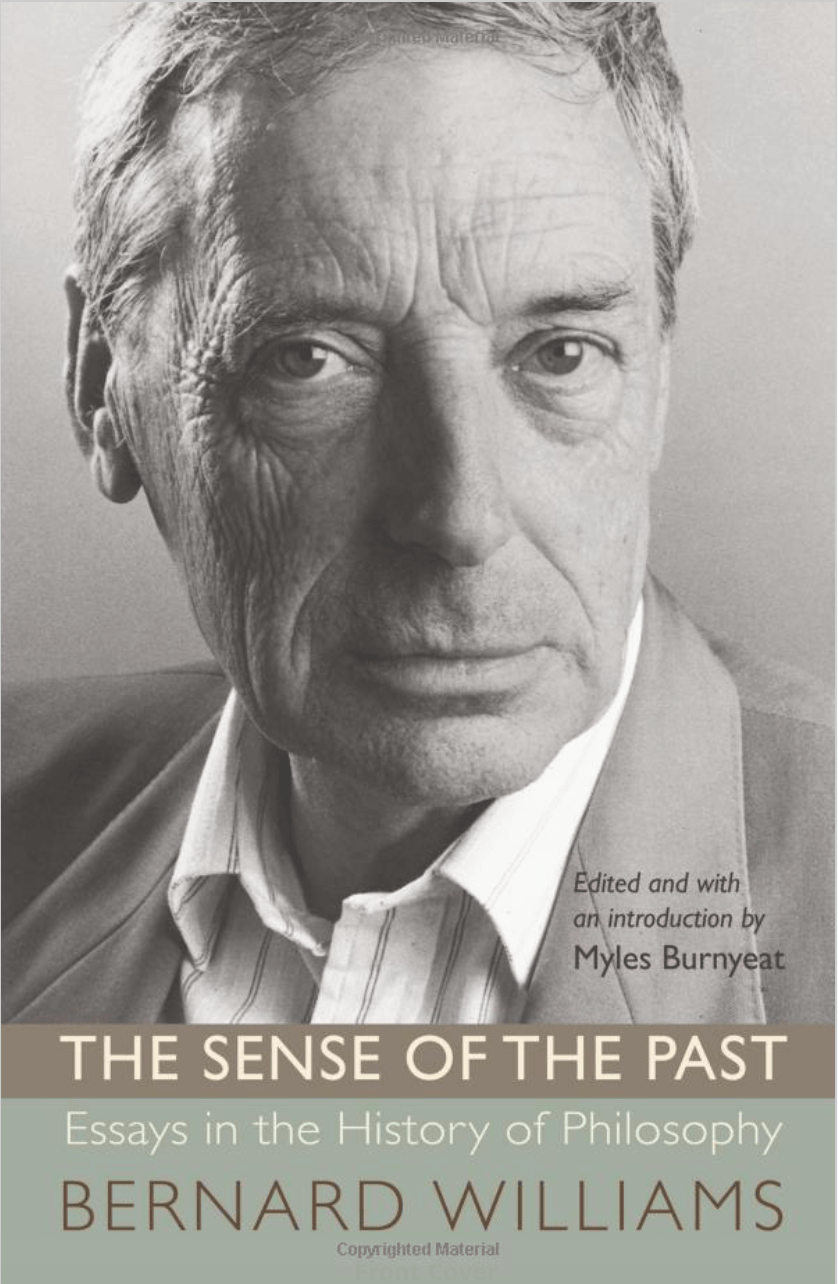
Excerpt from The Sense of the Past essays in the history of philosophy by Bernard Williams, Edited and with an introduction by Myles Burnyeat, Princeton 2006, pp. 267-273.
Here’s a recent open access paper in Current Biology along with a journalistic write-up in The Harvard Gazette.
The present research provides evidence for the existence of recurrent, perceptible features of three domains of vocal music across 86 human societies and for the striking consistency of form-function percepts across listeners from around the globe—listeners who presumably know little or nothing about the music of indigenous peoples. Moreover, these studies suggest that song types differ from each other on the basis of both contextual and musical features, but musical features tend to be more predictive of form-function inferences than contextual features.
It is quite astonishing that this encyclopedia entry makes no mention whatsoever of the doyen of recent Philonic studies — David Runia. This surely cannot qualify as mere oversight: it is akin to an ostensibly reliable overview of recent Hellenistic scholarship without ever citing A. A. Long. Anyway, to get a sense of just how central Runia has been to Philonic studies check out The Studia Philonica Annual festschrift for David, the intro freely available here. Here too is a warm review of the volume in the Bryn Mawr Classical Review.


 manwithoutqualities