The always provocative Walter Block’s rumination from a few years back in Psychology Today on a species of what I term the “dhimmi” Jew. This is also related to what Gad Saad has termed as Ostrich Parasitic Syndrome.

Metaphor Made Manifest: Taking Seriously Smith’s ‘Invisible Hand’
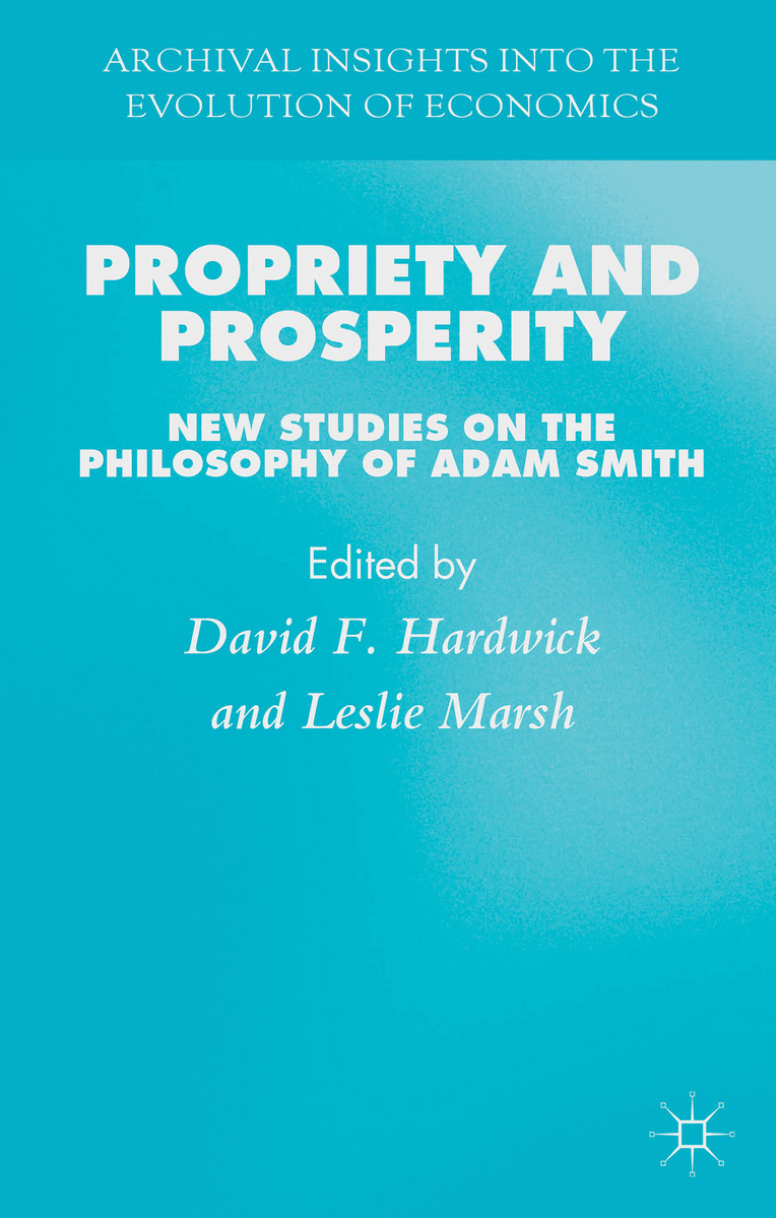
Is there any reason to devote time or effort to reading (or writing) an additional essay on Adam Smith’s “invisible hand”? Given the plethora of papers (as well as chapters, comments, and asides) dedicated to uncovering, interpreting, explaining, or contextualizing this notable expression, one could be pardoned for responding that, in fact, no such reason exists. Out of various analyses of this phrase two of the more recent reveal how patience has run thin: it has been argued that Smith’s phrase is deployed as a bit of irony or humor (Rothschild, 2001) and, more recently yet, that this unseen hand holds nothing at all—the phrase is “empty” (Samuels, 2012, p. 135). However, these suggestions need not settle matters. One appropriate avenue of exploration concerns the rhetorical nature of Smith’s famous phrase.
Many who examine or remark on Smith’s phrase point out that this parlance is, in its two main usages, metaphorical. However, in too many cases interpreters do not glimpse the implications of this fact. That Smith employs the phrase as metaphor may alert us to why there has emerged so many and varying interpretations. As one philosopher has characterized these figures of speech, “Metaphor is the dreamwork of language and, like all dreamwork, its interpretation reflects as much on the interpreter as on the originator” (Davidson 1978, p. 31). If the “invisible hand” is metaphor rather than description, if it is meant to suggest and illuminate rather than describe, then the phrase may not depict a univocal referent or specific function at all. Even so, one need not conclude that the usage is ironical, humorous, or empty. Smith’s marvelous metaphor may perform non-ironical and serious things but these need not be understood as the assertion of tidy propositions which together constitute la main invisible. In fact, one of the things yet to be made visible about this hand is how it provides a perspective on the ways in which the intentions of agents have implicit connections to the intentions of others.
To explore these matters it is necessary to revisit, albeit briefly, Smith’s three usages of these notable words. In so doing, there is opportunity to take issue with some recent interpretive claims and to recall as well that the work of Bernard Mandeville would have given Smith some basis for his figurative flourish. In the second section, the analysis turns to Smith’s own account of the justification, structure, and meaning of metaphor, as set forth in his Lectures on Rhetoric and Belles Lettres (LRBL). Smith’s portrayal, which bears a surprising surface similarity to his ruminations on the conditions of wonder (as set forth in his essay, “The History of Astronomy,” EPS), also intimates how metaphor may effect, in the listener or reader, a new perspective on a phenomenon. Indeed, Smith’s metaphor is less important for what it says than for what it does. This power to inspire a novel way of looking at things may prove more important than any attempt to discern what Smith’s metaphor means or describes. However, as argued in the third section, the unseen hand hardly presents itself as some kind of ironic joke and certainly not for the reasons that Emma Rothschild suggests (2001). In fact, the phrase offers an illuminating perspective on the way in which the local intentions of individuals prove mutually affecting and, as put into action, bring about outcomes distinct from their originating visions.
Major General Mordechai Hod
Uncle Motti, born on this day. See obits in The Telegraph, The Guardian and The Washington Post.
Hod originally had the surname Fine which he changed later on to Hod, keeping with the prevalent custom that period of taking a Hebrew surname when joining the armed forces.
Institutional Identity
The very excellent Joshua Rust has made this paper published in Journal of Social Ontology freely available.
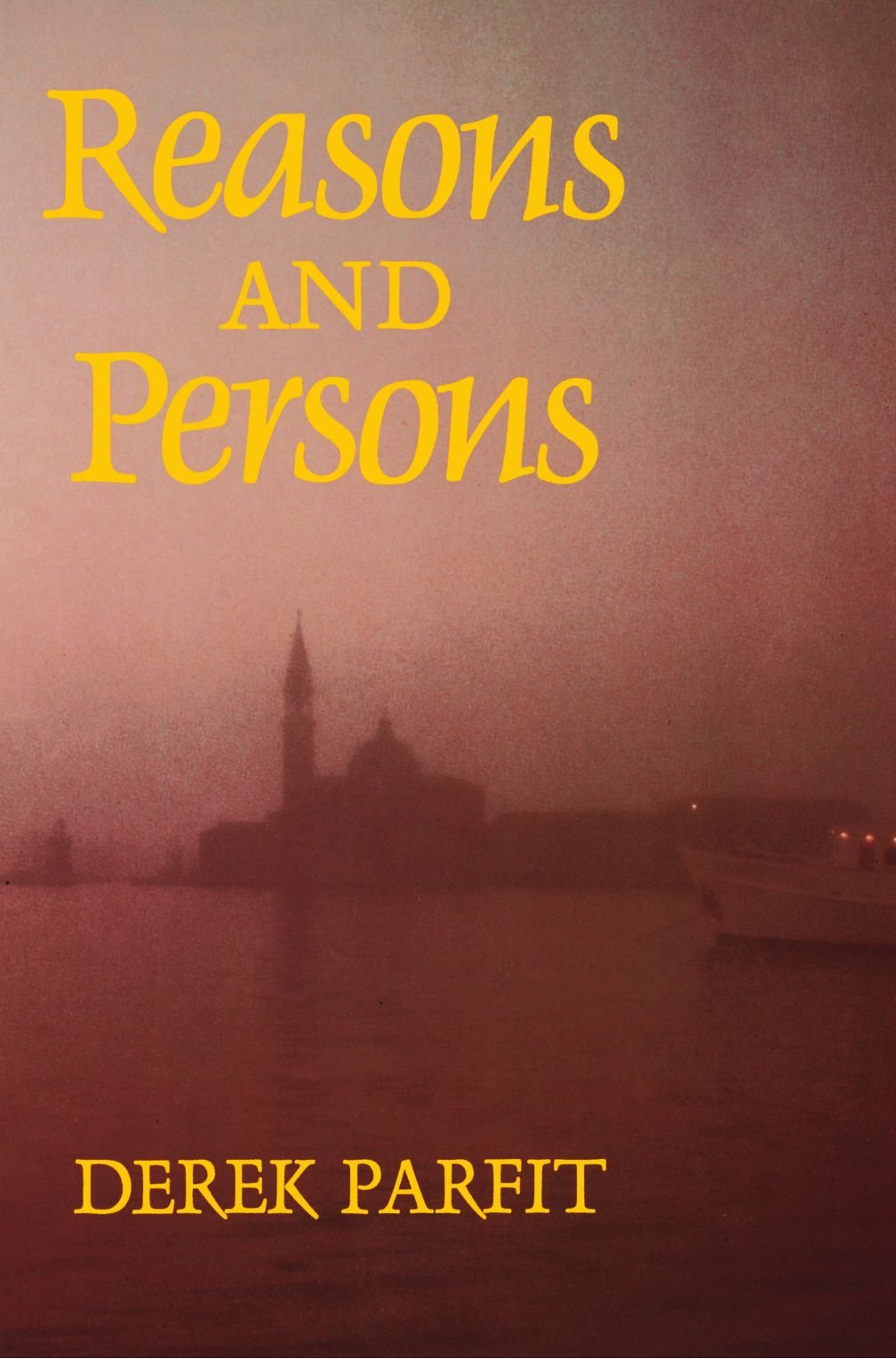
Derek Parfit famously sought to illuminate his account of personal identity by comparing a person to a club. If Parfit could use our intuitions about clubs to help motivate his neo-Lockean account of personal identity over time, which resists the idea that personal identity requires a common psychological thread, then I argue that an adapted version of his account of identity might, in turn, be reapplied to clubs and other institutions, such as the Crown.
Leo Strauss on Hegel

Satisficing in Political Decision Making
An open access entry. Wot? No discussion of Simon’s key The Sciences of the Artificial and broad discussion of collective intentionality?

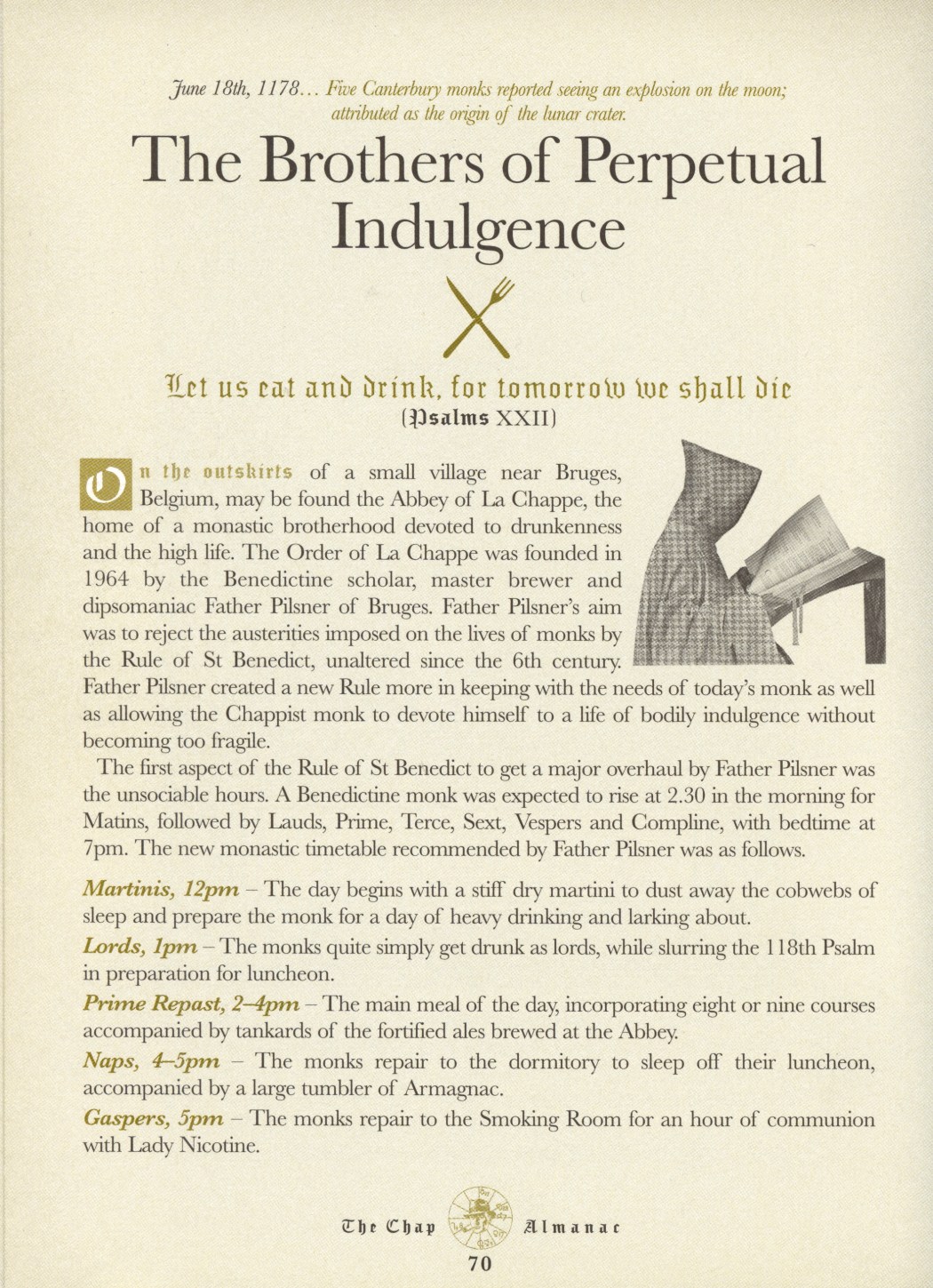
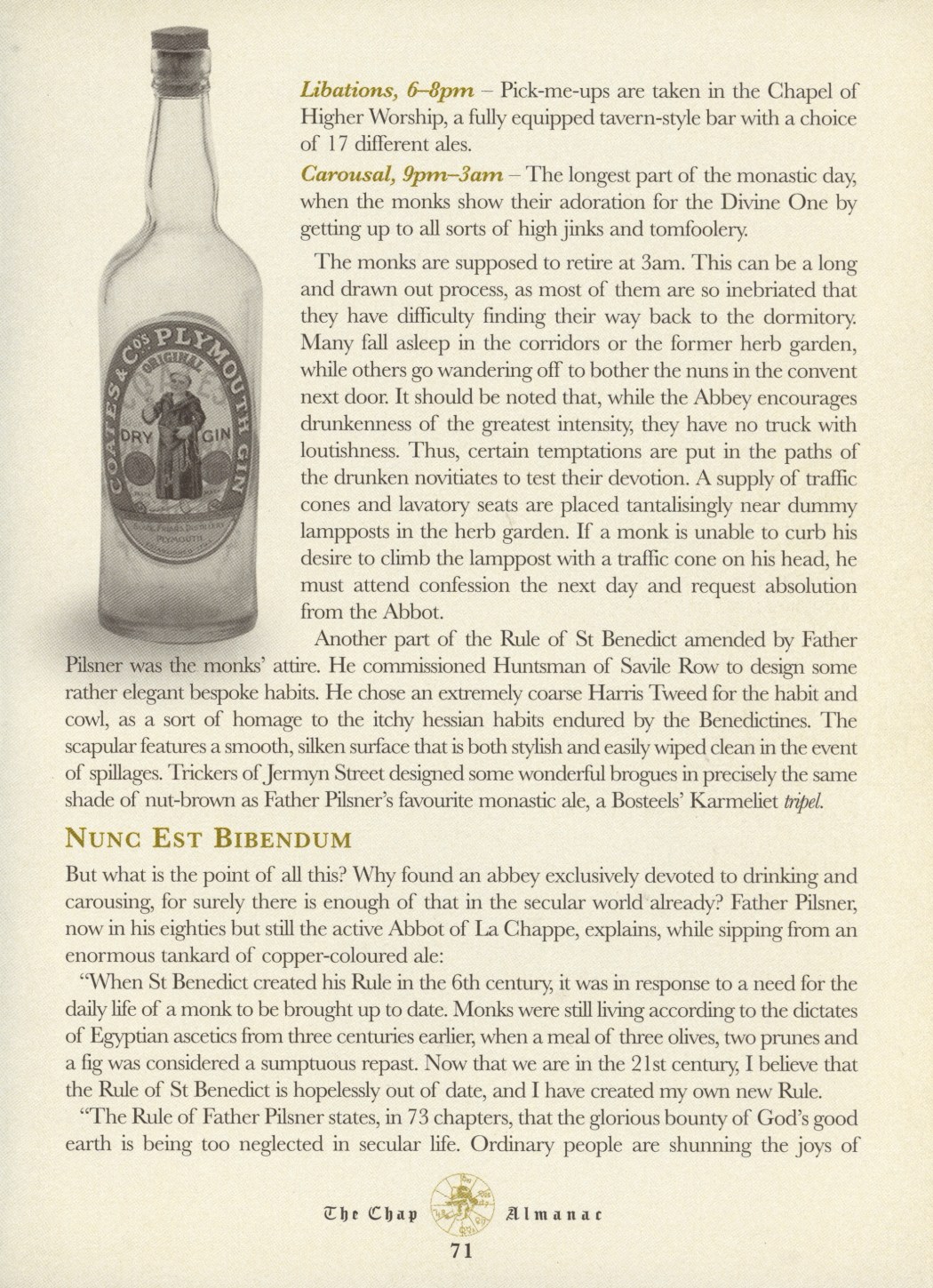
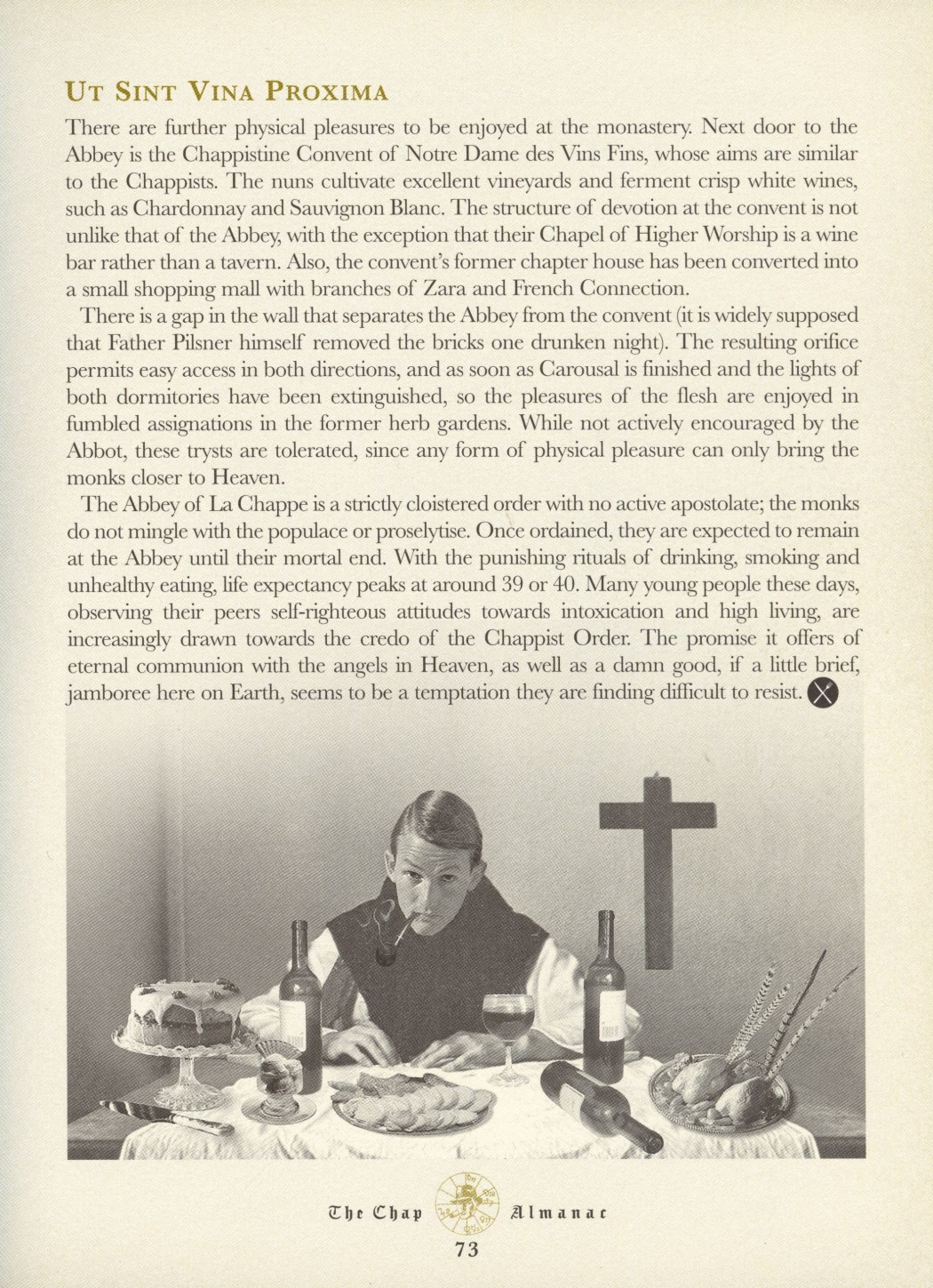
The Brothers of Perpetual Indulgence
The Anglo-American Conception of the Rule of Law

Ken Burns’ Country Music
Looking forward to this new offing from Ken Burns — and its Hank Williams’ birthday.

What My Dog Can Do: On the Effect of The Wealth of Nations I.ii.2
In and of itself, this is probably not a noteworthy sentence, but it has always rubbed me the wrong way because I have seen it happen. My late dog Mingus would regularly exchange his bone with his “best friend” Casey, and they would do so without conflict or negative consequence.
Mingus was both very empathetic and emotive. Like many border collies, he was smart, could communicate his desires clearly, and was tremendously attentive to his caregivers’ moods, suggesting, already, many Smithian traits. As many animal behaviorists will insist though, these descriptions may be anthropomorphizations. I loved Mingus dearly and was certainly susceptible to projecting meaning onto his actions beyond his capabilities.
Whether Mingus had intent or not, my designation of Mingus as worth affective consideration is compatible with Smith’s moral psychology. On the one hand, because sympathy is, for Smith, an “illusion of the imagination”—people can even sympathize with the dead—emotions need not actually be present in the observed for the spectator to sympathize with them (TMS I.i.1.13). Under Smith’s schema, my fellow feeling with Mingus would be no less sympathy if he himself did not have the thoughts or emotions I judged him to have. And, while he was likely incapable of the impartiality required for Smithian moral agency on his own, this does not disqualify him from my consideration. He may be designated, in Alejandra Mancilla’s terms, a “moral patient” that we advocate for (Mancilla, 2009, pp. 3, 6).
One the other hand, if Mingus did have intent (which I think is the case) I would have been in the most qualified position to know it. Because sympathy works best with those who are closest to us—those in our inner circle of sympathy—I could best interpret his behavior, facial expressions, and voice. I knew Mingus almost his entire life and he had only the briefest time to socialize to other humans before my wife and I adopted him (we rescued him from a Humane Society when he was a few months old). My family knew his preferences, tendencies, behaviors, and moods, and he knew ours; the entire household dynamic including all the human interrelationships, was significantly affected by his presence. This was painfully and repeatedly confirmed when Mingus died unexpectedly and the sociology of the house had to be renegotiated.
Mingus was family even by Smith’s definition; for him, familial relationships are not biologically defined. “The force of blood,” Smith writes, “exists no-where but in tragedies and romances.” Familial love is instead the “habitual sympathy” of those “naturally bred up in the same house” (TMS VI.ii.1.5–8). In short, losing him was not like losing a family member, it was actually losing one, and the Smithian framework for intimacy, communication, empathy, and care all support this point of view. As a result, whatever claim Smith makes about dogs and exchange does not extend further than the single assertion about economic capability. It has no consequences for the human-animal relationship.
Nevertheless, even though whether I anthropomorphize Mingus is irrelevant to the question of whether I can sympathize with him, it is indeed relevant to whether or not he was capable of exchange since the latter implies intent. Smith’s claim that dogs do not engage in contract appears to me false, but my belief does not make it so anymore than Smith’s writing confirms it. An empiricist system like Smith’s can be as indeterminate as any behaviorism, and the impartial spectator is fallible enough that even our deepest convictions may become corrupt (ASP 72).
Identifying whether dogs have intent is problematic, especially since there is disagreement as to what content such intentionality would have. Neuroscientists can, of course, photograph brain activity, but materialist descriptions of thinking are also subject to interpretation. Smith’s comment on dogs place us squarely in the classic philosophical problem of other minds and Smith’s corpus does not have the resources to solve it.
Recognizing the metaphysical and philosophical limitations of Smith’s approach, then, my intent in this paper is not to ask whether dogs engage in contract per se, but what happens to Smith’s account of humanity if they can. I will offer more evidence to suggest that the possibility is believable, but my emphasis will be on the text rather than the fact of the matter.
This textual approach is further justified by a commentator who claimed that Smith’s remarks about dogs be considered an essentialist definition of human beings. He claimed that Smith was arguing, not simply that people are the only ones who make contracts, but that making contracts is a necessary part of what it means to be human. If Mingus’s behavior challenges Smith’s veracity, and if the commentator is correct—if Smith defines a human life in this context—then Smith’s error might call his other writing into question as well. My task in this discussion is to ask if it does, and if so, how much. To do so, I engage in detailed exegesis on WN I.ii.2 and argue that this sentence is neither a definition of humanity nor intrinsically connected to the rest of Smith’s work. I conclude by explaining why I think this examination is relevant and important. To these purposes, unless otherwise specified, I will regard exchange and contract as designating the same behavior: consciously giving another creature, in Smith’s words, “this for that” (WN I.ii.2).
 manwithoutqualities