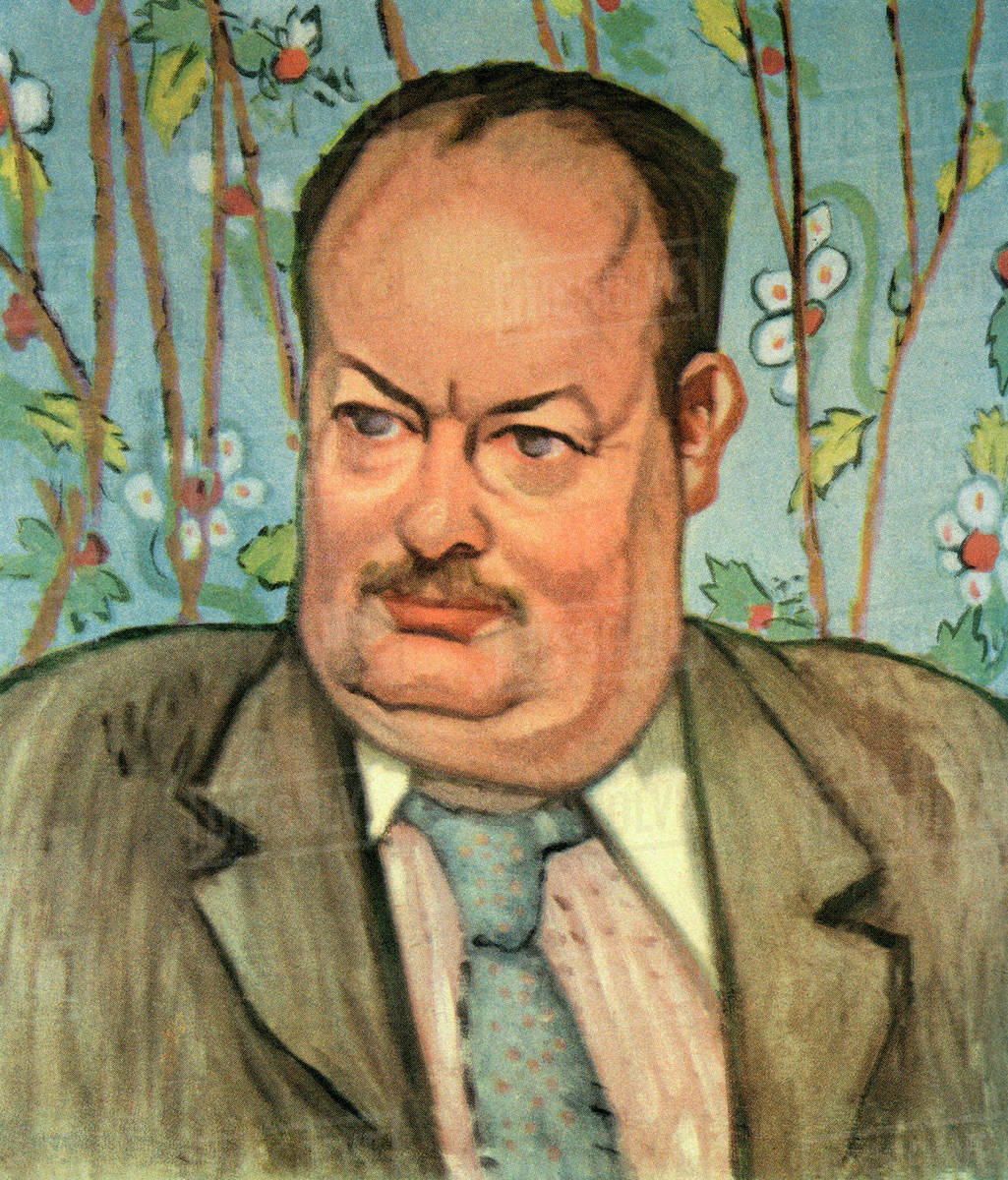
Nice explication by Emily Thomas of McTaggart’s classic argument for the unreality of time. It was Michael Dummett who reinvigorated interest in McTaggart after decades of neglect.
Nice explication by Emily Thomas of McTaggart’s classic argument for the unreality of time. It was Michael Dummett who reinvigorated interest in McTaggart after decades of neglect.
The seventh in a series of excerpts from Minds, Models and Milieux: Commemorating the Centennial of the Birth of Herbert Simon.
Shu-Heng Chen and Ying Fang Kao
Herbert Simon is a quintessential interdisciplinary scholar who has made pioneering contributions concerning the notion of bounded rationality, has built models based on it, and has also made important advances in understanding complex systems. His importance in the field of artificial intelligence, which is in turn the inspiration of agent-based computational economics (ACE), is discussed in detail in Chen (2005). Among all the Nobel Laureates in Economics, there are at least three whose work has been acknowledged by the ACE community. They are Friedrich Hayek (1899-1992), Thomas Schelling, and Elinor Ostrom (1933-2012). The last two directly worked on ACE. Schelling’s celebrated work on the segregation model is considered as one of earliest publications on ACE (Schelling, 1971). Ostrom had contributed to the development of the empirical agent-based models (Janssen and Ostrom, 2006). Hayek did not work on ACE, but the connection of his work to ACE has been pointed out by Vriend (2002).
We believe that there is a strong connection between the development of ACE and Herbert Simon and that his influence on ACE is not less, if not more, profound than the previous three. However, to the best of our knowledge, there seems to be no single document that from a holistic perspective addresses this linkage explicitly.[i] We conjecture that the burgeoning of ACE was too late for the time of Simon, who ended his professional life in 2001. However, even so, it still surprises us that so few attempts have been made to connect Simon and ACE, particularly considering that the latter was founded on artificial intelligence and cognitive psychology, the two pillars to which the former has contributed substantially.
In this chapter, we attempt to explore and identify the connections between Simon’s contributions and the development of ACE. We concentrate on his influence on the conception of an individual within an economic or social system, his philosophy regarding how the social systems are organized and can be understood, and finally about how the underlying rules that govern social interactions can be unearthed by the investigator, in this case a social scientist. We also suggest ways with which the future developments within ACE can be geared to be more Simonian in character and to be closer to his vision.
The rest of the chapter is structured as follows. Section 2 provides an overview of the setting in which we place our arguments. We then divide our arguments into three main departments: individuals, complex systems and the epistemology of ACE. In Section 3, the modeling of software agents in light of Simon’s bounded rationality is discussed. In Section 4, various aspects of complex systems are included here. In Section 5, we elaborate on ACE’s potential as an alternative to neoclassical economics. We conclude the paper in the last section.
Yet another Christmas viewing of “The Great Escape”, this time with the twofold expertise of Bud Ekins and Guy Martin firmly in mind. The former was the stunt double for McQueen orchestrating the original jump; the latter, all round good egg Guy Martin. And if two wheels is your thing, you probably already know that “On Any Sunday” is a classic piece of documentary filmmaking. And refreshingly, unlike the current crop of Hollywood shit-puppets:
McQueen, who turns up in the movie a couple of times . . . having done it [he] doesn’t tell us about it.
After one glass of bourbon, we agreed that our work consisted largely of reminding moral philosophers of truths about human life which are very well known to virtually all adult human beings except moral philosophers. After further glasses of bourbon, we agreed that it was less than clear that this was the most useful way in which to spend one’s life, as a kind of flying mission to a small group isolated from humanity in the intellectual Himalaya . . . My two associates in the view I am sketching are Alasdair MacIntyre and Charles Taylor. They are both Roman Catholics, though of different sorts. I used to find this a disquieting fact but no longer do so. All three of us, I could say, accept the significant role of Christianity in understanding modern moral consciousness, and adopt respectively the three possible views about how to move in relation to that: backward in it, forward in it, and out of it.
Bernard Williams, In the Beginning Was the Deed. Ed. Geoffrey Hawthorn. Princeton: Princeton University Press, 2009, pp. 52-54.

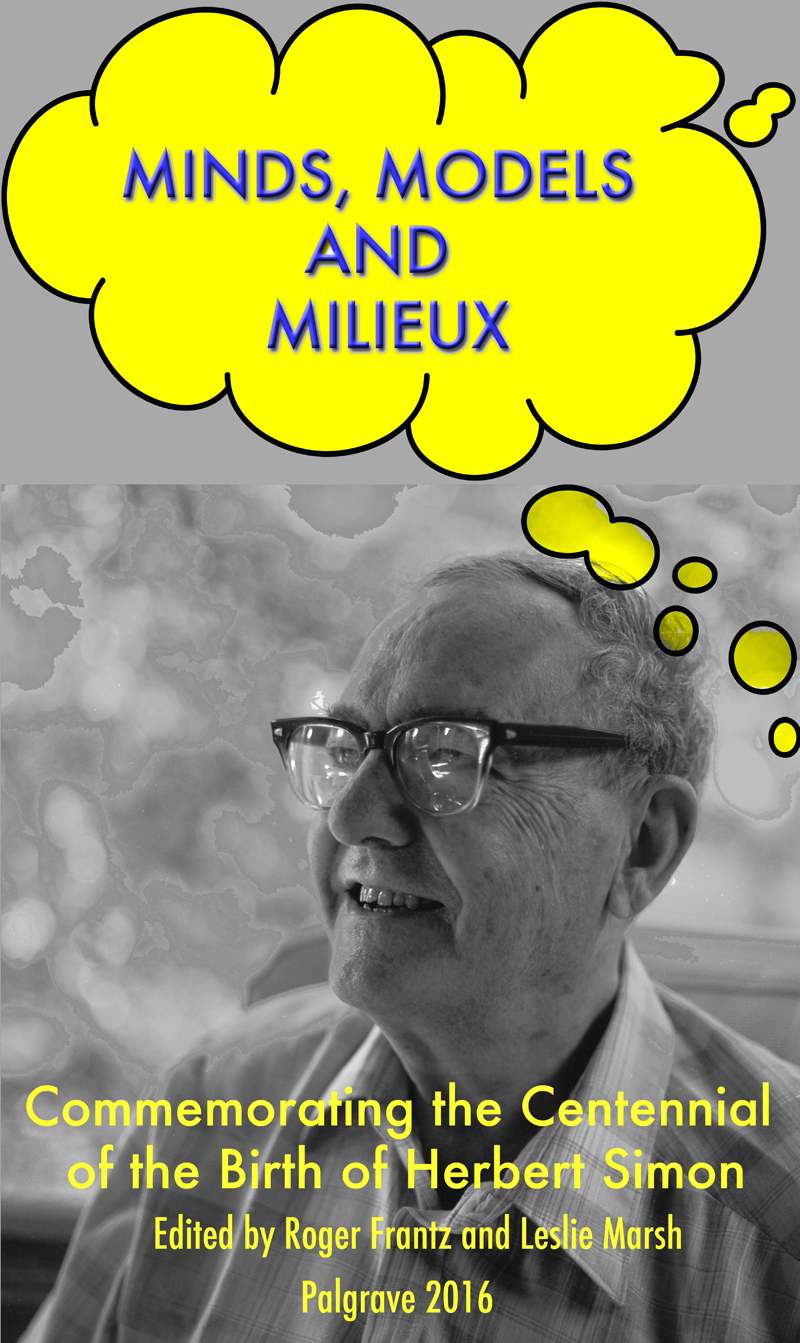
The sixth in a series of excerpts from Minds, Models and Milieux: Commemorating the Centennial of the Birth of Herbert Simon.
Mark Pingle
Introduction
Our collective rationality became more bounded on February 9, 2001. Herbert Simon emphasized we humans are cognitively constrained, and those constraints impact our decisions. Yet, Herbert Simon’s mind was less constrained than most of our minds. Because of his exceptional thinking and writing, the constraints binding many disciplines have been relaxed. Consequently, those disciplines have become more rational, and less. The purpose of this essay is to recognize how our collective rationality has been enhanced by the work of Herbert Simon, and related work, on decision making.
Decision-Making as a Processes
Our rationality is bounded by our limited cognitive capacities. This readily recognizable fact should make a theorist uncomfortable about assuming unbounded rationality. It made Herbert Simon uncomfortable. “The expressed purpose of Friedman’s principle of unreality (or as-if hypothesis),” Herbert Simon said, “is to save Classical theory in the face of the patent invalidity of the assumption that people have the cognitive capacity to find a maximum” (Archibald, Simon, and Samuelson, 1963). “The unreality of premises,” Simon continued, “is not a virtue in scientific theory but a necessary evil—a concession to the finite computing capacity of the scientist.”
Ignoring the bounds to rationality is convenient because it allows a decision problem to be specified as a mathematical optimization problem. Environmental factors can be parameterized using variables, so a change in one of the environmental variables will change the set of alternatives available to the decision maker. One can then delineate cause and effect relationships between elements of the decision environment and the optimal decision.
Herbert Simon’s critique of unbounded rationality was twofold. First, while all theories are abstractions, the explanatory power of a theory will tend to decrease as the premises of the theory are less representative of reality. Second, we should not just care about the ability of a theory to predict. The assumptions which underlie our theory are part of our explanation of how the world works, so our explanation lacks credibility to the extent that our assumptions lack realism. Simon (1955, p. 99) sought to “replace the global rationality of economic man with a kind of rational behavior that is compatible with the access to information and computational capacities that are actually possessed”
One of his important insights was that real world decision processes will tend to involve sequential search and adaptation. Search theory (e.g., Wilde, 1964) informs us that sequential search has a fitness advantage over the simultaneous sampling of alternatives because the knowledge obtained from the current search choice can be used to more effectively select the location of the next alternative. Simon’s (1955) bounded rationality model combines a sequential examination of alternatives with a predetermined “satisficing” goal for deciding when to stop incurring deliberation cost and accept an alternative as a choice.
If decision makers understand cognitive limitations imply deliberation costs bind them from achieving what Simon (1976) called “substantive rationality” (i.e., optimality), then they should also understand that no particular decision procedure will be best for all contexts. “Procedurally rationality” (Simon, 1976) involves coping with cognitive limitations and their implied deliberation costs, within a specific environment, by applying reason in some way. What is reasonable, or procedurally rational, can vary by decision maker and by context.
Under bounded rationality, then, understanding choice is not just a matter of relating changes in the decision environment to changes in the location of the optimal choice. It is involves relating changes in the decision environment to the decision maker’s cognitive abilities and to the decision maker’s available set of decision heuristics or processes. Because the choice is the outcome of the decision process selected, procedural rationality is reasoning applied at the level of selecting the decision method more so than reasoning applied to making the choice itself (Barros, 2010).
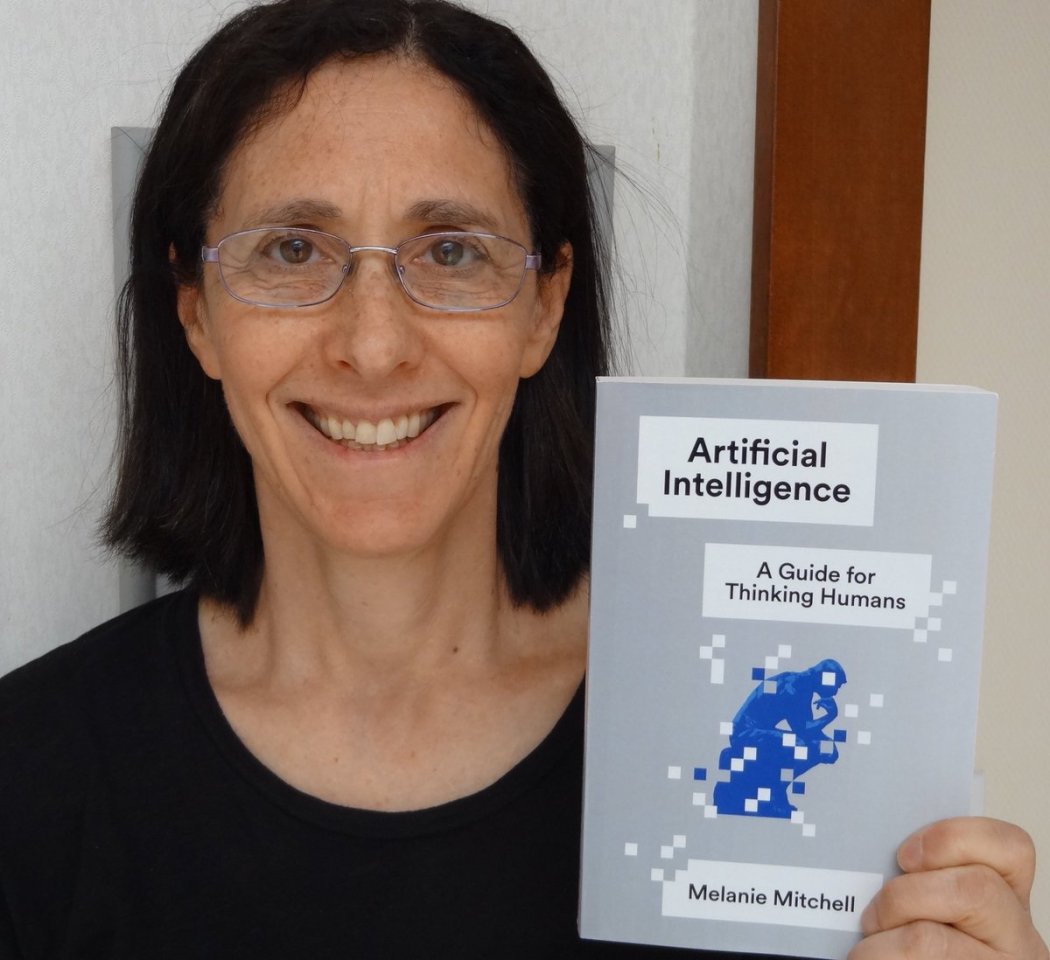
The very excellent Melanie Mitchell in conversation with Russ Roberts.
 manwithoutqualities