Organizational Decisions in the Lab

The eleventh in a series of excerpts from Minds, Models and Milieux: Commemorating the Centennial of the Birth of Herbert Simon.

Massimo Egidi

“Bounded Rationality” is a label that gathers the most important advancements of Herbert Simon’s scientific production. His fundamental contributions to cognitive psychology and to the theory of problem solving were developed jointly, each being nurtured by the discoveries emanating from the other discipline. I will briefly review some steps on the path to the creation of the theory of bounded rationality, in order to introduce to the issue of organizational decision making, and the associated laboratory experiments.

From the very start, Simon built the idea of bounded rationality on close observation of the behavior of employees and managers in large organizations. In Administrative Behavior, published in 1947, he came to the realization that organization’s internal mechanisms, insofar as they are characterized by division of labour and cooperation, are the product of a complex activity of goal achieving. Important progresses in this direction were achieved in the fifties, through some empirical analyses of managerial decisions that he conducted at the Graduate School of Industrial Administration of Carnegie Mellon. Among them, of primary interest is the research he conducted jointly with Cyert and Trow in which they realize that beyond the routine decisions, managers make non-repetitive decisions that require solving problems in ill-defined conditions. (Cyert, Simon and Trow, 1956, p. 238)

The field analysis of problem solving sowed the seeds of theory of bounded rationality. In Organizations (1958) March and Simon moved forward from the notion of problem solving as individual activity to the notion of organizational problem solving, with a clear recognition of the evolutionary processes of organizational adaptation and organizational learning within business corporations. The identification of these processes was enhanced by the assumption that the division of labour can be considered a collective problem solving activity. Thus, the development of a deeper theory of problem solving became crucial in explaining human decisions and for the creation of new ideas in theory of organization: in particular the notion of organizational routines within business firms, and of their evolution.

At the time he was finishing his work on Organizations, Simon began his collaboration with Allen Newell. Human Problem Solving, which they published together in 1972, is a bridge between computation, artificial intelligence and cognitive psychology. Here Simon went beyond the notion of “computation” as a human activity that relates means to ends, replacing it with the notion of symbolic manipulation and deepening the various connected mental abilities — memorization, evocation, categorization, abstraction, judgment.
61cOM18eAOL

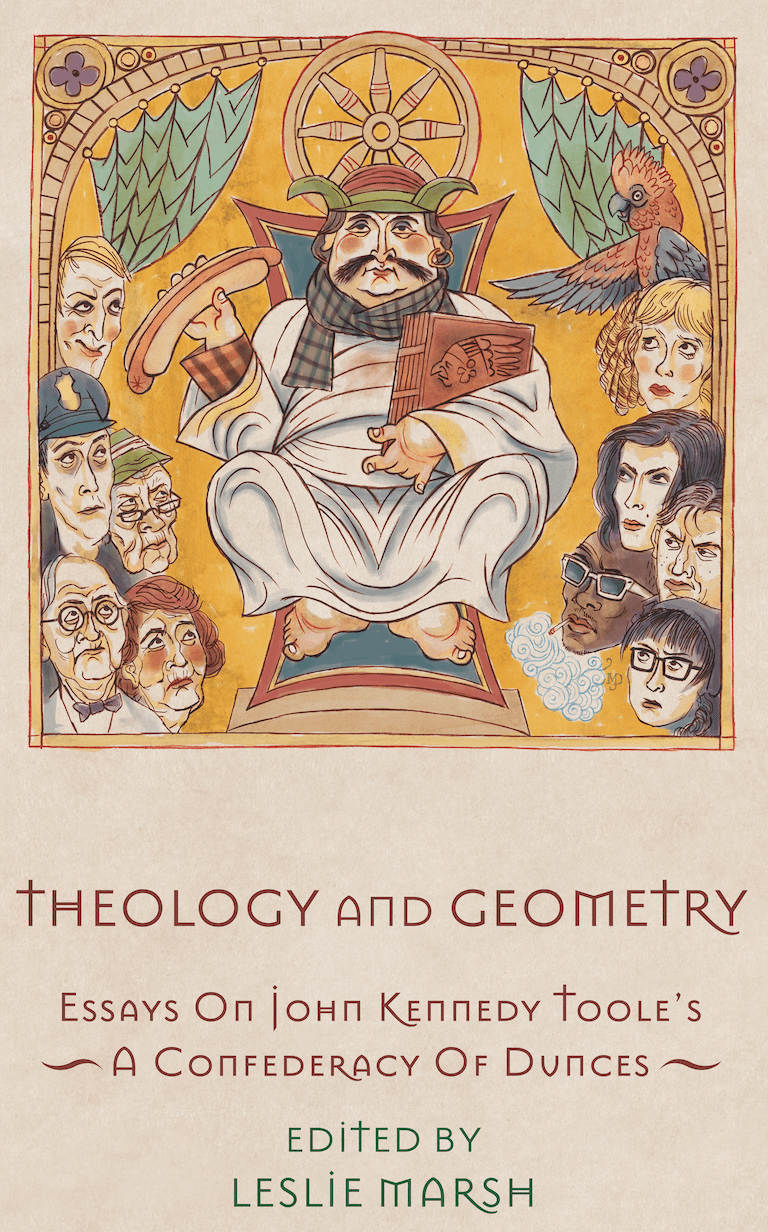
The artwork for Theology and Geometry

The most excellent illustrator, Matt Dawson, who did the cover for Theology and Geometry discusses and shows his process for this labour of love. Matt is someone who has impeccable artistic instincts — always far exceeding my highest expectations. The book is now available via Amazon.comAmazon.caAmazon.co.ukBarnes  & Noble — Indigo.caIndi BoundKobo — and last but not least, if you want a 30% discount go directly to Rowman & Littlefield.

tumblr_46f05b5725d8f5f12aa27c418d94e71c_f57792ef_640

. . . but our brain can’t understand the picture

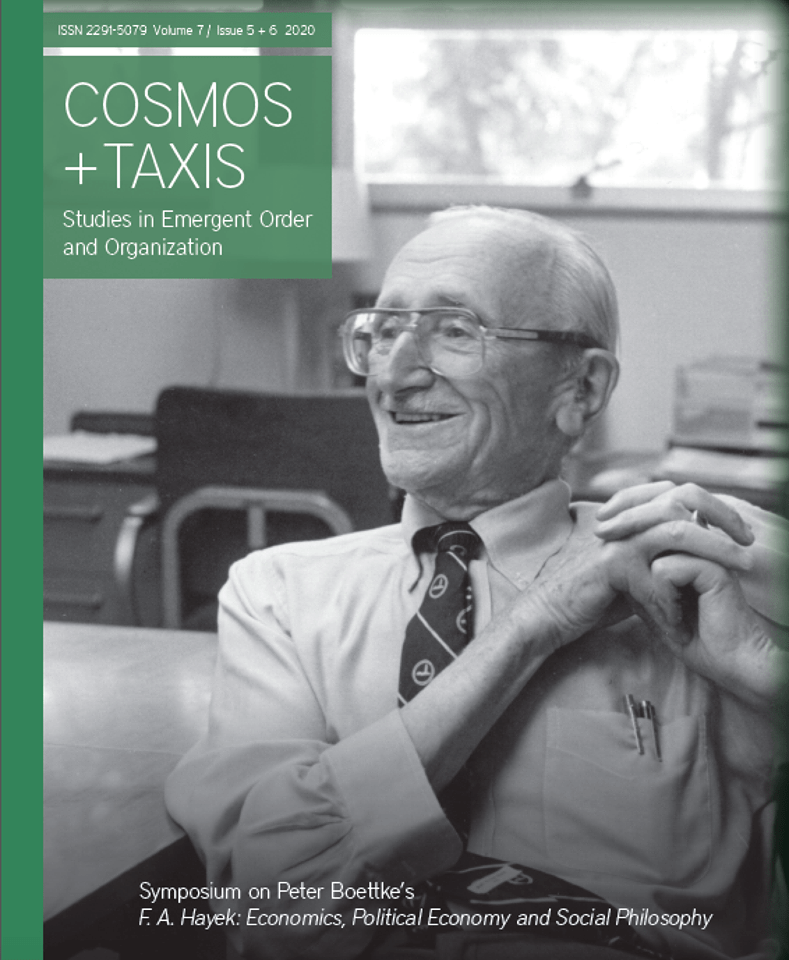
Hayek already wrote in The Sensory Order (1952) that “An apparatus of classification cannot explain anything more complex than itself” and that “The whole idea of the mind explaining itself is a logical contradiction’’. Hayek takes this incompleteness — the constitutional inability of mind to explain itself — to be a generalized case of Gödel’s Incompleteness Theorem. See Grigori Guitchounts’ chat with Jeff Lichtman: “An Existential Crisis in Neuroscience” published in Nautilus.

16761_dec91085de9ca1d81110ab53c6ba700b

Myth, Meaning, and Antifragile Individualism: On the Ideas of Jordan Peterson

Published today. The first intellectually honest explication and critique of Peterson by someone who has actually read Peterson’s Maps of Meaning. Marc Champagne’s book is aimed at a general audience — both Peterson’s supporters and detractors as well as those of an independent caste of mind who are curious as to whether the relentless kerfuffle surrounding Peterson is justified. Marc Champagne’s book is now available via Amazon.com, Amazon.co.uk and Imprint.

9781788360142

Multiple Equilibria, Bounded Rationality, and the Indeterminacy of Economic Outcomes: Closing the System with Institutional Parameters

The tenth in a series of excerpts from Minds, Models and Milieux: Commemorating the Centennial of the Birth of Herbert Simon.

Morris Altman

A critical point made by behavioral economists from a wide set of methodological perspectives is that individuals typically do not make decisions that are consistent with conventional economic theoretical norms of rational behavior. This is true of those building on the errors and biases or heuristics and biases approach derived from the research of Kahneman and Tversky (Kahneman, 2003, 2011; Thaler and Sunstein, 2008), and those building upon the bounded rationality approach introduced by Herbert Simon (1978, 1979, 1987; Altman, 1999; Gigerenzer, 2007; Smith, 2003). Such ‘irrational’ behavior form the perspective of the mainstream is considered to be inefficient or sub-optimal. And sub-optimal outcomes should not be able to survive—it would fail the test of the survival of the fittest. However, various and different socio-economic outcomes or solutions for the same specific decision problems appear to be consistent with the survival on the market place. This is even true of economic outcomes, when firms are not maximizing productivity. Both low and high productivity firms can survive simultaneously on in the market. Moreover, ethical or socially considerate firms, and other-giving and empathic individuals can also survive and persist, even if such behavior is often considered to be sub-optimal and irrational from the perspective of the conventional economic wisdom.

It was just such apparent anomalies that Herbert Simon attempts to address through the concept of multiple equilibria, set in contrast with the more mainstream focus on convergence towards some optimal and unique equilibrium. From this perspective, both inefficient and efficient economic entities can persist over time in equilibrium. Therefore, survival and existence need not be in any way indicative or proof of uniqueness or optimality or efficiency in outcomes or decision making processes.

It is important to note that conventional and dominant economic methodology that deduces optimality and efficiency and even uniqueness from survival and existence is derived from the methodological paradigm articulated by Milton Friedman (1953; see also, Alchain, 1950). He maintained that survival is proof of optimality and efficiency of both outcomes and decision-making processes. One can deduce from outcomes—from survival—that individuals or economic agents behave in a particular and unique fashion—optimally and efficiently.

61cOM18eAOL

Heart Full of Rhythm: The Big Band Years of Louis Armstrong

Stay tuned for this forthcoming book, a follow up to the superb What a Wonderful World: The Magic of Louis Armstrong’s Later Years. The book’s webpage is here.

9780190914110

Mr. Toole

Surprisingly enough, I hadn’t come across this before. Apparently the playwright was a student of Toole’s. If you are a Confederacy fan catch the show here.

59e59-mr-toole-pc1_orig