Hayek and the “Use of Knowledge in Society”

Here is a draft of my entry for the SAGE Encyclopedia of Philosophy and the Social Sciences.

Art and the Limits of Neuroscience

Alva Noë takes the Opinionator slot.

What is striking about neuroaesthetics is not so much the fact that it has failed to produce interesting or surprising results about art, but rather the fact that no one — not the scientists, and not the artists and art historians — seem to have minded, or even noticed. What stands in the way of success in this new field is, first, the fact that neuroscience has yet to frame anything like an adequate biological or “naturalistic” account of human experience — of thought, perception, or consciousness.

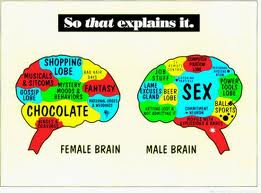
Sex on the Brain

Hat-tip to my chum David Livingstone Smith for bringing my attention to this article in Slate.

Machine Head

Namit Arora in a themed issue of Philosophy Now considers the complexity of consciousness and its implications for artificial intelligence.

But despite the big advances in computing, AI has fallen woefully short of its ambition and hype. Instead, we have ‘expert’ systems that process predetermined inputs in specific domains, perform pattern matching and database lookups, and algorithmically learn to adapt their outputs. Examples include chess software, search engines, speech recognition, industrial and service robots, and traffic and weather forecasting systems. Machines have done well with tasks that we ourselves can pursue algorithmically (ie, in a series of small specifiable steps) – as in searching for the word ‘ersatz’ in an essay, making cappuccino, or restacking books on a library shelf. But so much else that defines our intelligence remains well beyond machines – such as using our creativity and imagination to understand new contexts and their significance, or figuring out how and whynew sensory stimuli are relevant or not. Why is AI in such a brain-dead state? Is there any hope for it? Let’s take a closer look.

Companion to Oakeshott

The publisher has finally got a page up for Paul and my Companion. We’re getting there  . . . click on the graphic below and our dedicated page for more details.

MRI of Female Orgasm

Here’s a recent article from The Guardian. The brain in the clip turns from red to solid yellow during climax.

Interactive Epistemology

The latest and final issue of EPISTEME is now available. As of the next issue (9) EPISTEME will be published by Cambridge University Press.

Daniel Kahneman on Cognitive Traps

Daniel Kahneman’s recently released book Thinking, Fast and Slow aimed at a popular audience is certainly generating a great deal of press, so far as I can tell, most of it very positive. Here he is outlining his experimental work in a Ted Talk. As a behavioral economist much of what he says about rationality will have resonance for Hayek and Simon and other situated cognitive theorists. I think that much of what Kahneman says is consistent with Gunderman from the previous posting though they are of course very different thinkers.