“a steadfastly unclassifiable American original”

The Emergence of “Emergence” in the Work of F. A. Hayek: A Historical Analysis
Recent article by the very excellent Paul Lewis in History of Political Economy Volume 48, Issue 1. Abstract: This article identifies the sources on which Friedrich Hayek drew in order to develop his understanding of the notion of emergence. It is widely acknowledged that the notion of emergence plays a significant role in Hayek’s analyses of both the mind and the market. In Hayek’s account, the key capacities of the human mind—such as its capacity to enable people to perceive the world around them and to form plans about how to act—are emergent properties of the structured array of neurons found in the human brain. Analogously, Hayek’s analysis of the market portrays the coordinative powers of the price mechanism as an emergent property of the social system that is formed when people’s (inter)actions are governed by a set of norms that includes both the formal rules of property and tort and contract law, and also informal norms of honesty and promise keeping. However, while several scholars have identified the importance of the notion of emergence in Hayek’s thought, none have explored systematically and in detail the sources from which he acquired his knowledge of the concept. This article remedies that omission by examining the history of Hayek’s use of the concept of emergence and identifying the sources through which notions of emergence and “emergent properties” entered his thinking. It is argued that the three main sources of influence are as follows: the ideas of the German psychologist Wilhelm Wundt; the work of members of the gestalt school of psychology; and the writings of the organicist biologists Joseph Woodger and Ludwig von Bertalanffy. The significance of the article’s findings for those interested in the development of Hayek’s economics is also discussed.

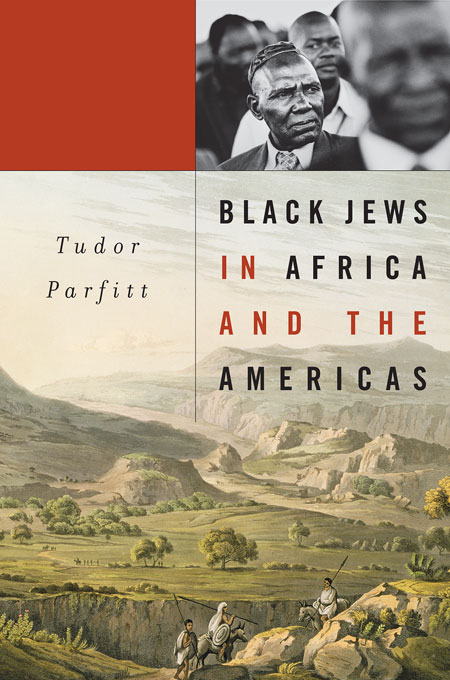
Black Jews in Africa and the Americas
I’ve been following the fascinating work of Tudor Parfitt for the past thirty or so years. He is known primarily for his television programmes broadcast on the BBC and Channel Four. I finally got to reading his book Black Jews in Africa and the Americas. In this age of crude identity politics and “cultural appropriation” fundamentalists, the story that Parfitt tells would, needless to say, obfuscate their ideologically and robotically regurgitated narrative. This aside from the fact that Jewish identity has ALWAYS been THE puzzle case in matters of social ontology. Parfitt’s book is very accessible and relatively brief, so if you want to get beyond the standard literature on race and colonialism, this book is just the ticket to muddy the waters. Despite seeing some value to the work one snippy reviewer in The American Historical Review completely misses the deep philosophical point that is the driver to the discussion. The reviewer writes: “However, Black Jews does little to define the terms “blacks” and “Jews,” and they are in bad need of denotation, particularly when counterpoised.” Now, that’s precisely the point!! There are no necessary and sufficient conditions for social identity, but this doesn’t mean either that one needs to buy into vulgar social constructivism, characteristic of the off-the-peg sort that is making headlines, under prevailing (and yes essentialist) identity politics paradigm. The reviewer then goes on to say that: “For a work deeply concerned with identity construction, it is also remarkable that Parfitt does not discuss the huge body of sociological and psychological literature that demonstrates how contemporary identities of individuals and groups are constructed.” Again, this is added value to Parfitt’s work — he’s not buying into the standard (and often) ideological lenses that sociologists especially, uncritically peddle, lapped up by their SJW cannon-fodder acolytes. Psychologically speaking, I don’t have a sense that the reviewer is au fait with much (or any) of the recent respectable research into social cognition. Perhaps the most idiotic comment is that: “Parfitt’s quest for etiology mirrors the very racialist reasoning he exposes earlier in his work as colonialist or the spawn of mono- and polygenesis theoreticians.” Across Parfitt’s work, this was never ever something entertained or even hinted at. Parfitt is merely using a tool, one legitimately employed scientific tool, to trace the spread of a genetic marker across vast geographical areas, adding some scientific credence to investigating the mythology of these stories. Parfitt is in no way claiming that this marker constitutes the essence to some racial or social profile — hence he desisted from defining “black” and “Jew”, precisely avoiding the dreadful essentialism that the reviewer chastised him for not engaging in earlier. Doesn’t the reviewer grasp that sociality is contingent and is not tied to some dubious metaphysic? That’s why to be critical of some aspect of a culture is the sine qua non to free speech and liberality. If that is denied, then our Enlightenment inheritance is doomed and we are about to enter the Dark Ages again — in some respects we are already there. Anyway, if you are genuinely interested in the puzzle cases thrown up by social ontology (and social history) this little book sheds light on the relatively little known phenomenon of black Jewry and should give food for thought (to Jew and Gentile alike) on critically engaging with these fascinating issues in social identity.
Multiple Equilibria, Bounded Rationality, and the Indeterminacy of Economic Outcomes: Closing the System with Institutional Parameters
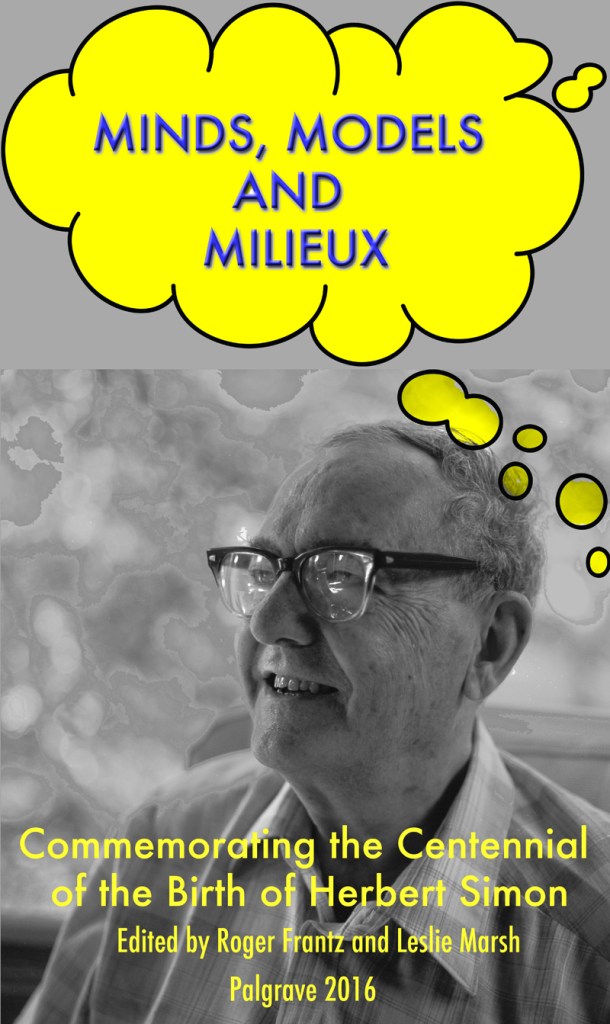
The tenth in a series of excerpts from Minds, Models and Milieux: Commemorating the Centennial of the Birth of Herbert Simon.
Morris Altman
A critical point made by behavioral economists from a wide set of methodological perspectives is that individuals typically do not make decisions that are consistent with conventional economic theoretical norms of rational behavior. This is true of those building on the errors and biases or heuristics and biases approach derived from the research of Kahneman and Tversky (Kahneman, 2003, 2011; Thaler and Sunstein, 2008), and those building upon the bounded rationality approach introduced by Herbert Simon (1978, 1979, 1987; Altman, 1999; Gigerenzer, 2007; Smith, 2003). Such ‘irrational’ behavior form the perspective of the mainstream is considered to be inefficient or sub-optimal. And sub-optimal outcomes should not be able to survive—it would fail the test of the survival of the fittest. However, various and different socio-economic outcomes or solutions for the same specific decision problems appear to be consistent with the survival on the market place. This is even true of economic outcomes, when firms are not maximizing productivity. Both low and high productivity firms can survive simultaneously on in the market. Moreover, ethical or socially considerate firms, and other-giving and empathic individuals can also survive and persist, even if such behavior is often considered to be sub-optimal and irrational from the perspective of the conventional economic wisdom.
It was just such apparent anomalies that Herbert Simon attempts to address through the concept of multiple equilibria, set in contrast with the more mainstream focus on convergence towards some optimal and unique equilibrium. From this perspective, both inefficient and efficient economic entities can persist over time in equilibrium. Therefore, survival and existence need not be in any way indicative or proof of uniqueness or optimality or efficiency in outcomes or decision making processes.
It is important to note that conventional and dominant economic methodology that deduces optimality and efficiency and even uniqueness from survival and existence is derived from the methodological paradigm articulated by Milton Friedman (1953; see also, Alchain, 1950). He maintained that survival is proof of optimality and efficiency of both outcomes and decision-making processes. One can deduce from outcomes—from survival—that individuals or economic agents behave in a particular and unique fashion—optimally and efficiently.
Allen Toussaint’s Final Release
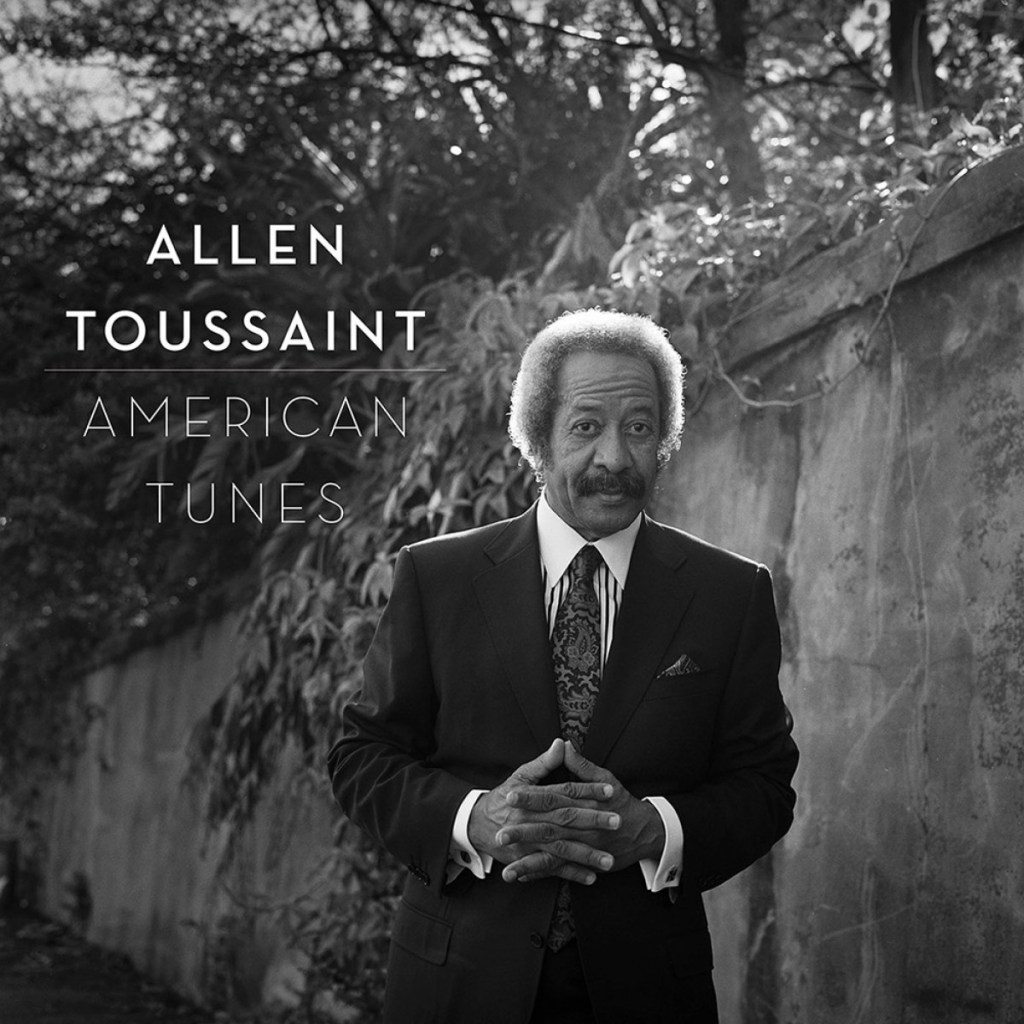
The master’s final release. The blurb from Nonsuch Records as follows: “American Tunes is the final recording from legendary New Orleans musician Allen Toussaint. It was produced by Joe Henry and features both solo piano recordings made at Toussaint’s home studio in New Orleans and others made in Los Angeles with musicians like Jay Bellerose, Bill Frisell, Greg Leisz, Charles Lloyd, David Piltch, and special guests Rhiannon Giddens and Van Dyke Parks. There are works by Toussaint, Professor Longhair, Duke Ellington, Fats Waller, and Paul Simon, among others. Nonesuch Store pre-orders include an instant download of the track “Big Chief” and an exclusive, limited-edition print”.
Walker Percy Wednesday 80

You should be interested! Such a quest serves God’s cause! How? Because the Good proves nothing. When everyone is wonderful, nobody bothers with God. If you had ten thousand Albert Schweitzers giving their lives for their fellow men, do you think anyone would have a second thought about God?
Or suppose the Lowell Professor of Religion at Harvard should actually find the Holy Grail, dig it up in an Israeli wadi, properly authenticate it, carbon date it, and present it to the Metropolitan Museum. Millions of visitors! I would be as curious as the next person and would stand in line for hours to see it. But what difference would it make in the end? People would be interested for a while, yes. This is an age of interest.
But suppose you could show me one “sin,” one pure act of malevolence. A different cup of tea! That would bring matters to a screeching halt. But we have plenty of evil around you say. What about Hitler, the gas ovens and so forth? What about them? As everyone knows and says, Hitler was a madman. And it seems nobody else was responsible. Everyone was following orders. It is even possible that there was no such order, that it was all a bureaucratic mistake.
Show me a single “sin.”
One hundred and twenty thousand dead at Hiroshima? Where was the evil of that? Was Harry Truman evil? As for the pilot and bombardier, they were by all accounts wonderful fellows, good fathers and family men.
“Evil” is surely the clue to this age, the only quest appropriate to the age. For everything and everyone’s either wonderful or sick and nothing is evil.
God may be absent, but what if one should find the devil? Do you think I wouldn’t be pleased to meet the devil? Ha, ha. I’d shake his hand like a long-lost friend.
The mark of the age is that terrible things happen but there is no “evil” involved. People are either crazy, miserable, or wonderful, so where does the “evil” come in?
There I was forty-five years old and I didn’t know whether there was “evil” in the world.
A small corollary to the above: Is evil to be sought in violence or in sexual behavior? Or is all violence bad and all sexual behavior good, or as Jacoby and Merlin would say, life-enhancing?
If one is looking for evil, why not study war or child-battering? Could anything be more evil? Yet, as everyone knows, mothers and fathers who beat and kill their children have psychological problems and are as bad off as the children. It has been proved that every battered child has battered parents, battered grandparents, and so on. No one is to blame.
As for war, the only time members of my family have ever been happy, brave, successful, was in time of war. What’s wrong with war?
Look across the street. Do you see that girl’s Volkswagen’s bumper sticker: Make Love Not War. That is certainly the motto of the age. Is anything wrong with it?
Yes. Could it be possible that since the greatest good is to be found in love, so is the greatest evil. Evil, sin, if it exists, must be incommensurate with anything else. Didn’t one of your saints say that the entire universe in all its goodness is not worth the cost of a single sin? Sin is incommensurate, right? There is only one kind of behavior which is incommensurate with anything whatever, in both its infinite good and its infinite evil. That is sexual behavior. The orgasm is the only earthly infinity. Therefore it is either an infinite good or an infinite evil.
My quest was for a true sin—was there such a thing? Sexual sin was the unholy grail I sought.
It is possible of course that there is no such thing and that a true sin, like the Grail, probably does not exist.

Stigmergy as a Universal Coordination Mechanism II: varieties and evolution
Here’s an extract from the sixth and the final article from this special Human-Human Stigmergy issue. It is the second part to Francis Heylighen’s contribution.
*****
In a preceding paper (Heylighen, 2015), stigmergy was defined as a mechanism for the coordination of actions, in which the trace left by an action on some medium stimulates the performance of a subsequent action. This generic definition is applicable to a very broad variety of cases, including the pheromone traces used by ants to find food, the self-organization of chemical reactions, and the implicit collaboration between people via the edits they make in a shared website, such as Wikipedia.
To bring some order to these phenomena, the present paper will develop a classification scheme for the different varieties of stigmergy. We will do this by defining fundamental dimensions or aspects, i.e. independent parameters along which stigmergic systems can vary. The fact that these aspects are continuous (“more or less”) rather than dichotomous (“present or absent”) may serve to remind us that the domain of stigmergic mechanisms is essentially connected: however different its instances may appear, it is not a collection of distinct classes, but a space of continuous variations on a single theme—the stimulation of actions by their prior results.
This continuity will further help us to understand the evolution of stigmergic mechanisms, from rudimentary to more sophisticated applications. The paper will in particular focus on the evolution of two applications of stigmergy that are particularly important for humans, cognition and cooperation, arguing that these phenomena, which are traditionally viewed as difficult to explain via conventional evolutionary mechanisms, actually seem to emerge rather naturally via stigmergy.
Individual vs. collective stigmergy
Perhaps the most intuitive aspect along which stigmergic systems can vary is the number of agents involved. In the limit, a single agent can coordinate its different actions via stigmergic interaction with the medium in which it acts.
An elegant example discussed by (Theraulaz and Bonabeau, 1999) is the solitary wasp Paralastor sp. building its nest in the shape of a mud funnel. The nest emerges in qualitatively different stages S1, S2, …, S5. These subsequently perceived conditions or stimuli each trigger a fitting action or response: S1 -> R1, …, S5 -> R5. Each building action Ri produces as a result a new condition Si+1 that triggers the next action Ri+1. The wasp does not need to have a plan for building such a nest, or to remember what it already did, because the present stage of the activity is directly visible in the trace left by the work already done.
However, the underlying rule structure becomes apparent when the sequence is disturbed so that stages are mixed up. For example, the wasp’s initial building activity is triggered by the stimulus S1, a spherical hole. When at stage S5 (almost complete funnel) the observer makes such a hole on top of the funnel, the wasp “forgets” that its work is nearly finished, and starts anew from the first stage, building a second funnel on top of the first one. This little experiment shows that the activity is truly stigmergic, and can only run its course when the medium (the mud) reacts as expected to the different actions performed on it, thus registering the information needed to guide the subsequent actions.
As (Theraulaz and Bonabeau, 1999) suggest, it is likely that collaborative stigmergy evolved from the simpler case of individual stigmergy. Imagine that a second wasp encounters the partially finished nest of the first wasp. It too will be stimulated to act by the perception of the present state of work. It does not matter that this state was achieved by another individual: the wasp anyway has no memory of previous actions—its own or someone else’s. Assume further that the resulting structure is big enough to house the two wasps. In this case, the wasps will have collaboratively built a nest for both, without need for any additional coordination between their genetically programmed building instructions. Assume that the structure is modular, like the nests of social wasps, so that an unlimited number of modules can be added. In that case, the number of wasps that may start working together simply by joining the on-going activity on an existing nest can grow without limit.
This example illustrates how the number of agents collaborating on a stigmergic project is actually much less fundamental than it may seem. The essence of the activity is always the same. Assuming that the agents have the same skills, adding more agents merely increases manpower and therefore the size of the problem that can be tackled, the speed of advance, or the eventual magnitude of the achievement. Only when the agents are diverse can an increase in their number produce a qualitative improvement in the solution via a division of labor, where differently skilled agents contribute different solutions.
The only complication added by increasing the number of agents is that agents may get in each other’s way, in the sense that similar individuals perceiving the same stimulus are likely to move to the same place at the same time, thus obstructing each other’s actions. This problem is easily tackled by an additional rule, which is already implicit in individual work but likely to become reinforced during collaborative work: keep a minimum distance from obstacles—including other agents. This rule is a well-known ingredient in the many successful simulations of collectively moving animals, such as flocks, schools or swarms (Okubo, 1986), allowing densely packed groups of agents to follow complex, synchronized trajectories without ever bumping into each other. In combination with the basic stimulation by the stimulus object, this leads to what may look like a carefully thought-out strategy of coordinated movement. An example are group hunting strategies, as used e.g. by lions or wolves (Parunak, 2006). Each wolf is attracted to move towards the prey (basic stimulus). On the other hand, each wolf is stimulated to stay as far away as possible from the other wolves. The result is an efficient encirclement of the prey, which is attacked simultaneously from all sides with no opening left for escape.

Academic Freedom in an Age of Conformity
Academic Freedom in an Age of Conformity: Confronting the Fear of Knowledge. Universities, once at the forefront of campaigns for intellectual liberty, are now bastions of conformity. This provocative book traces the demise of academic freedom within the context of changing ideas about the purpose of the university and the nature of knowledge and is a passionate call to arms for the power of academic thought today.
The Death and Life of Great Italian Cities
Abstract: The Death and Life of Great American Cities was written in 1961 and is now one of the most influential book in city planning. In it, Jane Jacobs proposed four conditions that promote life in a city. However, these conditions have not been empirically tested until recently. This is mainly because it is hard to collect data about “city life”. The city of Seoul recently collected pedestrian activity through surveys at an unprecedented scale, with an effort spanning more than a decade, allowing researchers to conduct the first study successfully testing Jacobs’s conditions. In this paper, we identify a valuable alternative to the lengthy and costly collection of activity survey data: mobile phone data. We extract human activity from such data, collect land use and socio-demographic information from the Italian Census and Open Street Map, and test the four conditions in six Italian cities. Although these cities are very different from the places for which Jacobs’s conditions were spelled out (i.e., great American cities) and from the places in which they were recently tested (i.e., the Asian city of Seoul), we find those conditions to be indeed associated with urban life in Italy as well. Our methodology promises to have a great impact on urban studies, not least because, if replicated, it will make it possible to test Jacobs’s theories at scale. — Proceedings of the 26th International ACM Conference on World Wide Web (WWW), 2016

Tony Visconti
Tony Visconti really was the natural heir to George Martin. Check out Tony’s thoughts on the state of the music industry — there is no-one as distinguished and so able to offer the ultimate insider’s diagnosis on the malaise of creativity that we know has well and truly flattened the creative landscape over the past 20 years at least — as has happened to all other realms of artistic endeavor. This is not to say that there is not superb talent out there — it’s just that one has to dig much deeper to find it, and shovel away the “fame” pap that is the prevailing driver. Tony knows every gratuitous technological trick in the recording book so he can quickly see through to the talentless underlayer.

