and then there was one . . . The Guardian — Rolling Stone — The Telegraph
and then there was one . . . The Guardian — Rolling Stone — The Telegraph
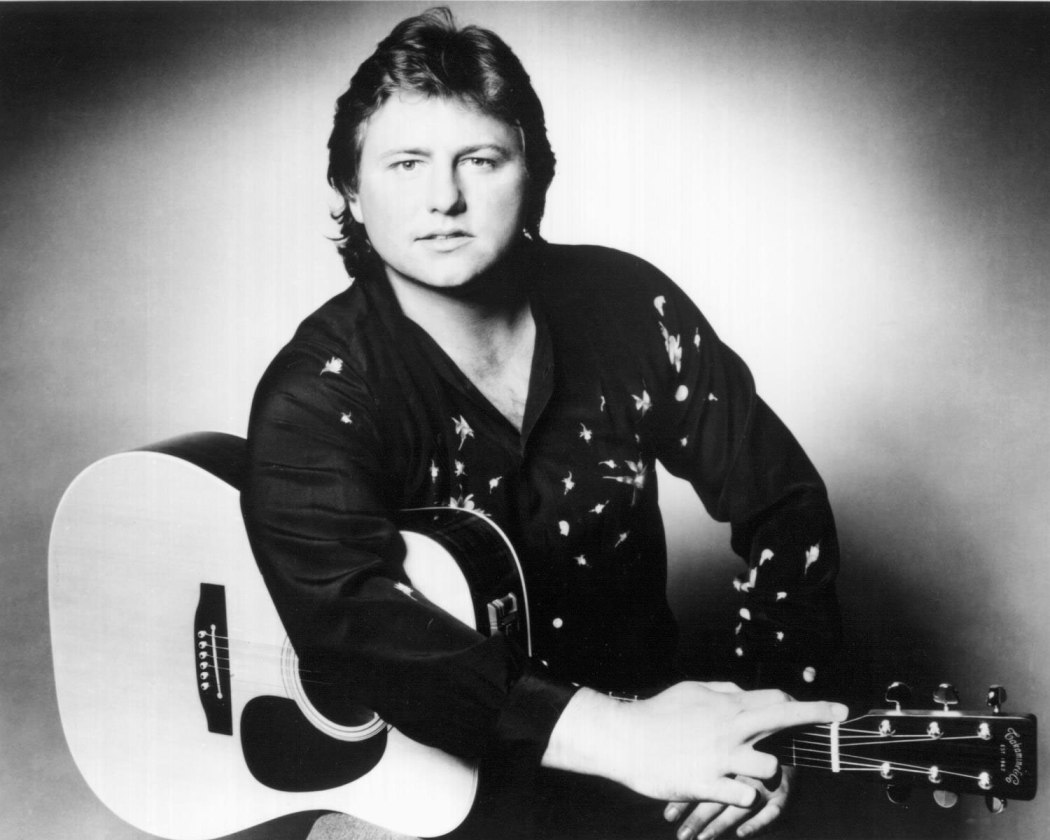
There are two reasons to check out this documentary on Glen Campbell. First, is his going public about his cognitive decline. The trials and tribulations of Glen and his family will have resonance for anyone who has had experience of caring for a dementia sufferer. Cases such as these provide philosophical food for thought about personal identity and sense of Self. Indeed, just as Otto’s notebook was his “extended mind“, this role was filled by Glen’s wife Kim. Not surprisingly, Glen’s deepest existential marker, i.e. that of being a musician, was what held his mind together while all else was fraying. And like Glen, my mother always retained a sense of humour despite her decline. The second point that this film brings out, is to remind people of the understated musical genius of the man. Glen has never sung a bum note, his choice of material impeccable, a mean guitarist and for many, might just have been what drew us into country music — without us ever realizing it. Glen Campbell classics have always loitered in an unfussy transcendental way much like the work of Burt Bacharach, Herb Alpert, The Carpenters and Lou Rawls.


“He told me that he had—ah—discovered a mathematical proof of what God’s will is, that is, what we must do in these dangerous times.”
*****
There was more excitement in prison, more argument, more clash of ideology. In Alabama we were polarized every which way, into pro-nukes and anti-nukes, liberals and conservatives, atheists and believers, anti-Communists and anti-anti-Communists, born-again Christians, old-style relaxed Catholics, lapsed Catholics, Barbara Walters haters, Barbara Walters lovers.
Nothing like Alabama!
The warfare in that quonset hut at Fort Pelham!
We inmates, or rather detainees—assorted con men, politicians, ex-Presidential aides, white-collar crooks, impaired physicians pushing pills, mercy killers, EPA inspectors on the take from lumber and oil barons—criminals all, but on the whole engaging and nonmurderous. And next door, Hope Haven, a community of impaired priests, burned-out ministers and rabbis, none criminal, none detained, but all depressed, nutty, or alcoholic, generally all three, who had not run afoul of the law as we had but had just conked out, and so had great sympathy for us and made themselves available.
*****
“It is not a question of belief or unbelief. Even if such things were all proved, if the existence of God, heaven, hell, sin were all proved as certainly as the distance to the sun is proved, it would make no difference, would it?”
“To whom?”
“To people! To unbelievers and to so-called believers.”
“Why wouldn’t it?”
“Because the words no longer signify.”
“Why is that?”
“Because the words have been deprived of their meaning.”
“By a depriver.”
“Right. Once, everyone admits, such signs signified. Now they do not.”
*****
He has the super-sane chipperness of the true nut.

The very excellent Philanthropic Enterprise has teemed up with the Smith-Tocqueville Center at Michigan State University to issue a call for papers for the 2017 Conference on Voluntary Governance.

My “old” Oxford chum, a real scholar, has just had this paper published — 10 years in the making! Jewish Quarterly Review, Volume 106, Number 4, Fall 2016. The intro to the piece as follows:
IN 2009, WHILE GATHERING MATERIALS for a book on Frankism, I made a pilgrimage to the grave of the famous adventurer Giacomo Casanova. My interest in Casanova was triggered by my discovery of his correspondence with Eve, the daughter of the Jewish heresiarch Jacob Frank. A single letter from this correspondence appears in a forlorn Italian publication curated by Carlo L. Curiel, Gustavo Gugitz, and Aldo Rava` in 1930, but the epistolary collection has never been discussed systematically by Casanova researchers. With one exception, it has gone unmentioned as well by the scholars of Frankism. While reading works by and about Casanova, I learned that he had had numerous contacts with Jews, including with some who were kabbalists. I was also told— wrongly as it turned out—that copies of Casanova’s literary estate remain intact at the location where he labored over his memoir and died, the Chateau of Duchcov (Dux) in Bohemia. I suspected that the estate might contain unpublished materials germane to the subject of my research.

Born on this day — a most radical and brave pioneer.
Little Richard told Blackwell he preferred the sound of Fats Domino. As a result, Little Richard began recording at Cosimo Matassa’s J&M Studios in New Orleans that September, recording there with several of Domino’s session musicians, including drummer Earl Palmer and saxophonist Lee Allen.[39] The initial cuts failed to produce anything that would inspire huge sales, and Little Richard and his producer took a break at a club called the Dew Drop Inn. While there, Little Richard performed a risqué song he had improvised from his days on the club circuit called “Tutti Frutti”.[40] The song’s a cappella introduction was based on a drum rhythm Little Richard had devised. Blackwell felt the song had hit potential and hired songwriter Dorothy LaBostrie to replace some of Little Richard’s sexual lyrics with less controversial words.[41][42] Recorded in three takes in September 1955, “Tutti Frutti” was released as a single in November.[43] — Wikipedia

The latest Stones album has dropped. The reviews seem to be universally glowing and for a change devoid of the tired journalistic cliches that typically accompany a Stones release, not too mention the accompanying label hype that “this is the best thing they have done since . . . Tattoo You/Some Girls/Exile on Main Street” — you know the score. The sound, at least going by below does seem to have an exciting early 60s freshness to it.
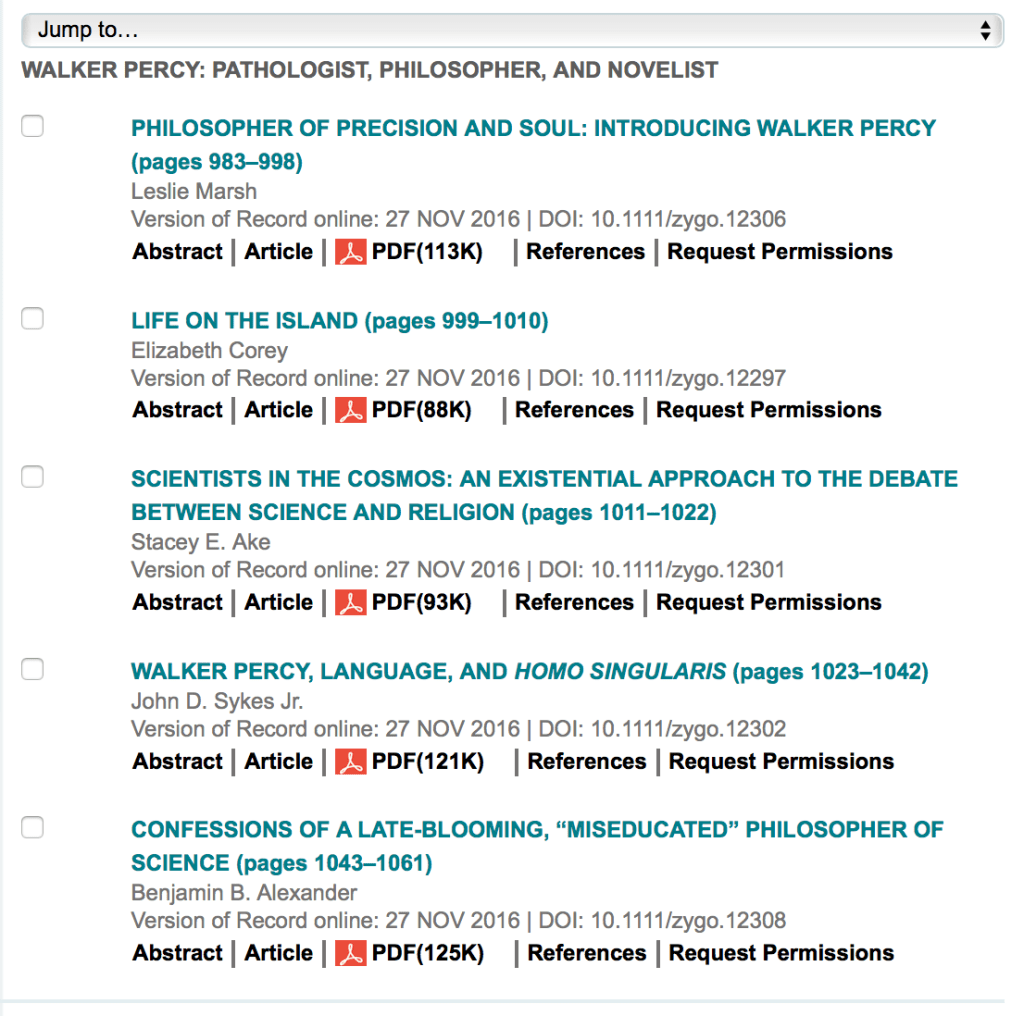
Here is the just published collection of papers in ZYGON. A big thanks to all the contributors and to ZYGON’S ecumenical editor for his patient shepherding of the project.