Brentano, Kafka and Hayek

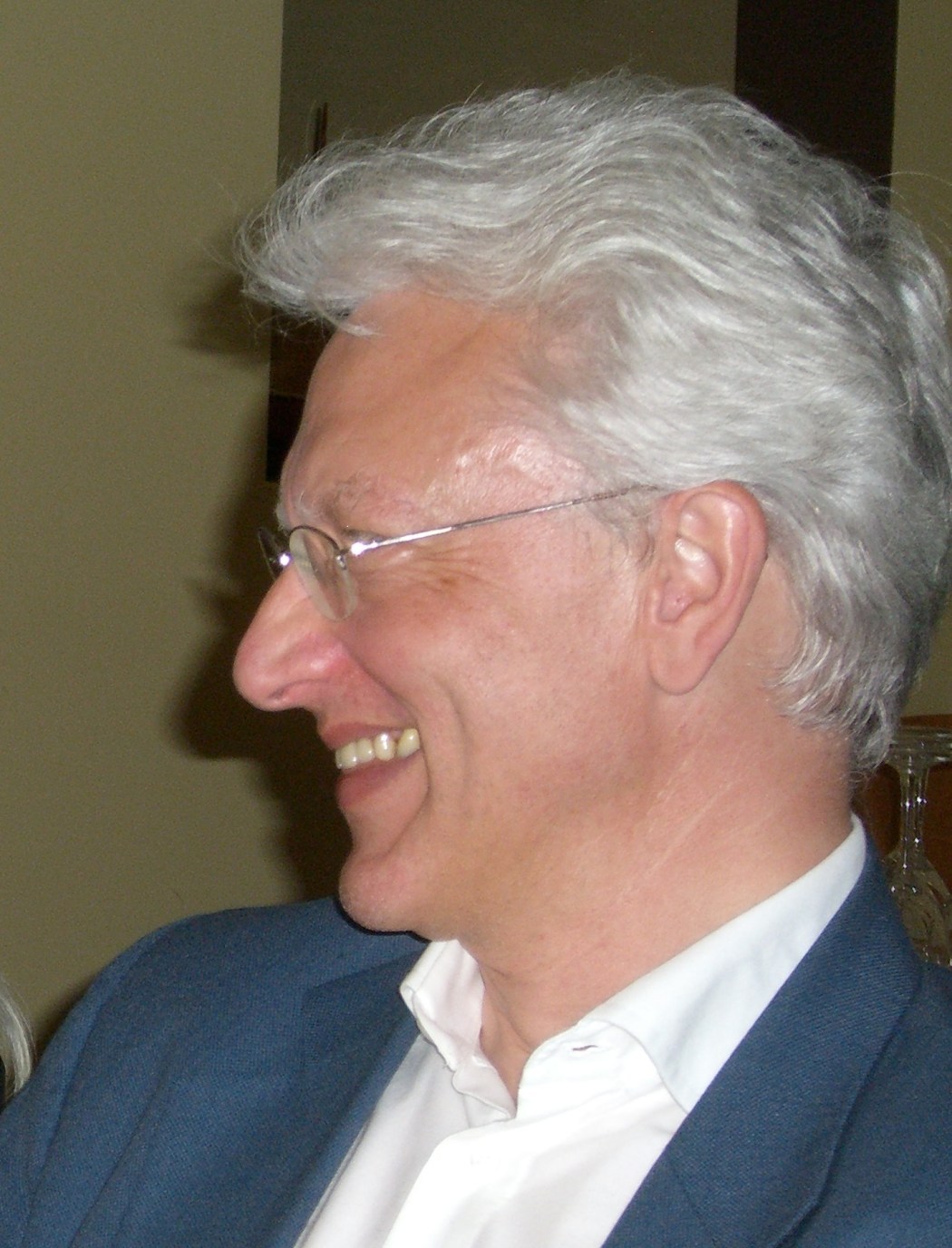
While working on a Barry Smith related project I was reminded of two fascinating papers by this incredibly productive, eclectic and just downright decent and responsive bloke whose work in ontology has had real and positive practical import for medical science. As you might be aware, many philosophers these days are in the business of self-aggrandizement, “activism posing as inquiry”, virtue-signaling (“tick box morality”). In effect, amounting to no more than a highfalutin style of hectoring us as to how bad the world is and how bad and stupid we are — their vain “one size fits all” solution, a deeply destructive groupthink authoritarianism. Barry, by contrast, is doing work that is actually relieving man’s estate and moreover, he profoundly understands the dynamism that underwrites our civil liberality. Anyway, below are the two papers that I mentioned. Please stay tuned for more big news on Barry in a month or so.

Bretano and Kafka

The Connectionist Mind: A Study of Hayekian Psychology (This was the chapter that cracked opened a rich vein of theorizing for me, having heretofore only being familiar with Hayek’s social theory).

Barry_Smith

Life + Death: Chairmen of the Board

A classic bit of acid funk to blow away the past week, a world away from “Give Me Just A Little More Time”. As per usual AllMusic gets it. Here are a couple of obits for General Johnson in The Guardian and The New York Times.

John Oliver as Ben Elton

Glad I’m not the only one to realize that North Americans are oblivious to the fact that John Oliver is really a “mini-me” Ben Elton, but without the talent, even though I thought, in the day, Elton as a stand-up, was tiresome. This said, I concede we needed a foil like BE. BE was a superb writer for The Young Ones and Blackadder and for that we should be grateful.

Screen Shot 2018-01-25 at 9.40.14 AM

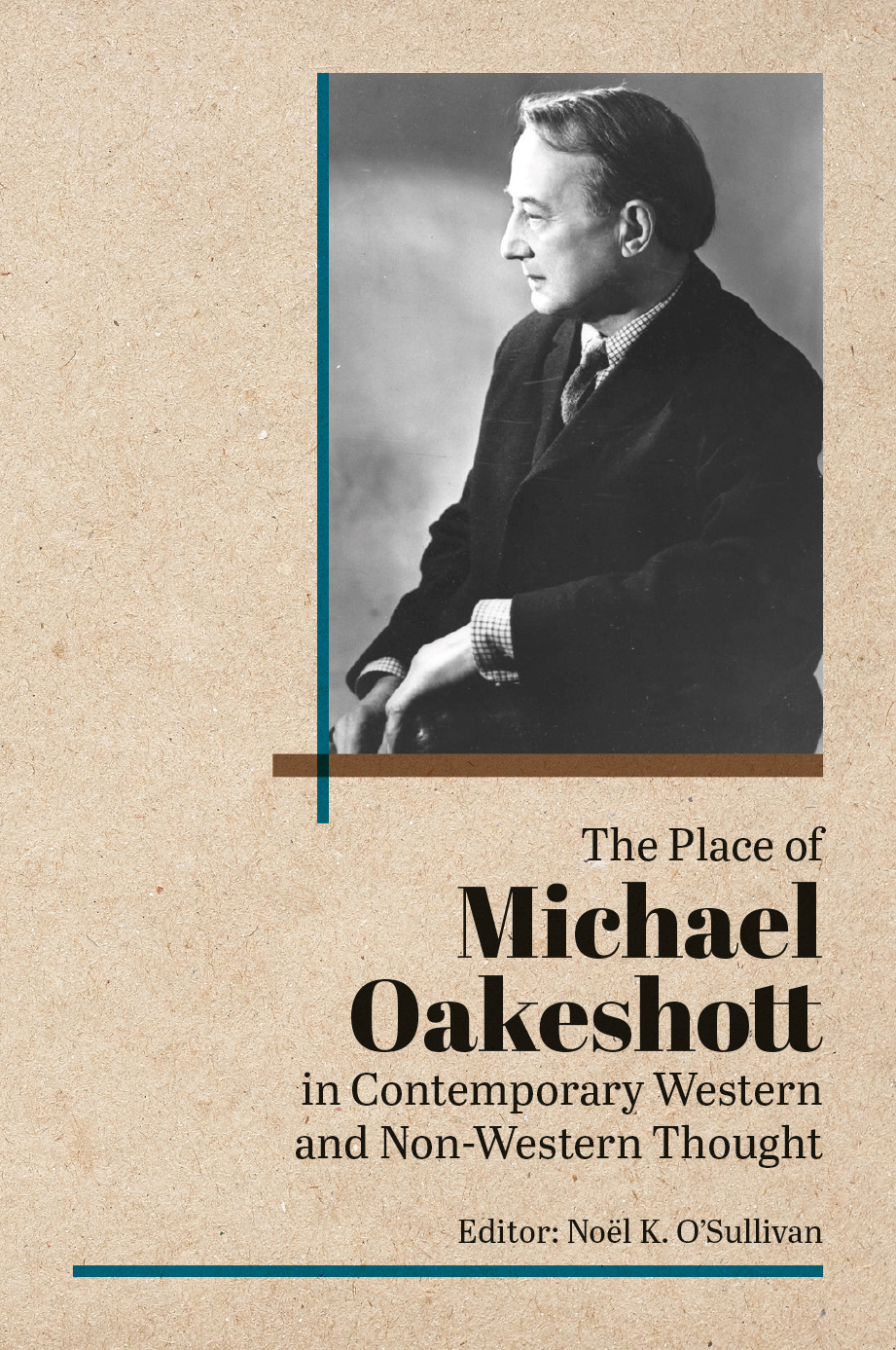
The Place of Michael Oakeshott in Contemporary Western and Non-Western Thought

Coming soon from Imprint Academic, edited by the very excellent Noel O’Sullivan.

9781845409265

Fellow-travellers and useful idiots

John Gray in the New Statesman.

Islamist movements fill this gap by combining hatred of the West with Leninist methods of remodelling society by force – a mix that some on the left evidently find appealing.

2017_18_travellers

Peterson + Rogan: Dream Team

I’ve listened to pretty much all of Joe’s podcasts as I have to Jordan’s: independently they are superb but together they bring out the absolute best in each other. I didn’t think that anything could top their first meeting but they did exactly that in this their second. They are the instantiation of Oakeshott’s metaphor of conversation as an unrehearsed intellectual adventure with no cheap rug-pull arguments and to no extrinsic or instrumental purpose. I’d love to see Joe and Jordan together biannually — what an unlikely combination! If you are looking for something educational in the deepest sense of the term, listen to these two elegant, critical, humane and playful minds: in three hours you’ll have learnt more about the world and yourself than in all of your three years regurgitating the infertile spoon-fed tripe of your gender studies/sociology/anthropology courses. There are so many memorable and eminently quotable phrases — I hope to compile some of them when I next listen to this conversation again but here are two of them: “The rational mind likes to fall in love with its own creations”. This is as deep and snappy an explanation as I’ve come across for the rationalist’s psychology. (The Tower of Babel!). And speaking to the fuckwittery of the SJWs: “You want all the benefits of having all the benefits and you want to have all the benefits of having none of the benefits” — a quote worthy of Chesterton! Thank you so much to the University of Toronto for bringing Jordan to the world’s attention — unintended consequences, eh? As Joe rightly said, they chose the wrong person to fuck with!

Every entrant is taken at its face-value and everything is permitted which can get itself accepted into the flow of speculation. And voices which speak in conversation do not compose a hierarchy. Conversation is not an enterprise designed to yield an extrinsic profit, a contest where a winner gets a prize, not is it an activity of exegesis; it is an unrehearsed intellectual adventure. It is with conversation as with gambling, its significance lies neither in winning nor in losing, but in wagering. Properly speaking, it is impossible in the absence of a diversity of voices: in it different universes of discourse meet, acknowledge each other and enjoy an oblique relationship which neither requires nor forecasts their being assimilated to one another.

This, I believe, is the appropriate image of human intercourse, appropriate because it recognizes the qualities, the diversities, and the proper relationships of human utterances. As civilized human beings, we are the inheritors, neither of an inquiry about ourselves and the world, nor of an accumulating body of information, but of a conversation, begun in the primeval forests and extended and made more articulate in the course of centuries. It is a conversation which goes on both in public and within each of ourselves.

Walker Percy Wednesday 135

percycovercroppea

But what has been called into question in these and like experiments is the use of words such as language, symbols, sentences to describe this kind of communication. Investigators such as Terrace and Sebeok have shown that such communication does not bear the test of language in the human sense, e.g., having a rule-governed syntax. One of the weaknesses of semiotics is the all-too-frequent use of words like language and sentence in a loose analogical sense.

00000

It has been called variously triadic behavior, thirdness, the Delta factor, man’s discovery of the sign (including symbols, language, art).
This phenomenon occurred in the evolution of man. It may have occurred elsewhere in the Cosmos, or it may have occurred in other creatures on earth. We do not know. But it is not known to have occurred elsewhere in the Cosmos and it has not been proved—despite heroic attempts with chimps, gorillas, and dolphins—to have occurred in other earth species.
The present argument does not require that triadic behavior be unique in man. Perhaps it is not. Semiotics proposes only that where triadic behavior occurs, certain new properties and relationships also come into existence,
Triadic behavior is that event in which sign A is understood by organism B, not as a signal to flee or approach, but as “meaning” or referring to another perceived segment of the environment:

Screen Shot 2017-05-09 at 12.54.16 PM

00000

Certain new properties appear. For example, all triadic behavior is social in origin. A signal received by an organism is like other signals or stimuli from its environment. But a sign requires a sign-giver. Thus, every triad of sign-reception requires another triad of sign-utterance. Whether the sign is a word, a painting, or a symphony—or Robinson Crusoe writing a journal to himself—a sign transaction requires a sign-utterer and a sign-receiver.
Other new properties appear, such as the relation between the utterer and the receiver, which are subject to such familiar variables as “intersubjectivity” (I-thou) and “depersonalization” (I-it).
A particularly mysterious property is the relation between the sign (signifier) and the referent (signified). It is expressed by the troublesome copula “is,” when Helen said that the perceived liquid “is” water (the word). It “is” but then again it is not. Herein surely is the root of all the troubles Stuart Chase spoke of when he said that his cat had no dealings with such a relationship and therefore was smarter or at least saner than humans.
Another unique property of the sign-user, of special significance here, is that as soon as he crosses the triadic threshold, he not only continues to exist in an environment but also has a world.
The world of the sign-user is not identical to its environment or the Cosmos.

9780312253998_custom-879fe996d0c45da2a69a358283ae164595a77f96-s6-c30

Jane Jacobs Special Issue

Coming soon in C+T

  1. Editor’s Introduction – Sanford IKEDA
  2. Jane Jacobs as Spontaneous Economic Order Methodologist: Part 1: Intellectual Apprenticeship – Pierre DESROCHERS & Joanna SZURMAK 3.
  3. Jane Jacobs as Spontaneous Economic Order Methodologist: Part 2: Metaphors and Methods – Pierre DESROCHERS & Joanna SZURMAK
  4. Experimenting in urban self-organization: Framework-rules and emerging orders in Oosterwold (Almere, The Netherlands) – Alessandra COZZOLINO et al.
  5. Modern Cities as Spontaneous Orders – Wendell COX & Peter GORDON
  6. NIMBYs as Mercantilists – Emily HAMILTON
  7. A city cannot be a work of art – Sanford IKEDA
  8. The State of Indian Cities – Shruti RAJAGOPALAN
  9. The Kind of Problem Gentrification Is: The Case of New York – Francis MORRONE
  10. Review: Lawrence N. Powell: The Accidental City: Improvising New Orleans – Leslie MARSH

Screen Shot 2017-05-08 at 5.42.44 PM

The Road to Serfdom or Dhimmitude

Marking the birth of Hayek and the dispiriting sense that we are well on the road to a new serfdom brought on, yet again, by the regressive left but this time in cahoots with Islamofacism. The marriage of cultural marxism with its first cousin, Jihadism, is continuing exactly from where the Nazis left off. With this unholy trinity we have the makings of a perfect storm, the likes of which history has never seen with the regressives now fulfilling the role of willing collaborators. At the Nuremberg Trials, Eichmann’s deputy Dieter Wisliceny said:

The Mufti was one of the initiators of the systematic extermination of European Jewry and had been a collaborator and adviser of Eichmann and Himmler in the execution of this plan. … He was one of Eichmann’s best friends and had constantly incited him to accelerate the extermination measures.

71FDiOr4jzL