The deliciously scathing and independent-minded Susan Haack in Free Inquiry. “The cannibal among the missionaries” — love it! This the quality of mind that I want and admire whatever one’s political persuasion.


The deliciously scathing and independent-minded Susan Haack in Free Inquiry. “The cannibal among the missionaries” — love it! This the quality of mind that I want and admire whatever one’s political persuasion.


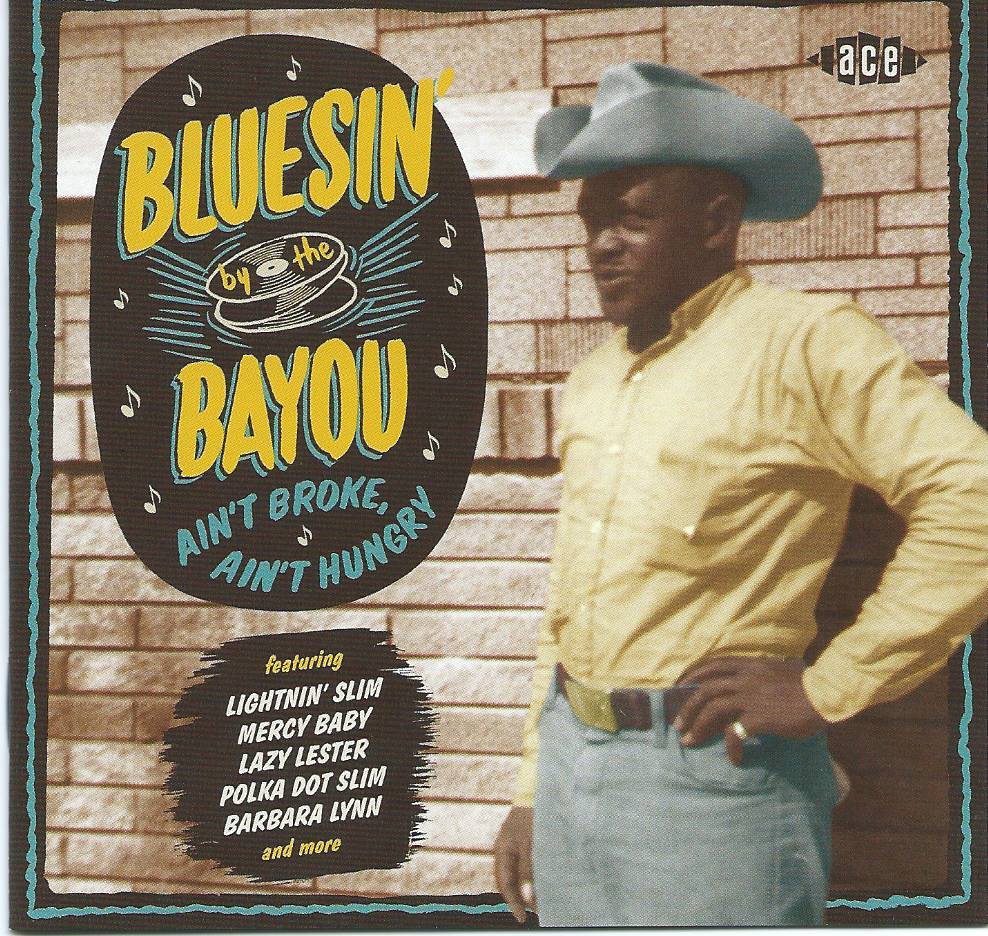
Terrific compilation that has just been released by the very excellent Ace Records. It seems that it’s up to some very small European labels to keep this amazing history alive.
I’ve been reminded by a friend that it is Battle of Britain Day, at least in the dominion of Canada it’s on the third Sunday of September (in the UK it’s commemorated on the 15th). Here is some discussion of Churchill’s famous “finest hour” speech. Listening to Winnie’s wartime speeches one can easily substitute several phrases for a [redacted] term denoting what has been the slowest burn and is currently the biggest threat, aided and abetted by the gormless regressives.

Benjamin Schwarz is perhaps in a class of his own in that his reviews are marvelously entertaining while remaining on point substantively. The danger for books reviewed by him — good, bad, or indifferent — is that his secondary commentary typically outshines the target work. Anyway, the discussion centres on what Jonathan Haidt has termed “lifestyle enclaves.” (Not sure what Schwartz and Currid-Halkett would have to say about my unapologetic Gordian knot of “deplorable” and “highfalutin” culture).
[A]s The Sum of Small Things establishes, many of the elite’s purchases are made in the name of protecting the environment. But the notion that self-denial—rather than buying things to gratify oneself—might better serve that end seems absent from the elite worldview.
Given that this class’s identity depends on a form of consumption that revolves around the display of cultural capital, it’s unsurprising that so much of the elite’s intellectual and political life is merely gestural.
They “like feeling smart without doing work—two hours in a theater is easier than ten hours with a book.”
As befits these engines of global capitalism, these cities and their inhabitants are pulling away with growing momentum from their native countries and cultures.

It’s puzzling that HDS’s most important film gets relatively short-shrift in so many of the reports on his death. It took someone of the calibre of Dirk Bogarde to make sure that this film got its due recognition. Anyway, here is Roger Ebert’s review and a Guardian reassessment.
Wim Wenders’ “Paris, Texas” (1984) is the story of loss upon loss. This man, whose name is Travis, was once married and had a little boy. Then that all went wrong, and he lost his wife and child, and for years he wandered. Now he will find his family and lose it again, this time not through madness but through sacrifice. He will give them up out of his love for them. — Roger Ebert
After 100 or so films, Travis Henderson was Harry Dean’s first lead role and he’s perfect, giving a performance of tremendous empathy and tenderness . . . Paris, Texas is a film about many things – about love, sacrifice and redemption, and about the fierce yearning for an imagined place always out of reach. — PARIS, TEXAS: A VISUAL TRIP
I’ve been wondering whatever became of Leo Sacks’ documentary on Myles — nothing new on the film’s website aside from the extended trailer. In case you don’t know who Raymond was, here is OffBeat‘s obituary. The most recent news I’ve come across are these articles: NYT, HuffPo and Billboard (you’d think given the high-profile level of interest, the readies would have long since been found). Hopefully this project will still come to fruition.

Because I believe that God exists and that he created the Cosmos (the Big Bang, as you vulgarly call it, embarrasses you, Aristarchus, doesn’t it?), that he created man through evolution, in the latest moment of which, perhaps the last Ice Age, man became ensouled and came to himself as man, body and spirit; that God thus created man as a person who had gifts of knowledge and love but most of all of freedom, that he somehow encountered a catastrophe, God alone knows what, used his freedom badly, and chose badly—perhaps chose himSELF, the one thing he can never know of itself, rather than God—and has been in trouble ever since. That, as a consequence, God himself intervened in the history of this insignificant planet, through a covenant with an even more obscure tribe, the Jews, through his son, a Jew who actually lived as a man on this earth, him and no other, through founding a church, the Catholic Church based on a very mediocre, intemperate Catholic, Peter, also a Jew; that he, God, is somehow inextricably and permanently, even hopelessly, involved with the two, the Jews and the Catholic Church, until the end of earth time.
00000
But the two, Jew and Catholic, are inextricably attached to each other, like Siamese twins at the umbilicus, whether they like it or not, and they both detest it, until the end of earth time.
00000
As Pope, my first act will be to revive the University of Notre Dame around a nucleus of Jewish scientists whom I shall lure from Israel. The Catholic Church is responsible for the birth of science in the West, but it got too rich, got distracted by family quarrels, and dropped the ball, which the Jews picked up.
00000
Thought Experiment: An experiment in shifting one’s perspective toward the end of determining the relative preposterousness of modern Cartesian consciousness vis-à-vis the preposterousness of Judaeo-Christianity—that is, whether they are two unrelated preposterousnesses or whether one preposterousness is a function of another, i.e., whether Judaeo-Christianity is preposterous from the point of view of the modern scientific consciousness precisely to the degree that the latter has elevated itself from a method of knowing secondary causes to an all-construing quasi-religious view of the world—whether, in fact, the preposterousness of Judaeo-Christianity is not in fact an index of the preposterousness of the age.
Play the following game. Adopt the following perspective: the point of view of Aristarchus Jones (little or no effort is required of you if you are a creature of the age, that is, a rational, intelligent, well-educated, objective-minded denizen of the twentieth century, reasonably well versed in the sciences and the arts; we are all Aristarchus Jones):
Judaeo-Christianity is indeed a preposterous religion, far less compatible with the modern scientific temper than, say, Buddhism or Brahmanism.
00000
Protestant Christianity is even more preposterous than Judaism. It proposes not only all of the above but further, that God himself, the God of the entire Cosmos, appeared as a man, one man and no other, at a certain time and a certain place in history, that he came to save us from our sins, that he was killed, lay in a tomb for three days, and was raised from the dead, and that the salvation of man depends on his hearing the news of this event and believing it!
Catholic Christianity is the most preposterous of the three. It proposes, not only all of the above, but also that the man-god founded a church, appointed as its first head a likable but pusillanimous person, like himself a Jew, the most fallible of his friends, gave him and his successors the power to loose and to bind, required of his followers that they eat his body and drink his blood in order to have life in them, empowered his priests to change bread and wine into his body and blood, and vowed to protect this institution until the end of time. At which time he promised to return.
Second Perspective: Now the game requires that you make a 180-degree shift of point of view from the standard objective view of the Cosmos to a point of view from which you can see the self viewing the Cosmos.
From this new perspective, it can be seen at once that the objective consciousness of the present age is also preposterous.
The earth-self observing the Cosmos and trying to understand the Cosmos by scientific principles from which its self is excluded is, beyond doubt, the strangest phenomenon in all of the Cosmos, far stranger than the Ring Nebula in Lyra.
It, the self, is in fact the only alien in the entire Cosmos.
The modern objective consciousness will go to any length to prove that it is not unique in the Cosmos, and by this very effort establishes its own uniqueness. Name another entity in the Cosmos which tries to prove it is not unique.
The earth-self seeks to understand the Cosmos overtly according to scientific principles while covertly exempting itself from the same understanding. The end of this enterprise is that the self understands the mechanism of the Cosmos but by the same motion places itself outside the Cosmos, an alien, a ghost, outside a vast machinery to which it is denied entry.
Are these two preposterousnesses commensurate or incommensurate, related in direct proportion or unrelated?
That is to say, which of these two propositions is correct?
(1) As time goes on and our science and technology advance and our knowledge of the Cosmos expands, the Judaeo-Christian claim becomes ever more preposterous, anachronistic, and, not to mince words, simply unbelievable.
(2) As time goes on and our science and technology advance and our knowledge of the Cosmos expands, the gap between our knowledge of the Cosmos and our knowledge of ourselves widens and we become ever more alien to the very Cosmos we understand, and our predicament ever more extreme, so that in the end it is precisely this preposterous remedy, it and no other, which is specified by the preposterous predicament of the human self as its sole remedy.
(CHECK ONE)
00000
Here is Aristarchus Jones’s famous speech as he surveyed his new home: “A new world! Now I know how the Pilgrim Fathers felt, but unlike the Pilgrims, we left the old world and the old beliefs behind. Free at last! Free at last! No thanks to God, free at last! No irate God, no irate Jews, no irate Christians, no irate Moslems, only liberated loving selves. Now we shall show the Cosmos how to live in peace and freedom. My friends, let us begin by learning to know ourselves, for only by knowing our interior gods and demons can we exorcise them. Our first group session in self-knowledge will be held tomorrow morning. Now let’s get to work.”
00000
The Captain has formed the habit of sitting on the hillside above the cave, a warm place fragrant with rabbit tobacco and scuppemong and the pine-winey light. It is a favorite meeting place on Sunday mornings of the unbelievers—non-churchgoers and dissidents of one sort and another—while the tiny congregations of Catholics and Protestants hold services. There is even talk of a temple, but the five Jews, one orthodox, one reformed, one conservative, one humanist, and one Yemenite Israeli, cannot get together.
00000
What is the character of your consciousness? Are you conscious? Do you have a self? Do you know who you are? Do you know what you are doing? Do you love? Do you know how to love? Are you loved? Do you hate? Do you read me? Come back. Repeat. Come back. Come back. Come back.

Superb analysis in City Journal by Pascal Bruckner outlining the fuckwittery that the regressive left is so complicitous with, and sadly, a disproportionate number of over-compensating virtue-signaling Jews buy into this dhimmitude under the guise of anti-Zionism. Also tiresome is when these nihilistically delusional dhimmies claim that there is no connection between Islam and terror. As Yahya Cholil Staquf has recently said: “Western politicians should stop pretending that extremism and terrorism have nothing to do with Islam. There is a clear relationship between fundamentalism, terrorism, and the basic assumptions of Islamic orthodoxy. So long as we lack consensus regarding this matter, we cannot gain victory over fundamentalist violence within Islam”.
There remains the mystery of the transubstantiation of religion into race. The racialization of the world has to be the most unexpected result of the antidiscrimination battle of the last half-century; it has ensured that the battle continuously re-creates the curse from which it is trying to break free. A great universal religion like Islam includes a vast number of peoples and cannot be assimilated to a particular ethnic group. The term “Islamophobia,” however, invites confusion between a system of specific beliefs and the faithful who adhere to those beliefs. To contest a form of obedience, to reject dogmas that one considers absurd or false is the very basis of intellectual life, but belief in the existence of Islamophobia renders such contestation impossible. Should we speak, then, of anticapitalist, antiliberal, or anti-Marxist “racism” or phobia?
But Islam benefits from a special protection. At the very time when Christian minorities in Islamic lands are persecuted, killed, and forced into exile—they are now threatened with extinction by the middle of this century—the word “Christianophobia,” despite UN officials proposing it, has not caught on, and it never will.
And here is where the strangest factor in the whole Islamophobia controversy emerges: the enlistment of a part of the American and European Left in the defense of the most radical form of Islam—what one might call the neo-Bolshevik bigotry of the lost believers of Marxism.
Why this Islamic desire to be considered Jewish? The answer is clear: to achieve pariah status. But the analogy is doubly false. First, anti-Semitism was never about the Jewish religion as such but rather the existence of Jews as a people. Even an unbelieving Jew was detested by anti-Semites, due to his family name and his group identity. And second, at the end of the 1940s, there were no groups of extremist Jews slitting the throats of priests in churches, as happened at Saint-Étienne-du-Rouvray in France in July 2016, the deed of two young jihadists; there were no Jews throwing bombs in train stations, shopping malls, or airports, or driving trucks into crowds.
On the view of Islamic fundamentalists and many progressives, the Muslim should replace the Jew for another reason: the Jew has dishonored his status and become in turn a colonizer, with the creation of the State of Israel. The idealization of the Jew after the war prepared the subsequent smear campaign; in other words, the Judaizing of the Muslims entailed the Nazification of the Israelis. There is the good Jew of yesterday, eternally persecuted, and the bad Israeli who has taken hold in the Middle East, imperious and racist. Traverso makes the formulation candidly: in the past, he argues, Jews and blacks fought together as antifascists and anticolonialists; then the Jews broke through the color line and became “white”—that is, oppressors. Today’s true Jew wears the headdress and speaks Arabic; the other is an imposter and usurper.
How should we react to this semantic racket?
The point is not to make Europe Islamic but to make Islam European, so that it is one religion among others and might, someday, help spread tolerance and a renewal of critical thought to the rest of the umma.
France is attacked not because it oppresses Muslims but because it liberates them from the hold of religion. It offers them a perspective that terrifies the devout—that of spiritual indifference, the right to believe or not to believe, as Jews and Christians are able to do.
Thus, we have the reprehensible law enacted by the Canadian Parliament this March that prohibits criticism of Islam, while other confessions still can be denigrated without any problem.
We must beware when fanaticism borrows the language of human rights and dresses up as a victim in order better to impose its grip on power.
It cannot be the equal of other faiths, since it believes itself superior to them all. This is the core of the problem.

The power team of Pete Boettke, Steve Horwitz, Adam Martin, and Roger Koppl comprise a symposium in Liberty Matters.