Born on this day — Mac Rebennack.
boogie woogieDr. Johnmac Rebennackmusicnew orleanspianothe band
Born on this day — Mac Rebennack.
Melvyn Bragg hosts In Our Time: it’s reassuring that there are still some intelligent and sober mainstream radio programmes around. Though Bragg ain’t no Bryan Magee (few, if any, can match him) Bragg’s series could nonetheless be a useful supplement. Remember kiddies, even if you are formally enrolled on a university course, in essence the burden of getting an education is still an autodidactic experience — unless of course you have given over your mind to robotically assimilate and regurgitate your activist professor’s whingeing off-the-peg worldview, thereby compromising your intellectual and moral integrity, and consigning yourself to being mere cannon fodder. Some of the episodes that caught my eye include: The categorical imperative, The Republic, Hannah Arendt, Animal Farm, Zeno’s Paradoxes, sovereignty, Tristan and Iseult, utilitarianism, Josephus, The Wealth of Nations, Thucydides, phenomenology, truth, The Trial, the philosophy of solitude, Berkeley, the trinity, The Symposium, complexity, ordinary language philosophy, Pascal, Montaigne, epicureanism, Russell, the ontological argument, scepticism, game theory, Neo-Platonism, Moses Mendelssohn, Erasmus, Hume, the cogito, freewill, Maimonides, logic, Burke, The Varieties of religion Experience, Schopenhauer, Aquinas, logical positivism, The Consolations of Philosophy, probability, Kierkegaard, Camus, Socrates, Ockham’s razor, Spinoza, Popper, Mill, The Oxford Movement, Don Quixote — and many more episodes besides.

Prima facie, I think this should make for an interesting listen despite the dissenting voice of Hal Horowitz. Another Horowitz (Steve) in Pop Matters and Joseph Ryle in The Recoup think otherwise. Reasonable disagreement amongst reasonable people . . .

A paper that caught my eye by Bernard Faure

As a Brit living in North America if ever there were a cuisine that I have regular cravings for it is Indian, Indian long-since becoming the national cuisine, a most welcome antidote to the grimness of the then-British cuisine of the early ’70s. Inevitably, there is so much schlock out there or if one goes to a supposedly high-end restaurant, the flavours have still been severely muted for “gringo”. Finally, there is an Indian restaurant in NOLA that is garnering some excellent reviews — Saffron NOLA. Note, their deployment of the word “evolution” in effect says that “cultural appropriation” fundamentalist fuckwits really are pissing in the wind. The food scene in N.O. is distinctively driven by a threefold inextricably linked dynamic: (a) food is an active highly qualic non-utilitarian cultural pillar to everyone’s daily life; (b) it is hyper-competitive not only because of (a) but because of the relatively small geographical proximity; and (c) because of (a) and (b) cuisines in NOLA partake in a conversation with each other in an adventurous way (Saffron’s cocktails a case in point). Saffron also provides a vital N.O. “morning after” Sunday brunch. I look forward to eating there: aside from the not so standard accoutrements (truffle naan!/I don’t see chutneys, pickles and papadums listed), what caught me eye was:
Here are a selection of reviews:
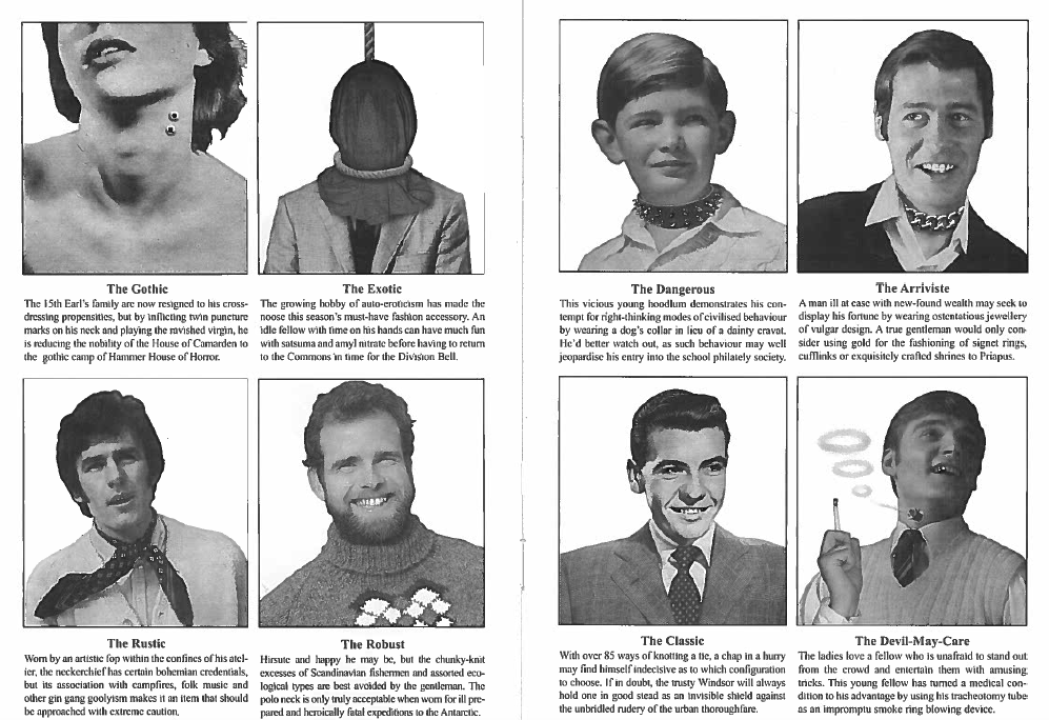
Classic from issue 16. So far as I’m concerned the most important item from The Chap Manifesto is number 8: “THOU SHALT NEVER WEAR PLIMSOLLS WHEN NOT DOING SPORT. Nor even when doing sport. Which you shouldn’t be doing anyway. Except cricket”. (In common parlance, those hideous and disposable artificial fibered walking billboards known as trainers, in great part sweatshop manufactured, ubiquitous even amongst anti-capitalistic regressives). Anyway, back to larynxial decoration: I’m pleased to report that my wonderful friend and collaborator is of The Splendid variety which he assures me is worn primarily for tactical reasons to outwit bureaucraps.

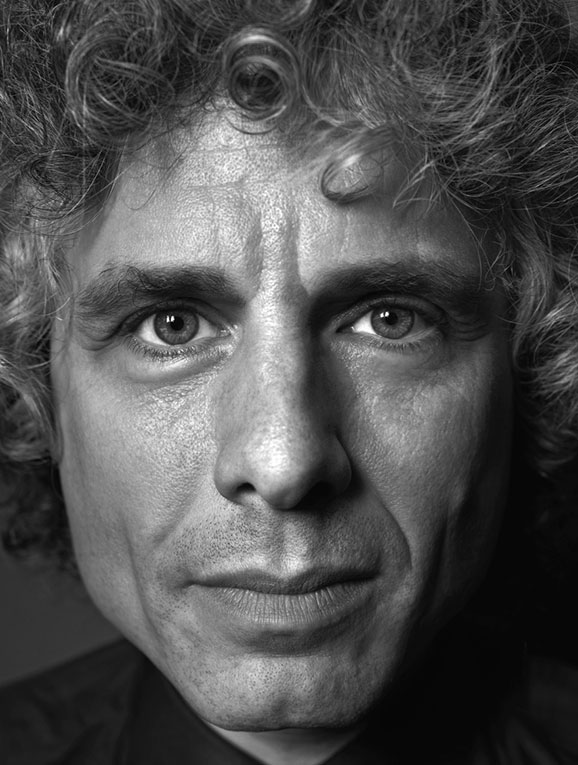
Pinker’s forthcoming bestseller which I’m expecting Taleb to eventually rip into. Despite Pinker ostensibly being a classical liberal his implicit progressivist ebullience is suspect. Epistemic humility is not seen as a cultural virtue: it is the zeitgeist of the modern age that we exist in a (misperceived) linear trajectory of progress, progress here taken to be coextensive with improvement – morally, socially, technologically, economically and scientifically. Progressivism thus conceived is clearly a “grand narrative” notion which on closer scrutiny is subject to all the weaknesses of such constructions. It is impossible to determine whether a change for the better in one part or aspect of the system is progressive for the system overall since there is no Archimedean point from which progress can be assessed. Every change alters some state of affairs, destroying or modifying it – that much one can accept. Musil captures this idea in The Man Without Qualities:
“It seems to me,” Ulrich said, “that every progressive step is also a retrogressive step. Progress exists always in one particular sense. And since our life as a whole has no sense, there is as a whole no progress either.”
Leo Fischel lowered his newspaper. “Do you think it better to be able to cross the Atlantic in six days or to have to spend six week on it?”
“I should probably say it’s definitely progress to be able to do both . . .”
Or as Chesterton put it:
Progress itself cannot progress. It is worth remarking, in passing that when Tennyson, in a wild and rather weak manner, welcomed the idea of infinite alteration in society, he instinctively took a metaphor which suggests an imprisoned tedium. He wrote—“Let the great world spin for ever down the ringing grooves of change.”
He thought of change itself as an unchangeable groove; and so it is. Change is about the narrowest and hardest groove that a man can get into.
The main point here, however, is that this idea of a fundamental alteration in the standard is one of the things that make thought about the past or future simply impossible. The theory of a complete change of standards in human history does not merely deprive us of the pleasure of honouring our fathers; it deprives us even of the more modern and aristocratic pleasure of despising them.
Granted we live, in some real sense, the best of times (for example, reductions in child mortality, vaccine-preventable diseases, access to safe water and sanitation, malaria prevention and control, prevention and control of HIV/AIDS, tuberculosis control and declining poverty – World Health Organization, 1998). But we also live in the worst of times – Auschwitz-Birkenau, Holodomor, Cambodia and more besides – the dark side to technocracy.
The latest from the culture and cognition reading group at Macquarie University. Worth checking out one of the articles already cited along with one that wasn’t.

Glad someone noted my tweet sometime back. :) This wasn’t as engaging as I’d hoped but I have every faith that they will do this again.
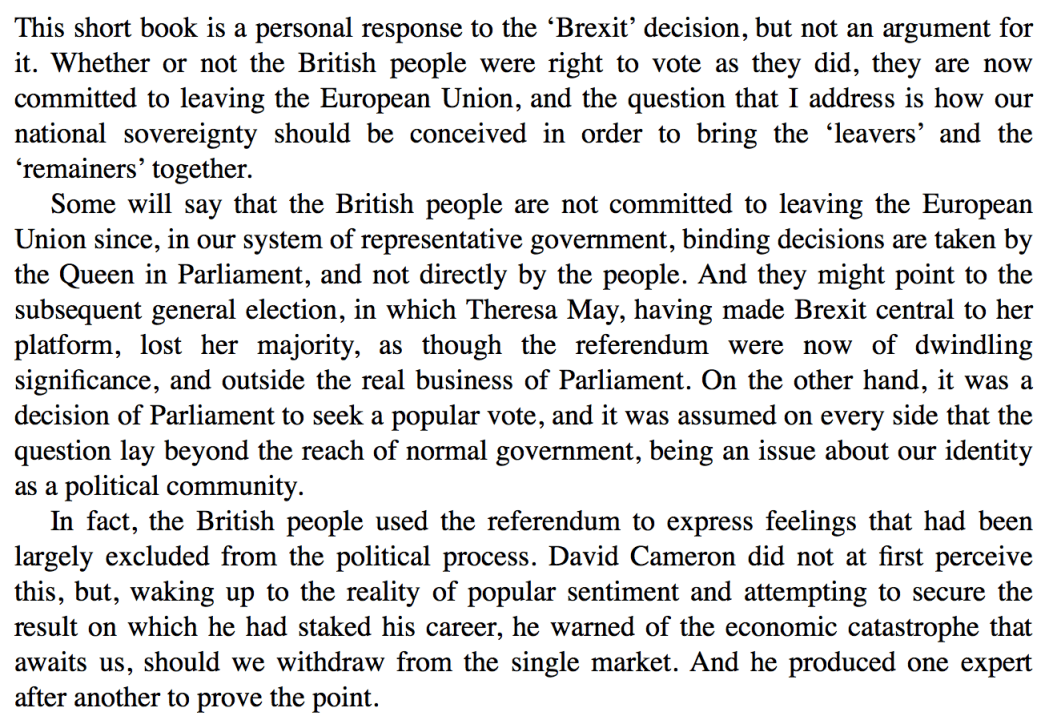
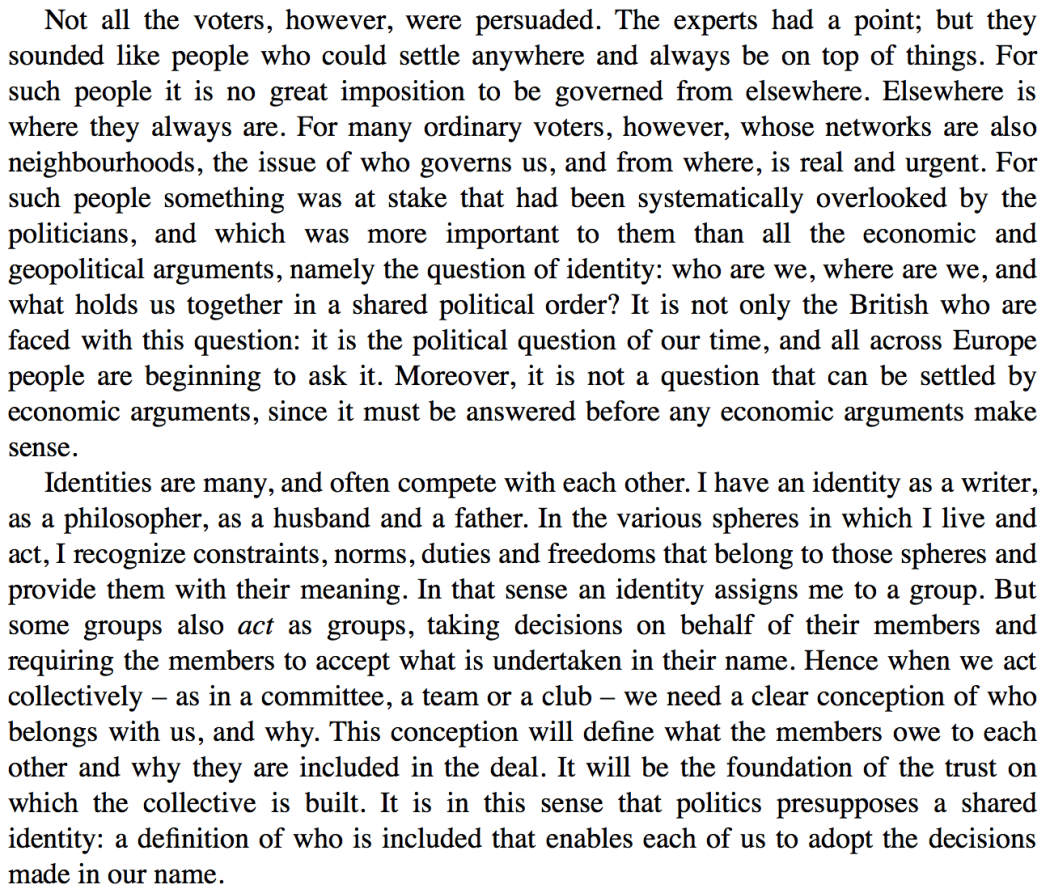
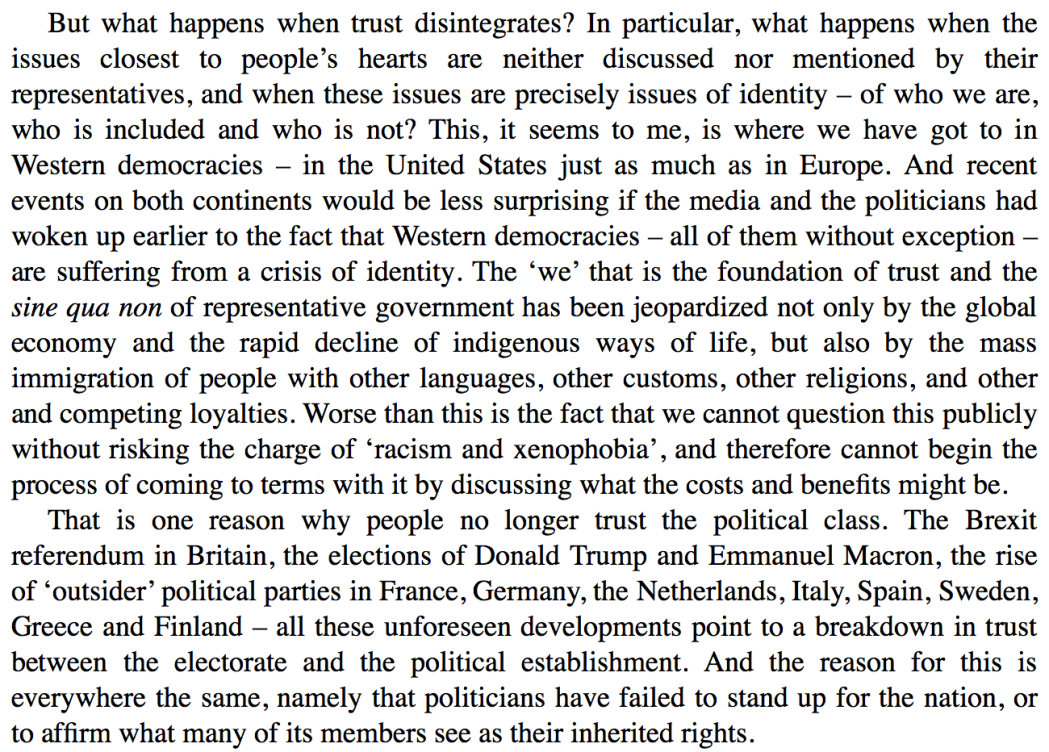
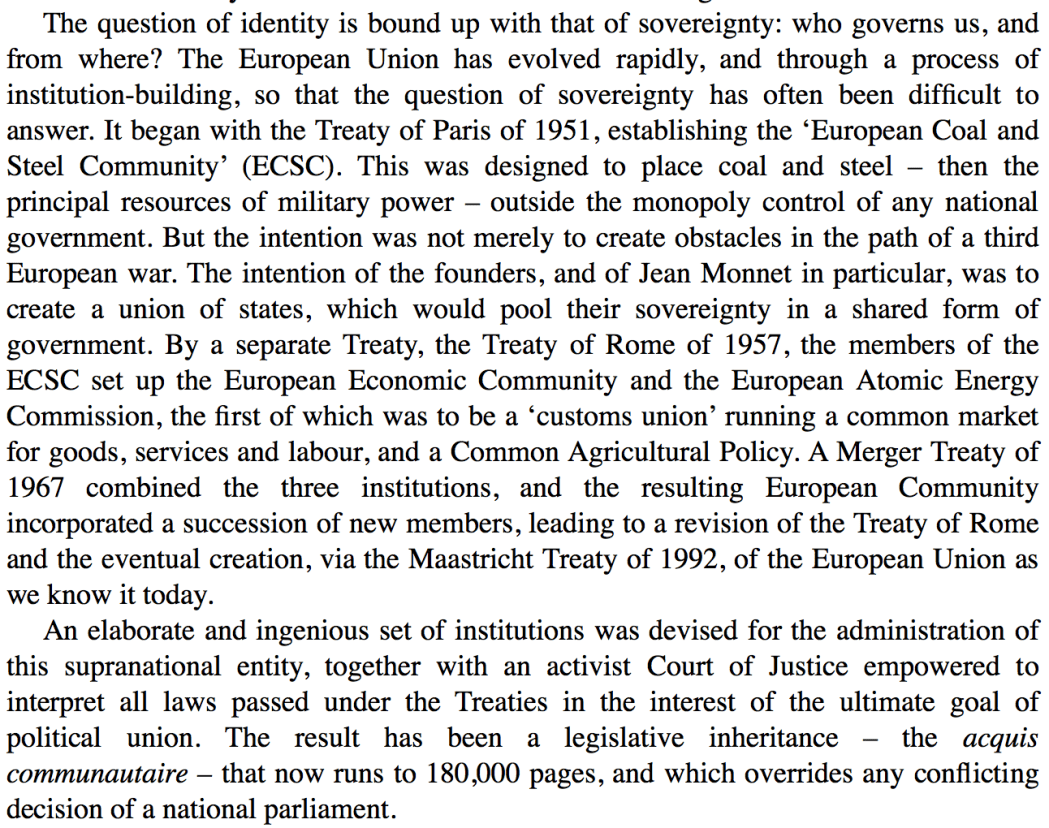
Published today. Below is Roger’s preface.