Marking the birth of the gentle professor.
In the university of Oxford, the greater part of the public professors have, for these many years, given up altogether even the pretence of teaching.
Marking the birth of the gentle professor.
In the university of Oxford, the greater part of the public professors have, for these many years, given up altogether even the pretence of teaching.
Here’s a most interesting article that reemphasizes the functional beauty of the Anglophone tradition of common law and language. As Givati points out, English, be it “BBC standard” or Jamaican (and everything in between), is essentially of a distributed character. This is one of the reasons why English is so adaptable (science and business), so culturally rich, and as a consequence so closely associated with individual liberty. All this is lost on the various varieties of vulgar rationalist: i.e. those behind Bill C-16 in Canada (still in Canada, check out the fuckwittery of this); the euphemistic Newspeak impulse of the “religion of peace” dhimmis; and the new-fangled fundamentalism of the “cultural appropriation” squawkers. Their relentless flattening of the socio-cultural landscape inevitably embodies an authoritarian tendency — since they are pissing in the wind, how else could they effect policy? They will of course double down but they will eventually be hoisted by their own petard through their own takfir-like purity tests.

Forthcoming: Walker Percy, Philosopher.
Percy, Peirce, and Parsifal: Intuition’s Farther Shore
by Stephen Utz
Walker Percy’s unusual aspirations set his novels apart from most literary attempts to understand profound human problems. He gave meaning to the category of art as inquiry. In the novels, his characters’ eccentric quests treat everyday things as evidence for abstract and ultimately theological hypotheses. Outside the novels Percy shared their conviction, inspired by philosophical traditions that include Leibniz, Descartes, the British phenomenalists, C. S. Peirce, and Noam Chomsky. This article shows how well in tune he was with these traditions, and especially with Chomsky’s and Peirce’s variants on the thesis that built-in biases picked up from our environment are relevant to everyday and scientific learning. In this respect, Percy too anticipated the significance of more recent developments in cognitive science and robotic learning. Like Peirce, he also believed that these empirical learning patterns have theological resonance.
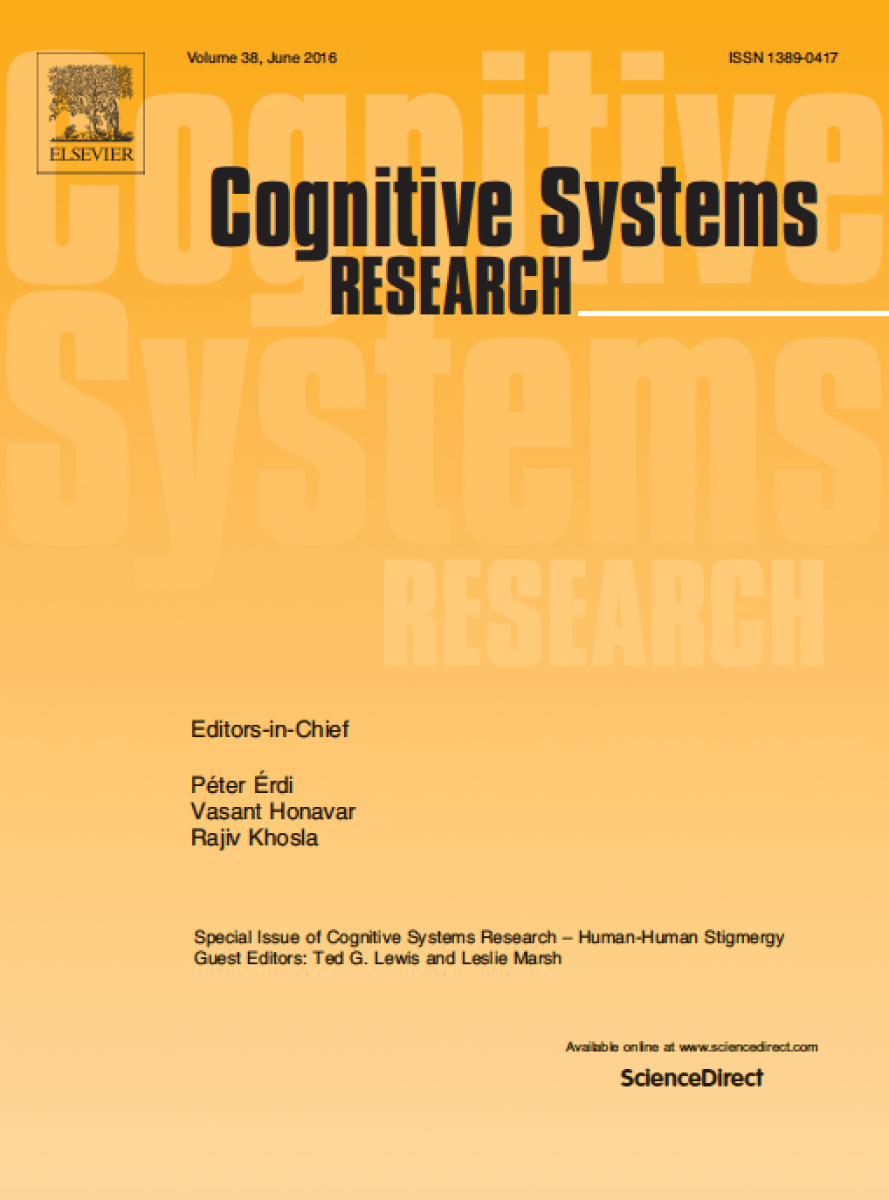
A collection of papers on human-human stigmergy: Theoretical developments and new applications and From ants to economies and Stigmergic epistemology, stigmergic cognition.
The latest installment of Marc’s podcast. For more on Marc see his website.

As a regular viewer of Tom Synder’s late night interview show ostensibly dealing with less fluffy primetime subject matter (e. g. Johnny Rotten, Lennon, Sterling Hayden, Manson), I recall seeing Thelma being interviewed: at the time it made little impression upon me. Since my interest in “Ken” Toole has been ignited I’ve failed to find a recording of that interview but I did find the transcript in the Toole archives at Tulane. If you want to get a strong sense of what Thelma was like, check out this video. Chris Harris who shot the image below spent a great deal of time with her, taking her shopping, being her on-call photographer and tells me that she was always “on”.

Forthcoming: Walker Percy, Philosopher.
Philosopher of Precision and Soul
by Leslie Marsh
The theme of abstraction operates in a twofold way in Percy – abstraction in the sense of being alienated from ones true or more authentic way of being/self and abstraction in a methodological sense, the inherent abstraction of scientific method and the more vulgar invocations of methodological individualism – social atomism.
The alienation that so animated Percy is deeply connected to the Cartesian tradition. Noted Harvard child psychiatrist and Percyean Robert Coles (1999, 127) quotes Percy: “The abstract mind feeds on itself, takes things apart, leaves in its wake all of us, trying to live a life, get from the here of now, today, to the there of tomorrow.” It entails an estrangement of the self both from the world and from itself. Walker Percy discerned what he took to be a distinctively 20th century (peculiarly western) form of disquieted consciousness – a miasmic malaise – consisting in a loss of the self brought about by three inextricably linked phenomena: (a) our inherited bifurcated Cartesian self – and derivatively (b) an uncritical assimilation and extension of scientific a priorism; and (c) atomistic social abstraction in the form of homo economicus. The upshot to these unremittingly abstract conceptions of being is that despite living in an age of considerable scientific achievement and attendant technological enhancement along with material abundance, we have been lulled us into a false sense of well-being. This shallow or inauthentic “well-being” is often manifest more as a distraction from boredom, a social palliative or stupor to ameliorate our heightened anomie and desiccated inner life – a rampant consumerism that defines us by what we want. But the “consumer” that Percy has in mind is not just of the commonplace “retail therapy” variety but also the consumer of ideas – junk science, conspiracy theorists, the New Age movement, cults, gurus of all sorts, fundamentalism, evangelicalism, zealotry of all kinds – all offering salvation that can be institutionalized as political, religious, or even academic charlatanism, the latter having a willing supply of vociferous illiberal student acolytes to do their bidding. It should be noted that though the root of our Western existential malaise is our Cartesian inheritance, I emphasize the adjectival so as not to cast Descartes as the whipping boy – that was not Percy’s intention.
This 2014 vintage has the most gorgeously addictive nose — and the wine itself was smooth and quite light despite the unusually high alcohol content. Scored highly by most others and is very well priced. Seek it out.

I have a chapter in this forthcoming book entitled “Pathologizing Ideology, Epistemic Modesty and Instrumental Rationality”.