Born on this day — a true gentleman in every sense. If ever Wiggins was miffed that I preferred to talk to him about his metaphysics rather than his ethics, he never let on. Sameness and Substance Renewed (2001) and its two precursors, 1967’s Identity and Spatio-Temporal Continuity and 1980’s Sameness and Substance, jointly remain one of my favourite reads. See discussion of Wiggins’ sortal identity at the Information Philosopher.
Clips Released from Islam & The Future Of Tolerance
The producers have released some clips via their Kickstarter page also published here on YouTube.
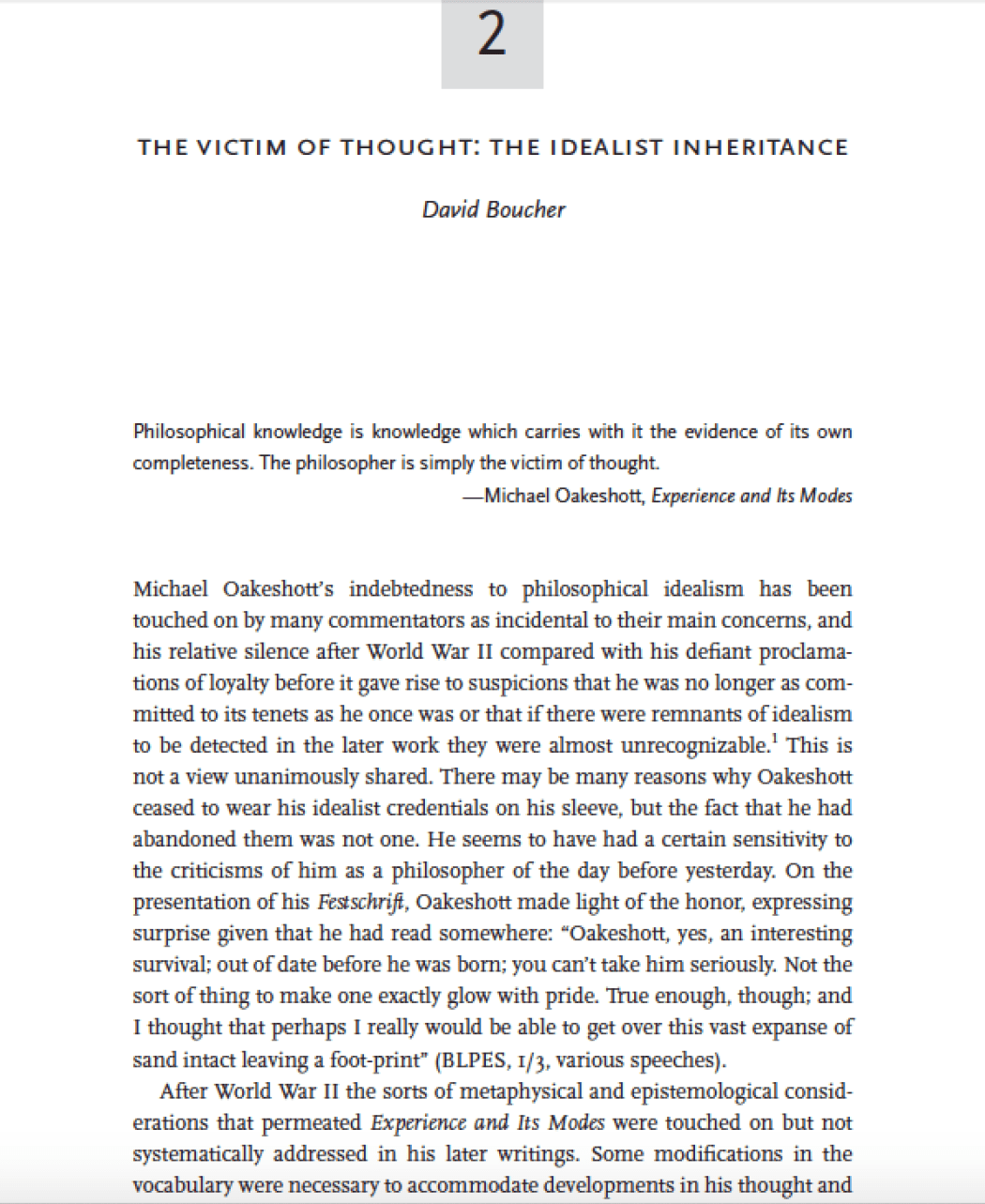
The Victim of Thought: The Idealist Inheritance
In “The Victim of Thought: The Idealist Inheritance,” David Boucher examines the relationship of this theory of knowledge or experience to philosophical—and especially British—idealism. He makes two fundamental points about this relationship. First, he argues that although idealism was on the wane in Britain the 1920s and 1930s, Oakeshott’s brand of idealism was hardly as unfashionable as many suppose. Second, he rejects the contention that Oakeshott jettisoned or severely attenuated his idealist commitments over the course of his career, arguing instead that Oakeshott’s philosophical outlook exhibits remarkable consistency over the course of fifty years. In particular, he claims that Oakeshott never abandoned his early commitment to absolute idealism or monism and that the introduction of the analogy of conversation in “The Voice of Poetry in the Conversation of Mankind” did not alter his view of philosophy. Boucher rounds off his analysis by teasing out what he takes to be the distinctive features of Oakeshott’s idealism.

Ennio Morricone: In His Own Words
Just published. Hopefully this will be a cracking and informative read. Surprisingly, it’s published by a university press.


Using Stigmergy to Distinguish Event-Specific Topics in Social Discussions
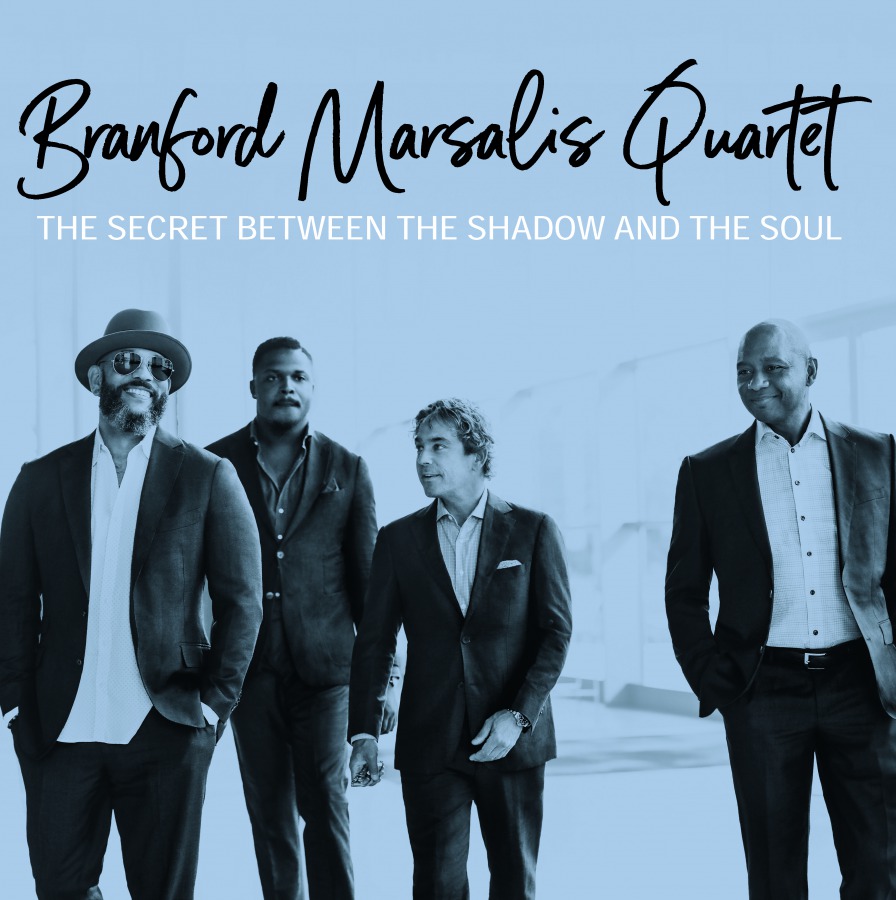
The Secret Between the Shadow and the Soul
Released today. OffBeat interview.
Symposium on Roger Scruton’s Conservatism: An Invitation to the Great Tradition
The Pursuit of Intimacy, or Rationalism in Love
What about his private, intimate life? This brings us to the first essay in this volume, Robert Grant’s “The Pursuit of Intimacy, or Rationalism in Love.” As the title suggests, this essay is concerned with Oakeshott’s love life, which he considered to be not merely peripheral but in many ways the main business of his life. It is, of course, well known that Oakeshott loved women: not only did he marry three times, but he enjoyed many, many affairs throughout his life. But Grant—who is currently working on a full-length biography of Oakeshott—takes us far beyond these well-known facts. Drawing on not only the letters and notebooks in the public archive at the LSE but also private diaries and letters as well as extensive personal interviews with Oakeshott’s friends, family, and lovers, Grant shows just how central erotic love was to Oakeshott’s life and how obsessively, irrationally, selfishly, and often destructively he pursued it. This Dionysiac aspect of Oakeshott’s private life stands in stark contrast to the polished, Apollonian character of his writings and philosophy in general, and it will no doubt shock those who are familiar only with the latter. Nevertheless, it is no part of Grant’s purpose to reduce Oakeshott’s philosophy to his private life or, Nietzsche-like, to see it as a mere rationalization of his personality. Instead, he sees a more complicated dynamic at work: Oakeshott’s anti-utopian politics serve as both a counterweight and a Hobbesian foundation for his erotic utopia.