Pete Mandik and Richard Brown, two of the most active, enthusiastic and competent “consciousness studies” bloggers (and who still find time to teach, write good articles, dictionary entries and books) discuss consciousness and higher-order representation on Philosophy TV.
Extended Mind Down Under
Here is a discussion between two of the major players in the extended mind literature – John Sutton and Richard Menary.
“Some philosophers are now arguing that thoughts are not all in the head” – it’s been at least 12 years! But the idea is now spreading like wildfire.
All about me: Disclosure in online social networking profiles: The case of FACEBOOK
With today’s release of the film The Social Network some might be interested in a recent academic study published in Computers in Human Behavior.

The Metaphysics of Skydiving
Some lovely reflections from Leon Malinofsky:
Skydiving is three things: It is a submission after years of willfulness; it is wholly absorbing, and therefore distracting from our cares; and it is the rational, peaceful contemplation of death, and eternity made less fearsome.
Excerpt from Why Skydive?
See also Imagine, Freefall, and my favourite Home.

(This is not Leon)
Big Thinkers: Dennett
Here is a programme featuring Dennett that I hadn’t heretofore come across. Glad to see Dennett as busy and pugnacious as ever after his health scare a while back which he amusingly talks about here. Speaking of health, here is Dennett on Christopher Hitchens.
Part 1
Part 2
Part 3
Consciousness in Interaction: The Role of the Natural and Social Context in Shaping Consciousness
My chum Mirko Farina has alerted me to a high-powered collection he and co-author Julian Kiverstein are contributing to. Here is the table of contents. One of the intriguing chapter titles is by Andy Clark. (Mirko tells me the volume has been severely delayed). I’m also looking forward to Mirko’s review of another contributor to this volume – Nivedita Gangopadhya’s co-edited Perception, action, and consciousness Sensorimotor Dynamics and Two Visual Systems.
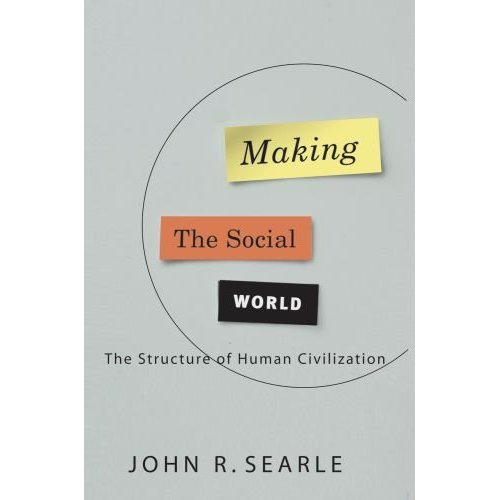
Searle’s Latest
NeuroPhone
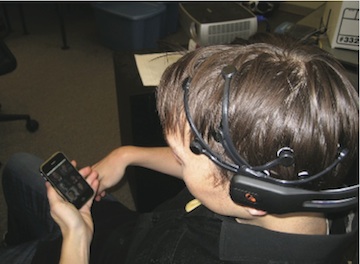
This is WILD – is this Andy Clark’s Natural-Born Cyborgs coming to full fruition? Thanks to my collaborator Marge Doyle for sending this my way. Check out this Award Abstract from the NSF and check out this paper by members of the Mobile Sensing Group at Dartmouth.
Abstract
Neural signals are everywhere just like mobile phones. We propose to use neural signals to control mobile phones for hands-free, silent and effortless human-mobile interaction. Until recently, devices for detecting neural signals have been costly, bulky and fragile. We present the design, implementation and evaluation of the NeuroPhone system, which allows neural signals to drive mobile phone applications on the iPhone using cheap off-the-shelf wireless electroencephalography (EEG) headsets. We demonstrate a brain-controlled address book dialing app, which works on similar principles to P300-speller brain-computer interfaces: the phone flashes a sequence of photos of contacts from the address book and a P300 brain potential is elicited when the flashed photo matches the person whom the user wishes to dial. EEG signals from the headset are transmitted wirelessly to an iPhone, which natively runs a lightweight classifier to discriminate P300 signals from noise. When a person’s contactphoto triggers a P300, his/her phone number is automatically dialed. NeuroPhone breaks new ground as a brainmobile phone interface for ubiquitous pervasive computing. We discuss the challenges in making our initial prototype more practical, robust, and reliable as part of our on-going research.
Adams on Embodied Cognition
Control, Embodiment, and Demonstrative Semantics
Rick Grush and co-author Amanda Brovold gave an interesting presentation at UBC. Grush’s reference to online gaming – his analysis of the gamers transcripts – was fascinating.
Abstract:
I present (work done in collaboration with Amanda Brovold) an account of the semantics of demonstratives, both exophoric and endophoric. The account, which represents a significant shift from accounts typical in philosophy and linguistics, has two features. First, it is argued that the conceptual archetype of what Langacker has called the control cycle is the key to understanding core demonstrative semantics. The control cycle is a conceptual archetype with many semantic and grammatical ramifications in which an agent recognizes something as a candidate for control, acts on it to bring it under control, and then controls it. This cycle can manifest in physical, perceptual, attentional, epistemic, and social domains. We analyze demonstrative semantics as keying on the interlocutors’ assessments of their own and each other’s (individual and joint) control domains – which objects they have control of, or are trying to gain, relinquish, or transfer control of. In languages with a proximal/distal distinction, proximals key on situations where the speaker S has control of the referent (and is often putting it in the addressee’s A control), and distals for referents S does not control.
This account i) does a better job explaining exophoric demonstrative choice than the spatial proximal/distal spatial interpretation; ii) provides a superior and unified interpretation of diverse experimental results; iii) provides a unified treatment of exophoric and endophoric anaphora; and iv) provides revealing analyses of how demonstratives pattern when different control cycles are involved.
(i)-(ii) Despite the view that ‘this’ is for things closer to S (speaker), and ‘that’ for things closer to A (audience), one can say ‘what’s this?” when touching a wound on someone’s back, even if one is touching it with a meter stick. Though closer to A spatially, S has control in several ways in which A does not. Also, as Coventry et al. (2008) have shown, giving S tools that extend the spatial range of their control also expands the range of things referred to with ‘this’ rather than ‘that’. These authors also found that demonstrative choice was affected by who last touched the referent – a subliminal indicator of social control (ownership).
(iii) Just as ‘this’ is preferred for things S has physical control of, and is placing in A’s control, so ‘this’ is preferred for ideas or propositions which S has attentional and epistemic control over, and is giving A control over (by telling her), e.g. 1a/1b.
(iv) Patterns can change as the relevant control domain changes. E.g. the pattern in 2a switches if A has physical control of S’s wrench, and S is giving A social control (ownership) of the wrench that A already has physical control of. An analogous switch occurs in 2c. In 2b/d, the pattern assumes that only the potential joke teller knows (and hence has epistemic control over) the joke. However, if S is given (metonymically) physical/perceptual control, e.g. physically touching one entry one a written list of jokes, ‘this’ is licensed. And if S does not know the joke, but points at a list, ‘that’ is licensed in 2b.
We explain what to make of languages whose demonstratives have specific spatial import (e.g. Burnhult 2008). And we respond to the potential charge that the notion of control is too vague, or is subsumed under notions such as accessibility or a metaphorical understanding of proximity.
The second feature is the embodied nature of exophoric demonstrative reference. As argued in the first part, demonstrative semantics keys on control relations. But the assessment of physical and perceptual control is a highly embodied enterprise. Most of the time, knowing what one’s interlocutor has physical or perceptual control over requires being in fairly rich perceptual contact with them. There are exceptions, of course. But the point is that the usefulness of demonstrative reference drops drastically when this sort of rich perceptual contact is blocked, even when both interlocutors know precisely where the other is located, where the conversational deictic center is. Data from naturally occurring communicative contexts of this sort (from sniper teams, and competitive online gaming) are presented which support this analysis.
Data:
1a. If you thought that/*this cookie was good, try this/*that.
1b. If you thought that/*this was a crazy idea, get a load of this/*that.
2a. Take this/*that wrench. 2b. Listen to this/*that joke.
2c. Give me that/*this wrench. 2d. Tell me that/*this joke.

