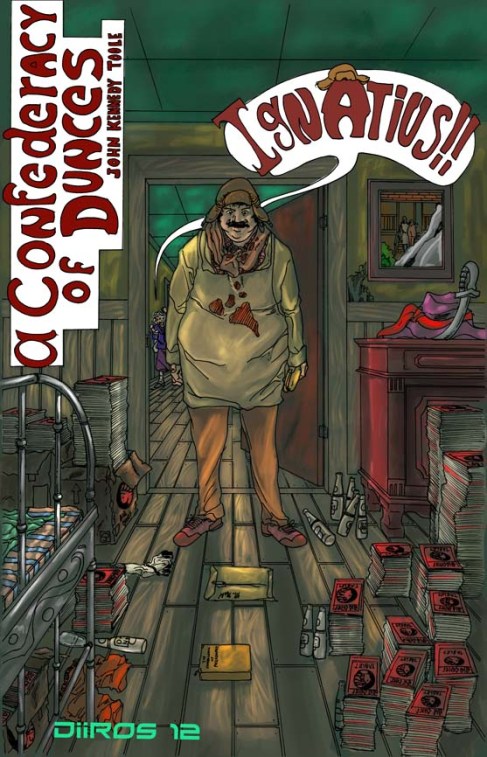
This from ABC (Australia) from a few years back — audio and transcript — featuring two chaps who made it over to London for MOA 2001. The fresh Oakeshott images below by Brian John Spencer.


This from ABC (Australia) from a few years back — audio and transcript — featuring two chaps who made it over to London for MOA 2001. The fresh Oakeshott images below by Brian John Spencer.
He dramatically whipped from his pelvis the sheet, flapping it open. Among the yellow stains the word FORWARD was printed in high block letters in red crayon. Below this Crusade for Moorish Dignity was written in an intricate blue script.
“Sheet? What sheet!” Ignatius replied. “I am holding before you the proudest of banners, an identification of our purpose, a visualization of all that we seek.” The workers studied the stains more intensely. “If you wish to simply run into the office like cattle, you will have participated in nothing more than a riot. This banner alone gives form and credence to the agitation. There is a certain geometry involved in these things, a certain ritual which musty be observed. Here, you two ladies standing there, take this between you and wave it thus with honor and pride, hands held high, et cetera.”
The two women who Ignatius indicated ambled slowly to the cutting table, gingerly took the banner with their thumbs and index fingers, and held it between them as if it were a leper’s shroud (p. 119).
Jennifer Lackey assumes the editorship of EPISTEME. Here is an interview with Jennifer. Here also is the programme for the recent 10th anniversary conference.

Now this is my idea of being a social activist and in the long term I’d imagine a whole lot more authentic and thus more effective.

Here’s a paper by David Weinbaum that invokes stigmergy, my first mention of stigmergy and the global brain this year.
What an incredible career, what an incredible life. Check out the clip below of the 14 y.o. Jimmy talking about becoming a biological researcher when he grows up.

Check out mixed media artist Gina Phillips’ Fats Domino Series

The piece that inspired the Fats Domino Series is called Not Fats. This piece started as a commission commemorating the nine people from New Orleans who have been inducted into the Rock and Roll Hall of Fame. I did nine fabric portraits of all the inductees and incorporated them all into a banner. I scrapped the first version of Fats, because I felt I hadn’t gotten his likeness quite right…so I made another, and the second one is the one that made it on the banner.
Late last year, I started experimenting with incorporating resin into some of my pieces. I still had the rejected Fats hanging around in my studio, so I used him as a guinea pig for the resin. I created a little dam out of plastic around the fabric portrait and proceeded to pour a lot of resin on top. At first it seemed it was working great, then after the resin started to set up, the fabric began to float to the top of the resin and rise above the surface…which I didn’t want. I wanted the fabric to be completely embedded in the resin. So I frantically started sticking pins into the fabric to keep it down. I intended to pull out the pins before the resin set up, but I missed my window of opportunity and the pins were a permanent addition.
Well, the pins were one of those “happy mistakes” that artists talk about. This mistake inspired me to make a whole new series about Fats Domino.
The addition of the pins gave the piece a whole new meaning. The pins are mostly stuck in Fats’ face and it made him seem afflicted and vulnerable. I started thinking about what happened to him after Katrina…how he had to be rescued from his house, like so many of my neighbors here in the Lower Ninth Ward. Many people thought he had died in the storm. Like so many others, he hasn’t moved back to his neighborhood since the storm. So, I titled that first piece Not Fats…because we hoped the best for him and couldn’t believe his misfortune and we were relieved to hear he was still alive.
After that first piece, I started depicting Fats in many different situations in which he transcends time and space. He’s taken on a semi-mythical/heroic stature. He fishes with the Natives. He floats above the Industrial Canal. He’s captain of his own ship. He walks through the Battle of New Orleans, unscathed. In Facing Leaner Times Ahead, Fats Nourishes Himself With A Bowl Of Yakamein, he is galvanized by a concoction that is particular to his home place.
We saw ourselves in Fats when he had to be rescued from his house after Katrina. We felt sorry for him and ourselves to have been put in such a vulnerable position in life, and for many it’s been a very bitter experience. So I wanted to restore Fats’ power. In this new body of work, Fats transcends adversity and becomes a Lower Ninth Ward hero.
Here’s an interview with Jack Weinstein whose Adam Smith’s Pluralism: Rationality, Education, and the Moral Sentiments will be the subject of an upcoming symposium for Cosmos + Taxis. Also, Jack is contributing to my Propriety and Prosperity: New Studies on the Philosophy of Adam Smith scheduled to appear this year.

This announcement (below) posted on PHILOS-L. Jonathan years back very kindly sent me a copy of his The Possibility of Metaphysics (1998) and A Survey of Metaphysics (2002). Here is an interview with Jonathan.
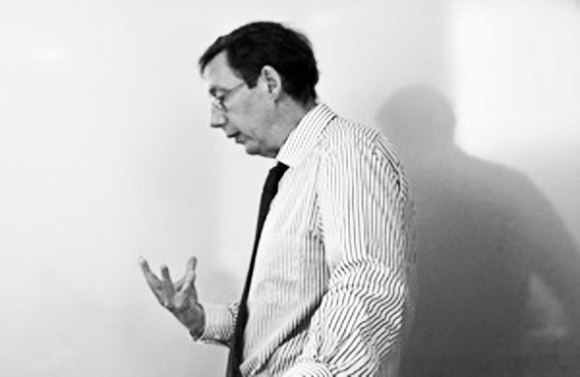
It is with great sadness that we announce the death of Professor E. J. (Jonathan) Lowe. Jonathan was born in Dover, England, on 24th March 1950. He went to Cambridge to read Natural Sciences in 1968, but changed to History after one year and was awarded a BA (first class) in 1971. After that, he switched to Philosophy and moved to Oxford, where he was awarded his BPhil and DPhil degrees in 1974 and 1975 (supervised by Rom Harré and Simon Blackburn respectively). After a brief period teaching at Reading, Jonathan joined the Department of Philosophy at Durham in 1980, where he stayed for the rest of his career. He was promoted to Senior Lecturer (1990), Reader (1992) and then Professor (1995). During his time at Durham, Jonathan established himself as one of the world’s leading philosophers, publishing twelve single-authored books, four co-edited collections and well over 200 articles in journals and edited volumes. His scholarship was strikingly broad, ranging from early modern philosophy through to the interpretation of quantum mechanics. His most important and sustained contributions were to philosophy of mind, philosophical logic and especially metaphysics.
Jonathan adopted a realist conception of metaphysics as an autonomous discipline concerned with the fundamental structure of reality, as exemplified by his important book The Possibility of Metaphysics (OUP, 1998). Metaphysics, he maintained, should take common sense as its starting point, while at the same time acknowledging that aspects of common sense will need to be revised or abandoned. It should also retain a healthy respect for science but resist scientism, as the role of metaphysics is to illuminate features of reality that empirical scientific enquiry inevitably presupposes. It is therefore the most fundamental form of enquiry and – as Jonathan also emphasised – something that is extremely difficult to do. But, he insisted, there are no cheap short-cuts, and no piecemeal solutions to metaphysical problems. Metaphysics is to be done systematically and patiently. Jonathan’s approach drew inspiration from Aristotle and Locke, amongst others, both of whom retained a foothold in common sense. His metaphysical writings addressed a range of themes, including volition, personhood, agency, mental causation, identity, truth, essentialism and ontological categories. In recent years, one of his many notable achievements was the formulation of a new ‘four-category ontology’, which he proposed as a metaphysical foundation for all empirical scientific thought. The most detailed account of this appears in his book The Four-Category Ontology (OUP, 2006).
Throughout his life, Jonathan was guided by a kind of faith in our ability to discover the fundamental structure of reality through metaphysical thought. He was spurred on by a constant sense of puzzlement, fascination and bewilderment at the existence and nature of reality, and would not let extraneous considerations distract him from a resolute search for truth. Those of us who knew him will remember him not just as a gifted and committed philosopher but also as an exceptionally kind, caring and generous person. He was an accomplished teacher, who did everything he possibly could to support, encourage, nurture and inspire his students, many of whom have gone on to have successful academic careers. He was similarly supportive of his colleagues at Durham and of the wider philosophical community. Philosophers from all over the world came to depend on him as a mentor and referee, and he would spend many hours most weeks writing carefully crafted letters of support. It was a privilege to work with Jonathan. He was always a keen participant in research events, at Durham and elsewhere, where he exercised his astonishingly refined critical skills and offered numerous insightful comments, without ever being dismissive. Even with his eminence in the profession and the many associated demands on his time, he insisted on doing his fair share (and usually more than his fair share) of administrative and teaching work. He was a reassuring presence in the department, who was always on hand to offer support, advice and consolation to colleagues. We are diminished by the loss of an outstanding philosopher and a great friend.
Jonathan died on 5th January 2014, after several months of illness. He leaves his wife, Susan, and their two adult children, Rebecca and Tim.
Robin Hendry and Matthew Ratcliffe
7th January 2014
Here’s an interesting article, the first EM article of the year, from Joel Krueger (Joel by the way also contributed to the Zygon syposium on EM).


