Louis Armstrong on Desert Island Disks

The BBC recently discovered a half-hour BBC Radio 4 interview with Louis Armstrong from 1968 (The story in The Guardian). Armstrong’s desert island records are:
Blueberry Hill — Louis Armstrong
Mack the Knife — Louis Armstrong
People — Barbra Streisand
Bye Bye Blues — Guy Lombardo & His Royal Canadians
Bess, You Is My Woman Now — Ella Fitzgerald and Louis Armstrong
New Orleans — Bobby Hackett
Stars Fell on Alabama — Jack Teagarden
What a Wonderful World — Louis Armstrong
Ernie K-Doe
This “character” born on this day. Ernie’s official website.
Antoinette also led a tongue-in-cheek campaign for K-Doe’s election for mayor of hurricane-ravaged New Orleans in 2006, five years after his death.

On Human Conduct

It’s been 40 years since one of Oakeshott’s masterpieces, On Human Conduct, was published. Despite being an “old man’s” book, dense and highly qualified, it contains some of the most melliflous writing Oakeshott ever did.
Religious faith is the evocation of a sentiment (the love, the glory, or the honour of God, for example, or even a humble caritas), to be added to all others as the motive of all motives in terms of which the fugitive adventures of human conduct, without being released from their mortal and their moral conditions, are graced with an intimation of immortality: the sharpness of death and the deadliness of doing overcome, and the transitory sweetness of the mortal affection, the tumult of grief and the passing of beauty of a May morning recognized neither as merely evanescent adventures or emblems of better things to come, but as adventures, themselves encounters with eternity.
Here is the very excellent David Lloyd Thomas’ review in MIND New Series, Vol. 86, No. 343 (Jul., 1977), pp. 453-456
It would be understandable if a reader’s first impression were that this is a book from another age, largely irrelevant to contemporary philosophical discussions of politics. One will find no reference to Barry, Nozick, Rawls or Sen: only the great dead philosophers are both discussed and named. The lack of ‘engagement’ (to use one of the author’s favourite words) with current discussion may suggest a certain aloofness from, and disdain for, recent work. Such an impression, then, would be understandable, but it would also be wrong. Professor Oakeshott’s book is a major contribution to recent attempts to emancipate political thought from the neo-egalitarianism to which it has been largely confined during the past decade. The ideas, if not the packaging, are very contemporary indeed. Where, for example, has one recently encountered a view of justice like this? ‘(T)he term so frelationship are exclusively the rules of a practice which may concern any and every transaction between agents and is indifferen to the outcome of any such transaction:the practice of being “just” to one another’ (p. I28).
The first essay is principally concerned to defend the thesis that the ‘theoretical understanding of a substantive action or utterance is . . . in principle, a “historical” understanding’ (pp. I06-I07). It is not clear that discussion of the issues raised by this main thesis is much advanced, in part, perhaps, because recent debate on this matter is ignored. The part of this essay of most intrinsic interest and aloof most relevance to what is to follow, is a brief account of morality based upon the analogue of language. ‘A morality, then, is neither a system of general principles nor a code of rules, but a vernacular language. General principles and even rules may be elicited from it, but (like other languages) it is not the creation of grammarians; it is made by speakers’ (p. 78). Besides containing the germ of the idea of ‘the civil condition’, to be developed in the second essay, this account of morality reveals a tension which, in different forms and with respect to several matters, is to persist: are we being given a normatively neutral account of morality or not? On the one hand we are told ‘(that) there should be many such languages in the world . . . is intrinsic to their character. This plurality cannot be resolved by being understood as so many contingent and regrettable divergencies from a fancied perfect and universal language of moral intercourse’ (p. 80). But it also appears that for anything to count as a morality it must be ‘a practice without any extrinsic purpose’ (p. 62), and one may wonder whether some of the ‘vernacular languages’ would in fact satisfy that condition.
The ‘civil condition’, which is the subject of these essays, is an ideal ‘mode of association’.It is referred to as civitas, and is described in terms of its relationship to other idealized notions. The civil condition holds between cives who are subject to a system of rules, lex, which authorizes a procedure of adjudication in which ‘uncertainties and disputes are resolved and the conditions of association in contingent situations ascertained’ (p. I3). The account of civitas is not intended to represent civil society as it actually is, but to be a model to which political communities have approximated in varying degrees. Similarly, lex is not intended to be an account of law as it actually is in any particular state. The principal theme of the essay is to contrast the civil condition with an ‘enterprise association’, which is specified by ‘a common substantive purpose and the choice of each of the agents concerned to be related in terms of it’ (p. 114). But the civil condition is not to be understood in terms of a substantive purpose by which cives are related, nor is lex a system of common rules adopted to further some purpose,nor are the ruler sofa civitas the managers of a collective enterprise.
This essay, the core of the book, presents a lucid model of a conception of political life which many (though not Oakeshott himself, apparently) would call ‘liberal’. Elegant though it is as an intellectual construction, it is not without some obscurities, one being the relationship of civitas to morality. It resembles morality in that both are practices without a goal or purpose. Civil association is also said to be a ‘moral condition’ (p. 174). Nevertheless civitas is not co-extensive with a moral community: moral duties need not be civil obligations. Possibly the answer is that in the civil condition’s system of lex and a procedure of adjudication . . . are necessarily partnered by a procedure of legislation’ (p. I38), whereas there is no such requirement in the case of morality. This could be the starting point for developing an account of ‘the political’. The extent to which civitas is a formally defined relationship is also unclear. Presumably there are many possible variants of civitas all satisfying the formal requirements. ‘The terms of a practice of civility, then, are not conclusions inferred from the postulates of civil association’ (p. 176). On the other hand it appears that the formal requirements of the civil condition can sometimes have impressively strong implications. For example, of a proposal to prescribe that a certain opinion be believed it is said that such a proposal ‘is excluded from politics because such a rule is incompatible with the character of respublica as a system of rules to be subscribed to in conduct’ (p. I7I).
Near the end of this essay Oakeshott says of the civil condition that (one is not astonished to find this mode of human relationship to be as rare as it is excellent’ (p. 180). How is its excellence to be shown? Not, of course, by reference to the purpose it serves, for it has none, nor is it to be justified by contractor consent. Does Oakeshott believe that current orthodoxy simply ignores the distinction between the civil condition and an enterprise association? No doubt it often does, but this is hardly a sufficient argument for the former. Those who conceive of the state as an enterprise association, having become conscious of the alternative, could say ‘Civitas is no doubt an interesting political conception, but we happen to see the state, as an enterprise association devoted to such and such purposes’. It is conceded, apparently, that both models are internally consistent, and Oakeshott cannot say that those who see the state as an enterprise association misunderstand terms such as ‘state’ and ‘law’, for the terms appearing in the model of civitas do not necessarily have the same meaning as ‘state’, ‘law’, etc.
This issue arises again at the end of the third essay. The main task of this essay (entered upon after a delicious debunking of the pretensions of modern European states to either permanence, or national homogeneity, or authority) is to trace the development of two conceptions, societas and universitas in terms of which attempts have been made to understand the state in the course of modern European history. These two conceptions, corresponding to the civil condition and the enterprise association of the preceding essay, are used as poles between which the characters of actual states can be located. There is some brief discussion of particular political theories; for example, of Bodin and Hegel as representatives of the state conceived of as societas, and of Bacon as a representative of the alternative conception. There is also speculation as to the causes of subscription to universitas (though not, significantly, as to the causes of subscription to societas). The causes are said to include familiarity with the exercise of ‘lordly’ power in the administration of colonies, the frequency with which European states go to war, and the prevalence of a certain type of character, those who have an ‘incapacity to sustain an individual life’ (p. 276). In its modern form the state as universitas is seen as the organizer of an economic corporation, managed by the government and directed to exploiting its resources,both human and natural,to provide as many benefits as possible for distribution on some supposed criterion of equality.
Even by the end of the book there is still uncertainty as to whether Oakeshott thinks it proper to argue for the civil condition. Any request for something more than ‘a historical account of how the character of a modern European state . . . came to be understood in terms of the diverse analogies of societas and universitas would be made ‘somewhat improperly’ (p. 326), and yet only a few pages before we have this not altogether uncommitted passage: ‘no European alive to his inheritance of moral understanding has ever found it possible to deny the superior desirability of civil association without a profound feeling of guilt’ (p. 32I). Is it really intended that there should be no argument? Perhaps the outlines of one is to be found in the implausibility of the claims of a state as enterprise association to have authority. ‘(W)hen a state is understood as a purposive association the analogy has been fatally corrupted: association in terms of a common substantive purpose must spring from the choice of each associate to be thus joined with others,a choice which he must be able to revoke,and no modern European state has ever been of this character’ (p. 3I9). By contrast, the authority of the state as a civil association is thought to be (for somewhat mysterious reasons) above reproach. Thus modern anarchism could only apply to the state as an enterprise association, for it has ‘no meaning or relevance whatever in relation to civil association’ (p. 3I9).
This book could be seen as the complement of Professor Nozick’s Anarchy, State, and Utopia. The coyness Oakeshott displays when it comes to revealing arguments for civil association is not a striking characteristic of Nozick’s work: on the other hand, if it is true that Nozick’s book could have more sense of tradition in political thought, that lack is certainly not to be found in Qakeshott’s work. Despite the difficulty one may have in finding specific conclusive arguments, Oakeshott’s defence of the civil condition is both eloquent and persuasive.
BEDFORD COLLEGE, UNIVERSITY OF LONDON
D. A. LLOYD THOMAS
Prison Dining
Seems to be a superb idea that should be tried elsewhere especially in the US.
The brainchild of The Clink Charity, set up to reduce reoffending rates of ex-offenders by training and placing graduates into employment upon their release, three prison restaurants now operate in the UK.

Turing: “He invented the idea of software, essentially”
This in The Washington Post.
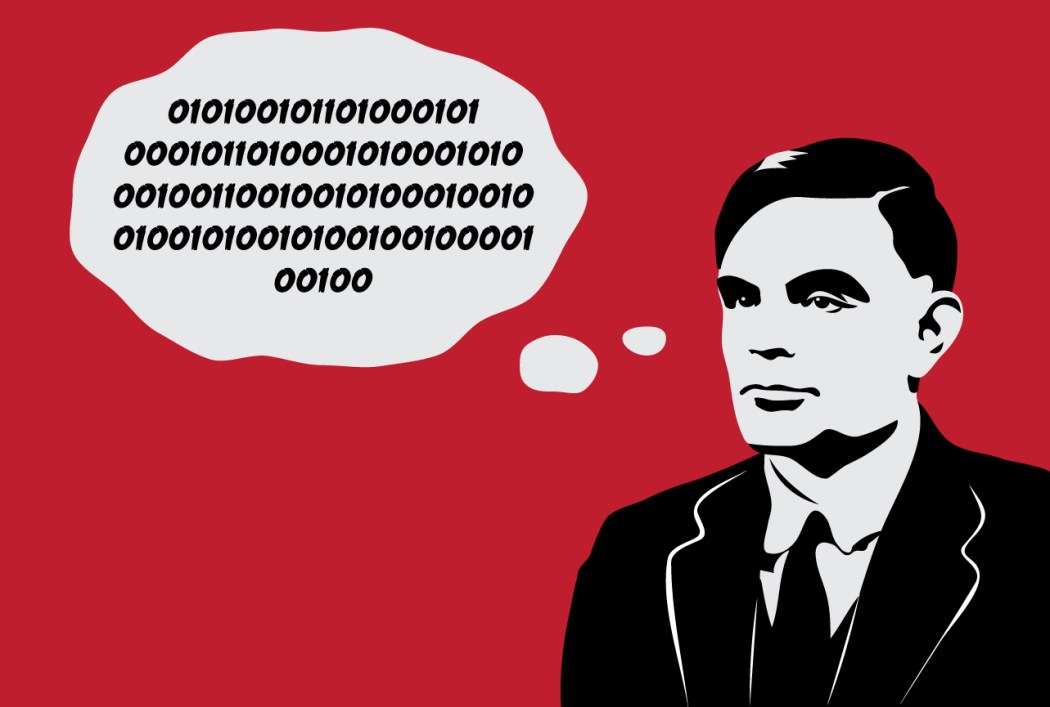
A Confederacy of Dunces – quotes and extracts – 91
After about two years this marks the end of the weekly CoD cycle and with no more text forthcoming here are the left over Ignatius graphics I’ve found.


What My Dog Can Do: On the Effect of The Wealth of Nations I.ii.2
The intro to Jack Weinstein’s chapter.
In the midst of one of the most famous passages in The Wealth of Nations, Adam Smith writes “nobody ever saw a dog make a fair and deliberate exchange of one bone for another with another dog” (WN I.ii.2).
In and of itself, this is probably not a noteworthy sentence, but it has always rubbed me the wrong way because I have seen it happen. My late dog Mingus would regularly exchange his bone with his “best friend” Casey, and they would do so without conflict or negative consequence.
Mingus was both very empathetic and emotive. Like many border collies, he was smart, could communicate his desires clearly, and was tremendously attentive to his caregivers’ moods, suggesting, already, many Smithian traits. As many animal behaviorists will insist though, these descriptions may be anthropomorphizations. I loved Mingus dearly and was certainly susceptible to projecting meaning onto his actions beyond his capabilities.
Whether Mingus had intent or not, my designation of Mingus as worth affective consideration is compatible with Smith’s moral psychology. On the one hand, because sympathy is, for Smith, an “illusion of the imagination”—people can even sympathize with the dead—emotions need not actually be present in the observed for the spectator to sympathize with them (TMS I.i.1.13). Under Smith’s schema, my fellow feeling with Mingus would be no less sympathy if he himself did not have the thoughts or emotions I judged him to have. And, while he was likely incapable of the impartiality required for Smithian moral agency on his own, this does not disqualify him from my consideration. He may be designated, in Alejandra Mancilla’s terms, a “moral patient” that we advocate for (Mancilla, 2009, pp. 3, 6).
One the other hand, if Mingus did have intent (which I think is the case) I would have been in the most qualified position to know it. Because sympathy works best with those who are closest to us—those in our inner circle of sympathy—I could best interpret his behavior, facial expressions, and voice. I knew Mingus almost his entire life and he had only the briefest time to socialize to other humans before my wife and I adopted him (we rescued him from a Humane Society when he was a few months old). My family knew his preferences, tendencies, behaviors, and moods, and he knew ours; the entire household dynamic including all the human interrelationships, was significantly affected by his presence. This was painfully and repeatedly confirmed when Mingus died unexpectedly and the sociology of the house had to be renegotiated.
Mingus was family even by Smith’s definition; for him, familial relationships are not biologically defined. “The force of blood,” Smith writes, “exists no-where but in tragedies and romances.” Familial love is instead the “habitual sympathy” of those “naturally bred up in the same house” (TMS VI.ii.1.5–8). In short, losing him was not like losing a family member, it was actually losing one, and the Smithian framework for intimacy, communication, empathy, and care all support this point of view. As a result, whatever claim Smith makes about dogs and exchange does not extend further than the single assertion about economic capability. It has no consequences for the human-animal relationship.
Nevertheless, even though whether I anthropomorphize Mingus is irrelevant to the question of whether I can sympathize with him, it is indeed relevant to whether or not he was capable of exchange since the latter implies intent. Smith’s claim that dogs do not engage in contract appears to me false, but my belief does not make it so anymore than Smith’s writing confirms it. An empiricist system like Smith’s can be as indeterminate as any behaviorism, and the impartial spectator is fallible enough that even our deepest convictions may become corrupt (ASP 72).
Identifying whether dogs have intent is problematic, especially since there is disagreement as to what content such intentionality would have. Neuroscientists can, of course, photograph brain activity, but materialist descriptions of thinking are also subject to interpretation. Smith’s comment on dogs place us squarely in the classic philosophical problem of other minds and Smith’s corpus does not have the resources to solve it.
Recognizing the metaphysical and philosophical limitations of Smith’s approach, then, my intent in this paper is not to ask whether dogs engage in contract per se, but what happens to Smith’s account of humanity if they can. I will offer more evidence to suggest that the possibility is believable, but my emphasis will be on the text rather than the fact of the matter.
This textual approach is further justified by a commentator who claimed that Smith’s remarks about dogs be considered an essentialist definition of human beings. He claimed that Smith was arguing, not simply that people are the only ones who make contracts, but that making contracts is a necessary part of what it means to be human. If Mingus’s behavior challenges Smith’s veracity, and if the commentator is correct—if Smith defines a human life in this context—then Smith’s error might call his other writing into question as well. My task in this discussion is to ask if it does, and if so, how much. To do so, I engage in detailed exegesis on WN I.ii.2 and argue that this sentence is neither a definition of humanity nor intrinsically connected to the rest of Smith’s work. I conclude by explaining why I think this examination is relevant and important. To these purposes, unless otherwise specified, I will regard exchange and contract as designating the same behavior: consciously giving another creature, in Smith’s words, “this for that” (WN I.ii.2).
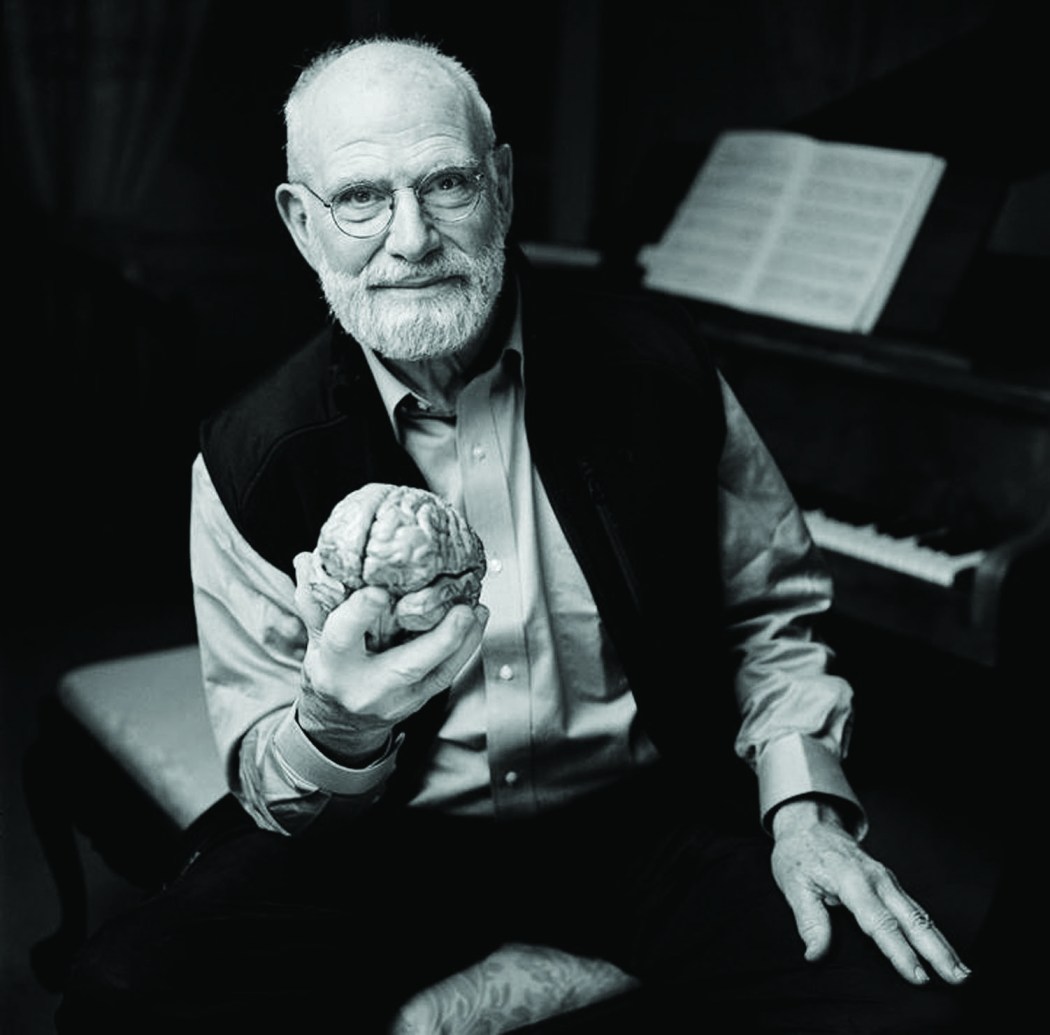
Oliver Sacks on Learning He Has Terminal Cancer
Clarence “Gatemouth” Brown: Dirty Work at the Crossroads 1947-1953
Essential for Gatemouth fans and others. Succinctly and very well put by Steve Leggett.


