Bernard Williams in the LRB reprinted in Essays and Reviews: 1959-2002. An update, see: The London Review of Books.
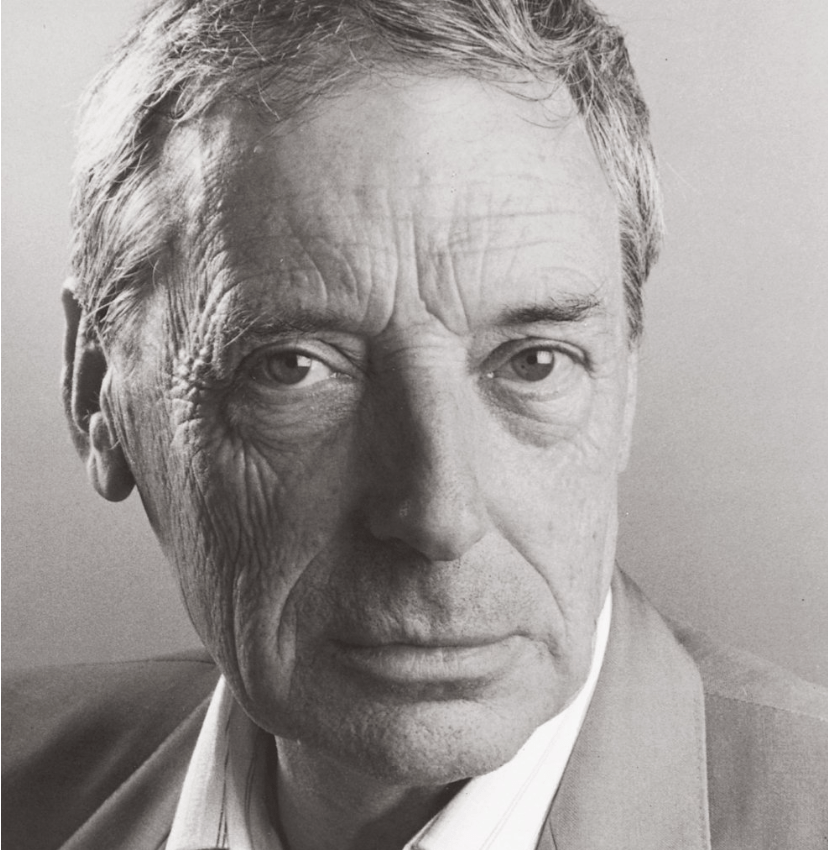
As long as there has been such a subject as philosophy, there have been people who hated and despised it.
I do not want to exaggerate, in a self-pitying or self-dramatising way, the present extent or intensity of this dislike; I am not thinking of the philosopher as emblematically represented by the figure of Socrates, the martyr to free thought who reaches what the pious or conventional regard as the wrong answer. Nor do I suppose that philosophers are often seen as politicians are in Australia, where that profession (I was once told) is regarded as much like that of nightsoil workers. Still less are they like American lawyers, notoriously considered powerful, ubiquitous and horrible.
Few people, after all, think about philosophers much, and some of those who do may well regard them with a mildly bemused respect. But the subject does collect a familiar style of complaint: that philosophy gets no answers, or no answers to any question that any grown-up person would worry about, or no answer which would be worth worrying about, even if the question were. The complaint is, basically, that philosophy is useless: either intrinsically useless, or useless in the form in which it is usually done, a professional or academic form. It is this second view, that philosophy is useless but ought not to be, that is likely to add dislike to mere contempt.
In asking many of their questions – what doing an action is, for instance, or how by making noises we can make sense to each other, if indeed we can – philosophers are motivated by curiosity. But that is not their only motive, and particularly in asking political and ethical questions, about justice, the rightful use of power, and what sorts of life might be worth living, they have wanted to be helpful. They have even hoped, some of them, to redeem or transform humanity.
Of course, not every such question is philosophical. Politics itself, and religion, and people in the bar discuss these things, and they are not all doing philosophy. Philosophy comes into it when the discussion becomes more reflective or theoretical or systematic, and it is typical of philosophy that its discussions of ethics and politics have some connection with those other more theoretical questions, about knowledge, action and psychology. Arguments for political toleration have often been linked to the idea that no one has a monopoly of moral truth. The idea that all human beings share moral freedom has been offered as a basis of liberalism. These examples are modern, but philosophy in the past had similar interests, and equally it was capable of attracting some rather special styles of dislike.
The most radical form of the complaint against philosophy is that it is as such irredeemably useless: that all of it is empty, pointless, word-spinning which wastes time and distracts people from worthwhile work. This style of objection came, once upon a time, from certain religious outlooks: Tertullian, for example, said that he agreed that Christianity was absurd, and that was why he believed it. Other pious people have thought that philosophical reflection was a distraction from the religious life and an evasion from it, putting aridly clever arguments in place of an honest view of life’s commitments. That complaint was directed as much to religious philosophy as to any other: in fact, theology was seen as in some ways the worst kind of philosophy, being a parody of religion as it should really be.
These days, most of those who take this kind of attitude to philosophy are not religious, but scientists, or – more typically – fellow-travellers of science, and they take it not in the name of religion but in the interest of an anti-philosophical and confidently puritanical view of science. Just as the religious haters of philosophy most hated religious philosophy, so these complainers may particularly dislike the philosophy that is nearest to science, such as that which considers the relations between thinking and the brain. The scientific critics are disposed to see this as a lazy substitute for work in the lab.
These complainers have a problem, which is similar to one that their religious forebears had: they cannot hope to justify their story that science is useful and philosophy is useless simply by doing science – in order to justify it, they will have to do philosophy. Their best strategy, then, is not to try to justify their complaint, or even to mention it, but to ignore philosophy and, if they are scientists, get on with science.
A different view is that philosophy does not have to be useless, but that in its present forms it mostly is. On this account, there is something that philosophy could do, indeed used to do, but which it has now forsaken. It could and should help us, but instead of doing so, philosophers spend their time in academic exercises which are technical and inaccessible. This is the sort of attitude which was expressed in a recent review by Roger Scruton, who is, among other things, a philosopher, and certainly does not think that he despises philosophy as such. He claimed that philosophy should ‘say something useful to the ordinary person’, and should give him ‘help in confronting the moral morass which surrounds him’. The complaint here is that philosophy is too technical and abstract to be available and helpful to people who lack the appropriate training. In a formal and unappealing way, it is too hard, and in being too hard, it has betrayed its promise of human helpfulness.
This, too, is an old complaint, which goes back at least to Plato’s time, and in that fact there is a considerable irony. Plato is a hero of those who claim the human importance of philosophy, and rightly so; indeed, if he does not speak (rightly or wrongly) to our most basic concerns, it is hard to see which philosopher does. Yet those who in Plato’s time complained that philosophy was becoming technical and inaccessible – concerned, worthy, pompous, in some cases merely opportunistic, citizens – had Plato as their enemy. We are told that at the door of Plato’s Academy there was a sign that read ‘Let no one enter who knows no geometry,’ and the studies that went on inside it were very hard. Plato thought, with increasing sternness as he got older, that philosophy could not help anyone unless it was true to itself. Its truthfulness meant, too, that it could not tell in advance what would help; and since that was so, it could not hope to find things that would help if it thought that it knew in advance what kinds of thing they would be.
As Plato knew, the road to something helpful is not only hard, but unpredictable, and the motives that keep people moving down it don’t necessarily have to do with the desire to help. They include that other motive of philosophy, curiosity. In fact, the two motives cannot really be taken apart; the philosophy that is concerned to be helpful cannot be separated from philosophy that aims to help us to understand.
There is an illustration of this in a question which is certainly a philosophical question, and at the same time politically important: the question of the value of free speech. What is this value? What are the most basic reasons for it? Is it just an example of the value of freedom, the freedom to do anything at all? Or is it particularly connected with a democratic value, the freedom to participate politically? Or, again, is it connected with the importance of truth – specially, perhaps, truth as involved in a political and social critique? Different practical consequences will follow from these various answers. The first approach merely encourages as much speech as possible, or as much as people like, but it does not suggest why speech is more important than anything else, and in face of the fact that all freedoms need curtailing sometimes, offers speech no special protection. The second does privilege political speech, however distracting or irrelevant, but leaves a nasty problem about the boundaries of political speech. If truth, lastly, is the aim of the exercise, it is far from clear that the confused din of unhampered speech is the best way of its being either found or heard.
But perhaps, quite apart from politics and the need to expose deliberate untruth, there is a deeper connection between freedom and looking for the truth. Primo Levi tells in his autobiography how he found a refuge from Fascism’s suffocating and poisonous lies in his work on chemistry. His idea was that the pursuit of objective scientific truth itself expressed freedom, because what one did was not under the control of other human beings, but was governed by the structure of the world as it is independently of human will. Levi’s vision has a good deal to do with political freedom and the value of free speech, but if we are to share it, it will be important to know whether science can reasonably be expected to achieve objective truth, and to understand what types of human research, if any, can lead to results that are independent of human will.
So in the end the question of free speech, one of the most practical questions of political value, leads, if one takes it seriously, to basic issues in the philosophy of science and metaphysics. Those issues simply are hard, technical, and not immediately helpful. Those who work at them may well not have a hand free to stretch out to the ordinary person, to help him confront the moral morass. Plato’s answer, that serious philosophy is (or very rapidly becomes) unobvious, remains in place.
The general complaints, then, that philosophy is inherently useless, or that it has betrayed its destiny just by being hard and unobvious, are as baseless now as they were two thousand years ago. But there is certainly room for complaint, and it would be a bad friend of philosophy who did not admit that there is quite a lot of philosophical work that is unrewarding by any standard: unhelpful, boring, sterile. The awful fact is that some of it hardly tries to be anything else. It consists of exercises that are necessary for the structure of philosophy as providing an academic career. The professionalisation of philosophy has been going on for more than a century (or longer, if you count the Middle Ages), but it is now at an unprecedented level. It undeniably brings its own deformations, and the question that Stravinsky used to ask disobligingly about much contemporary music, ‘Who needs it?’, can press hard on some philosophical production.
There is another worry that goes beyond the numbing presence of too many professional exercises. Analytical philosophy has, correctly, held onto the idea that there must be something in philosophy that counts as ‘getting it right’. In this, it properly rejects Richard Rorty’s model for the future of philosophy (or rather, as he sees it, of what used to be philosophy), the model of a conversation. Unless a conversation is very relentless – for instance, one between philosophers – it will not be held together by ‘so’ or ‘therefore’ or ‘but’, but rather by ‘well then’ and ‘that reminds me’ and ‘come to think of it’, and it is simply unclear who will stay around for it, and why. In fact, it is tempting to think that the conversation model is secretly an ally of professionalisation: the only people who will take part in such a conversation are those who are paid to do so.
If philosophy, or anything like it, is to have a point, the idea of ‘getting it right’ must be in place, and so must clarity and precision. But there is more than one kind of all these things. It is hard to deny that over too much of the subject, the idea of getting it right which has gone into the self-image of analytic philosophy, and which has supported some of its exclusions, is one drawn from the natural sciences; and that the effects of this can be unhappy.
There is a lot of philosophy that lives closely with science. Some philosophical subjects have scientific neighbours, to such an extent that there may be no clear boundaries between them. This is true for the philosophy of quantum mechanics, for the philosophy of mathematics, for some philosophy of language and some philosophy of mind. But even in areas where its practices are most relevant, science can be a bad model for philosophy.
There are several features of natural science which, applied to philosophy, may have a baleful effect on it. One is that science does not really need to know about its own history. It is no doubt desirable that scientists should know something about their science’s history, but it is not essential to their enquiries. A parallel conclusion has been drawn by some philosophers: in one prestigious American department a senior figure had a notice on his door that read JUST SAY NO TO THE HISTORY OF PHILOSOPHY. In one or two areas philosophy may be near enough to science for this attitude to be justified. But if so, they are an exception. In general, one must take extremely seriously Santayana’s warning that those who are ignorant of the history of philosophy are doomed to recapitulate it.
A second point is that science really does have an effective division of labour. It is of course true that great breakthroughs have been achieved by the transfer of skills between scientific fields: for instance, by John Maynard Smith, trained as an engineer, turning his attention to biology. But in everyday practice there are perfectly well-established methods of getting local results, and even if the results are not very exciting, they are results. It follows from this that professional training exercises, however run-of-the-mill, make a contribution not just to education but to the subject itself, but as we have already sadly noted, this is not necessarily true of philosophy.
Last, there is a question of style. Science of course displays imagination, but when it does, it tends to be creative rather than expressive. It leads to the discovery or theory, and does not necessarily emerge in the way in which the result is expressed. Scientific writing should be clear and effective, and it can be stylish, but the question of whether scientists have got it right or not is not much affected by the expressive power of their writing. It is not necessarily so with philosophy. The traditions of the plain style that are familiar in analytic philosophy have much to be said for them, but they can become a dead weight under the influence of the scientific model. One should not approach philosophical writing in the spirit of the analytic philosopher who (in actual fact) said to another when they were trying to write a book together: ‘Let’s get it right first and you can put the style in afterwards.’
Why do we assume that it should be like this? When we turn, in particular, to moral and political philosophy, and we look at the canon of past philosophy that even analytical philosophy agrees on, does it look like this? Plato, Hobbes, Hume, Rousseau, indeed John Stuart Mill, not to go into more disputed territory: do we really suppose that their contributions to the subject are independent of the imaginative and expressive powers of their work? There is indeed the extraordinary and unparalleled case of Aristotle, who has had an immense influence on the analytic tradition’s conception of what it is to get it right. But why should we even assume that these affectless treatises represent his own voice? To the extent that they do, what does the tone mean? The pictures that Aristotle gives or implies of the society he lived in are to a notable degree fictional: perhaps we should recognise the colourlessness, the lack of history, the technicality, as themselves an evasion? In any case, why should we want to sound like that? Most philosophers do not deserve their historical legacy: Plato did not deserve most sorts of Platonist, and even Hegel did not deserve many Hegelians, but Aristotle, perhaps uniquely, deserved what he got – he invented scholasticism.
As those other authors (and many others) remind us, moral and political philosophy demand more than such a style. They may need to give us their picture of life and society and the individual. Moreover, a philosopher may need not merely to give us such a picture, but to give it in a way that integrates it with what he or she cares about. If a philosophical writer does not solve or, as in many cases, does not even face the problems of how to express those concerns adequately, he or she will have failed to carry reflection far enough. So the demand that moral and political philosophy should sound right, should speak in a real voice, is not something arbitrarily imposed by those with a taste for literature, or for history, or for excitement. It follows from philosophy’s ideal of reflectiveness, an ideal acknowledged in the subject’s most central traditions.
There are, undeniably, problems associated with philosophy’s becoming a profession – problems shared, to some extent, by all the humanities – but they do not show that there is something wrong with the idea of philosophy as a discipline. The hopes that still exist for philosophy as an enlightening and constructive discipline are threatened by its being made into an academic routine, just as they are by its being advertised as offering instantly accessible help. In both cases, what philosophy loses is a quality which is essential to it, whatever questions it is addressing: an intense attention to what it is saying, and to the question whether what it is saying is not only true, but rings true. In this sense, good philosophy (or, at least, very good philosophy) on any theme will display some kind of urgency or intensity, and routine philosophy will lack it.
However, these kinds of urgency or intensity come about (remember Plato) only by philosophy’s taking itself seriously as a hard discipline. Philosophy does not acquire these qualities, as many of philosophy’s critics suppose, by instantly addressing the urgent and the deep. There is much cultural criticism and supposed philosophy which sounds, superficially, very urgent, only too heart-breakingly involved in the end of humankind or the horrors of the 20th century. It offers an easily accessible and instantly impressive eschatology, and it is this that some critics hold up as a model of seriousness. But these writings, just because of their message that what is really important is instantly awesome, are on the wrong side from philosophy – on the wrong side, not between literature and philosophy (which is another story), nor between rhetoric and plain statement, but between kitsch, on the one hand, and truthfulness, on the other. In philosophy, at least, a truthful style is not likely to make it immediately obvious what the work has to do with our most urgent concerns, because its interest is in the less obvious roots and consequences of our concerns.
This is not true of every kind of writing. Philosophy has its own responsibilities and limitations, and fiction or drama or reporting may be able to speak directly to suffering, in ways that are not open to philosophy. But they, and all other kinds of serious writing, do face together with philosophy some common demands of truthfulness, which each must acknowledge in its own style. (Perhaps these common demands show how philosophy, too, can be a form of imaginative writing.) Nothing, in any of these forms, will be helpful or enlightening if the writer thinks first about being helpful, rather than about getting it right. In the case of philosophy, ‘getting it right’ may involve exploring paths that seem fairly dank and unrewarding.
There is another demand of truthfulness. Even in everyday conversation, being helpful does not necessarily involve being comforting. Still less is this going to be so with a truthful philosophy, and the ways in which a serious philosophy might prove, in the end, helpful may well not be those that bring, even in the end, comfort. It will not, either, bring comfort by the way in which it refuses comfort; it will reject those familiar assurances of a rhetorical and immediately recognisable despair.
If there could be what serious philosophers dream of, a philosophy at once thoroughly truthful and honestly helpful, it would still be hard, unaccommodating and unobvious. For those reasons, it would doubtless be disliked by those who dislike philosophy as it is. But it might, more encouragingly, succeed in recruiting some new enemies as well, who would do it the credit of hating it for what it said and not just for what it was.
AristotleBernard WilliamsethicsHegelHistory of PhilosophyhumenietzschePhilosophyPlatoPoliticsReligionRoger ScrutonscienceSocratesTruth