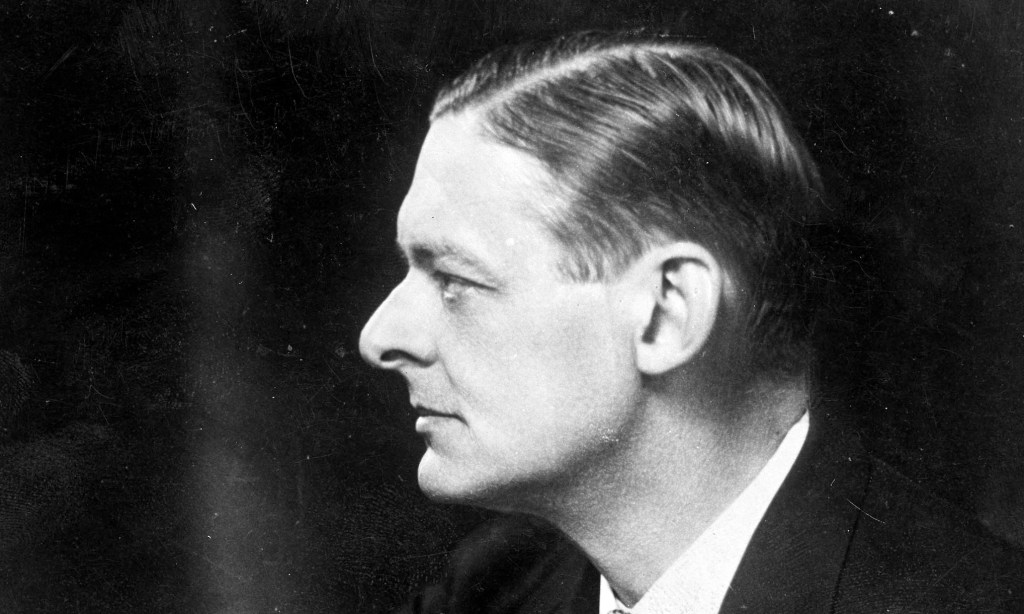
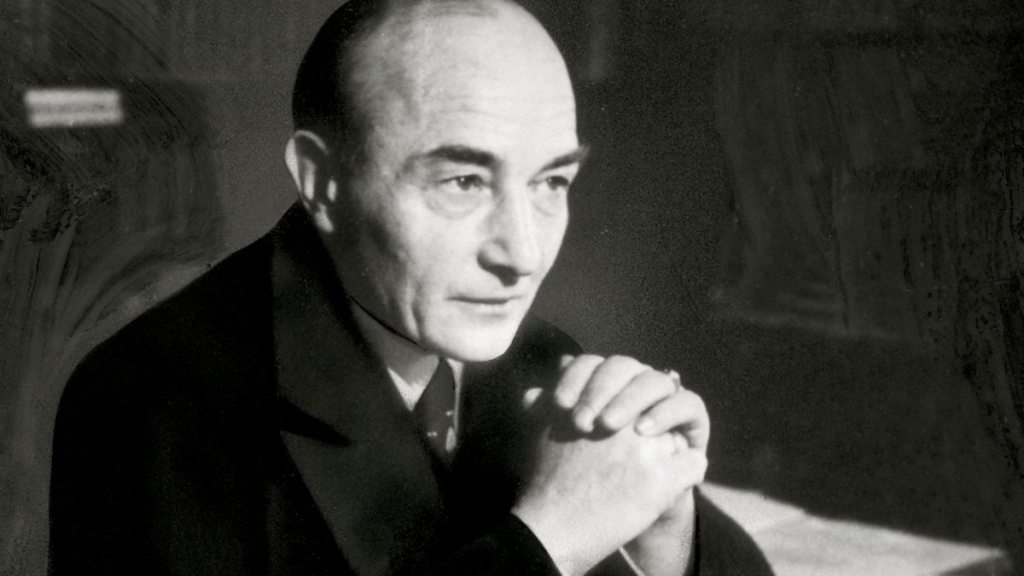
In addition to checking out the Walker Percy documentary if you are a fan of the great man, please consider making a contribution to this project — all is explained in the video.

The Director is a tough old party, a lean leathery emeritus behaviorist with a white thatch and a single caliper crease in his withered brown cheek. Though he is reputed to have a cancer in his lung that is getting the better of him, one can easily believe that the growth is feeding on his nonvital parts, fats and body liquors, leaving the man himself worn fine and dusty and durable as Don Quixote. The only sign of his illness is a fruity cough and his handkerchiefs, which he uses expertly, folding them flat as a napkin over his sputum and popping them up his sleeve or into the slits of his white coat.
Though he is a behaviorist and accordingly not well disposed to such new ideas as an “ontological lapsometer,” I take heart from two circumstances: one, that he is an honorable man of science and as such knows evidence when he sees it; two, that he is dying. A dying king, said Sir Thomas More, is apt to be wiser than a healthy king. A dying behaviorist may be a good behaviorist.
. . .
When I open my eyes, I am conscious first of breathing. Something in my diaphragm lets go. I realize I’ve been breathing at the top of my lungs for forty-five years. Now my diaphragm moves like a piston into my viscera, pulling great drafts of air into the base of my lungs.
Next I become aware of the cool metal of the support against my neck.
Then I notice my hand clenched into a fist on my knee. I open it slowly, turning it this way and that, inspecting every pore and crease. What a beautiful strong hand! The tendons! The bones! But the hand of a stranger! I have never seen it before.
How can a man spend forty-five years as a stranger to himself? No other creature would do such a thing. No animal would, for he is pure organism. No angel would, for he is pure spirit.
. . .
“It lies in the frontal-temporal sulcus of course, betwixt and between the abstractive areas of the frontal and the concrete auditory radiation of the frontal. It is the area of the musical-erotic.”
“Hm, that’s not my terminology.”
“But you know what I mean. Here the abstract is experienced concretely and the concrete abstractly. Take women, for example. Here one neither loves a woman individually, for herself and no other, faithfully; nor does one love a woman organically as a dog loves a bitch. No, one loves a woman both in herself and insofar as she is a woman, a member of the class women. Conversely, one loves women not in the abstract but in a particular example, this woman. Loves her truly, moreover. One loves faithlessly but “truly.”
“Truly?”
“Loves her as one loves music. A woman is the concrete experienced abstractly, as women. Music is the abstract experienced as the concrete, namely sound.”
“So?”
“Ha! Old stuff to you, eh, Doc? Well, that’s not the end of it. Don’t you see? Stimulate this area and you stimulate both the scientist and the lover but neither at the expense of the other. You stimulate the scientist-lover.”
existentialismlove in the ruinsphilosophical literatureWalker Percy