Born on this day. The following extract from Bernard Williams’ brilliant (but dense) Descartes: The Project of Pure Enquiry.
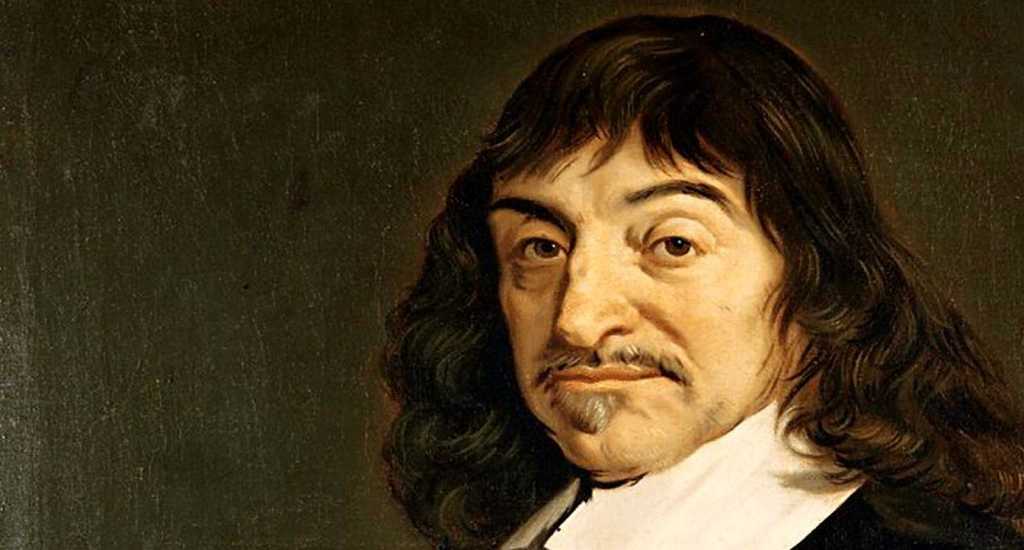
René Descartes was born on 31 March 1596 in a small town near Tours, now called la-Haye-Descartes, where the house of his birth can still be seen. His family belonged to the lesser nobility, his father and his elder brother both being magistrates at the High Court of Brittany at Rennes. His mother died in childbirth a year after he was born, and he said that he inherited from her a dry cough and a pale complexion, and for a long time he feared that he would die young. In 1604 he entered the Jesuit college of la Fléche at Anjou, which had been opened only that year. The Rector knew his family, and he was allowed his own room and to get up when he liked. The spirit of the school was intellectually more open than in most. Though Galileo had not then become the centre of controversy he was to become later, it is significant that a poem was declaimed there on 6 June 1611 in celebration of Galileo’s discovery of the moons of Jupiter. Though Descartes, as he said, found little real knowledge in what he was taught except in mathematics, he was well disposed to the Jesuits, and the marked tendency he showed throughout his life to conciliate the Church expressed itself in the case of the Society with signs of genuine respect and gratitude. He left la Flèche in 1614, and took a Baccalauréat and a Licence in law at Poitiers in November 1616.
In 1618, wanting, he says, to see the world of practical affairs, he joined at his own expense an army led by Maurice of Nassau, son of William the Silent. It was a travelling rather than a military undertaking, and he was not involved in action. In 1618–19 he was in friendly association with Isaac Beeckman, eight years older than himself, who was a doctor of medicine from Caen. Descartes said that Beeckman had woken him up to scientific questions, and he dedicated to him a small treatise on music which he completed in 1618. He travelled in Germany. On 10 November 1619 there occurred a significant event, perhaps at Ulm. In a poêle, or stoveheated room, he had some intellectual vision of a mathematical science, and the same night had three dreams, which revealed to him, as he interpreted them, a destiny to create a scientia mirabilis. He made a vow to Our Lady of Loreto to make a pilgrimage to her shrine, which he later did. The exact nature of the daytime intellectual vision is not clear, but he formed in this period aims of clarifying the basic ideas and notation of algebra (Descartes invented the modern notation for powers), and of developing the relations of algebra and geometry, which was to issue in his laying the foundations of analytical geometry; and also the wider project of unifying all sciences of quantity under mathematics (the eventual form of this last project in Descartes’s hands we shall be considering in Chapter 9).
Descartes travelled a good deal in the 1620s. During this period various sceptical views, sometimes associated with radically libertin outlooks, were current. There was a meeting in Paris in the presence of the Papal Nuncio, at which a figure called Chandoux (hanged in 1631 for counterfeiting) lectured against the Aristotelian philosophy. Descartes made a speech in reply, urging that the sciences could be founded only on certainty. Among those present was Pierre de Bérulle, head of the Oratory, who in a conversation afterwards made Descartes promise to devote himself to philosophy.
In 1628–9 he wrote some of a work called Regulae ad directionem Ingenii, Rules for the direction of the Understanding. Conceived on an ambitious plan, this was left unfinished and was published only in 1701. In it, many of Descartes’s basic philosophical concerns are expressed or at least prefigured, and we shall have various occasions to refer to it. In general, it emphasizes the methodological aspects of Descartes’s thought, and offers already the idea of a universal science of quantity, but lays less emphasis on the metaphysical issues which concern him in later works. It also emphasizes less the distinction between the purely intellectual powers of the mind and the corporeal imagination which was to become basic to Descartes’s philosophy, an epistemological correlate to the dualism between the body and the intellectual soul.
In 1628 Descartes went to Holland, where he lived, with brief interruptions, until 1649. The atmosphere in Holland in the early seventeenth century was comparatively liberal: the Dutch publishers Elzevier, for instance, were able to publish works of Galileo in the 1630s. It was chosen for its liberty by a number of thinkers, including some Frenchmen. One objected to the weather (‘four months of winter and eight months of cold’), but Descartes preferred its climate to that of Italy. He had a number of intellectual friends. Despite his desire for a quiet life, he was involved in some academic and religious disputes, unpleasant and at one point rather threatening; in particular one between Gisbert Voet of Utrecht and Regius (Henri de Roy), professor of medicine, who pronounced himself a Cartesian, but whose teachings later attracted Descartes’s criticism. One of the few details of Descartes’s purely personal life which is known is that he had an illegitimate daughter, baptized 7 August 1635, whose name was Francine; her mother was called Hélène, and Descartes told Clerselier (IV 660) that the child was conceived in Amsterdam on 15 October 1634. His daughter died at Amersfort on 7 September 1640, and Descartes is said to have found this the heaviest blow of his life.
In March 1629, the phenomenon of parhelia, sun-haloes, was observed at Rome, and Descartes was asked his opinion of this. He formed the conception of a treatise on meteorological questions, and, more generally, on physics: it was to be called Le Traité du Monde, Treatise on the Universe. Shortly before it was to be published, in 1633, Descartes heard of the condemnation of Galileo by the Inquisition for teaching the movement of the earth, and he suppressed his Treatise. He was to incorporate some of its material in later works, and the Treatise itself partly survives in the form of two works, the Treatise on Light and the Treatise on Man, which were not published until after his death. Some material which linked these two parts is missing, and a third treatise, on the soul, which is promised in the Treatise on Man, has never been found and was perhaps never written.
The fear of being censured by the Church undoubtedly had some distorting effect on Descartes’s thought (we shall encounter effects of this in Chapter 9), through personal fear of criticism, and also from a desire to have his works adopted officially as manuals of instruction. (For his attitude at the time of suppressing the Treatise, see his letter to Mersenne of April 1634: I 270–73, K 25–7.) ‘It is not my temperament to set sail against the wind,’ he wrote to Pollot in 1644 (IV 73), and this was true. It was later said by the Catholic writer Bossuet, hardly himself a radical figure, that Descartes was too worried about being condemned by the Church. That his precautions were extreme is perhaps suggested by the fact that Mersenne was able to persist in strongly pro-Galilean statements, in the less favourable atmosphere of Paris.
The suppression of the Treatise led Descartes, however, to produce a different and in several respects more unusual work. It consisted of three essays; they are presented in the order in which they were written. The first is the Dioptric, dealing with problems of refraction and related matters, and including a formulation of what is now called Snell’s Law, though Descartes appears to have discovered it independently of Snell. The second treatise is the Meteors, and the third, the Geometry, which lays the foundations of what is now known as analytical geometry. The set of essays is prefaced by a remarkable work, the Discourse on the Method.4 The whole book was written in French, Descartes hoping, as did Galileo, by writing in the vernacular to reach over the heads of pedants and monks to the growing population of lay persons of good sense, free from academic and theological prejudice, with whom his reasonings might strike home. The style is very lucid and elegant, and has always been admired as a model of the expression of abstract thought in French. Descartes wrote to a Jesuit (I 560, K 46) that it was so written that even women should be able to understand it,5 and he told Mersenne that he had called it a Discourse, rather than a Treatise, on the Method, because his aim was not to teach, but only to talk about it (I 349).
The Discourse also remarkably expressed Descartes’s individuality. It was already a contrast with the practice of some geometers that he presented the Geometry in his own name – many preferred to offer their discoveries as additions to the works of the ancients, Viète appearing as the ‘French Apollonius’, Snell as the ‘Dutch Apollonius’ and so forth. But far beyond this, the Discourse offers an account of Descartes’s enquiries and his attitude to them in a genuinely autobiographical form. Montaigne had of course displayed an amused and searching interest in himself, but in virtue of that spirit itself had been distant and ironically reserved about philosophy or systematic speculation. The Discourse, on the other hand, displays its author not so much as an object of human interest to himself or others, but rather as an example – though a genuinely existing, particular, example – of the mind being rationally directed to the systematic discovery of truth.
The sophistication of this way of presenting philosophy is much further developed in his masterpiece, the Meditations on First Philosophy, the first edition of which was published in 1641. In this work, the ‘I’ of the writer is not so much the historical Descartes as it is any reflective person working their way through this series of arguments. The Meditations are not a description but an enactment of philosophical thought, following what Descartes regarded as the only illuminating way of presenting philosophy, the order of discovery: an order of discovery, however, which is not just arbitrarily individual, but idealized, the fundamental route by which human thought should move from everyday experience to greater philosophical insight. The extreme skill with which Descartes realizes this scheme, and the subtlety with which the work is organized (something which emerges more and more on repeated readings), make the Meditations one of the most original achievements of philosophical literature.
It was, unlike the book of 1637, written in Latin, though it was soon translated into French. It was published together with six (in the second edition, seven) sets of Objections from various writers, and Descartes’s Replies. These documents, some more than others, shed valuable light on Descartes’s views. The First set, from Caterus, a priest in Holland, Descartes collected himself: the aim was to impress the Sorbonne, particularly through the Jesuit Gibieuf. He then sent the Meditations themselves and the first set of Objections and Replies to Mersenne, with instructions to collect other objections – instructions which Mersenne characteristically exceeded. The Second Objections came from various theologians, and include some of Mersenne’s own. The Third are from the English philosopher Hobbes; this was not Descartes’s idea, an association with the heretic and materialist Hobbes being unlikely to help with the Sorbonne. Fortunately for Descartes, Hobbes was hostile. Unfortunately for us, the resulting exchange does not illustrate much, except truculent misunderstanding on Hobbes’s part and impatience on Descartes’s. Far superior, indeed best of all, as Descartes himself thought, was the exchange (the Fourth) with Antoine Arnauld, then only twenty-nine, the Jansenist priest whose famous book De la Fréquente Communion (1643) led to a long quarrel with the Jesuits, as a result of which Arnauld was in retreat, even in hiding, for twenty-five years. Mersenne went beyond his instructions for a second time in inviting comments from Pierre Gassendi, a prolix atomist writer, who had been annoyed at not having been mentioned in the Dioptric, and also from the mathematician Fermat, with whom there had already been controversy. Fermat kept quiet, perhaps for fear of renewing the quarrel, but Gassendi offered Objections (the Fifth) at great length, and later responded to Descartes’s Replies (which take a rather laboriously sarcastic tone) with a yet vaster work, the Instances. Descartes was eventually reconciled with Gassendi, perhaps on his visit to France in 1647; it may also have been then that there was a dinner for Descartes, Gassendi and Hobbes given by Descartes’s correspondent William Cavendish, Marquis of Newcastle (who in 1638 was made tutor to the future Charles II of England).
The Sixth set of Objections was from various geometers, philosophers and theologians of Mersenne’s circle. In the second edition of the Meditations (1642) all these were joined by a Seventh set by Bourdin, a professor at the Jesuit College in Paris. Despite Descartes’s general disposition to be agreeable to Jesuits, these Objections obviously (and justifiably) annoyed him, though they did elicit one or two useful clarifications about the Method of Doubt. The tone and content of Bourdin’s reply so upset him that he wrote, and had published with the Meditations, a letter to another Jesuit, Dinet, who had been his instructor at la Flèche; in this letter (VII 563 ff., HR2 347 ff.) he also cited what he had suffered at the hands of the Protestants in Holland.
Further in his attempt to establish his philosophy as official Catholic teaching, he produced in 1644 a work in the form of a textbook, divided into books and articles, the Principia Philosophiae, the Principles. Three of its four books are largely concerned with what would now be called scientific rather than philosophical matters. He had said to Huyghens (31 January 1642: III 523, K 131) that his suppressed treatise would have already appeared, but he had been ‘teaching it to speak Latin; and I shall call it Summa Philosophiae, so that it will be more familiar to the scholastics, who persecute it and try to smother it before its birth, the Ministers as much as the Jesuits’. This was the Principles, which thus contains a lot of the Traité du Monde; at the same time, Descartes hoped that ‘it could be used in Christian teaching without contradicting the text of Aristotle’. This tortuous objective means (as we shall see in Chapter 9) that as a guide to Descartes’s true opinions, the Principles has in places to be used with caution. The work was translated into French by the Abbé Claude Picot, a new enthusiast for Descartes’s philosophy, who had been opposed to him but had been converted by the Meditations. A letter to him forms the Preface to the French edition.
Descartes dedicated the Principles to a friend, the Princess Elizabeth, who is first referred to in his correspondence in 1642. This remarkable woman had been born at Heidelberg in 1618. Her father was Frederick, Elector Palatine, who was crowned King of Bohemia in November 1619 but lost the crown at the battle of the White Mountain in 1620, and then lived in exile until his death in 1632. Her mother, widowed with ten children, was Elizabeth Stuart, the ‘Winter Queen’, daughter of James I of England and sister of Charles I: Descartes found himself with the unusual task of writing the Princess a letter of consolation on the execution of her uncle (22 February 1649: V 281). Elizabeth normally spoke French, knew English, German, Flemish, Italian and Latin, had some skill in mathematics, solving a difficult problem set by Descartes, and had an interest in astronomy and physics. She was a Calvinist, but disapproved of narrow Protestant bigots. She and Descartes wrote frankly to each other on a range of topics. Though Descartes’s letters to her were published in 1657, Elizabeth refused publication of her letters to him, and asked for them back; copies were found, and they were published in 1879.
One subject that Elizabeth pursued in her correspondence with Descartes was the relation of mind and body, and the nature and control of the passions. Prompted by her discussions, Descartes wrote what was to be his last work, The Passions of the Soul, which was published in November 1649, though a manuscript had been sent already in November 1647 to Queen Christina of Sweden. The larger part of this work consists of a classification and description of the emotions: though it contains some points of interest, this part has been ignored in the present study. The material on mind–body relations, however, is a principal text for this, notorious, aspect of Descartes’s views.
In 1647 the French King awarded Descartes a pension, ‘in consideration of his great merits, and of the utility that his philosophy and his long researches would bring to the human race’, but he seems never to have received any of it, and merely had to pay out for the sending of the warrant. A more significant royal interest was that of Christina. She had been born in 1626, and had come to the throne in 1644 after a regency, in succession to her father Gustavus Adolphus. At this time she had the idea of bringing arts and letters to the North, and assembled about her a number of scholars. Descartes was approached through the French resident in Stockholm, Hector-Pierre Chanut, and urged to go to Sweden. He hesitated for a long time, and said to others that he had no desire to go to ‘the land of bears’. However, he did leave in September 1649, and arrived in Stockholm at the beginning of October. (The pilot of the ship is supposed to have told the Queen that Descartes was a ‘demi-god’ in matters of navigation and so forth.) There were two audiences with Christina, and then she left him alone for six weeks. Descartes was lonely and unhappy. He was required, among other absurd employments, to write verses for a ballet (La Naissance de la Paix, concerned with the Peace of Westphalia and Christina’s birthday). The Queen was away for the first half of January. Descartes had his picture painted by David Beck, a pupil of Van Dyck, and is said to have converted the painter to sentiments of religion during their conversations. He also drew up the statutes of a Swedish Academy – one rule he proposed was that no foreigners should belong to it. The Queen returned, and took up philosophy lessons, which took place three times a week at 5 a.m. She said later, when she became a Catholic, that these conversations had had some effect on her (she could hardly say less). Chanut’s residence, where Descartes lived, was at some distance from the Palace. He had had, moreover, for years the habit of not rising until 11, spending the earlier hours reading and writing in bed. He caught pneumonia and died at 4 a.m. on 11 February 1650. His last words are alleged to have been Ça mon âme, il faut partir.
He was buried in Stockholm, but in 1666 his body was removed to France and buried in Paris at Sainte-Geneviève. It was the occasion of a banquet of anti-scholastic and anti-authoritarian tone. Three years before, his philosophy had been condemned by Rome. This image of Descartes as an anti-clerical and indeed anti-religious force, deeply contrary to his actual disposition, was to persist. In 1791 a petition was raised for his remains to be transferred to the Panthéon: ‘Descartes, kept away from France by superstition and fanaticism,’ etc. The project was not carried out at that time, because of political events; taken up again by the Directory, it was opposed by a député who was apparently a supporter of Newton, and allowed to lapse. He was finally reburied in Saint-Germaindes- Prés in 1819, where his tomb can be seen between those of two Benedictines.
Descartes was lofty, chilly and solitary, and cultivated a certain reserve and self-sufficiency in life and manner. ‘Fermat est Gascon (a boaster), moi non,’ he is reported to have said. He valued his financial independence, and his references in the Discourse to the need for funds for experiments should not be read as an appeal for himself. He refused the offer of a M. de Montmort to set him up in a château near Paris (an offer later accepted by Gassendi), and also declined a considerable sum from the Comte d’Avaux, sent to Holland for his experiments. He was touchy where his originality was in question, and his attitude to other well-known mathematicians was often condescending or hostile. He took pleasure in mystifying them. In sending Roberval the solution to the problem of finding the tangent to a figure called the ‘garland’, which Roberval failed to solve, Descartes propounded another curve, which he in fact knew to be equivalent, as he told Mersenne in confidence; ‘I did it to make fun of him’ (23 August 1638: II 336). It was a habit of the time to wrap one’s discoveries up: rather later, Hooke concealed in anagrams his discoveries about the arch. Yet it seems paradoxical that Descartes should have deliberately left out simpler material from the Geometry, part of the book of 1637, which was supposed to be luminous to all. He was afraid that his originality would not be recognized if he made it too easy, and he took pleasure in the thought of the difficulties it would cause to geometers in France such as Fermat and the unfortunate Roberval (to Mersenne, 1 March 1638: II 28, 30; to Debeaune, 20 February 1639: II 511).
This sense of superiority to contemporary mathematicians coexisted with a belief that his ideas could be made plain to ordinary men of good sense. This seemingly rather odd combination of attitudes is more than an accident of Descartes’s temperament. The early seventeenth century was only just beginning to develop the apparatus of scientific communication, the foundation of an international scientific community, which is familiar today. The tireless Abbé Mersenne acted as a post office between the many scientists, mathematicians and others that he knew: Fermat at Toulouse, Debeaune at Blois, Desargues occasionally at Lyon, Descartes in Holland. Meetings of Pascal, Gassendi, Fermat and others at Mersenne’s cell played a part in the origin of the Académie des Sciences, not founded till 1666. With these imperfect communications, there went an imperfect sense of the need for them. Descartes found that he had no time to read Galileo’s mechanics (cf. X 573), and he died without having heard of Kepler’s laws of planetary motion, which were first announced in Paris, without attracting much attention, in 1639.
It is important that there existed no clear sense either of the size of the scientific task, or, on the other hand, of its possibility. On the one hand, sane and informed people could believe that once the right path had been found, basic understanding of nature and hence control of it would be very rapidly available. Francis Bacon admittedly had a rather distant, organizational, view of the subject – ‘he writes philosophy like a Lord Chancellor’ William Harvey said of him – but he was able to say: ‘the particular phenomena of the arts and sciences are in reality but a handful; the invention of all causes and sciences would be the labour of but a few years’. Descartes himself entertained when he was young some extravagant hopes about the control of aging, which were modified by experience.
On the other hand, this unclarity about what might be involved in the knowledge of nature could equally give rise to doubts whether it was possible at all. The traditional framework of scholastic teaching had provided a range of patterns for ‘legitimating belief’: scripture and the interpretative authority of the Church in religious matters; the force of other authoritative texts; the application to these, with the help of common observation and some traditions of experimental enquiry, of sophisticated forms of logical argument. The Reformation had questioned the traditional sources of religious authority, but had not produced any consensus, and was not going to produce any, on what others there might be. The controversies surrounding these issues helped to generate movements of scepticism, not only with respect to religion itself, but with respect to other forms of supposed knowledge. If it were objected that religious belief had no true foundation, defenders of Christianity could reply that things were no better with secular beliefs.
But there was a general doubt at work, about what powers of the human mind were relevant to the discovery of ultimate truth. Inasmuch as the medieval tradition relied on authority in secular questions, in particular (though by no means universally) the authority of Aristotle, it had no fully coherent answer to this question, which was bound to recur in the form of asking what peculiar access to truth was possessed by Aristotle, who was after all only another human being, if a very gifted one. This idea occurs repeatedly in Galileo’s Dialogues concerning the two Chief World Systems; while Descartes is, significantly, in a position to deploy a clearly developed and dismissive concept of ‘history’ to make a similar point: . . .
nor shall we come out as philosophers, if we read all the arguments of Plato and Aristotle, but can form no sound judgement on the matters in question: we shall have learned, not the sciences, but history. (Reg. iii: X 367, HR1 6)
In the Renaissance, a confusion of possible answers was generated to this question of what capacities could lead to knowledge. Many Renaissance thinkers, particularly in Italy, understood their task to be not just the establishment of knowledge about the classical past, but also the revival of the attitude to knowledge which existed in that past. But this understanding was itself surrounded by great uncertainty about what the powers of the ancients consisted in. Some of these writers perhaps did unwittingly recapitulate a feature of fifth-century bc Greek culture, of which it has been well said that the Greek sophists (who lived before the fundamental logical discoveries of Plato and Aristotle) ‘were prone to confuse the force of reason and the power of the spoken word’. Those sophists were fascinated by sceptical arguments, and originally invented some of the sceptical material which was known to the seventeenth century chiefly through the works of Sextus Empiricus (c. ad 200). This incapacity to tell the difference between the power of words and the force of argument (prevalent, then as now, in Paris) contributed to the sceptical disorientation which existed in Descartes’s time. Having discarded the run-down traditional logic which then was current (for which Descartes sustained a life-long contempt), and the answers to sceptical argument provided by the Aristotelian tradition, adventurous thinkers were uncertain what dialectical weapons could counter scepticism. But that lack was not the most important. If there are evident examples of real knowledge around, the fact that one lacks arguments to explain how such knowledge is possible is of purely philosophical – that is to say, very limited – interest. But the early seventeenth century lacked prototypes of such knowledge and also lacked settled belief about how to acquire it.
One ancient idea, variously reinterpreted in this period, was that the truth of things was hidden – in some versions, occult. Some Renaissance and post-Reformation conceptions offered as the image of one who knows, and who through knowledge has power over nature, the Magus. Recent work has emphasized, perhaps exaggerated, the role of magical and occult ideas in the formation of the seventeenth-century scientific outlook. For Descartes, it is the case that the truth about the natural world is hidden, but it is not occult, nor are occult powers needed to uncover it. It is hidden in the form of a mathematical structure which underlies sensible appearances. It is uncovered by systematic scientific enquiry and the use of the rational intellect. If there is magic in Descartes’s system, it is in its old place, with God, the Incarnation and the Sacraments.
But what was the rational intellect? In whom could it be found? Descartes’s straightforward answer was that it was to be found in everyone, in such a way that anyone, or nearly anyone, given help in clear thinking and freed from prejudice, could pursue reasonings which would lead to truth in philosophy, science or mathematics. This line is particularly emphasized in the Regulae, where he says that no sort of knowledge can be more obscure in itself than any other, since all knowledge is of the same nature, and consists solely in the putting together of simple things known in themselves. These perfectly simple truths are known even to quite uneducated people, but the minds of many have been clouded by absurd scholastic formulations (Reg. xii: X 426–8, HR1 46–7; cf. also the Introduction to the Recherche de la Vérité: X 495–9, HR1 305–7). He carried such ideas into practice, teaching his servant mathematics, and strongly approving of the scheme of a M. d’Alibert to found a college to teach arts and sciences to artisans and others who wanted to learn. The same attitude is expressed in the hope which has already been mentioned, to reach an unprejudiced public by publishing in French (a hope which, as we have also seen, he tended to replace later with that of insinuating his theories into the clergy). It goes with his preferring, in general, the company of practical men, and the same sort of attitude motivated, so he tells us, the journeys he made in his youth. As he very reasonably says:
It seemed to me that I could find much more truth in the reasonings which each man makes about the matters which are of concern to him, and of which the outcome is likely to punish him soon after if he has made a mistake, than in those which a man of letters makes in his study, concerning speculations which lead to no result, and which have no other consequence for him except perhaps that he will be all the more vain about them the further they are from common sense, since he will have had to spend that much more intelligence and skill in trying to make them seem probable. (Discourse Part i: VI 9–10, HR1 86–7)
It is notable that several of Descartes’s friends were ambassadors or other men of affairs, and it was such people who intervened to help him in his disputes with the university pedants in Holland.
What the unprejudiced mind can deploy is the power of reason, good sense, what Descartes calls ‘the natural light’, and apparently people possess it in equal measure. The Discourse famously begins:
Good sense is of all things in the world the best distributed: each thinks he is so well provided with it, that even those who are hardest to please in other things are not in the habit of wanting more of it than they have. (Discourse Part i: VI 1–2, HR1 81)
Yet even if Descartes sincerely believed that men could, when freed from prejudice, equally follow scientific reasonings, did he really believe that they were equally capable of producing them? The joke about everyone’s satisfaction with his own good sense already indicates irony, and Descartes’s attitude to his own and others’ work suggests that he thought that while anyone, properly taught, could understand the truth – which could consist ultimately of nothing but longer or shorter chains of absolutely clear and simple reasoning – it nevertheless took at least one genius to discover it. Yet even allowing for that, there will be no question of a return to authority. Nothing will be rationally believed because it was discovered by Descartes, even if it takes Descartes to discover it. It will be believed because, when put before the unprejudiced mind, it compels assent by its own rational clarity.
The ambivalence of Descartes’s attitude to such matters is mirrored also in there being, as we shall see in the next chapter, more than one way of taking his project of Pure Enquiry – as something to be done once and for all by him, or as something which others might also profitably attempt. But there is a good reason why, for Descartes, these issues could remain unresolved. The question of how many, other than himself, might be capable of making fundamental scientific and philosophical discoveries was not very important if none remained to be made. Descartes’s faith was that the basic task, at least, was soon to be achieved. Though much, quantitatively, remained to be done, he hoped to have laid the foundations.
In laying ‘foundations’, philosophy played an essential role – or, rather, a number of roles, for, as we shall see, there is more than one thing encompassed by Descartes’s favourite metaphor. But while the role is essential, it is very important that, for Descartes, philosophy’s part was very small, in relation to worthwhile knowledge as a whole. This is a book about Descartes’s philosophy, and it is as a philosopher that Descartes is now principally known; but by his own conception of things that is an irony. The project we shall be studying is a philosophical project, but it was intended by Descartes to be preliminary to a larger enterprise of science, medicine and technology, which would confer practical benefits on mankind. It was a product of his historical situation that he could hope for his project to have these results. It was also a feature of his situation that he could conceive of that project (as we shall see) as conducted by a solitary thinker, as transparent to human reason, and as definitively revealing how knowledge is, after all, possible.