This event was brought to my attention by Martin Rosenberg, one of conference speakers and a contributor to the forthcoming themed C+T issue on jazz. Here is the conference website.
This event was brought to my attention by Martin Rosenberg, one of conference speakers and a contributor to the forthcoming themed C+T issue on jazz. Here is the conference website.
The birthday of one of New Orleans’ great characters. Read all about Ernie here.
Antoinette also led a tongue-in-cheek campaign for K-Doe’s election for mayor of hurricane-ravaged New Orleans in 2006, five years after his death. She is quoted as saying, “He’s the only one qualified—that’s my opinion.”


One of the peculiar ironies of being a human self in the Cosmos: A stranger approaching you in the street will in a second’s glance see you whole, size you up, place you in a way in which you cannot and never will, even though you have spent a lifetime with yourself, live in the Century of the Self, and therefore ought to know yourself best of all.
The question is: Why is it that in your entire lifetime you will never be able to size yourself up as you can size up somebody else—or size up Saturn—in a ten-second look?
Why is it that the look of another person looking at you is different from everything else in the Cosmos? That is to say, looking at lions or tigers or Saturn or the Ring Nebula or at an owl or at another person from the side is one thing, but finding yourself looking into the eyes of another person looking at you is something else. And why is it that one can look at a lion or a planet or an owl or at someone’s finger as long as one pleases, but looking into the eyes of another person is, if prolonged past a second, a perilous affair?
00000
(5) Do you understand sexuality?
That is to say, are you happy with either of the two standard versions of sexuality:
One, the biological—that the sex drive is one among several needs and drives evolved through natural selection as a means of sustaining the life of the organism and ensuring the survival of the species. Thus, sexual desire is one item on a list which includes other such items as hunger, thirst, needs of shelter, nest-building, migration, and so on.
The other, the religious-humanistic—sex is an expression, perhaps the ultimate expression, of love and communication between a man and a woman, and is best exemplified in marriage, raising children, the sharing of a life, family, home, and fireside.
Or do you see sexuality as a unique trait of the present-day self (which is the only self we know), occupying an absolutely central locus in the consciousness particularly as it relates to other sexual beings, of an order and magnitude of power incommensurate with other “drives” and also specified by the very structure of the present-day self as its very core and as its prime avenue of intercourse with others?
If the sexual drive is but one of several biological needs, why are we living in the most eroticized society in history? Why don’t TV, films, billboards, magazines feature culinary delights, e.g., huge chocolate cakes, hams, roasts, strawberries, instead of women’s bodies?
Or are you more confused about sexuality than any other phenomenon in the Cosmos?
Do you know why it is that men and women exhibit sexual behavior undreamed of among the other several million species, with every conceivable sexual relation between persons, or with only one person, or between a male and female, or between two male persons, or two female persons, or two males and one female, or two females and one male; relationships moreover which can implicate every orifice and appendage of the human body and which bear no relation to the reproduction and survival of the species?
Is the following statement true or false:
Pornography is not an aberration of a few sexually frustrated middle-aged men in gray raincoats; it is rather a salient and prime property of modern consciousness, of three hundred years of technology and the industrial revolution, and is symptomatic of a radical disorder in the relation of the self to other selves which generally manifests itself in the abstracted state of one self (male) and the degradation of another self (female) to an abstract object of satisfaction.

Marcin Miłkowski has made available a full draft of his chapter from Minds, Models and Milieux: Commemorating the Centennial of the Birth of Herbert Simon.

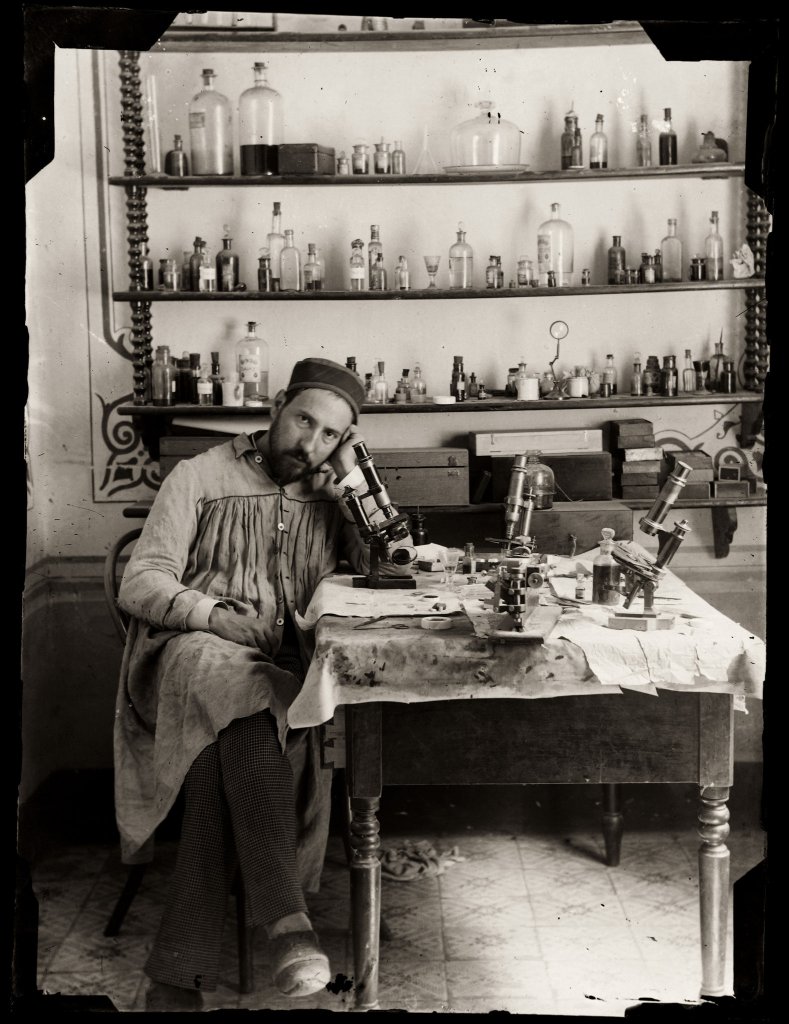
Meet Santiago Ramón y Cajal, an artist, photographer, doctor, bodybuilder, scientist, chess player and publisher. He was also the father of modern neuroscience.
Hunched Over a Microscope, He Sketched the Secrets of How the Brain Works. It was Joaquin Fuster who first brought Santiago Ramón y Cajal to my attention.
Galen Strawson revisits Frank Jackson’s thought experiment in a final draft made available here. For those not familiar with this thought experiment, Galen sets it up quickly and clearly.
If this line of thought is right, the mistake on both sides is—to repeat—to confuse materialism or physicalism with physics-alism. The mistake is a mistake whether it leads materialists to deny a certain truth (Mary learns something completely new about the nature of concrete reality, and hence, if materialism is true, about the nature of physical reality) or whether it leads those who reject materialism to beg the question against materialism. It is a distinctively twentieth- and twenty-first-century mistake.

I’d be deeply envious of you were you able to catch a rare appearance by (in my book at least) the legendary Shuggie Otis (see The Mystery of Shuggie Otis and write-ups in The Guardian and Popmatters).
Before you meet Otis, you encounter the myth: the vanished genius worshipped by crate-digger cultists and waylaid by the industry—a psychedelic phantom sharing a bloodline with Brian Wilson, Arthur Lee of Love and Syd Barrett. Otis has a sphinx-like elusiveness. He answers questions circuitously and describes himself as neither having nor wanting many friends. He’s generous with his memories but only to a point.

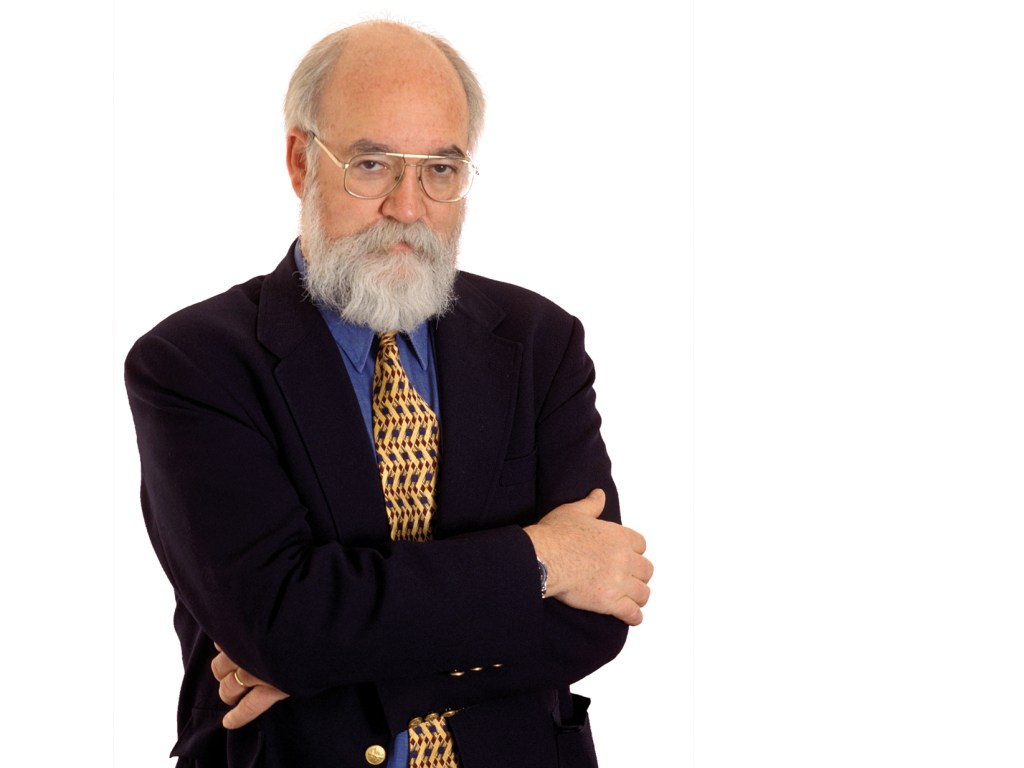
Dennett plugging his latest From Bacteria to Bach and Back. I’m with Dennett on this deeper analysis of where we are at just now and have been very concerned about this since Sokal. It was one of the primary motivations for my setting up EPISTEME. The problem, going back at least 30 years, has been that postmodernism has been either assimilated into disciplines with no philosophical culture (anthropology-, english-, gender-, communications- studies, and so on), or into philosophical departments that have lazily substituted activist ideology for disinterested inquiry (there is a socio-economic story of academia that can be told accounting for this).
I think what the postmodernists did was truly evil. They are responsible for the intellectual fad that made it respectable to be cynical about truth and facts. You’d have people going around saying: “Well, you’re part of that crowd who still believe in facts.”
Chicago University Press have now listed that the reissue will only become available in June.


