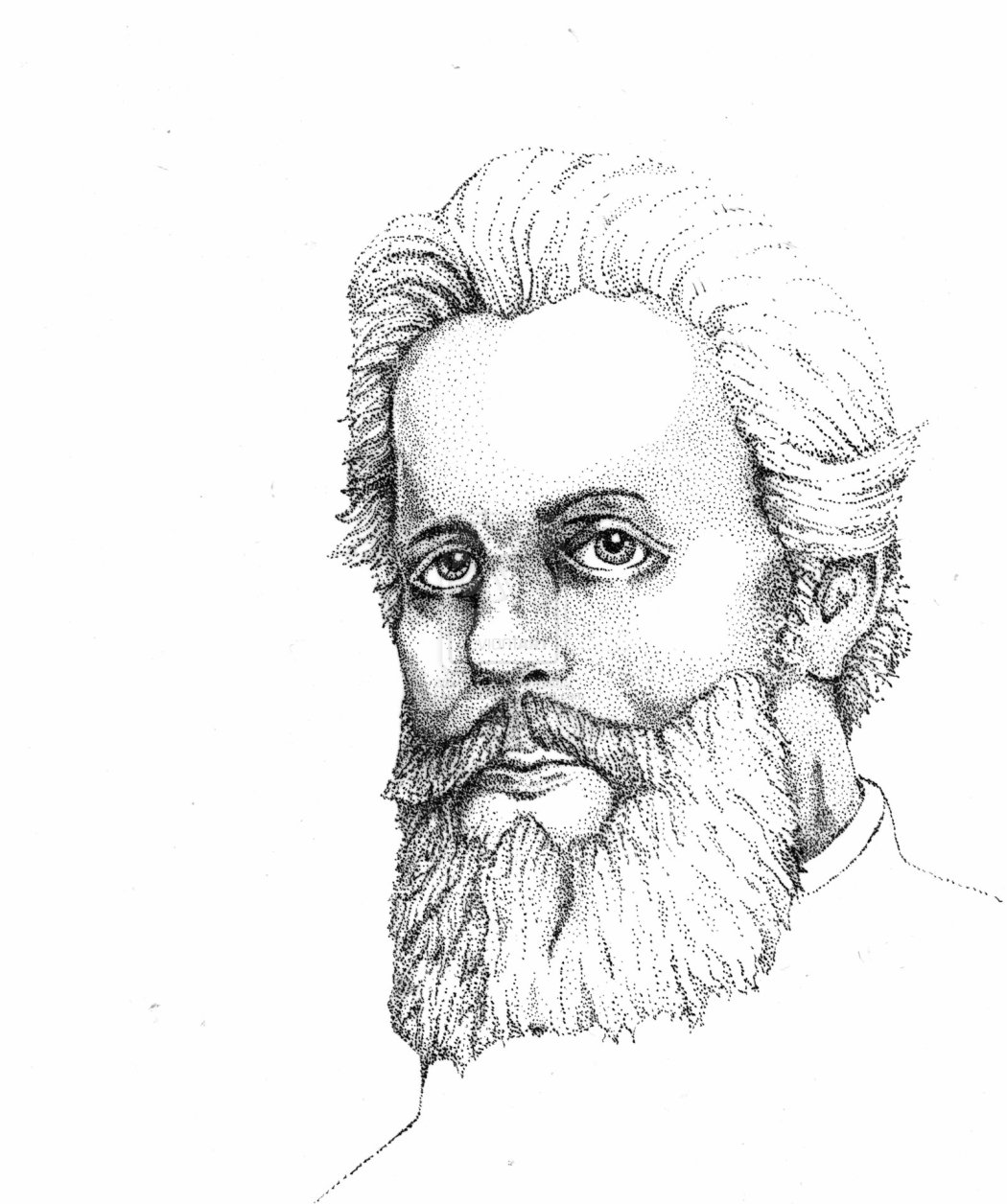
Pilgrims and Adventurers: Herman Melville on Spontaneous Order and Teleocracy

Potentially interesting paper referencing Hayek and Oakeshott freely available in Soundings: An Interdisciplinary Journal

melville

Walker Percy Wednesday 129

percycovercroppea

Question (I): Which of the two, the actors or the townspeople, are the more real, that is, perceive themselves as more nearly what they are?
(a) The townspeople because they have no illusions about themselves, their humdrum lives and workaday selves, whereas the actors not only live in a tinsel world but are themselves forever playing roles, are always “on” even when they walk into the town drugstore.
(b) The actors, particularly the actress who, by very reason of her finding herself in a real place among real people and removed from the fakery of Hollywood, is able for once in her life to become herself, her true best self.
(c) Neither town folk nor actors, because both are equally displaced, equally deprived of themselves, though in different ways. The town folk are deprived because, though they live in a “real” town, through an optical illusion they perceive the actors to be more splendidly real than they themselves and perceive the actors’ lives to be both more glamorous and more of a piece (to judge from the films) than their own, which seem somewhat dim and tentative by comparison. Through a different sort of optical illusion, the actors are able for a while to take on the very reality imputed to them by the town folk, wear it like a costume and with the greatest of ease because they’ve been doing nothing else most of their lives. Thus, they cloak the nought and nakedness of their selves, which are perhaps no different in kind from anyone else’s but perhaps more acutely felt.
Note that the felt “reality” of the actors in the town is as brief as any other performance. After six weeks on location, even the gracious actress said she “couldn’t wait to get out of the boonies.” For their part, too, the town folk might get sick and tired of the antics of, say, Mel Brooks.
Though both actors and town folk have reached for what they perceived to be a heightened reality, it, reality itself, has somehow fallen between them, like a dropped ball.

OOOOO

A letter to Dear Abby:

I am a twenty-three-year-old liberated woman who has been on the pill for two years. It’s getting pretty expensive and I think my boyfriend should share half the cost, but I don’t know him well enough to discuss money with him.

(f) The Self since the time of Descartes has been stranded, split off from everything else in the Cosmos, a mind which professes to understand bodies and galaxies but is by the very act of understanding marooned in the Cosmos, with which it has no connection. It therefore needs to exercise every option in order to reassure itself that it is not a ghost but is rather a self among other selves. One such option is a sexual encounter. Another is war. The pleasure of a sexual encounter derives not only from physical gratification but also from the demonstration to oneself that, despite one’s own ghostliness, one is, for the moment at least, a sexual being. Amazing! Indeed, the most amazing of all the creatures of the Cosmos: a ghost with an erection! Yet not really amazing, for only if the abstracted ghost has an erection can it, like Jove spying Europa on the beach, enter the human condition.

9780312253998_custom-879fe996d0c45da2a69a358283ae164595a77f96-s6-c30

The Undoing Project: A Friendship That Changed the World

Listen to Michael Lewis discuss his latest book on Freakonomics Radio: “The Men Who Started a Thinking Revolution” (skip to 1:50) and on Charlie Rose (much better than the former discussion); plus some print reviews in the New York Times, The New Yorker, the FT and The Economist. Below is a draft encyclopedia entry on Daniel Kahneman (and Amos Tversky).

http---com.ft.imagepublish.prod-us.s3.amazonaws.com-9a5ff242-c875-11e6-9043-7e34c07b46ef

Sunstein-Thaler-TheTwoFriendsWhoChangedHowWeThinkAboutHowWeThink-1200

Daniel Kahneman

Daniel Kahneman (b. 1934) is a social psychologist who, along with experimental economist Vernon Smith, shared the Nobel prize in economics for 2002. Though the prize was conferred upon Kahneman, it was in in effect recognition of the seminal work dubbed “prospect theory” that Kahneman formulated in collaboration with the late Amos Tversky. Independently and jointly they were interested in studying the cognitive biases (and cognitive illusions) of intuitive thinking; of how minds actually operate in a social world shot through with limitations, complexity and contingency. Their research can be understood as a finer-grained and more technical explication of Simon’s “bounded rationality” pursuing three different, though not unrelated, lines of inquiry – heuristics, prospect theory and framing effects – that all came to be distilled in Kahneman (2011).

The “framing effect” connotes the idea that options are described in terms of gains (positive frame) rather than losses (negative frame) and under study, elicits systematically different choices. Prospect theory concerns the psychophysics of wealth utility: that is, the perceived tradeoffs between potential outcomes and the probability of some outcome occurring. Kahneman and Tversky reworked Bernoulli’s long established orthodoxy of wealth utility that supposedly explained loss aversion through quantifiable states of wealth. Instead, they took the view that by asking subjective questions rather than propositional (or abstract) questions regarding terms of loss and gain, they presented a richer explanation for loss aversion. They found that that though agents like winning and dislike losing, they in effect are orientated to dislike losing more.

Kahneman and Tversky (1979) initially articulated decisions under risk (as opposed to decisions under uncertainty) involving at most two non-zero outcomes. Later as cumulative prospect theory (1992) they accommodated decisions under uncertainty and risky conditions that employs cumulative, rather than separable decision weights with any number of outcomes.

Out of prospect theory grew Kahneman’s “two minds” thesis, summarized for a popular audience in his book Thinking, Fast and Slow. The title of the book connotes two fictional systemic ideal types or characters: fast thinking connotes the “on the fly” or “online” or automatic intuitive operation of the human perceptual and memory apparatus; slow thinking by contrast is “conscious,” deliberate, effortful, conceptual, analytical and propositional in character. Four things should be noted. The positing of these two systems should not lead one to any of the following inferences:

(a)        that there is indeed a sharp duality and that ne’er the twain shall meet;

(b)       that these two “systems” have definitive brain structure instantiations;

(c)        that fast thinking is intrinsically irrational;

(d)       that slow thinking is intrinsically rational.

In support of his thesis Kahneman’s presents a raft of empirically based puzzles, illusions and paradoxes illustrating our innate capacity for deluding ourselves and perhaps more importantly just about how little we know. Kahneman illustrates how heuristics or rules of thumb deployed to solve statistical problems can quite easily result in biased estimates and predictions. Respondents, when confronted with a problem to which they are unlikely to know the correct answer to, tend to allow their ruminations to be influenced by objectively irrelevant frames. Other heuristic tests showed that even if respondents receive all the information needed, it is not used correctly.

This said, it should be understood that Kahneman is not suggesting that agents are necessarily and irredeemably irrational – what he’s proposing is merely that one is alert to the supposedly infallible deliverances of intuition. Kahneman’s and Tversky’s work illustrated that neither the lay individual nor indeed even the expert in any knowledge community, are immune from systematic error. Given the vast scope of the “expertise industry” be within an academic or in a public life setting, Kahneman is viewed as highly controversial, not least in his own field of psychology where he has called for a more rigorous validation of priming effect studies.

See also: Anchoring; bounded rationality; ecological rationality; errors and biases; heuristics 

Further Reading:

Kahneman, D., & Tversky, A. 1973. On the psychology of prediction. Psychological Review, 80, 237-25l.

Kahneman, D., & Tversky, A. 1974. Judgment Under Uncertainty: Heuristics and Biases. Science, New Series, Vol. 185, No. 4157: 1124-1131.

Kahneman, D., & Tversky, A. 1979. Prospect theory: An analysis of decisions under risk. Econometrica, Vol. 47, No. 2: 263-291.

Kahneman, D., & Tversky, A. 1992. Advances in prospect theory: Cumulative representation of uncertainty. Journal of Risk and Uncertainty 5 (4): 297–323.

Kahneman, D. 2011. Thinking, Fast and Slow. Toronto: Random House.

Dirk Bogarde

Recalling one of the greatest, bravest, most- cultured, eloquent, insightful and- dignified of all actors.

9_Dirk-Bogarde

Just over a year ago I made an observation concerning DB’s website as per below — aside from a website revamp, it’s still business as usual.

Screen Shot 2017-03-27 at 1.34.51 PM

Cognitive and emotional demands of black humour processing: the role of intelligence, aggressiveness and mood

This in Cognitive Processing.

A total of 156 adults rated black humour cartoons and conducted measurements of verbal and nonverbal intelligence, mood disturbance and aggressiveness. Cluster analysis yields three groups comprising following properties: (1) moderate black humour preference and moderate comprehension; average nonverbal and verbal intelligence; low mood disturbance and moderate aggressiveness; (2) low black humour preference and moderate comprehension; average nonverbal and verbal intelligence, high mood disturbance and high aggressiveness; and (3) high black humour preference and high comprehension; high nonverbal and verbal intelligence; no mood disturbance and low aggressiveness. Age and gender do not differ significantly, differences in education level can be found. Black humour preference and comprehension are positively associated with higher verbal and nonverbal intelligence as well as higher levels of education. Emotional instability and higher aggressiveness apparently lead to decreased levels of pleasure when dealing with black humour. These results support the hypothesis that humour processing involves cognitive as well as affective components and suggest that these variables influence the execution of frame-shifting and conceptual blending in the course of humour processing.

Pete And Dud

The Opium of the Intellectuals

What with the “communisants” (the priesthood and their bureaucratic Stasi-like enforcers) in charge of the academy, Raymond Aron’s classic The Opium of the Intellectuals (the original English translation freely available here), still has resonance. (Want to know more about Aron? — a good place to start is here and here and I’d highly recommend Aron’s wonderfully lucid two-volume Main Currents of Sociological Thought). Anyway, in the article Whatever happened to the public intellectual? John Gray might well be right that because of their marginalization (and manifest frustration, resentment, snobbery, and entitlement) arising from not being exposed to the pressing issues of the day (they are self-deluded about Islam), they come over as trivial whinny wets subjecting each other to purity tests of their “theological” commitment. Through their self-defeating and shallow social ontology and its ridiculous number of permutations (an ontological slum), they have “lost a sense of reality”:

Screen Shot 2017-03-24 at 11.08.28 AM