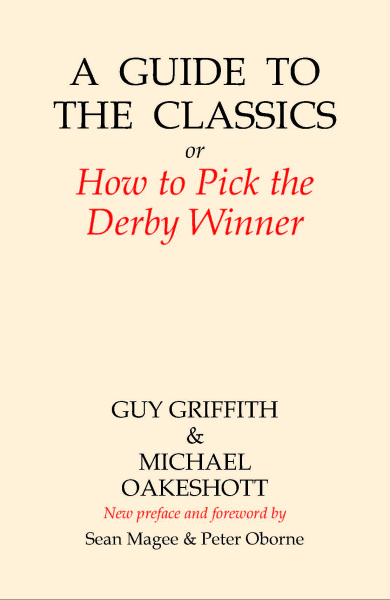
My late chum, Ken Minogue, has just had a posthumous collection of his classic essays republished and it is edited by none other than Tim Fuller.
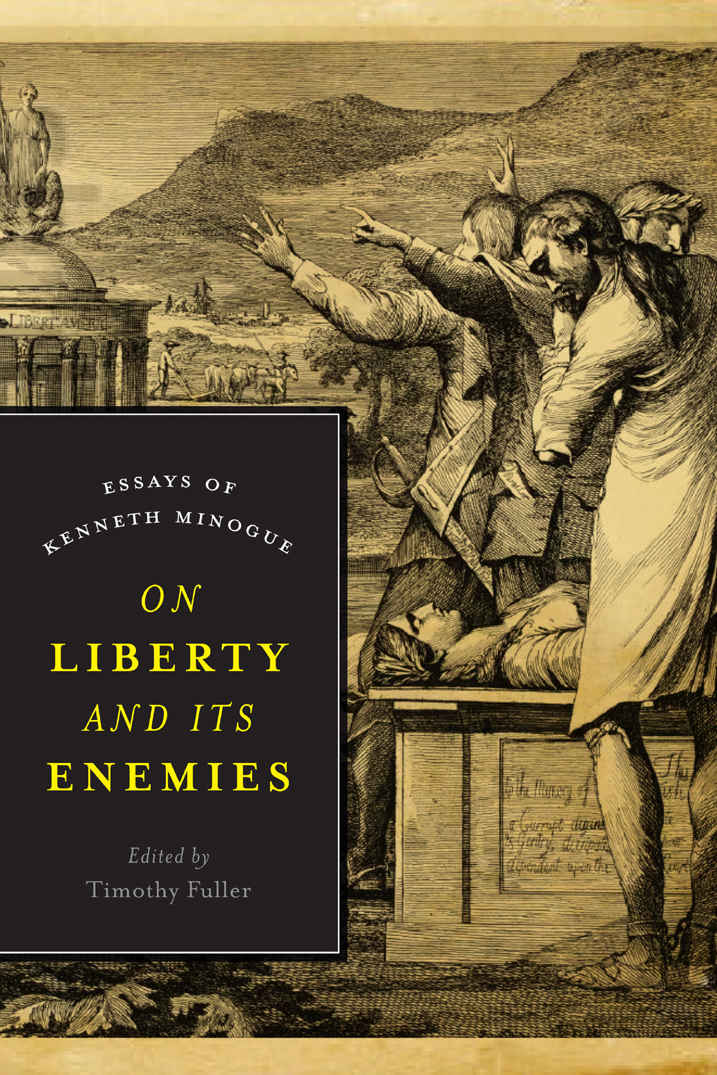
My late chum, Ken Minogue, has just had a posthumous collection of his classic essays republished and it is edited by none other than Tim Fuller.

The so-called détentes and reconciliations between “Science” and “Religion” are even more boring. What is more boring than hearing Heisenberg’s uncertainty relations enlisted in support of the freedom of the will? The traditional scientific model of man is clearly inadequate, for a man can go to heroic lengths to identify and satisfy his needs and end by being more miserable than a Calcuttan. As for the present religious view of man, it begs its own question, the question of God’s existence, which means that it is not only useless to the unbeliever but dispiriting. The latter is more depressed than ever at hearing the goods news of Christianity. From the scientific view at least, a new model of man is needed, something other than man conceived as a locus of bio-psycho-sociological needs and drives.
00000
Footnote:
My difficulty with the behaviorists is that they rule out mind, self, and consciousness as inaccessible either on the doctrinal grounds that they do not exist or on methodological grounds that they are beyond the reach of behavioral science.
It is not necessarily so. The value of Charles Peirce and social psychologists like George Mead is that they underwrite the reality of the self without getting trapped in the isolated autonomous consciousness of Descartes and Chomsky. They do this by showing that the self becomes itself only through a transaction of signs with other selves—and does so, moreover, without succumbing to the mindless mechanism of the behaviorists.
00000
Perhaps there was another cause. Perhaps God was the cause. We do not know. At any rate, a new kind of system came into being, the organism. It had the extraordinary property of maintaining its internal milieu, its homeostasis, and of reproducing itself.
00000
It is all very well to speak of the wonders of the Cosmos as testimony to the glory of God, and it may in fact be true, but it, the Cosmos, is hardly perceived as such in modern technological societies. For most scientists, it seems fair to say, these same wonders, including the behavior of organisms, can be explained as an interaction of elements. The wonder to the scientist is not that God made the world but that the works of God can be understood in terms of a mechanism without giving God a second thought. Is it not indeed more wonderful to understand the complex mechanisms (dyads) by which the DNA of a sperm joins with the DNA of an ovum to form a new organism than to have God snap his fingers and create an organism like a rabbit under a hat?
00000
It became useful to think of an organism as an open system which through the selective processes of evolution had developed a genetic code which enabled it to maintain an internal steady state (homeostasis) in a changing environment and to reproduce itself. Thus, all the elements and events in the Cosmos, including other organisms, could be thought of as the environment of the organism.
00000
An organism may also, either by being genetically coded or by learning—that is, by modifying certain neurones in its central nervous system—respond to certain signals in its environment by a behavior oriented toward other segments of the environment. Thus, a Texas leaf-cutting ant which discovers a food source too big to move will deposit a trail of pheromones on the ground, which other ants will follow for several hundred meters from the nest.
00000
The Texas leaf-cutting ant is genetically programmed so to respond. But Pavlov’s dog—or any other mammal exposed to certain changes in its environment—can learn to respond to a signal in an appropriate manner—by eating, fleeing, or fighting—through modification of cells in its central nervous system.

Here’s a profile of my incredibly accomplished colleague, collaborator, dear friend and accomplice in silliness. Dave’s wiki entry.
In The World of Yesterday, published in 1942, the Austrian writer Stefan Zweig wrote that in the years leading up to the Second World War, “I felt that Europe, in its state of derangement, had passed its own death sentence.” Only his timing was out. It would take several more decades before that death sentence was carried out — by ourselves on ourselves.

Europe is committing suicide. Or at least its leaders have decided to commit suicide. Whether the European people choose to go along with this is, naturally, another matter. When I say that Europe is in the process of killing itself, I do not mean that the burden of European Commission regulation has become overbearing or that the European Convention on Human Rights has not done enough to satisfy the demands of a particular community.
I mean that the civilisation we know as Europe is in the process of committing suicide and that neither Britain nor any other western European country can avoid that fate, because we all appear to suffer from the same symptoms and maladies.
As a result, by the end of the lifespans of most people currently alive, Europe will not be Europe and the peoples of Europe will have lost the only place in the world we had to call home.
Europe today has little desire to reproduce itself, fight for itself or even take its own side in an argument. Those in power seem persuaded that it would not matter if the people and culture of Europe were lost to the world.
There is no single cause of the present sickness. The culture produced by the tributaries of Judaeo-Christian culture, the ancient Greeks and Romans, and the discoveries of the Enlightenment has not been levelled by nothing. But the final act has come about because of two simultaneous concatenations — sets of linked events — from which it is now all but impossible to recover.
The first is the mass movement of peoples into Europe. In all western European countries this process began after the Second World War due to labour shortages. Soon Europe got hooked on the migration and could not stop the flow even if it had wanted to.
The result was that what had been Europe — the home of the European peoples — gradually became a home for the entire world. The places that had been European gradually became somewhere else.
All the time Europeans found ways to pretend this influx could work. By pretending, for instance, that such immigration was normal. Or that if integration did not happen with the first generation then it might happen with their children, grandchildren or another generation yet to come. Or that it didn’t matter whether people integrated or not.
All the time we waved away the greater likelihood that it just wouldn’t work. This is a conclusion that the migration crisis of recent years has simply accelerated.
Which brings me to the second concatenation. For even the mass movement of millions of people into Europe would not sound such a final note for the continent were it not for the fact that (coincidentally or otherwise) at the same time Europe lost faith in its beliefs, traditions and legitimacy.
More than any other continent or culture in the world today, Europe is deeply weighed down with guilt for its past. Alongside this outgoing version of self-distrust runs a more introverted version of the same guilt. For there is also the problem in Europe of an existential tiredness and a feeling that perhaps for Europe the story has run out and a new story must be allowed to begin.
Mass immigration — the replacement of large parts of the European populations by other people — is one way in which this new story has been imagined: a change, we seemed to think, was as good as a rest. Such existential civilisational tiredness is not a uniquely modern European phenomenon, but the fact that a society should feel like it has run out of steam at precisely the moment when a new society has begun to move in cannot help but lead to vast, epochal changes.
Had it been possible to discuss these matters, some solution might have been possible. Looking back, it is remarkable how restricted we made our discussion, even while we opened our home to the world.
A thousand years ago the peoples of Genoa and Florence were not as intermingled as they now are, but today they are all recognisably Italian, and tribal differences have tended to lessen rather than grow with time.
The current thinking appears to be that at some stage in the years ahead the peoples of Eritrea and Afghanistan too will be intermingled within Europe as the Genoans and Florentines are now melded into Italy. The skin colour of individuals from Eritrea and Afghanistan may be different, their ethnic origins may be further afield, but Europe will still be Europe and its people will continue to mingle in the spirit of Voltaire and St Paul, Dante, Goethe and Bach.
As with so many popular delusions, there is something in this. The nature of Europe has always shifted and — as trading cities such as Venice show — has included a grand and uncommon receptiveness to foreign ideas and influence. From the ancient Greeks and Romans onwards, the peoples of Europe sent out ships to scour the world and report back on what they found. Rarely, if ever, did the rest of the world return their curiosity in kind, but nevertheless the ships went out and returned with tales and discoveries that melded into the air of Europe. The receptivity was prodigious: it was not, however, boundless.
The question of where the boundaries of the culture lay is endlessly argued over by anthropologists and cannot be solved. But there were boundaries. Europe was never, for instance, a continent of Islam. Yet the awareness that our culture is constantly, subtly changing has deep European roots. We know that the Greeks today are not the same people as the ancient Greeks. We know that the English are not the same today as they were a millennium ago, nor the French the French. And yet they are recognisably Greek, English and French and all are European.
In these and other identities we recognise a degree of cultural succession: a tradition that remains with certain qualities (positive as well as negative), customs and behaviours. We recognise the great movements of the Normans, Franks and Gauls brought about great changes. And we know from history that some movements affect a culture relatively little in the long term, whereas others can change it irrevocably.
The problem comes not with an acceptance of change, but with the knowledge that when those changes come too fast or are too different we become something else, including something we may never have wanted to be.
At the same time we are confused over how this is meant to work. While generally agreeing that it is possible for an individual to absorb a particular culture (given the right degree of enthusiasm both from the individual and the culture) whatever their skin colour, we know that we Europeans cannot become whatever we like. We cannot become Indian or Chinese, for instance. And yet we are expected to believe that anyone in the world can move to Europe and become European.
If being “European” is not about race, then it is even more imperative that it is about “values”. This is what makes the question “What are European values?” so important. Yet this is another debate about which we are wholly confused.
Are we, for instance, Christian? In the 2000s this debate had a focal point in the row over the wording of the new EU constitution and the absence of any mention of the continent’s Christian heritage. The debate not only divided Europe geographically and politically, it also pointed to a glaring aspiration.
For religion had not only retreated in western Europe. In its wake there arose a desire to demonstrate that in the 21st century Europe had a self-supporting structure of rights, laws and institutions that could exist even without the source that had arguably given them life.
In the place of religion came the ever-inflating language of “human rights” (itself a concept of Christian origin). We left unresolved the question of whether or not our acquired rights were reliant on beliefs that the continent had ceased to hold, or whether they existed of their own accord. This was, at the very least, an extremely big question to have left unresolved while vast new populations were being expected to “integrate”.
An equally significant question erupted at the time around the position and purpose of the nation state. From the Treaty of Westphalia in 1648 up to the late 20th century the nation state in Europe had generally been regarded not only as the best guarantor of constitutional order and liberal rights but the ultimate guarantor of peace.
Yet this certainty also eroded. European figures such as Chancellor Helmut Kohl of Germany in 1996 insisted that “The nation state . . . cannot solve the great problems of the 21st century.” Disintegration of the nation states of Europe into one large integrated political union was so important, Kohl insisted, that it was in fact “a question of war and peace in the 21st century”.
Others disagreed, and 20 years later just over half of British people who voted in the EU referendum demonstrated that they were unpersuaded by Kohl’s argument. But, once again, whatever one’s views on the matter, this was a huge question to leave unresolved at a time of vast population change.
While unsure of ourselves at home, we made final efforts at extending our values abroad. Yet whenever our governments and armies got involved in anything in the name of these “human rights” — Iraq in 2003, Libya in 2011 — we seemed to make things worse and ended up in the wrong. When the Syrian civil war began, people cried for western nations to intervene in the name of the human rights that were undoubtedly being violated. But there was no appetite to protect such rights because whether or not we believed in them at home, we had certainly lost faith in an ability to advance them abroad.
At some stage it began to seem possible that what had been called “the last utopia” — the first universal system that divorced the rights of man from the say of gods or tyrants — might comprise a final failed European aspiration. If that is indeed the case, then it leaves Europeans in the 21st century without any unifying idea capable of ordering the present or approaching the future.
Europe has little desire to reproduce itself, fight for itself or even take its own side in an argument. At any time the loss of all unifying stories about our past or ideas about what to do with our present or future would be a serious conundrum. But during a time of momentous societal change and upheaval the results are proving fatal. The world is coming into Europe at precisely the moment that Europe has lost sight of what it is. And while the movement of millions of people from other cultures into a strong and assertive culture might have worked, the movement of millions of people into a guilty, jaded and dying culture cannot.
Even now Europe’s leaders talk of an invigorated effort to incorporate the millions of new arrivals. These efforts too will fail. If Europe is going to become a home for the world, it must search for a definition of itself that is wide enough to encompass the world. This means that in the period before this aspiration collapses our values become so wide as to become meaninglessly shallow.
So whereas European identity in the past could be attributed to highly specific, not to mention philosophically and historically deep foundations (the rule of law, the ethics derived from the continent’s history and philosophy), today the ethics and beliefs of Europe — indeed the identity and ideology of Europe — have become about “respect”, “tolerance” and (most self-abnegating of all) “diversity”.
Such shallow self-definitions may get us through a few more years, but they have no chance at all of being able to call on the deeper loyalties that societies must be able to reach if they are going to survive for long.
This is just one reason why it is likely that our European culture, which has lasted all these centuries and shared with the world such heights of human achievement, will not survive.
As recent elections in Austria and the rise of Alternative for Germany seem to prove, while the likelihood of cultural erosion remains irresistible, the options for cultural defence continue to be unacceptable. Even after the tumultuous years they have just had, the French electorate go to the polls next weekend to choose between more of a disastrous status quo or a member of the Le Pen family.
And all the time the flow into Europe continues. Over the Easter weekend alone European naval vessels collected more than 8,000 African migrants from the seas around Italy and brought them into Europe. Such a flow — which used to be unusual — is now routine, apparently unstoppable and also endless.
In The World of Yesterday, published in 1942, the Austrian writer Stefan Zweig wrote that in the years leading up to the Second World War, “I felt that Europe, in its state of derangement, had passed its own death sentence.” Only his timing was out. It would take several more decades before that death sentence was carried out — by ourselves on ourselves.
© Douglas Murray 2017
Died on this day. See Housman’s entry in Poetry Foundation. I came to know Housman through his classical scholarship and only much later got round to reading his poetry. Housman was a scathe merchant of the highest order, sometimes it felt like wrestling with a razor blade. One of my favorite quotes of his could well be applied to the garden variety regressive.
An editor of no judgment, perpetually confronted with a couple of MSS. to choose from, cannot but feel in every fibre of his being that he is a donkey between two bundles of hay. What shall I do now? Leave criticism to the critics, you might say, and betake himself to any honest trade for which he is less unfit. But he prefers a more flattering solution: he confusedly imagines that if one bundle of hay is removed he will cease to be a donkey.
Housman, A. E. (1961). Selected prose. Cambridge: Cambridge University Press.

Here’s wishing a happy birthday to the amazingly brave Mary Lefkowitz, a beacon of light for intellectual integrity, truth and liberality. I’d urge you to read History Lesson: it’s an easy, quick and a rather chilling read. Mary came to my attention some thirty years ago when, studying classics, I came across the contentious Martin Bernal. Their bitter clash later morphed into even more unsavory exchanges with others as set out in History Lesson. Here are a few write-ups for History Lesson in The Telegraph, First Things, and The Spectator.

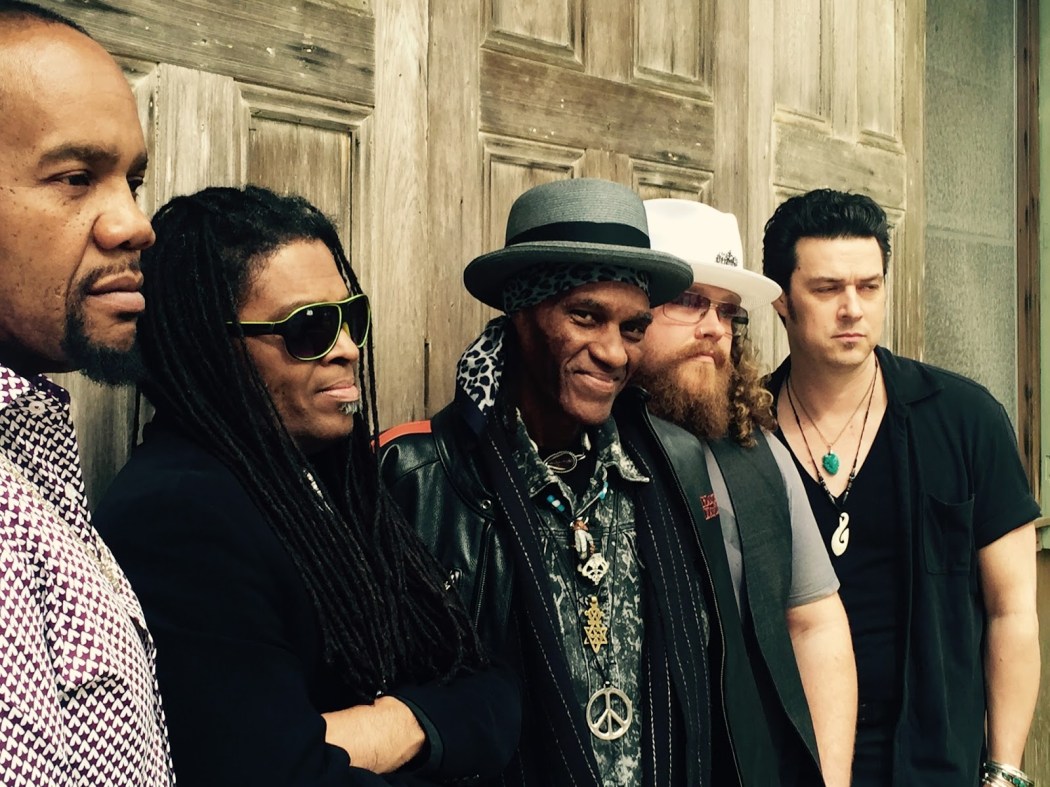
Usually when the hyperbolic term “supergroup” is used that alone is enough to dissuade me from listening. This group so far, is an exception. At least on their latest album they offer a powerful and seamless emergent blend of funk, gospel and blues — it doesn’t get much better than this.

Eric Cohen and Aylana Meisel in Commentary.
To this day, many American Jews reflexively associate anti-Semitism with the “Right.” And without question, the “neo-Nazi” and white-supremacist strains of anti-Semitism exist in America, and occasionally their sick adherents act out against the Jews. But these perverse philosophies have no broad institutional base and no representatives in American political office. They are fringe movements. Leftist anti-Zionism, by contrast, has permeated every corner of academia and now has powerful adherents in high political office. The ideological preconceptions of our self-proclaimed sentinels against anti-Semitism, always looking for right-wing monsters to decry, often blind them to the far more dangerous ideological threat now facing the Jews: the simultaneous rise of progressive Israel-bashing and Islamic Jew-hatred.