Walker Percy Wednesday 165

percycovercroppea

NOTES FOR A NOVEL ABOUT THE END OF THE WORLD

A SERIOUS NOVEL about the destruction of the United States and the end of the world should perform the function of prophecy in reverse. The novelist writes about the coming end in order to warn about present ills and so avert the end. Not being called by God to be a prophet, he nevertheless pretends to a certain prescience. If he did not think he saw something other people didn’t see or at least didn’t pay much attention to, he would be wasting his time writing and they reading. This does not mean that he is wiser than they. Rather might it testify to a species of affliction which sets him apart and gives him an odd point of view. The wounded man has a better view of the battle than those still shooting. The novelist is less like a prophet than he is like the canary that coal miners used to take down into the shaft to test the air. When the canary gets unhappy, utters plaintive cries, and collapses, it may be time for the miners to surface and think things over. But perhaps it is necessary first of all to define the sort of novel and the sort of novelist I have in mind. By a novel about “the end of the world, ” I am not speaking of a Wellsian fantasy or a sciencefiction film on the Late Show. Nor would such a novel presume to predict the imminent destruction of the world. It is not even interested in the present very real capacity for physical destruction: that each of the ninety-odd American nuclear submarines carries sixteen Polaris missiles, each of which in turn has the destructive capacity of all the bombs dropped in World War II. Of more concern to the novelist are other signs, which, if he reads them correctly, portend a different kind of danger. It is here that the novelist is apt to diverge from the general population. It seems fair to say that most people are optimistic with qualifications-or rather that their pessimism has specific causes. If the students and Negroes and Communists would behave, things wouldn’t be so bad. The apprehension of many novelists, on the other hand, is a more radical business and cannot be laid to particular evils such as racism, Vietnam, inflation. The question which must arise is whether most people are crazy or most serious writers are crazy. Or to phrase the alternatives more precisely: Is the secular city in great trouble or is the novelist a decadent bourgeois left over from a past age who likes to titivate himself and his readers with periodic doom-crying? The signs are ambiguous. The novelist and the general reader agree about the nuclear threat. But when the novelist begins behaving like a man teetering on the brink of the abyss here and now, or worse, like a man who is already over the brink and into the abyss, the reader often gets upset and even angry. One day an angry lady stopped me on the street and said she did not like a book I wrote but that if I lived up to the best in me I might write a good Christian novel like The Cardinal by Henry Morton Robinson or perhaps even The Foundling by Cardinal Spellman. What about the novelist himself? Let me define the sort of novelist I have in mind. I locate him not on a scale of merit-he is not necessarily a good novelist-but in terms of goals. He is, the novelist we speak of, a writer who has an explicit and ultimate concern with the nature of man and the nature of reality where man finds himself. Instead of constructing a plot and creating a cast of characters from a world familiar to everybody, he is more apt to set forth with a stranger in a strange land where the signposts are enigmatic but which he sets out to explore nevertheless. One might apply to the novelist such adjectives as “philosophical,” “metaphysical,” “prophetic,” “eschatological,” and even “religious.” I use the word “religious” in its root sense as signifying a radical bond, as the writer sees it, which connects man with reality-or the failure of such a bond-and so confers meaning to his life-or the absence of meaning. Such a class might include writers as diverse as Dostoevsky, Tolstoy, Camus, Sartre, Faulkner, Flannery O’Connor. Sartre, one might object, is an atheist. He is, but his atheism is “religious” in the sense intended here: that the novelist betrays a passionate conviction about man’s nature, the world, and man’s obligation in the world. By the same token I would exclude much of the English novel-without prejudice: I am quite willing to believe that Jane Austen and Samuel Richardson are better novelists than Sartre and O’Connor. The nineteenth-century Russian novelists were haunted by God; many of the French existentialists are haunted by his absence. The English novelist is not much interested one way or another. The English novel traditionally takes place in a society as everyone sees it and takes it for granted. If there are vicars and churches prominent in the society, there will be vicars and churches in the novel . If not, not. So much for vicars and churches. What about American novelists? One would exclude, again without prejudice, social critics and cultural satirists like Steinbeck and Lewis. The Okies were too hungry to have “identity crises.” Dodsworth was too interested in Italy and dolce far niente to worry about God or the death of God. The contemporary novel deals with the sequelae. What happens to Dodsworth after he lives happily ever after in Capri? What happens to the thousand Midwesterners who settle on the Riviera? What happens to the Okie who succeeds in Pomona and now spends his time watching Art Linkletter? Is all well with them or are they in deeper trouble than they were on Main Street and in the dust bowl? If so, what is the nature of the trouble? We have a clue to the preoccupation of the American novelist in the recurring complaint of British critics. A review of a recent novel spoke of the Americans’ perennial disposition toward “philosophical megalomania.” Certainly one can agree that if British virtues lie in tidiness of style, clarity and concision, a respect for form, and a native embarrassment before “larger questions,” American failings include pretension, grandiosity, formlessness, Dionysian excess, and a kind of metaphysical omnivorousness. American novels tend to be about everything. Moreover, at the end, everything is disposed of, God, man, and the world. The most frequently used blurb on the dust jackets of the last ten thousand American novels is the sentence “This novel investigates the problem of evil and the essential loneliness of man.” A large order, that, but the American novelist usually feels up to it. This congenital hypertrophy of the novelist’s appetites no doubt makes for a great number of very bad novels, especially in times when, unlike in nineteenth-century Russia, the talent is not commensurate with the ambition.

Screen Shot 2017-10-11 at 10.58.26 AM.png

Conservatism and Common-Sense Realism

For a limited time OUP have made freely available several articles from across their small catalogue of philosophy journals, one of which is by the very excellent Kristóf Nyíri in The Monist.

philosophy_and_theology

Understanding Cryptocurrencies with Stigmergy

This from Alexander Blum writing in the HuffPost. We already have markets, the republic of science (Polanyi), urban design (Jacobs) and much more besides, spontaneous orders that embody these worthy stygmergic [sic] virtues (quote below). Writing a decade or so ago, the downside then expressed was that there runs the risk of ‘‘a kind of dysfunctional communal narrowing of attention’’ that can be self-fulfilling. This has now fully come to pass manifest as faux outrage, fake news, and groupthink — of course, afforded by social media and the now ubiquitous navel-gazing smart phone fuckwittery that is no longer confined to the “yoof”. See Stigmergic epistemology, stigmergic cognition, Stigmergy in the Human Domain, and Human-Human Stigmergy.

Screen Shot 2017-12-20 at 2.43.38 PM

mesh01b

Derek Parfit, photographer

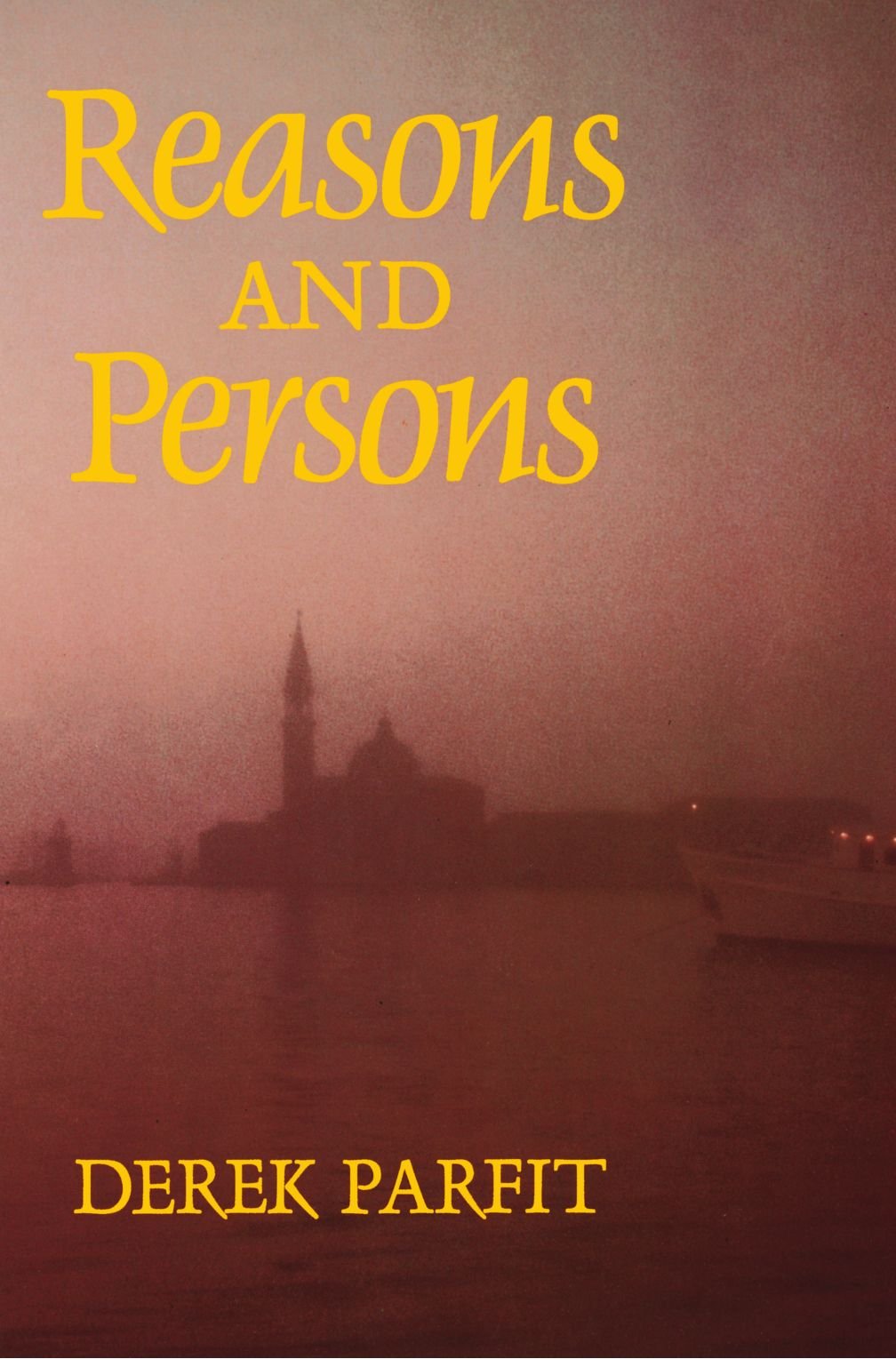
I knew that Parfit was a keen photographer with a great eye at least from the cover of Reasons and Persons, but here are many that have remained unseen by most until now. Luchino Visconti would have approved.

71GOmPf3NFL


Walker Percy Wednesday 164

percycovercroppea

A man riding a train may incarnate alienation (the commuter) or rotation (i. e., the English variety: “I was taking a long-delayed holiday. In the same compartment and directly opposite me, I noticed a young woman who seemed to be in some sort of distress. To my astonishment she beckoned to me. I had planned to get off at North Ealing, but having nothing better to do, I decided to stay on to render what assistance I could . . . “) But he is also admirably placed to encounter the Return or repetition. Tom Wolfe, lying in his berth while the train passes by night through lonely little Midwestern towns, is alienation re-presented and so reversed. He may be lost and by the wind grieved but he is withal triumphant. But George Webber going home again and Charles Gray going back to Clyde are transmitted intact-once the reader, who has never been to Clyde or Asheville, has made the shift. But this is not rotation, for it is a deliberate quest for the very thing rotation set out at any cost to avoid; the rider has turned his back upon the new and the remote and zone crossing, and now voyages into his own past in the search for himself. It is thus in the nature of a conversion. Unlike rotation, it is of two kinds, the aesthetic and the existential, which literature accordingly polarizes. The aesthetic repetition captures the savor of repetition without surrendering the self as a locus of experience and possibility. When Proust tastes the piece of cake or Captain Ryder finds himself in Brideshead, the incident may serve as an occasion for either kind: an excursion into the interesting, a savoring of the past as experience; or two, the passionate quest in which the incident serves as a thread in the labyrinth to be followed at any cost. This latter, however, no matter how serious, cannot fail to be polarized by art, transmitting as the interesting. The question what does it mean to stand before the house of one’s childhood? is thus received in two different ways-one as an occasion for the connoisseur sampling of a rare emotion, the other literally and seriously: what does it really mean? Repetition is the conversion of rotation. In rotation, Shane cannot stay. In repetition, Shane neither moves on nor stays, but turns back to carry the search into his own past (we need not consider here Kierkegaard’s distinction that true religious repetition has nothing to do with travel but is “consciousness raised to the second power”-which I take to be equivalent to Marcel’s secondary reflection). In East of Eden Steinbeck leaves the wheel of rotation, the wayward bus, and with a great flourish turns back to Salinas and the past. In a less cluttered repetition, In Sicily, Vittorini’s “1,” on the occasion of a letter from his father, leaves his life of everydayness in Milan, where he is besieged by “abstract furies,” and makes the pilgrimage back to Sicily. It is a very good repetition, or as Hemingway says in a somewhat purple introduction, it has rain in it. Like rotation, repetition offers itself as a deliverance from everydayness, yet it is, in a sense, the reverse of rotation. It is also a reversal of the objective-empirical. The latter world view cannot get hold of it without radically perverting it. For example, the dust jacket of Vittorini’s book says something, as I recall, about modern man’s renewing his vital energies by rediscovering his roots, etc. This remark is no doubt true in a garrulous dust-jacket sense, yet it is the very stuff of the “abstract furies” which drove him from Milan in the first place. It is the objective-empirical counterattack, the attempt to seize and render according to its own modes the existential trait-which it does only by re-reversing and alienating. (Even when a critic tries to stay clear of the abstract furies and writes of The Adventures of Augie March that it has the “juices of life in it,” if it did have any juices, he is already drying them up.) To say the least o f it, then, whatever the ultimate metaphysical issues may be, the alienated man has in literature, as reader or writer, three alternatives. He may simply affirm alienation for what it is and as the supreme intersubjective achievement of art set forth the truth of it: how it stands with both of us. Such is Joseph K.: Kafka’s pointing at and naming alienation has already reversed it, healing the very wound it re-presents. For an intersubjective discovery of alienation is already its opposite. Rotation, on the other hand, is transmitted intact. Repetition is polarized, transmitting as the interesting, canceling as the existential. What is omitted is the serious character of the search. If it should happen that a real Charles Gray came to himself one morning in the full realization of the absurdity of his life in the suburbs and if on the occasion of a chance recollection of Clyde he had the strongest inkling that back there, not ahead, lay the thread in the labyrinth he had lost, and if, like Kierkegaard’s young man, he developed a passion for recovering himself beside which his family, his work, science, art, were of no account whatsoever-such a passion would not transmit aesthetically as a passion but only as the interesting. This is to testify not to an artistic deficiency of the writers of repetition but to the validity of Kierkegaard’s aesthetic stage-which can in no wise be selftranscending. Marquand hit the mother lode when he applied the device of the Return to the promising vein of exurbanite alienation. The disenchantment of Charles Gray may never go beyond the genteel limits of irony, of the attractive emotion with which he suffers his wife’s conversation (“Aren’t you going to wear your ruptured duck today?”); it needn’t go beyond this limit; indeed it should not-it is impossible to imagine Charles Gray in the full grip of anxiety, staring at his hand like Roquentin and shaking like a leaf at what he sees. It is altogether inappropriate that he should be. His little excursion into alienation-the pleasant return to Clyde, the mild disenchantment, stoically borne, which follows-is no more nor less than what we bargained for. It would not do at all for Charles Gray to come to despair or to experience a religious conversion. Whatever may be the ultimate decision-and one is tempted to contrast Marquand’s Book-of-the-Month Club disenchantment with Kafka’s Mitteleuropa alienation-the fact is that Charles Gray is the suburban counterpart of Joseph K. (and in my opinion, a not unworthy counterpart: the first hundred pages of Point of No Return are of a very high order). Charles Gray is a gentle wayfarer who is true to himself in the search for himself, and if he moderately despairs in the end and has recourse to a poetic Stoa, at least he knows and we know how it stands with him. It is otherwise with the hero of The Man in the Gray Flannel Suit, who is said to be plowing the same field but who actually exists one whole spiral beneath Marquand. Tom Rath is interesting as a regression from whatever authenticity Charles Gray achieves in his recognition of alienation and the deliverance therefrom, a regression which masquerades as rotation and is not even that. We come upon Tom Rath in the same promising wasteland as Charles Gray, the everydayness of the Manhattan-to-suburb axis. His way out is not repetition, however, but rotation and a remarkably shoddy variety of rotation. It is a device in which dishonesty is compounded at least twice-once in what the writer intends to do and again in what he does without intending to do-to issue in the standard rotative rhythm of the soap opera. Whatever Marquand’s shortcomings, he knows what he can do and he does it very well. He shows a man in an unauthentic situation and he explores one interesting alternative to it. Tom Rath, on the other hand, embarks on a career of bad faith and counterfeit motivation in which righteous alternatives conceal their opposites. Marquand’s formula might be summed up as suburban alienation recognized, plus the way out of the Return, plus a gentle disillusionment stoically borne. And this is in fact what happens. Tom Rath’s formula is: alienation recognized, the prevailing marketing orientation rejected, and a becoming one’s authentic self by devoting oneself to family and the P. T. A.-an admirable turn of events, but this is not what really happens. Behind this fa􀛏ade an altogether different (and desperately unauthentic) bid for authenticity is made. At least two concealed reverses can be disentangled from this skein of bad faith. The first reverse: Overtly, the episode with Maria and the begetting of an illegitimate child is offered as a wartime lapse, bringing on a serious crisis in Rath’s life which must be faced and surmounted, with the help of Judge Bernstein before the authentic life at home can be resumed. Covertly and in fact, the wartime episode with Maria is offered as the one authentic moment, the high tide of Rath’s life. It is clear enough that the Roman idyll with Maria sans pajamas and culminating in the scene in the ruined villa (!) is regarded as the highest moment to which mortal Rousseauian man may attain. Postwar life with the family and community projects, far from being an advance into the good life as advertised, are unmistakably set forth as making the best of a sorry situation. Charles Gray’s most authentic moment is the Return: repetition; Tom Rath’s is rotation, the coming upon the Real Thing among the ruins-a moment which needn’t have been disguised, since, for one thing, it has honorable literary forebears, as when Prince Andrei transcended everydayness and came to himself for the first time only when he lay wounded on the field of Borodino. This is a true existential reversal, the discovery of the pearl of great price at the very heart of the objective-empirical disaster. Yet even if Tom Rath’s rotation with Maria had been offered at its face value, it would not have rung true. For Tom’s adventure is not, in fact, a rotation but a desperate impersonation masquerading as rotation. The second reverse: Overtly the adventure with Maria is offered as rotation , an untrammeled exploration of la solitude a deux amid the smoking ruins of the en soi. Covertly and in fact, Tom Rath is taking refuge in the standard rotation of the soap opera, the acceptable rhythm of the WellsianHuxleyan- Nathanian romance of love among the ruins. His happiness with Maria as they lie in the ruined villa warmed by the burning piano, far from being a free exploration , is in reality a conforming to the most ritualistic of gestures: that which is thought to be proper and fitting for a sexual adventure. The motto of Tom’s happiness is “Now· I am really living,” which does not mean now I am truly myself but rather, now at last I am doing the acceptable-thing-which- an-American-officer-in-Europe-is-supposed-to-do. He has at last achieveid a successful impersonation, the role-taking of the American-at-war. It would have been more interesting if Rath’s adventure could have been explored as a repetition, a re-experiencing of what his father had done with the Mademoiselle from Armentieres. As it is, finding himself in the situation of alienation, the familiar I estranged from the .It, Tom Rath, instead of becoming a self, a free individual, solves the dilemma by a dismal impersonation, a fading into the furniture of the It.

Screen Shot 2017-10-11 at 10.58.26 AM.png