A collaborator of mine, Ted Lewis, has a new book out.

A collaborator of mine, Ted Lewis, has a new book out.
Was Adam Smith a Scottish philosopher? The question seems an odd one. He was a philosopher and he was Scottish. What more could we need to know, in order to arrive at the simple answer ‘yes.’ And in any case, why does it matter? On reflection, however, neither the question nor the answer seems so simple, and both are more consequential than might be thought at first. Consider the case of David Hume. Hume was Scottish, and Hume was a philosopher, but at one time he was regularly excluded him from the canon of ‘Scottish philosophy.’ The reason is not hard to find. For a century or more Scottish philosophy was especially identified with Thomas Reid, the founding figure of a ‘Scottish School of Common Sense’, a ‘school’ that arose from sustained opposition to Hume. In The Scottish Philosophy of Common Sense Selwyn Grave writes:
The philosophy of Common Sense became ‘the Scottish philosophy’ and schooled several generations of Scotsmen. . . . Its history in Scotland began at Aberdeen with Thomas Reid’s teaching at King’s College and his papers to the Aberdeen Philosophical Society. . . The society, important both for the origin and expansion of the philosophy of Common Sense, was formed in 1758 and during its early years gravitated in a distant orbit round Hume. . . . Reid’s Inquiry into the Human Mind on the Principles of Common Sense, based on his papers to the Aberdeen Philosophical Society was published in 1764. . . . The philosophy of Common Sense arose as an ‘answer’ to Hume (Grave, 1960, pp. 1-4).
Grave is here expressing a view widely held, that the integrity and distinctiveness of ‘Scottish philosophy’ rests upon the exclusion of Hume. Being Scottish and being a philosopher, it seems, can at best be necessary conditions for being a Scottish philosopher. The case of Hume demonstrates that they may not be sufficient.
If Hume is not to be designated a ‘Scottish philosopher’, there are grounds for thinking that Smith is not to be designated in this way either. Smith’s friendship and personal admiration for Hume is well known. His profound intellectual sympathy for Hume is widely regarded as no less notable. Indeed, according to Nicholas Phillipson, Hume’s:
Treatise provided Smith with the foundations on which to base his own philosophical thinking’, Smith’s own contribution being primarily that of ‘developing a science of man on Humean principles’ by formulating ‘remarkable theories of language and property’ into which ‘he was to weave his own conjectural discussion of the assumption on which all Hume’s philosophy was based (Phillipson, 2010, pp. 69-71).
So from the simple facts that Smith was both Scottish and a philosopher, we cannot automatically derive a positive answer to the question with which we began.
Due in January of 2020. For more on Evan’s work see his website.
There are conferences, courses, and celebrities promoting the notion that Buddhism is spirituality for the rational; compatible with cutting-edge science; indeed, “a science of the mind.” In this provocative book, Evan Thompson argues that this representation of Buddhism is false.
This is a lot of coin (11,100 quid) for a second bike but were one gonna have a second floozy, this would be a contender. The V85 TT really seems to be a jack of all trades for those who have long-since tired of crotch-rockets. While across the range Guzzi has always had the strongest sense of theology and geometry, their current range offering is absolutely divine.
Released today. Stax store.
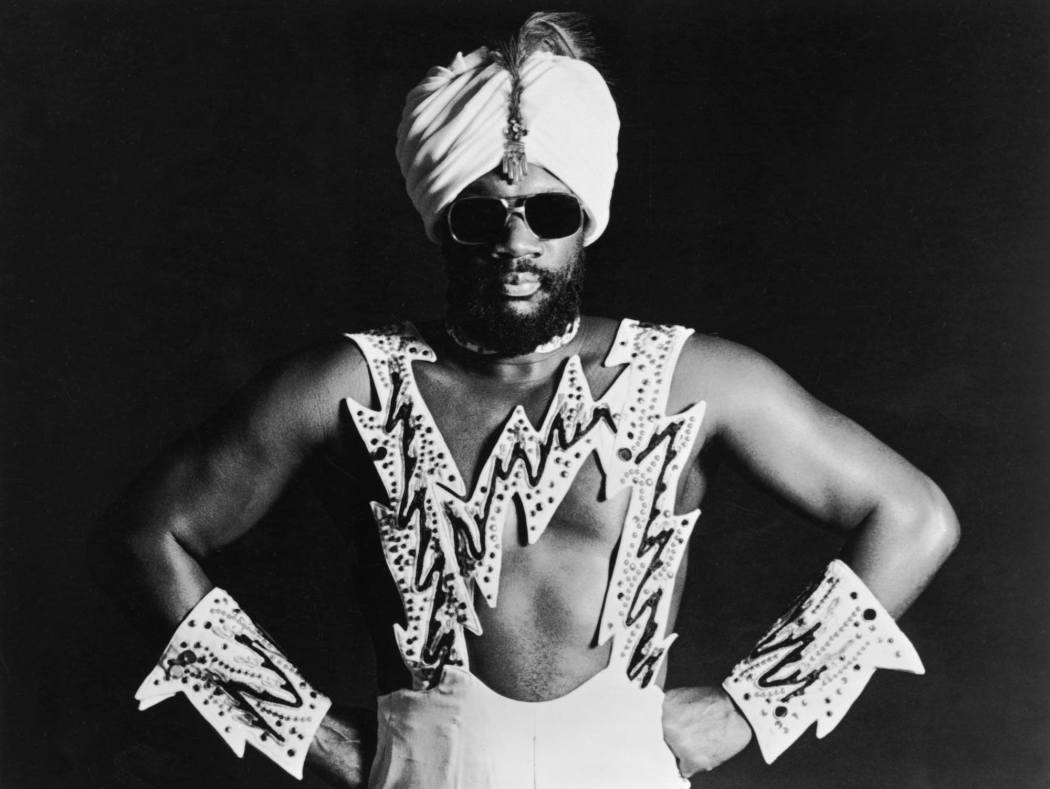
The redoubtable, incisive and subtle Douglas Murray is the only current public intellectual I’ve come across to have read Gregor von Rezzori’s Memoirs of an Anti-Semite. While Murray points to Rezzori’s central psychological insight that anti-Semitism is a form of prestige (i.e. snobbery), I want to add a further complicating wrinkle to the discussion. That is, there is a profound schism within Jewry itself. There are those who are deeply ensconced within dhimmitude and there are those whom I term the Maccabean type. The former, as a function of their psychological dhimmitude, ingratiate themselves with Jeremy, Ilhan, Rashida, Ken, Iqra, Joy, Roger, the Women’s March &c. The grievance industry of which they tend to be a part, necessitates their overt distaste for the latter kind, the “muscular” (and therefore “vulgar”) kind of Jew as signified by Israel. This default stance is the dhimmi’s union card so to speak. It’s almost as if they need the musty caricature of the enfeebled Jew to be perpetuated: their bluster is all for show, wets “bravely” rooting-/calling- out only one manifestation of AS (tiki-man, KKK, skinheads etc.), the low-stakes variant. But as Murray points out, this is no more than pissing in the wind. They willfully ignore or (with weasel-wordage) fudge the more ubiquitous and insidious anti-semitism within their very own ecosystem (what Gad Saad scathingly terms as Ostrich Parasitic Syndrome). This is precisely the sort of anti-semitism that Gregor von Rezzori was articulating except manifest here in an inverse and an even more perverse fashion — now it’s Jew vs. Jew. Under Murray’s (and by implication Rezzori’s) understandings, the dhimmi’s irrational monomaniacal obsession with Israel merely reveals their bad faith, despite Israel’s profound humanitarian (technological know-how) contributions to underserved regions. Through their ritualized anti-Zionist sloganeering (e.g. in the paper of record, the New York Times), they ignore the fact that Zionism in all its strands, for the most part, is derivative of mainstream European political thought. Ahad Ha’am’s critique of Herzl has resonance to the communitarian critique of liberalism within contemporary social philosophy: Herzl was the liberal rationalist par excellence, Ahad Ha’am was a conservative in the tradition of Burke and Scruton. Moreover, the irony is lost on these mendacious scattergun critics that it was part and parcel of the marxist-inspired Kibbutzim project to refashion the dhimmi Jew into a new “muscular” type. It’s not a matter of if but when the dhimmis’ ostensible chums will throw them under the bus: there is ample precedence and we are already witnessing prominent instances. When the regressives do lay into the dhimmi who they gonna call?

One of the surest signs that somebody does not understand anti-Semitism is that he talks about defeating it, destroying it, or otherwise ending it. For many Jews, and anyone else who has had to take note of anti-Semitism, such inflated claims elicit only a dark laugh. Imagining you might end anti-Semitism is like saying you might forever postpone the aging process. An ambition, certainly, but one perpetually condemned to disappointment.
It is a virus that endlessly mutates, taking advantage of environment, locale, host, events, and more.
In particular, how might they condemn the Muslim’s anti-Semitism without appearing to be Islamophobic? In this situation it becomes impossible to single out anti-Semitism for specific condemnation. The only way to do it is to condemn, as Corbyn does, “anti-Semitism, Islamophobia, and all forms of racism.”
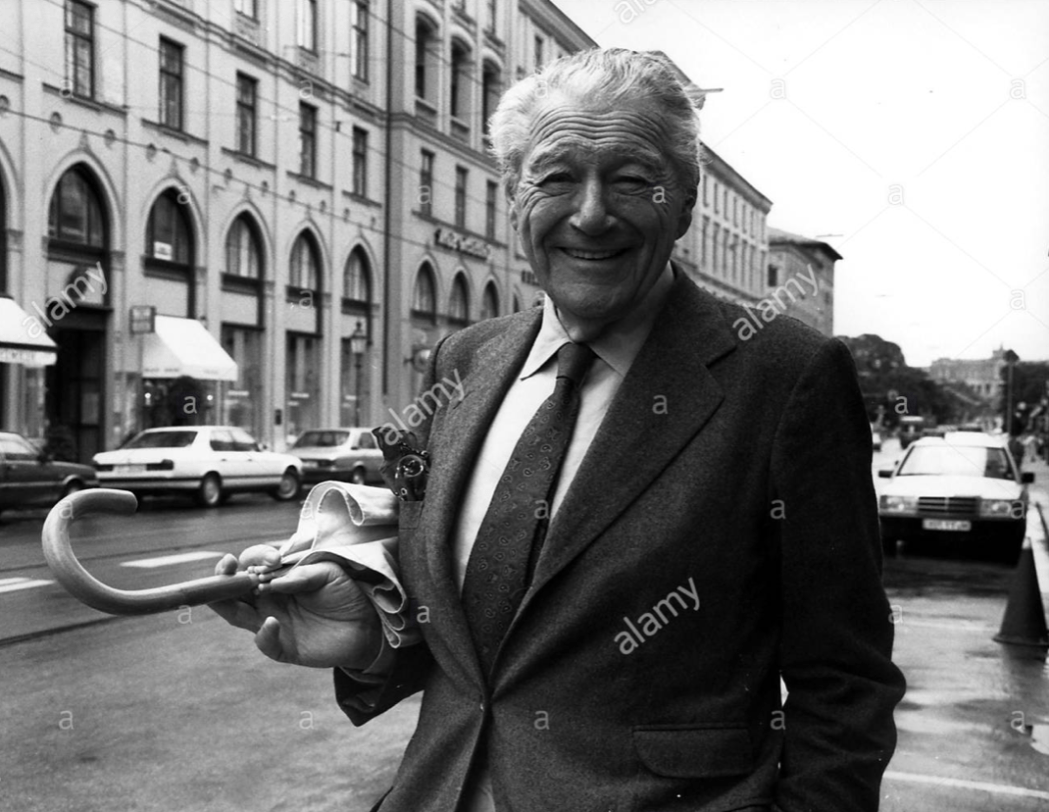
Here is the opening paragraph to Vernon’s Foreward to Propriety and Prosperity. I would urge anyone interested in situated cognition to read his superb Rationality in Economics: Constructivist and Ecological Forms, amazingly an unknown work within situated circles, proponent or critic. Also worth a read is Vernon’s memoir.
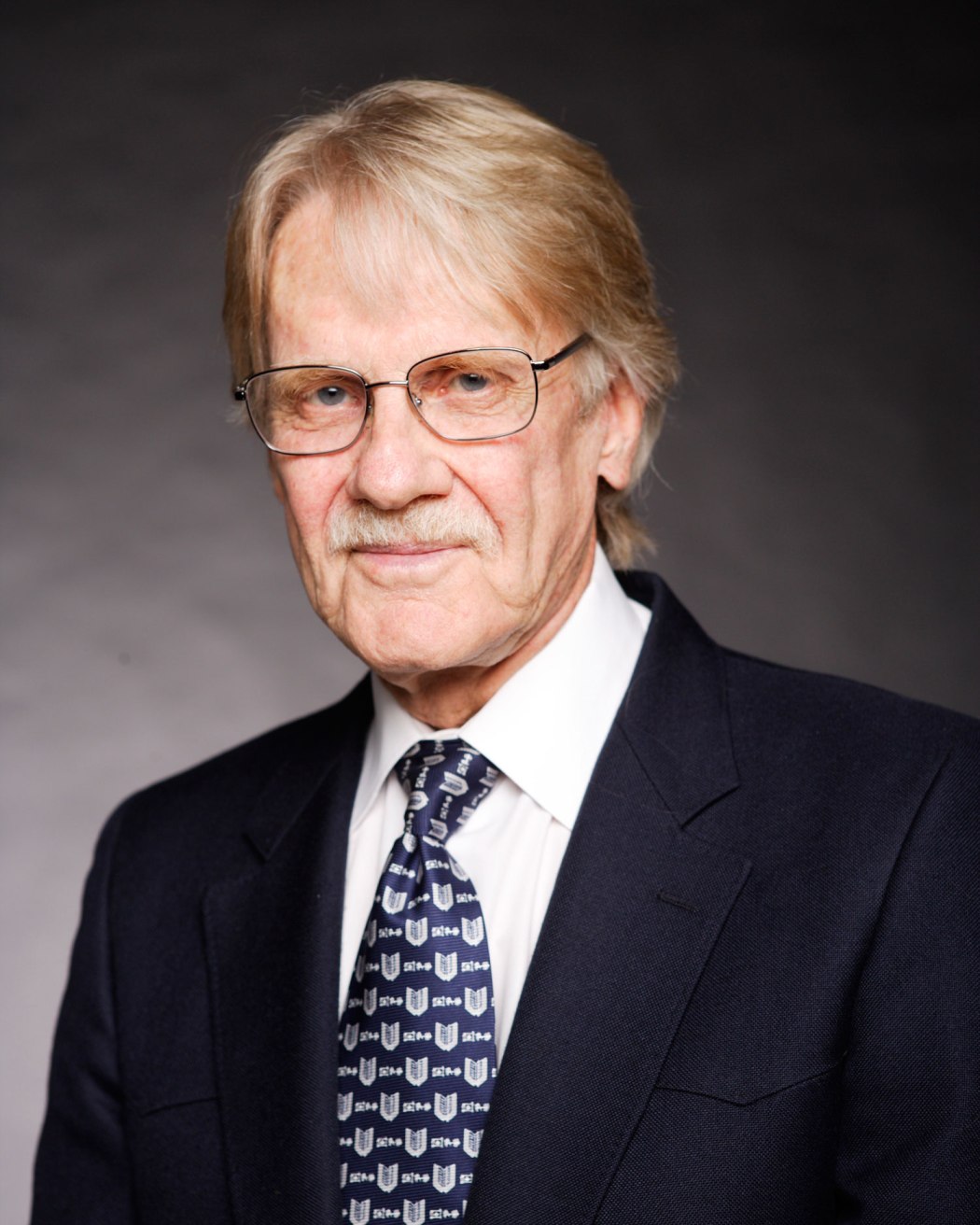
This book is a welcome addition to the resurgent scholarly and practical interest in Adam Smith’s contributions to market economics and its antecedents in the social order of human culture. In Smith, propriety concerned the rules that govern human sociability by mutual consent in local group interactions. Out of this experience were fashioned the rules of property, justice and the liberal order of political economy, and thence to economic prosperity. It is a grand narrative alive with meaning for the contemporary world in which side-by-side with markets the demand for sociability has found new expression in the social media companies. No wonder that in a seminar Kenneth Boulding could refer to Adam Smith as the first great post-Newtonian scientist.


 manwithoutqualities