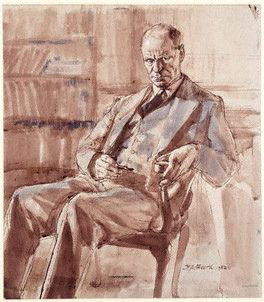
Hayek’s notion of cognitive closure, a mark of the human condition, can be ameliorated if the social and artifactual world functions as a kind of distributed extra-neural memory store manifest as dynamic traditions, part of the resources for acting, thinking or communicating. This cognitive¬epistemological¬liberty tripartite is closely related to a long-standing bone of contention in Hayek centering on the two-fold claim:
(a) epistemological immodesty is the sine qua non of a mixed or socialist economy, and that
(b) this inexorably leads us on “the road to serfdom” (Samuelson, 2009).
The manifold ways in which this so-called “inevitability thesis” (Hayek 1944/1976, Chapter IV) can be interpreted is discussed by Farrant & McPhail (2009). Working from the 1976 edition of The Road to Serfdom Hayek gives out a mixed message. The cover trumpets the book as “A classic warning against the dangers to freedom inherent in social planning” (emphasis added). In the forward Hayek claims that he has “never accused the socialist parties of deliberately aiming at a totalitarian regime or even to show such inclinations” (Hayek 1944/1976, pp. xiv, xxi). Hayek is of the view that the source of misinterpreting the inevitability thesis is terminological – that is, socialism at the time he was writing really did mean complete and utter centralization. Thirty years on, socialism in Western Europe pretty much denoted a mixed economy. So what are we to make of Hayek on this issue?
Hayek definitely does believe that a necessary condition of socialism is a degree of centralization, political and economic, which seriously infringes personal freedom. This looks like a causal claim: socialism cannot operate without this degree of centralization. It’s a quite different (though still causal) claim that a mixed economy either leads to socialism or, for other reasons, itself produces a degree of centralization, political and economic, which seriously infringes personal freedom. I’d agree that the link between central planning and the kind of socialism Hayek had in mind is logical. One might even see it as definitional. One might think that the diminution of freedom is itself a logical consequence if what is centrally planned, since it is no longer a matter for personal choice. But this line of argument, whether Hayek’s or not, neglects the calculus of freedom. It’s logically perfectly possible for central planning to restrict some freedoms but to create or increase others. Why not? Hayek can’t logically rule it out. It’s a causal matter. In any event, it should be remembered that Hayek’s target was a rationalist zeitgeist that infected “socialists of all parties”: this was, after all, the polemical point of the book (note the tongue in cheek dedication; p. 35).
Of course it matters whether one is focusing on the Hayek of 1944 or the Hayek of 1967: it is clear that Hayek had refined his views. Consider the later essay “The Theory of Complex Phenomena” (Hayek, 1967, p. 42) where he concludes that:
. . . we may well have achieved a very elaborate and quite useful theory of some kind of complex phenomena and yet have to admit that we do not know of a single law, in the ordinary sense of the word, which this kind of phenomena obeys . . . I rather doubt whether we know of any “laws” which social phenomena obey . . . in the field of complex phenomena the term “law” as well as the concepts of cause and effect are not applicable without such modification as to deprive them of their ordinary meaning.
Hayek rightly admits that the “inevitability” is a vague and imprecise expression. So far as I can see, Hayek’s “infelicity” is generated by a lack of philosophical precision – but his critics fare little better on this point. A philosopher would talk about some (specified) kind of necessity. I’d guess Hayek assumes causal necessity but the covering law(s) would have to contain ceteris paribus clauses – which rather undermines the dramatic claim of inevitability. And what is the covering law or set of covering laws? Hayek can, it seems to me, assume causal necessity and does so at various points in his argument. The spontaneous social order emerges causally. Epistemologically we can’t predict its features but it’s not spontaneous in the sense of being metaphysically uncaused. Clearly ceteris paribus clauses water down a law’s necessity, and in this sense make its operation contingent. And contingency means that the law has a probability of less than 1. This is so even if the law “works” with exceptionless regularity: that’s just a contingency. But ceteris paribus clauses don’t tell you, without extra assumptions, what the actual probability is between 0 and less than 1. If there’s a social law with ceteris paribus clauses to support this probabilistic generalization, then we need to know what the clauses are and what in turn their probability is. Central planning leads to the general erosion of freedom unless:
x, y, z where ‘x, y, z’ individually or as a disjunctive set have a probability of 0.9 (or whatever).
If, on the other hand, Hayek is offering a social law as an exceptionless generalization, then presumably his whole interlocked social theory will be needed to deliver this law (note 1). The claim might be that there’s a high probability, approaching 1, that central planning will lead to the erosion of freedoms. Not just economic freedoms but any freedom that relies on the rule of law, since central planning will need to override the rule of law. What is this probability claim based on? If on enumerative induction, then Hayek cannot make good this claim because his sample base is tiny. Enough said.
Note 1: By the way, while Marx does talk of the “iron laws of history,” there are other passages where historical transitions are seen as trends of extremely high probability. Epistemologically, of course, Marx never claims chronological precision as to what will happen: he can’t give even the roughest of timelines.
Farrant, A. & McPhail, E. (2009). Hayek, Samuelson, and the logic of the mixed economy? Journal of Economic Behavior & Organization 69 (2009) 5–16.
Hayek, F.A. (1944/1976). The Road to Serfdom. Chicago: University of Chicago Press.
Hayek, F.A. (1967). Studies on Philosophy, Politics and Economics. Chicago: University of Chicago Press.
Samuelson, P. A. (2009). A few remembrances of Friedrich von Hayek (1899–1992). Journal of Economic Behavior & Organization 69: 1–4