On several occasions I’ve featured Steve Pyke’s work – Habermas of two posts back has been Pyked. Here is a review by a philosopher of Steve’s book. There is also brief mention in The New Yorker. The image featured above is of course Jerry Fodor.
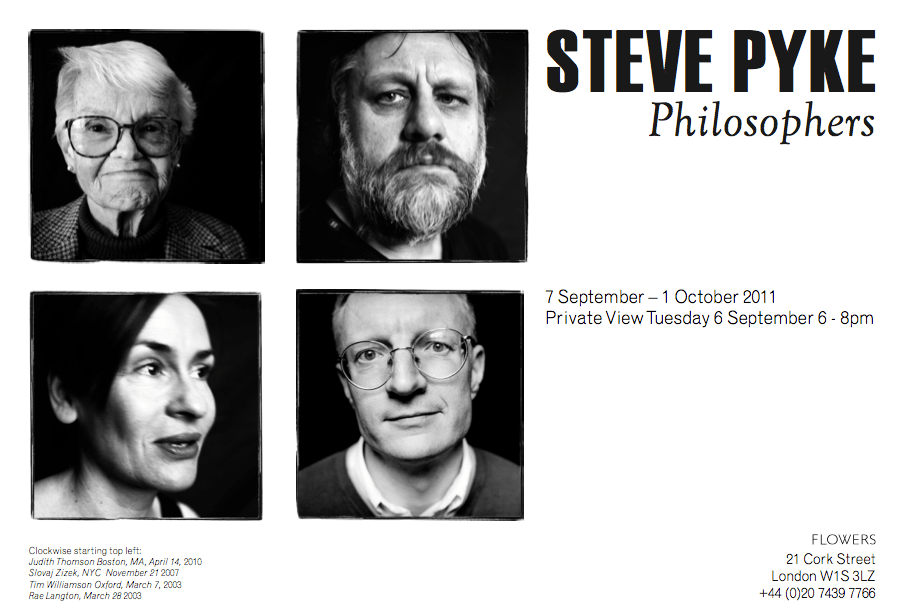
On several occasions I’ve featured Steve Pyke’s work – Habermas of two posts back has been Pyked. Here is a review by a philosopher of Steve’s book. There is also brief mention in The New Yorker. The image featured above is of course Jerry Fodor.
Some of the most talented professional bloggers in the U.S. have backgrounds in philosophy. Is this just a coincidence or is there a causal relationship between philosophical training and the demands of professional blogging? In addition to learning about the philosophical backgrounds and abiding interests of three of the most prominent bloggers in the U.S., we’ll discuss how the emergence of this new journalistic medium could provide a new substantive professional venue for some of our most talented students and a significant outlet for public philosophy.
Three bearded ones comprise the panel:
Here is a previous post on the social epistemology of blogging
Here’s a recent article published in Political Studies.
Sandy Goldberg gave an excellent talk yesterday. I’m looking forward to seeing some version of this coming out as a fully-fledged paper. Sandy is of course referring to one of the most famous papers in post-War philosophy.
Abstract. According to the widely-endorsed safety condition on knowledge, S knows that p only if: not easily would S believe that p were p false. It is natural to think that the safety condition on knowledge – or perhaps some version of it, relativized to grounds or methods – can be used to diagnose failures of knowledge that obtain owing to epistemic luck or gettierization. In this paper I argue against this natural view: there can be cases of justified, true, safely-formed belief that nevertheless suffer from a form of epistemic luck (and so fail to be knowledge). As a result, I argue, we would do well to reconsider the anti-luck condition on knowledge. In particular, we should think of the satisfaction of the modal component of this condition as something that must be explained by the subject’s epistemic access to the fact that makes her belief true. When we do so in the context of perceptual cases, as I do here, we see that the causal condition on perceptual knowledge, which everyone will acknowledge, has a non-negligible role to play as part of the anti-luck condition on such knowledge.
Here are some photos of the wonderfully irrepressible Sandy in action. Also, check out his latest book Relying on Others, a work I’ve mentioned before.



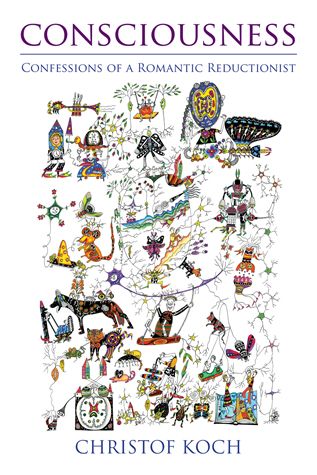
Here is a review by David Winters on Mark Reed’s recently published Robert Musil and the NonModern.
There’s something about The Man Without Qualities that seems to resist conclusive criticism. Something not so much unfinished as uniquely continuous; infinite. The reason the novel is unlike anything else you’ll ever read is because it goes on reading itself when you’ve finished reading it. Any kind of critical account would miss that mark, and how could a critic hope to catch up with a book that’s always outrunning its readers? Musil’s novel never will require to be read in order to exist. It will go on regardless, forever essaying itself, perfecting itself.
“Stigmergy” has finally made it into a mainstream philosophy reference work. It is mentioned in the chapter entitled “Reasoning and Rationality” written by Collin Allen, Peter M. Todd, and Jonathan M. Weinberg.
Colin, by the way, is co-authoring a paper for a themed issue of Cognitive Systems Research on stigmergy Marge Doyle and I are editing.
EPISTEME has now fully transitioned the move to Cambridge University Press. The complete back catalogue from the previous publisher is now available on the EPISTEME/CUP website. The EPISTEME website will be revamped shortly.

Telegraph obituary
My favourite Dummett book: Truth and Other Enigmas. My favourite Dummett paper: A Defense of Mctaggart’s Proof of the Unreality of Time. Here is Steve Pyke’s superb portrait.
Michael Dummett
Oxford
21 May 1990Philosophy attempts, not to discover new truths about the world, but to gain a clear view of what we already know and believe about it. That depends upon attaining a more explicit grasp of the structure of our thoughts; and that in turn on discovering how to give a systematic account of the working of language, the medium in which we express our thoughts.

When I saw Dummett give a lecture some years back at Birkbeck he could have been mistaken for a Fleet Street hack – he just sounded like one and had the look of one that had spent many an hour frequenting Ye Olde Cheeshire Cheese.