bluesbrooks williamsmusicWalker Percy
James Kurth and the Fate of Western Civilization
My chum Corey Abel’s usual elegance and eloquence. Kurth, by the way, is one of the great performers. Here is a free author’s copy.
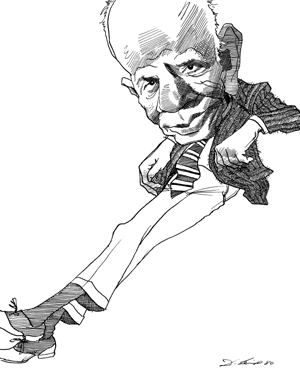
Socrates pointed out that self-satisfaction is the death of philosophy. To pursue wisdom one must desire it. But to desire something, one has to understand not only its appeal but also one’s lack of it. We do not seek what we believe we already possess. Hobbes saw, like Socrates, that a major affliction of mankind was that everyone considers himself wise. So it is today. Only a brave few welcome bracing criticism and challenges to ideés reçus.
For decades Kurth has been a gadfly to the academic establishment and the cultural leadership of the United States, reminding them of unfashionable truths, and making the case to think fearlessly about the gravest problems facing the United States and Western powers generally.

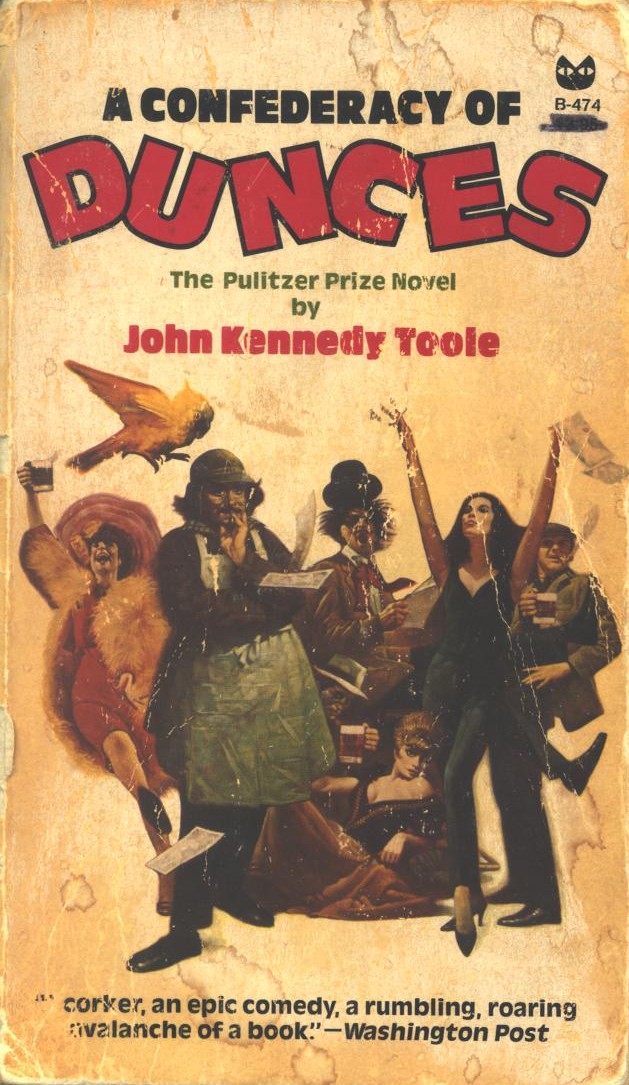
A Confederacy of Dunces – quotes and extracts – 78
“They would try to make me into a moron who liked television and new cats and frozen food. Don’t you understand? Psychiatry is worse than communism. I refuse to be brainwashed. I won’t be a robot!”
“But, Ignatius, they help out a lot of people got problems.”
“Do you think that I have a problem?” Ignatius bellowed. “The only problem that those people have anyway is that they don’t like new cars and hair sprays. That’s why they are put away. They make the other members of the society fearful. Every asylum in this nation is filled with poor souls who simply cannot stand lanolin, cellophane, plastic, television, and subdivisions.”
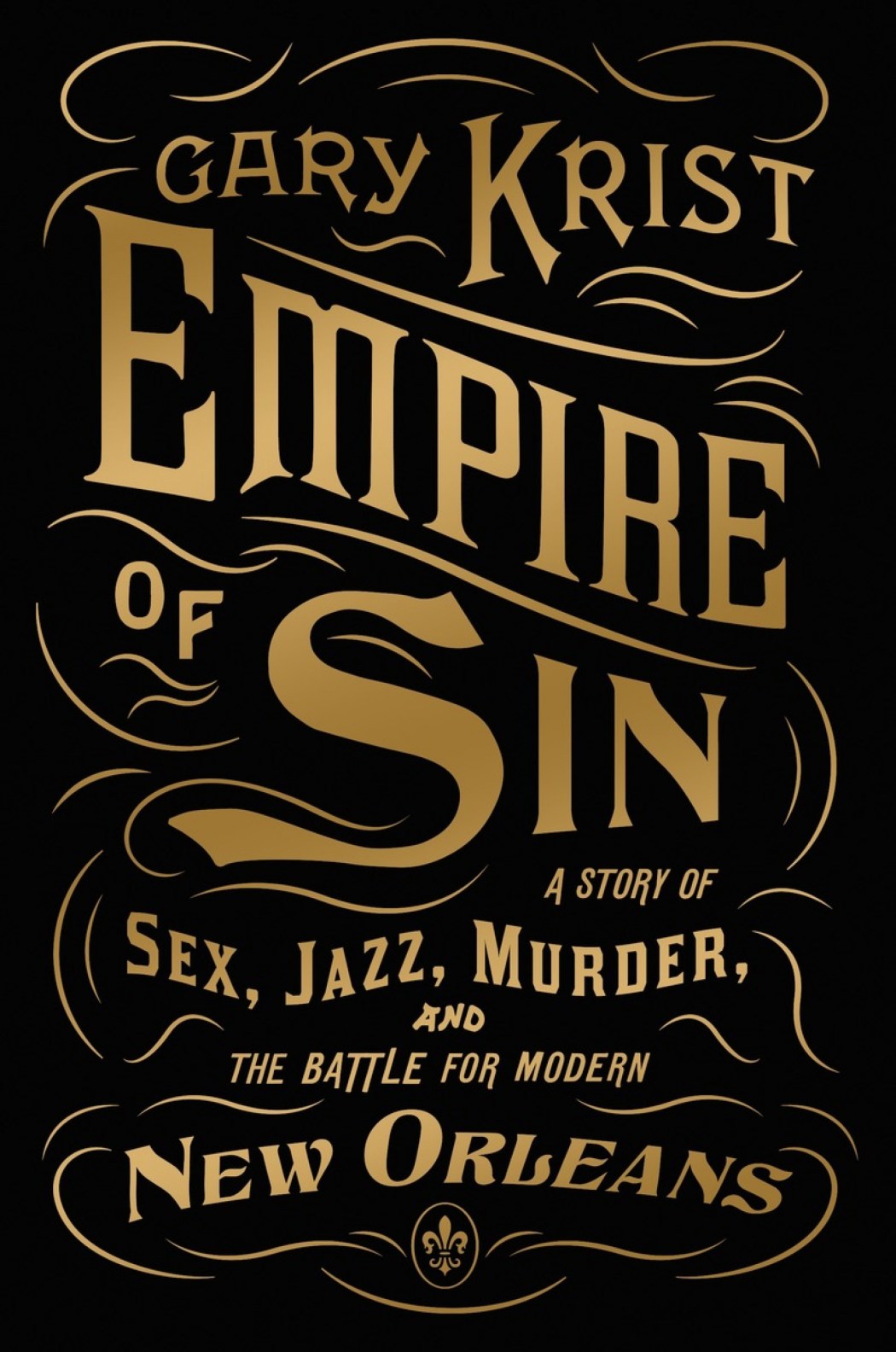
Empire of Sin
Here is Walter Isaacson’s review of Gary Krist’s Empire of Sin.
Storyville’s sporting houses became cribs for jazz. Like most of the creative culture of New Orleans, this new style of music was spawned by the town’s diversity. Flowing together on the street corners were the sounds of marching brass bands, church spirituals, plantation blues, Creole orchestras, returning Spanish-American War cornetists, ragtime pianists, African drummers, Congo Square dancers and opera house singers. Like the pleasures of Storyville, jazz respected no color line. As a local newspaper wrote of a music hall, “Here male and female, black and yellow, and even white, meet on terms of equality and abandon themselves to the extreme limit of obscenity and lasciviousness.”
Rooting out sin may be worthy, but beware the unsavory motives that can lurk in the hearts of moral crusaders.
Cosmos + Taxis 2:1
The latest issue of C+T is now available.
The Moviegoer – quotes and extracts – 8
Until recent years, I read only “fundamental” books, that is, key books on key subjects, such as War and Peace, the novel of novels; A Study of History, the solution of the problem of time; Schroedinger’s What is Life?, Einstein’s The Universe as I See It, and such. During those years I stood outside the universe and sought to understand it. I lived in my room as an Anyone living Anywhere and read fundamental books and only for diversion took walks around the neighborhood and saw an occasional movie. Certainly it did not matter to me where I was when I read such a book as The Expanding Universe. The greatest success of this enterprise, which I call my vertical search, came one night when I sat in a hotel room in Birmingham and read a book called The Chemistry of Life. When I finished it, it seemed to me that the main goals of my search were reached or were in principle reachable, whereupon I went out and saw a movie called It Happened One Night which was itself very good. A memorable night. The only difficulty was that though the universe had been disposed of, I myself was left over. There I lay in my hotel room with my search over yet still obliged to draw one breath and then the next. But now I have undertaken a different kind of search, a horizontal search. As a consequence, what takes place in my room is less important. What is important is what I shall find when I leave my room and wander in the neighborhood. Before, I wandered as a diversion. Now I wander seriously and sit and read as a diversion.

Where is my mind?
Marcus Aurelius’ Meditations — audiobook
Rationalism and Teaching the Constitution
Elizabeth Corey’s recent discussion in Academic Questions. An extract below:

Oakeshott’s Critique
In his most famous essay, “Rationalism in Politics,” published in a book of the same name, Oakeshott calls the American Founding a “Rationalist” project. In Oakeshott’s lexicon, Rationalism is not something to be praised but a pathological condition, a cast of mind exhibited by many people in the present day and especially by those involved in politics. It is the notion that what is most important in any activity is not the knowledge acquired in the practice of an art or science, but instead the principles and precepts that can be distilled and written down about it. These precepts can, in turn, be used as guides or directives for novices. Thus does an ideology substitute for an inherited or hard-won understanding of political activity.
This is the kind of knowledge one finds in technical handbooks and how-to manuals: “Teach Yourself Piano in Six Weeks” or “How to Become a Food Critic in Nine Easy Steps.” The presupposition is that in showing novices how to engage in an activity, somehow these abridgments can assume the place formerly held by teachers and expert practitioners. Another assumption is that these precepts are somehow self-generating—bright ideas thought up by enterprising individuals or committees—owing little to tradition and almost everything to the exercise of a supposedly pure, unaided reason.
If it is not already clear from the above description, being called a Rationalist is no compliment. Yet these are precisely the terms in which Oakeshott describes the authors of the Declaration of Independence. The American colonists believed that “the proper organization of a society and the conduct of its affairs were based upon abstract principles.” Such principles were “not the product of civilization; they were natural, ‘written in the whole volume of human nature’…to be discovered in nature by human reason.” He credits John Locke with having set out an ideology that was adopted wholesale by people such as Thomas Jefferson and Alexander Hamilton, who then claimed “a positive superiority over older societies not yet fully emancipated from the chains of custom.”4 Allied with this indictment is Oakeshott’s severe skepticism about written constitutions and their ability to constrain political practice in the way their authors intended.
Historians and political philosophers will no doubt find much to quibble with in this account, since it is brief and deliberately provocative. In painting with a broad brush, Oakeshott is certainly guilty of simplifying a situation that is far more complex than he admits. Yet there is something persuasive about his critique of the Founding as a Rationalist project and his idea of written constitutions as an integral part of this Rationalism. This places the current debate between timeless truths and fluid experiment—often framed as the difference between “Originalism” and “Living Constitutionalism”—on a somewhat different footing.
Oakeshott’s criticisms highlight the contingent character of documents that many of us might be inclined to view as foundational, even quasi-scriptural. And yet he does not careen off into unfettered relativism. Oakeshott is perhaps most helpful in reminding us that traditions must be learned and maintained—that they constitute a kind of endowment that must be continuously replenished by emerging generations of students. Yet while he is undoubtedly right that no written abridgment can adequately capture a tradition, neither, he might suggest, should we abandon the one we have inherited, even if it is built on the “Rationalistic” documents of the Declaration and Constitution.
Leslie Armour (1931-2014)

According to an email circulated to the PSA British Idealism Specialist Group, Leslie Armour died yesterday.
Here is an interview with him.
Here is his Wiki entry.