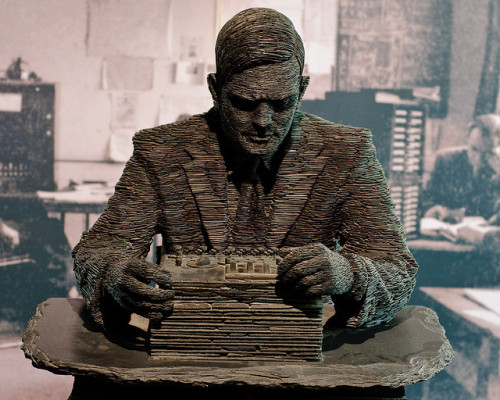
Andy Clark talk.
Andy ClarkArtificial intelligenceBrainCognitionCognitive neuroscienceCognitive scienceconsciousnessdistributed cognitionEmbodied cognitionExtended MindExternalismphilosophical psychologyPhilosophy of mindsituated cognition
Andy Clark talk.
What is the malaise? you ask. The malaise is the pain of loss. The world is lost to you, the world and the people in it, and there remains only you and the world and you no more able to be in the world than Banquo’s ghost.
You say it is a simple thing surely, all gain and no loss, to pick up a good-looking woman and head for the beach on the first fine day of the year. So say the newspaper poets. Well it is not such a simple thing and if you have ever done it, you know it isn’t—unless, of course, the woman happens to be your wife or some other everyday creature so familiar to you that she is as invisible as you yourself. Where there is chance of gain, there is also chance of loss. Whenever one courts great happiness, one also risks malaise.
The car itself is all-important, I have discovered. When I first moved to Gentilly, I bought a new Dodge sedan, a Red Ram Six. It was a comfortable, conservative and economical two-door sedan, just the thing, it seemed to me, for a young Gentilly businessman. When I first slid under the wheel to drive it, it seemed that everything was in order—here was I, a healthy young man, a veteran with all his papers in order, a U.S. citizen driving a very good car. All these things were true enough, yet on my first trip to the Gulf Coast with Marcia, I discovered to my dismay that my fine new Dodge was a regular incubator of malaise. Though it was comfortable enough, though it ran like a clock, though we went spinning along in perfect comfort and with a perfect view of the scenery like the American couple in the Dodge ad, the malaise quickly became suffocating. We sat frozen in a gelid amiability. Our cheeks ached from smiling. Either would have died for the other. In despair I put my hand under her dress, but even such a homely little gesture as that was received with the same fearful politeness. I longed to stop the car and bang my head against the curb. We were free, moreover, to do that or anything else, but instead on we rushed, a little vortex of despair moving through the world like the still eye of a hurricane. As it turned out, I should have stopped and banged my head, for Marcia and I returned to New Orleans defeated by the malaise. It was weeks before we ventured out again.
This is the reason I have no use for cars and prefer buses and streetcars. If I were a Christian I would make a pilgrimage by foot, for this is the best way to travel. But girls do not like it. My little red MG, however, is an exception to the rule. It is a miserable vehicle actually, with not a single virtue save one: it is immune to the malaise. You have no idea what happiness Marcia and I experienced as soon as we found ourselves spinning along the highway in this bright little beetle. We looked at each other in astonishment: the malaise was gone! We sat out in the world, out in the thick summer air between sky and earth. The noise was deafening, the wind was like a hurricane; straight ahead the grains of the concrete rushed at us like mountains.

The very excellent scathe merchant Justin Shubow in Forbes.
Betsky explicitly said that context was appropriately irrelevant to the design. It was clear that for Betsky and Kroloff, the anonymous globalized starchitecture that is all the rage in Dubai, Davos, and Shanghai equally belongs in New Orleans’ Lower Ninth Ward.
If the architects had their way, elevator music in New Orleans public housing would be screeching Stockhausen, not native Louis Armstrong or Fats Domino. Modernists have no room for harmony, rhythm, or soul; they are high-culture elitists, not multiculturalists who celebrate class and ethnic diversity.

Mrs. Reilly reached down next to her chair and picked from the floor the large volume of The Consolation of Philosophy. She aimed one of its corners at Ignatius’ stomach.
“Awff,” Ignatius gurgled.
“Angelo found it in that barroom last night,” Mrs. Reilly said boldly. “Somebody stole it off him in the toilet.”
“Oh, my God! This has all been arranged,” Ignatius screamed, rattling the huge edition in his paws. “I see it all now. I told you long ago that that mongoloid Mancuso was our nemesis. Now he has struck his final blow. How innocent I was to lend him this book. How I’ve been duped.” He closed his bloodshot eyes and slobbered incoherently for a moment. “Taken in by a Third Reich strumpet hiding her depraved face behind my very own book, the very basis of my worldview. Oh, Mother, if only you knew how cruelly I’ve been tricked by a conspiracy of subhumans. Ironically, the book of Fortuna is itself bad luck. Oh, Fortuna, you degenerate wanton!”

Below is the intro to Gordon Graham’s chapter.
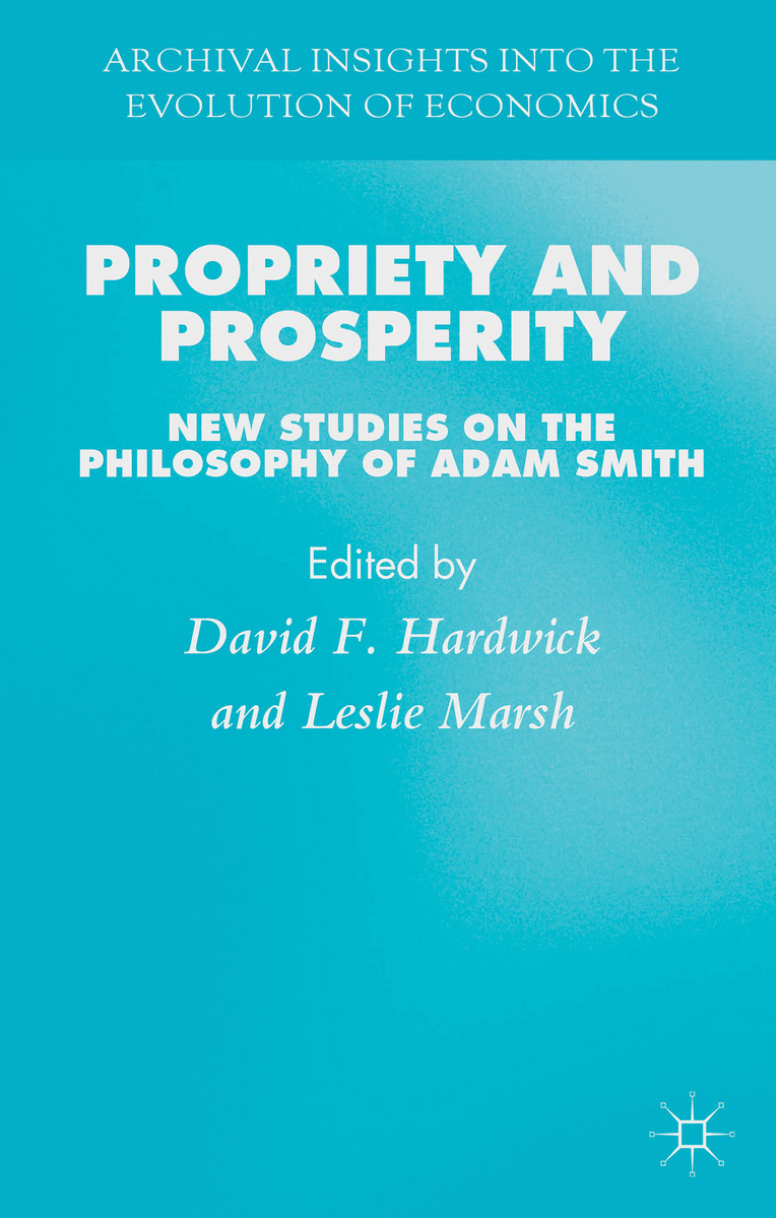
Was Adam Smith a Scottish philosopher? The question seems an odd one. He was a philosopher and he was Scottish. What more could we need to know, in order to arrive at the simple answer ‘yes.’ And in any case, why does it matter? On reflection, however, neither the question nor the answer seems so simple, and both are more consequential than might be thought at first. Consider the case of David Hume. Hume was Scottish, and Hume was a philosopher, but at one time he was regularly excluded him from the canon of ‘Scottish philosophy.’ The reason is not hard to find. For a century or more Scottish philosophy was especially identified with Thomas Reid, the founding figure of a ‘Scottish School of Common Sense’, a ‘school’ that arose from sustained opposition to Hume. In The Scottish Philosophy of Common Sense Selwyn Grave writes:
The philosophy of Common Sense became ‘the Scottish philosophy’ and schooled several generations of Scotsmen. . . . Its history in Scotland began at Aberdeen with Thomas Reid’s teaching at King’s College and his papers to the Aberdeen Philosophical Society. . . The society, important both for the origin and expansion of the philosophy of Common Sense, was formed in 1758 and during its early years gravitated in a distant orbit round Hume. . . . Reid’s Inquiry into the Human Mind on the Principles of Common Sense, based on his papers to the Aberdeen Philosophical Society was published in 1764. . . . The philosophy of Common Sense arose as an ‘answer’ to Hume (Grave, 1960, pp. 1-4).
Grave is here expressing a view widely held, that the integrity and distinctiveness of ‘Scottish philosophy’ rests upon the exclusion of Hume. Being Scottish and being a philosopher, it seems, can at best be necessary conditions for being a Scottish philosopher. The case of Hume demonstrates that they may not be sufficient.
If Hume is not to be designated a ‘Scottish philosopher’, there are grounds for thinking that Smith is not to be designated in this way either. Smith’s friendship and personal admiration for Hume is well known. His profound intellectual sympathy for Hume is widely regarded as no less notable. Indeed, according to Nicholas Phillipson, Hume’s:
Treatise provided Smith with the foundations on which to base his own philosophical thinking’, Smith’s own contribution being primarily that of ‘developing a science of man on Humean principles’ by formulating ‘remarkable theories of language and property’ into which ‘he was to weave his own conjectural discussion of the assumption on which all Hume’s philosophy was based (Phillipson, 2010, pp. 69-71).
So from the simple facts that Smith was both Scottish and a philosopher, we cannot automatically derive a positive answer to the question with which we began.
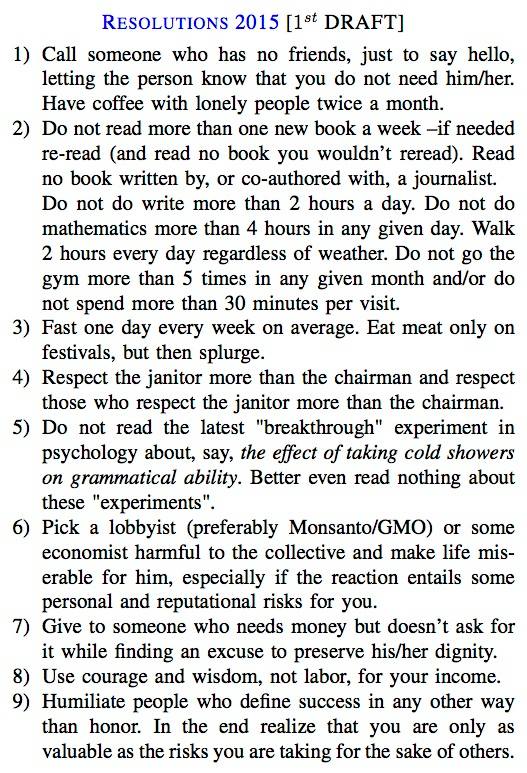
Humiliate people who define success in any other way than honor. In the end realize that you are only as valuable as the risks you are taking for the sake of others.
Being a creature of habit, as regular as a monk, and taking pleasure in the homeliest repetitions, I listen every night at ten to a program called This I Believe. Monks have their compline, I have This I Believe. On the program hundreds of the highest-minded people in our country, thoughtful and intelligent people, people with mature inquiring minds, state their personal credos. The two or three hundred I have heard so far were without exception admirable people. I doubt if any other country or any other time in history has produced such thoughtful and high-minded people, especially the women. And especially the South. I do believe the South has produced more high-minded women, women of universal sentiments, than any other section of the country except possibly New England in the last century. Of my six living aunts, five are women of the loftiest theosophical panBrahman sentiments. The sixth is still a Presbyterian.
If I had to name a single trait that all these people shared, it is their niceness. Their lives are triumphs of niceness. They like everyone with the warmest and most generous feelings. And as for themselves: it would be impossible for even a dour person not to like them.
Tonight’s subject is a playwright who transmits this very quality of niceness in his plays. He begins:
I believe in people. I believe in tolerance and understanding between people. I believe in the uniqueness and the dignity of the individual—
Everyone on This I Believe believes in the uniqueness and the dignity of the individual. I have noticed, however, that the believers are far from unique themselves, are in fact alike as peas in a pod.
I believe in music. I believe in a child’s smile. I believe in love. I also believe in hate.
This is true. I have known a couple of these believers, humanists and lady psychologists who come to my aunt’s house. On This I Believe they like everyone. But when it comes down to this or that particular person, I have noticed that they usually hate his guts.
I did not always enjoy This I Believe. While I was living at my aunt’s house, I was overtaken by a fit of perversity. But instead of writing a letter to an editor, as was my custom, I recorded a tape which I submitted to Mr Edward R. Murrow. “Here are the beliefs of John Bickerson Bolling, a moviegoer living in New Orleans,” it began, and ended, “I believe in a good kick in the ass. This—I believe.” I soon regretted it, however, as what my grandfather would have called “a smart-alecky stunt” and I was relieved when the tape was returned. I have listened faithfully to This I Believe ever since.
I believe in freedom, the sacredness of the individual and the brotherhood of man—
concludes the playwright.
I believe in believing. This—I believe.