Propriety and Prosperity: New Studies on the Philosophy of Adam Smith
Spanish Reds and WAGYU steak
At half the price this bottle, Toro Flor de Vetus 2013, fared so much better than the Scala Dei 2012 Cartoixa, despite the promising name and my long-standing appreciation of Priorats. The allure of Priorats has now been well and truly dampened. The centre piece of the dinner was WAGYU steak which though expensive ($60 for two good sized steaks) can be done so much better than even a steak house with high-end pretensions and without any seasoning because of the intrinsic tastiness of the beautifully marbled meat. It is surprisingly very cost effective (feeding three for the price of one eating out) and with guaranteed top-notch meat: restaurants usually make false and perhaps ignorant claims about their supposed Angus meat. Anyway, WAGYU really is the way meat should be. C’est tout!

Walker Percy Wednesday 148
One thing of value is his setting aside the “sensuous-erotic” as a category to be examined in its own right, a category which not only is not to be dismissed as simply sinful but which can in fact produce works of the highest genius, in Kierkegaard’s term, “the musical-erotic genius” of Don Giovanni. Thus, we are dispensed from the necessity of uttering the usual denunciations of the present age, familiar from both Christian and non-Christian sources, and adducing the usual statistics about the rise in teenage pregnancies, pornography, sex in the media, child molestation, rape, and so on. And dispensed as well from the usual rhetoric of the “sexual revolution”—the Don would have made an ideal subject of a Playboy interview or Playgirl centerfold (Hugh Hefner in fact might be described as a latter-day, rather washed-out Don; if he were set to music, it would not be by Mozart but by Mantovani)—even to the point of blaming all the woes of the Western world on the repression of sexuality by Christianity. Such denunciations and defenses are remarkable chiefly for their sterility. There is something more than a little dreary about the present standoff between the “sexual revolution” and the Christian counterrevolutionaries. It usually comes down to the Reverend Jerry Falwell confronting Bob Guccione, editor of Penthouse, on a talk show. Both men do their usual numbers, the viewer takes sides, and that is that.
But Kierkegaard gives us leave to see both, both Jerry Falwell and Bob Guccione, from a different perspective, as if the TV camera had been dollied backstage, from which vantage point we can see both Guccione and Falwell plus the talk-show host plus the studio audience and form some notion of what is going on with all of them.
Even more valuable is Kierkegaard’s characterization of “the spirit of the sensuous-erotic” and his use of the quaint word “demoniac.”
“Demoniac” implies possession of the soul by an unbenign spirit. Such a notion comports well with our far more modest semiotic description of the self, not necessarily as a soul or spirit, but in minimal terms as that semiotic entity which is unique in its ability to understand the world but not itself. The science of the scientist can understand everything in the Cosmos but the self of the scientist. It, the self, is therefore a “spiritual” entity, if you like, but an entity anyhow subject to its own modes of existence, triumphs, and disasters and, in this age, its own peculiar predicaments. Not the least benefit of semiotics and Kierkegaard is that we are delivered from the debilitating strictures of modern psychology, which has not the means of saying anything at all about the self, let alone spirit.
Both Kierkegaard and modern semiotics give us leave to speak of the self as being informed—“possessed,” if you like, at certain historical stages of belief and unbelief. It becomes possible, whether one believes in God or not, soul or not, to agree that in an age in which the self is not informed by cosmological myths, by totemism, by belief in God—whether the God of Christianity, Judaism, or Islam—it must necessarily and by reason of its own semiotic nature be informed by something else.
Kierkegaard wrote of the relationship between Christianity and “the spirit of the erotic.” I wonder what he would have made of the influence of the technological revolution on the spirit of the erotic and whether it is a coincidence that this country is not only the most Christian and most eroticized of all societies but also the most technologically transformed and the most violent. Is there a relationship between the “spirit of the erotic,” technology, and violence?
At any rate, one may state the fact in Kierkegaardian terms without pretending to solve the riddle of the relationship:
The fact is that, by virtue of its peculiar relationship to the world, to others, and to its own organism, the autonomous self in a modern technological society is possessed. It is possessed by the spirit of the erotic and the secret love of violence.
The peculiar predicament of the present-day self surely came to pass as a consequence of the disappointment of the high expectations of the self as it entered the age of science and technology. Dazzled by the overwhelming credentials of science, the beauty and elegance of the scientific method, the triumph of modern medicine over physical ailments, and the technological transformation of the very world itself, the self finds itself in the end disappointed by the failure of science and technique in those very sectors of life which had been its main source of ordinary satisfaction in past ages.
As John Cheever said, the main emotion of the adult Northeastern American who has had all the advantages of wealth, education, and culture is disappointment.
Work is disappointing. In spite of all the talk about making work more creative and self-fulfilling, most people hate their jobs, and with good reason. Most work in modern technological societies is intolerably dull and repetitive.
Marriage and family life are disappointing. Even among defenders of traditional family values, e.g., Christians and Jews, a certain dreariness must be inferred, if only from the average time of TV viewing. Dreary as TV is, it is evidently not as dreary as Mom talking to Dad or the kids talking to either.
School is disappointing. If science is exciting and art is exhilarating, the schools and universities have achieved the not inconsiderable feat of rendering both dull. As every scientist and poet knows, one discovers both vocations in spite of, not because of, school. It takes years to recover from the stupor of being taught Shakespeare in English Lit and Wheatstone’s bridge in Physics.
Politics is disappointing. Most young people turn their backs on politics, not because of the lack of excitement of politics as it is practiced, but because of the shallowness, venality, and image-making as these are perceived through the media—one of technology’s greatest achievements.
The churches are disappointing, even for most believers. If Christ brings us new life, it is all the more remarkable that the church, the bearer of this good news, should be among the most dispirited institutions of the age. The alternatives to the institutional churches are even more grossly disappointing, from TV evangelists with their blown-dry hairdos to California cults led by prosperous gurus ignored in India but embraced in La Jolla.
Social life is disappointing. The very franticness of attempts to reestablish community and festival, by partying, by group, by club, by touristy Mardi Gras, is the best evidence of the loss of true community and festival and of the loneliness of self, stranded as it is as an unspeakable consciousness in a world from which it perceives itself as somehow estranged, stranded even within its own body, with which it sees no clear connection.
But there remains the one unquestioned benefit of science: the longer and healthier life made possible by modern medicine, the shorter work-hours made possible by technology, hence what is perceived as the one certain reward of the dreary life of home and the marketplace: recreation.
Recreation and good physical health appear to be the only unambivalent benefits of the technological revolution.

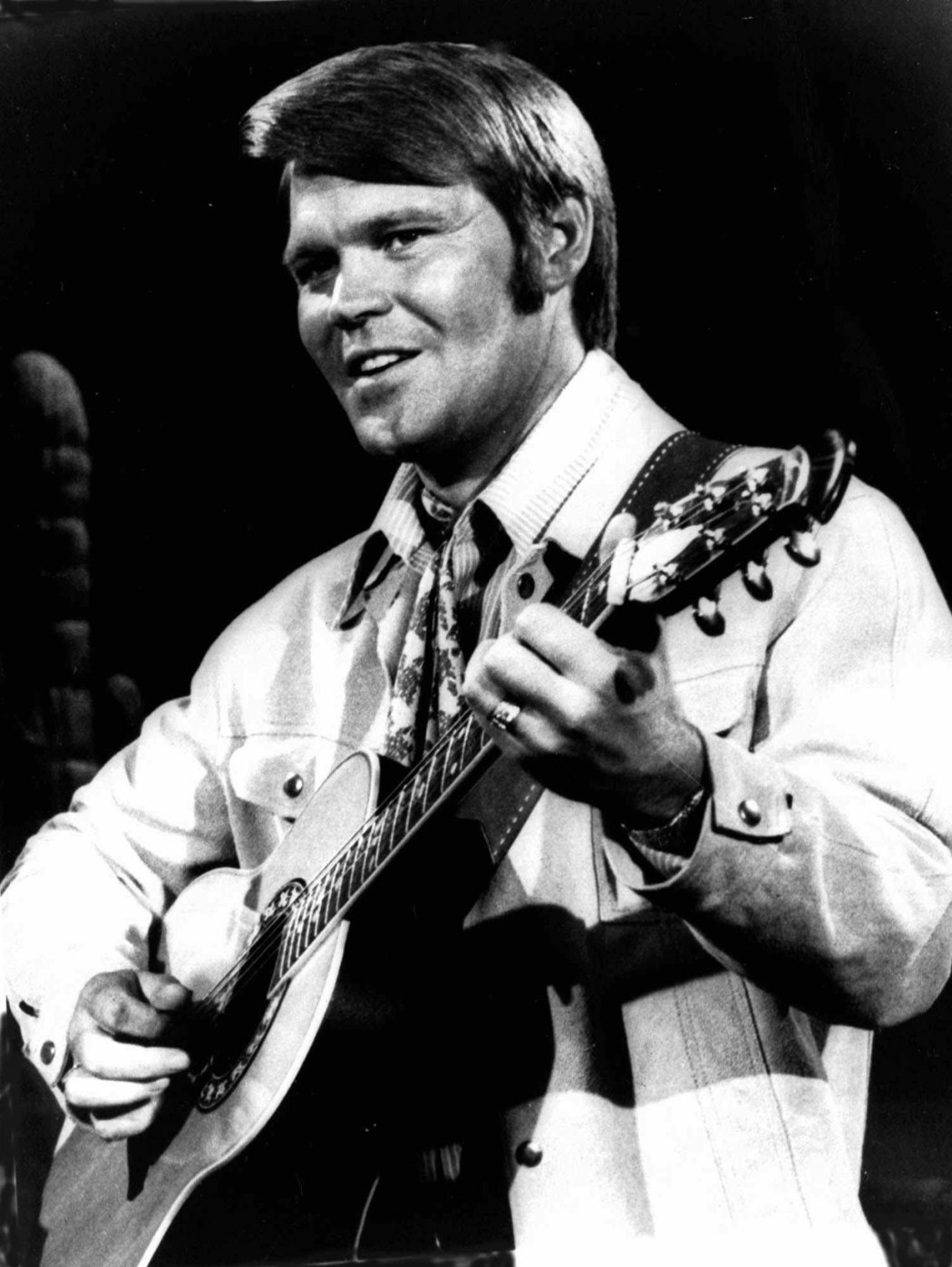
Glen Campbell

Pokey LaFarge | Something in the Water
Very much looking forward to seeing the Pokester in concert very soon.
Joan McCord
Born on this day. NYT obituary — LA Times.
Hobby Horses
John Gray discusses the reissue of A Guide to the Classics or How to Pick the Derby Winner in the Literary Review.
For both authors, the point of betting on the horses was not so much profiting from the wager as the satisfaction that came from picking the winner.

Walker Percy Wednesday 147
Carl Sagan is right in ridiculing the absurd pseudosciences now so popular. He is admirable in his defense of science as a reliable and self-correcting method of attaining truth.
Yet the fact is that nowadays there is no piece of nonsense that will not be believed by some and no guru or radio preacher, however corrupt, who will not attract a following.
Question: Why are people these days generally indifferent to science and yet willing to believe any absurd claim and any rascal who puts it forward?
(a) Because there is a need in humans for myth, for symbols, to construe and order a confusing and hostile environment—just as there is a need for food, water, shelter, and sex—and the abstract truths in science do not provide this myth.
(b) Because, as Chesterton said, when man stops believing in God, he will believe in anything at all.
(CHECK ONE)
00000
SÖREN KIERKEGAARD MADE a very strange statement. He said that Christianity first brought the erotic spirit into the world. In his arcane style, which often seems designed as much to obfuscate as to enlighten the reader, he wrote: “Sensualism, viewed from the standpoint of Spirit, was first posited by Christianity.” Which is to say, not that sensuality had not existed in the world before in paganism, perhaps in its most perfect expression in Greece, “but not as a spiritual category.” It existed rather as an expression of harmony and unison. “In the Greek consciousness, the sensuous was under the control of the beautiful personality or, more rightly stated, it was not controlled, for it was not an enemy to be subjugated, not a dangerous rebel who should be held in check.” But in the Christian era the sensuous-erotic becomes “a qualified spirituality, that is to say, so qualified that the Spirit excludes it; if I imagine this principle concentrated in a single individual, then I have a concept of the sensuous-erotic genius. This is an idea which the Greeks did not have, which Christianity first brought into the world, even if only in an indirect sense.”
The highest expression of the sensuous-erotic genius, in Kierkegaard’s view, was Mozart’s Don Giovanni: “Mozart is the greatest of classic composers and Don Giovanni deserves the highest place among all classic works of art.”
What is arresting here is Kierkegaard’s view that the Don is to be understood not merely as a roué, a dirty old man reverted to his animal appetites, a sinner, or even as a good pagan, a Greek hedonist, but rather as the inspiration of the flesh by the spirit of the flesh.”
Nor is the “sensuous-erotic” to be understood in modern biological terms as the sex drive and need-satisfaction, but rather as the sensual “spirit” and therefore, in Kierkegaard’s word, as the “demoniac.”
It is this “demoniac” spirit of the erotic which is “posited” by Christianity.
Presumably, Kierkegaard would have no difficulty explaining that national characteristic which has astounded so many foreign visitors to this country: that the United States is at once the most Christian of nations (at least in numbers of churchgoers) and at the same time the most eroticized society in all of history.”