Browse by:

Is Behavioral Economics Doomed?

Here is a skeptical take on the insights supposedly offered by the rise of behavioral economics as represented by Daniel Kahneman and others. Since I’m in the process of reviewing Kahneman it will be interesting to see if Levine’s take on behavioral economics jibes with my take on Kahneman in particular and behavioral economics in…

T.S. Eliot recording

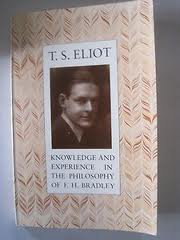
Listen to T.S.E. here. A little known fact, at least amongst those who come to TSE through his poetry, is that T.S.E. wrote his doctoral dissertation on F.H. Bradley, a copy of which I read some 25 years ago. Here is an article on the relationship between T.S.E. and Russell. F. H. BradleyLiteratureLove Song of…

Discount on Oakeshott Companion

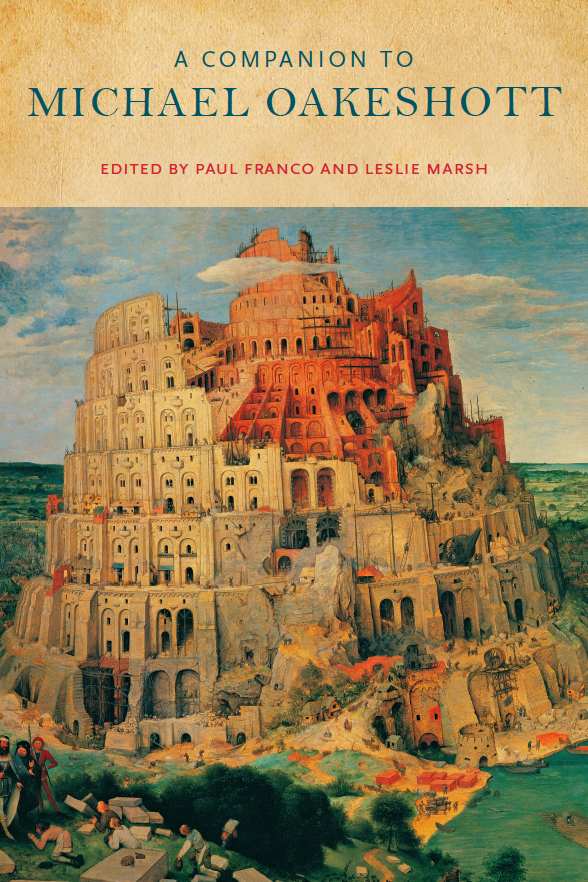
In anticipation of the publication date (October) Penn State University Press are offering a 20% discount off the cover price of A Companion to Michael Oakeshott – download form here. Michael OakeshottPenn State University Press

Review of “Pops”

Here’s a review from the very excellent Journal of Jazz Studies. Along with Teachout’s “Pops” I can also highly recommend Ricky Riccardi’s What a Wonderful World: The Magic of Louis Armstrong’s Later Years since together one gets a fuller and more rounded picture of America’s greatest art form and greatest artist. Both Teachout and Riccardi are masterful…

The Extended Mind and Religious Thought Revisted

Here’s plug for a collection of EM papers from about three years ago The Extended Mind by Mark Rowlands Abstract & Keywords Persons and the Extended-Mind Thesis by Lynne Rudder Baker Abstract & Keywords Minds, Intrinsic Properties, and Madhyamaka Buddhism by Teed Rockwell Abstract & Keywords Empathy and the Extended Mind by Joel W. Krueger Abstract & Keywords Quintuple…

Fiction and the brain

Here’s a recent article referring to Joshua Landy’s very interesting work. Check out his just released book How to Do Things with Fictions. This blurb alone is recommendation enough: Witty and approachable, How to Do Things with Fictions challenges the widespread assumption that literary texts must be informative or morally improving in order to be of any real…