Noë: Does Thinking Happen In The Brain?

Speaking of Andy Clark and Alva Noë in the previous posting, here is Noë writing for NPR set to continue in another installment.

Andy Clark in the New York Times

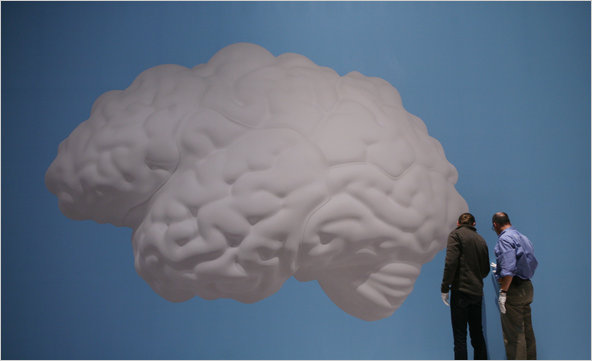
After some very middling opinion articles in this forum we have Andy Clark who is both a superb stylist and actually has interesting things to say. The title of the piece echos Alva Noë’s recent Out of Our Heads. Andy references some great images recently featured in the NYT that I was tempted to say something about – but forgot.

Ryle and Oakeshott

At last here is the book in which my essay “Ryle and Oakeshott on the know-how/know-that distinction” appears, masterly edited by Corey Abel. A draft of the paper can be found here.

Don’t get hung up by the use of the word “conservatism” in the collection’s title – Oakeshott’s conservatism bears no resemblance to those who would go by that name. Much of Oakeshott is in tune with situated wing of cognitive science. The photo is of Oakeshott at the Dorset coast, snapped by Ken Minogue. Here’s the blurb:

This collection of recent scholarship on the thought of Michael Oakeshott includes essays by distinguished and established authors as well as a fresh crop of younger talent, reflecting the sustained and ever growing interest in Oakeshott . Together, they address the meanings of Oakeshott’s conservatism through the lenses of his ideas on religion, history, and tradition, and explore his relationships to philosophers ranging from Hume to Ryle, Cavell, and others. Befitting the nuances of Oakeshott’s conception, the collection assigns no single or final meaning to his conservatism, but finds in him a number of possibilities for thinking fruitfully about what conservatism might mean, when it is no longer considered as a doctrine, but as a disposition.

The Mind as Neural Software?

Here is a superb paper by Gualtiero Piccinini that brings much needed clarity to a longstanding issue. A penultimate ms can be found here.

As a consequence, when the behavior of ordinary computers is explained by program execution, the program is not just a description. The program is also a (stable state of a) physical component of the computer, whose function is to generate the relevant capacity of the computer. Programs are physically present within computers, where they have a function to perform. Somehow, this simple and straightforward point seems to have been almost entirely missed in the philosophical literature. (p. 295).

Bravo Gualtiero!

Stigmergy group

My collaborator Marge Doyle and I have set up a LinkedIn group for the many academic disciplines that now have an interest in stigmergy. Go to LinkedIn and search LinkedIn groups for “stigmergy.”

Jurisprudence and Oakeshott

Here is a just published paper that draws heavily on Oakeshott.

Ratio Juris. Vol. 23 No. 4 December 2010 (460–78)

Abstract. There is a vast literature on the meanings of legal penalties. However, we lack a theory that explains them according to the formation of the modern state. Oakeshott’s theory can help explain this phenomenon, leading to an attempt of the individual to take over as many powers of the state as possible. Thus, Kant’s and Smith’s retributivism is the most consistent of all those theories. Nevertheless, the preventive and resocializing theory of Bentham succeeded eventually. But is this a liberal theory? We contrast the explanations of H.L.A. Hart and Frederick Rosen in order to lay the groundwork for a liberal theory of the meaning of legal sanctions.