Volume 17 – Special Issue 3 – September 2020

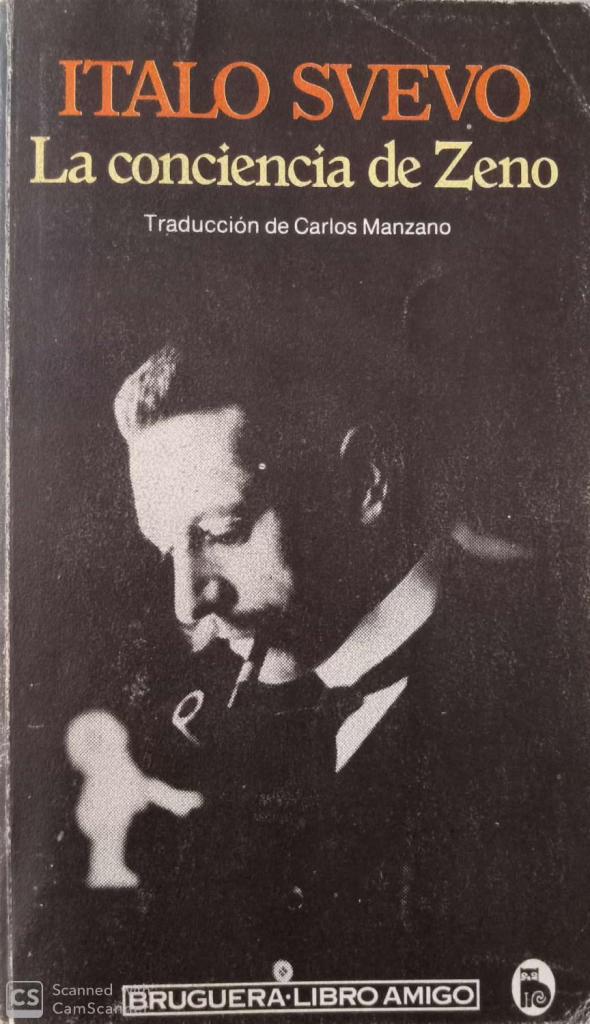
IN THE MIND of a young man from a middle-class family, the concept of human life is associated with that of a career, and in early youth the career is that of Napoleon I. This is not to say that the young man dreams of becoming emperor, for you can remain at a much lower level and still resemble Napoleon. The most intense life is narrated, in synthesis, by the most rudimentary sound, that of the sea-wave, which, once formed, changes at every instant until it dies! I expected therefore also to assume form and to dissolve, like Napoleon and like a wave.
My life could provide only a single note with no variation, fairly high and envied by some, but horribly tedious. Throughout my life my friends maintained the same opinion of me, and I believe that I, too, since arriving at the age of reason, have not much changed the notion I formed of myself.

New article in The Linacre.
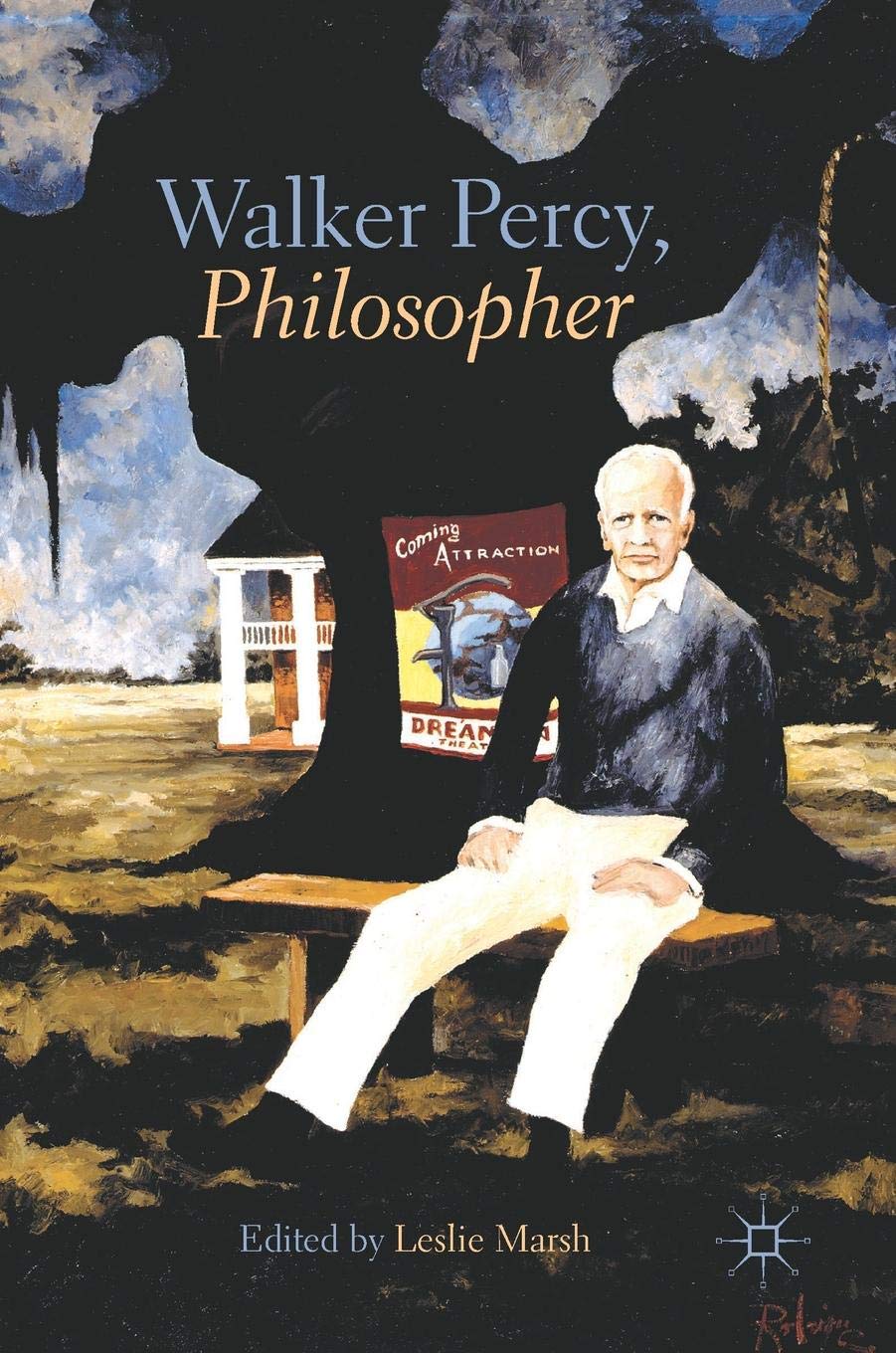
Percy was concerned with spiritual suicide at heart—despair, made explicit to him by Kierkegaard—resembling Victor Frankl’s concern with meaning and the current “existential vacuum” (Desmond 2005). However, the novelist’s theological mooring gave him a stronger platform to map postmodern man’s search for meaning, making him a prime example for physicians encountering patients on their own searches.

A good rotation. A rotation I define as the experiencing of the new beyond the expectation of the experiencing of the new. For example, taking one’s first trip to Taxco would not be a rotation, or no more than a very ordinary rotation; but getting lost on the way and discovering a hidden valley would be.
. . .
But, good as it is, my old place is used up (places get used up by rotatory and repetitive use) and when I awake, I awake in the grip of everydayness. Everydayness is the enemy. No search is possible. Perhaps there was a time when everydayness was not too strong and one could break its grip by brute strength. Now nothing breaks it—but disaster. Only once in my life was the grip of everydayness broken: when I lay bleeding in a ditch.
. . .
(The everydayness is everywhere now, having begun in the cities and seeking out the remotest nooks and corners of the countryside, even the swamps.)
. . .
My mother’s family think I have lost my faith and they pray for me to recover it. I don’t know what they’re talking about. Other people, so I have read, are pious as children and later become skeptical (or, as they say on This I Believe: “in time I outgrew the creeds and dogmas of organized religion”). Not I. My unbelief was invincible from the beginning. I could never make head or tail of God. The proofs of God’s existence may have been true for all I know, but it didn’t make the slightest difference. If God himself had appeared to me, it would have changed nothing. In fact, I have only to hear the word God and a curtain comes down in my head.
My father’s family think that the world makes sense without God and that anyone but an idiot knows what the good life is and anyone but a scoundrel can lead it.
But the criteria at Levy Pants were very low. Promptness was sufficient excuse for promotion.
I returned to the religion of my childhood and remained there for a long time. I imagined that my father heard me and I could tell him that the fault had been not mine but the doctor’s. The lie was of no importance because now he understood everything, and so did I. And for quite some time the conversations with my father went on, tender and secret like an illicit love, because with everyone I continued to laugh at all religious practices, while it is true – and I wish to confess it here – that into someone’s hands I daily and fervently commended my father’s spirit. True religion, indeed, is that which does not have to be avowed in order to provide the solace that at times – if only rarely – you cannot do without.

What an imaginative invocation of recent embodiment literature! This is an eminently plausible move at least with regards to the doctrine of the λόγος.

Yet another deliciously entertaining paper from Susan freely accessible here.
Some of you may think that this shows that the civil-law custom of court-appointed experts has a distinct advantage over the common-law practice. And in some ways, no doubt, it does. But I’m not convinced it is better overall, and not just because the U.S. experience with court-appointed experts hasn’t been exactly a roaring success. The problem, as I see it, is that judges may not always choose experts wisely, and may become too accustomed to working with, and relying on, “their” DNA guy, or “their” epidemiology guy, etc., to maintain a critical distance when they need to.
****
An example that comes immediately to my mind is a paper (on which, heaven help me, I had to serve as commentator) by Ronald Allen and Brian Leiter.

Sometimes when she mentions God, it strikes me that my mother uses him as but one of the devices that come to hand in an outrageous man’s world, to be put to work like all the rest in the one enterprise she has any use for: the canny management of the shocks of life. It is a bargain struck at the very beginning in which she settled for a general belittlement of everything, the good and the bad. She is as wary of good fortune as she is immured against the bad, and sometimes I seem to catch sight of it in her eyes, this radical mistrust: an old knowledgeable gleam, as old and sly as Eve herself. Losing Duval, her favorite, confirmed her in her election of the ordinary. No more heart’s desire for her, thank you. After Duval’s death she has wanted everything colloquial and easy, even God.
I have been informed that Jerry Gaus has a new book to be posthumously published by OUP next year. Here he is discussing some of the book’s ideas.