A sensible discussion by Jeffrey Hatcher. Click image for MP3 discussion (H/T Robert Bugg)
A sensible discussion by Jeffrey Hatcher. Click image for MP3 discussion (H/T Robert Bugg)
Here is an interview I came across with Yourcenar. As one would expect she takes no prisoners and clearly would rub up activists the wrong way — hence they systematically avoid her, assuming they’d even read top-notch stuff like “Hadrian”. I guess she would be unknown to “creative writing” courses constituted as they seem to be by nth rate ideological tripe. I can imagine that Camille Paglia would certainly appreciate Yourcenar. Here too is an article in The New Yorker. And by the way, Yourcenar loved gospel and blues music.
It does not interest me. I have a horror of such movements, because I think that an intelligent woman is worth an intelligent man—if you can find any—and that a stupid woman is every bit as boring as her male counterpart. Human wickedness is almost equally distributed between the two sexes.
The sacred is the very essence of life. To be aware of the sacred even as I am holding this glass is therefore essential.
I am myself neither rightist nor leftist.

Only in N.O. — click above image for 15 minute video footage of second line in spite what Keith reports AT wanted below. In any event, a second line was what made me fall in love with N.O.
As I anticipated, the very excellent Keith Spera on Allen Toussaint’s send off with a whose who in attendance :
Though very much a public figure who reveled in his countless interactions with strangers, Toussaint was also extremely private. Over the years, he had discussed plans for his funeral with his son. Reggie Toussaint said Friday that his father did not want a spectacle, or even a second-line parade.
To that end, his casket was closed. Saturday’s burial will be private, and Friday’s program, like its honoree, was elegant, restrained and finely tuned.
OffBeat Magazine’s coverage. Looking forward though to Keith Spera’s report.

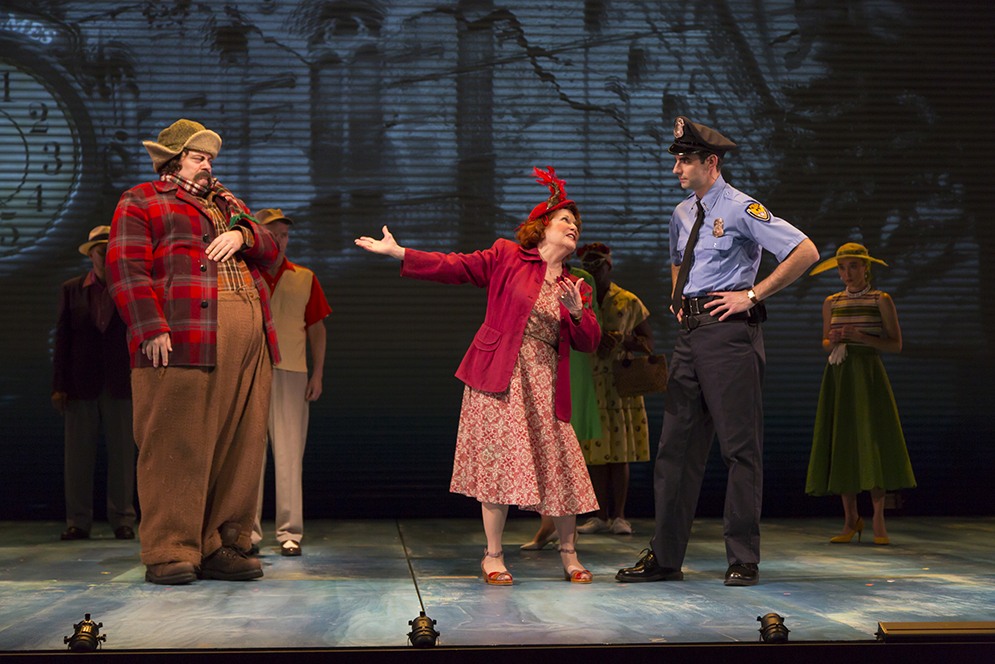
I’m typically very sceptical about a great piece of art being adapted for another modality and though the reviewers don’t fully grasp CoD, I think this shows. Burma cynical? Only the shallowest of readings of the book would suggest that but if he comes over as such in the play, then we have a disjuncture. The New York Times review is the most insightful, most regurgitate the same old memes. (H/T to fellow CoD nut Robert Bugg for several of these links)

This mystery Islay (we don’t know the distillery) doesn’t live up to the packaging hyperbole — I can’t figure out who the target demographic is. I don’t think that there is such a thing as an “entry level” Islay — if one is going to try one for the first time, one might just as well go for the full qualic experience with of the big three: Laphroaig, Lagavulin or Ardbeg. Anyway, Smokehead is way too “thin” but if you like Islays then this just about falls within the range of what to expect but very much on the less intense side of the spectrum. Would go well with chocolate tasting which is what I’ll do.
Eliot and Swinburne have been part of my consciousness for many years but for different reasons. The former I primarily knew for his Knowledge and Experience in the Philosophy of F. H. Bradley (his Harvard dissertation) and the for latter, my curiosity was piqued through my walking regularly past 11 Putney Hill, Sw15 on my way to Putney High Street where he died, close to where I lived. Needless to say, that a movement called the decadent movement was bound to attract my attention and I spent much time in the old British Library perusing original copies of The Yellow Book when ostensibly I was there to do other unrelated research.
The faults of style are, of course, personal; the tumultuous outcry of adjectives, the headstrong rush of undisciplined sentences, are the index to the impatience and perhaps laziness of a disorderly mind. But the style has one positive merit: it allows us to know that Swinburne was writing not to establish a critical reputation, not to instruct a docile public, but as a poet his notes upon poets whom he admired.
— Eliot, T. S. (1998). The Sacred Wood and Major Early Essays. Mineola NY: Dover Publications. p. 10.
Speaking of Eliot hat-tip to Troy Camplin for pointing me to this write-up in The Guardian.

Women are mythical creatures. They have no more connection with the ordinary run of things than do centaurs. I see her clearly, gin fizz in one hand, the other held against her sacrum, palm out, pushing herself rhythmically off the wall. Women! Music! Love! Life! Joy! Gin fizzes!
. . .
It is true. Women are so smart. In truth I am suffering from simultaneous depression and exaltation. So I tell her about it: that this very day I perfected my invention and finished my article, which will undoubtedly be recognized as one of the three great scientific breakthroughs of the Christian era, the others being Newton hitting on his principles and Einstein on his field theory, perhaps even the greatest of all because my discovery alone gives promise of bridging the dread chasm between body and mind that has sundered the soul of Western man for five hundred years.
. . .
It is easy to understand how men do their best work in prison or exile, men like Dostoevsky, Cervantes, Bonhoeffer, Sir Thomas More, Genet, and I, Dr. Thomas More. Pascal wrote as if he were in prison for life and so he was free. In prison or exile or a mental hospital one has time to watch and listen. My question was: how is it with you, fellow patient? how is it with you, fellow physician? and I saw how it was. Many men have done that, seen visions, dreamed dreams. But it is of no use in science unless you can measure it. My good luck came when I stumbled onto a way of measuring the length and breadth and motions of the very self. My little machine is the first caliper of the soul.
Sad news reported in The Guardian. Try facing him with no helmet and padding/armour a la North American football and coming at you at serious sprinter speed carrying 262 pounds and with the presence of mind of a terrier. I saw his finest hour in a pub in La Baule during the World Cup ’95.
Much ink has been spilled over SB but viewing the two documentaries below (they do overlap) one is touched by how Pink Floyd kept his story alive and because of his absence, gave them new purpose. What other band that has lost a key member that has been so elegantly elegiac about their past colleague? Each band member is very articulate musically and in interview mode at helping the viewer piece together who this mythological (at least in rock) person was. As great an album Dark Side of the Moon was (it cast a long shadow over the 70s like no other), it was Wish You Were Here that I thought was the better album in many respects — this despite PF panicking about a follow up to DSOTM. From what I recall the reviews of the day while not bad were, not surprisingly, sucked into spurious comparisons with DSOTM. These two documentaries fill in a lot of the detail about the PF story which is quite different from most other mega bands of the day — even Bob Geldof now gets it! Nick Mongiardo’s assessment of WYWH is in accord with my view, the whole album being an elegiac lament to friendship.
Once you’ve checked out these rather unremarkable two pieces, the real gem is Pink Floyd: Live at Pompeii, 1972. This is what is special about this band: they weren’t R&B based nor were they rock stars. Can you imagine there being a momentous broadcast such as the as the moon landing having a young band involved?


