Browse by:

Adam Smith and Mirror Neurons

It is wonderful at last to see the Adam Smith of The theory of moral sentiments rather than The wealth of nations finally getting some attention. Smith’s moral psychology is amazingly presient. Here is one of the better articles by the very talented Nicolas Baumard making the connection.

Group agency

Here’s a recent co-authored book from Christian List. CL is probably the leading theorist in this area and one of the best philosophers around who, not so long ago, was not affiliated with a philosophy department (I see that he now has a joint appointment with the Department of Philosophy, Logic and Scientific Method). How…

Trailing Hayek in Mind

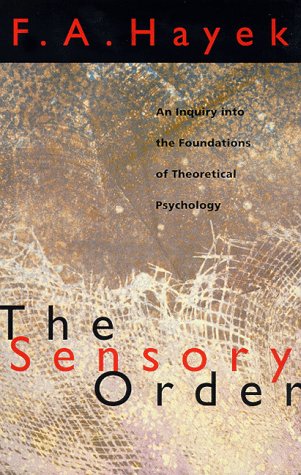
Here is the table of contents for my forthcoming (in press) edited volume focusing on The Sensory Order – this is the first salvo of shameless promotion. CONTENTS “SOCIALIZING” THE MIND AND “COGNITIVIZING” SOCIALITY Leslie Marsh “MARGINAL MEN”: WEIMER ON HAYEK Walter Weimer PART I: NEUROSCIENCE HAYEK IN TODAY’S COGNITIVE NEUROSCIENCE Joaquín Fuster THE NON-CARTESIAN…

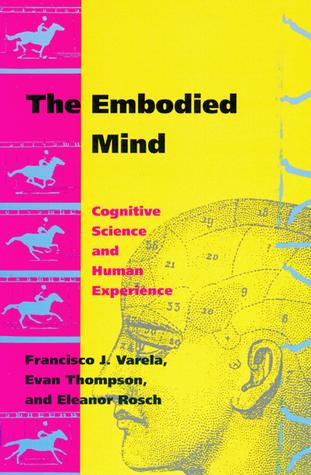
The Embodied Mind: 20 years on

Commemorating a landmark book The Future of the Embodied Mind The summer school focuses on cognition in artificial and biological systems from a theoretical perspective that considers embodiment, situatedness, and action-relatedness as key elements in understanding and implementing cognitive systems. The school will be held in San Sebastián, Spain 5th – 9th September 2011 The school will…

Hayek in Mind: Hayek’s Philosophical Psychology

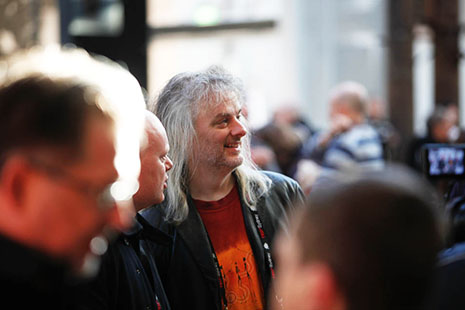
Having just delivered an edited volume entitled Hayek in Mind: Hayek’s Philosophical Psychology to the publisher, this is an opportune time to make widely available, for the first time, some photographs so generously sent to me by Walt Weimer (contact made through the good offices of a few of his students, some featured in the photos…

Autopoiesis and Cognition

Maturana and Varela’s classic Autopoiesis and Cognition is freely available here (H/T to Paul Loader). What makes a living system a living system? What kind of biological phenomenon is the phenomenon of cognition? These two questions have been frequently considered, but, in this volume, the authors consider them as concrete biological questions. Their analysis is bold and…