Neuroscience and philosophy must work together
Part of the Guardian’s Hard Problem series. BrainCognitionCognitive neuroscienceCognitive scienceneurosciencePhilosophy of mindqualia

Part of the Guardian’s Hard Problem series. BrainCognitionCognitive neuroscienceCognitive scienceneurosciencePhilosophy of mindqualia
Check out Joaquín Fuster’s recent paper: Only now, more than half a century after the publication of his theoretical book (Hayek, 1952), is the reaction to Hayek’s argument beginning to be heard. And it’s a positive reaction, now supported by facts. He used to say that without a theory the facts are silent. Now, belatedly reacting to…
Oliver Sacks is the test subject in looking at the effect of music on the brain. BrainElectroencephalographyMagnetic resonance imagingOliver Sacks

Anil Seth, Chris Frith and Barry Smith (of Birkbeck, not Buffalo!) outline the topography in a podcast. Anil SethBarry SmithChris FrithCognitionCognitive neuroscienceCognitive sciencecomplexityconsciousnessEmbodied cognitionMagnetic resonance imagingneurosciencePhilosophy of mindqualia
Richard Menary’s long time coming The Extended Mind is reviewed here by Joseph Ulatowski. CognitionCognitive neuroscienceCognitive scienceEmbodied cognitionExtended MindneurosciencePhilosophy of mindqualia
Colin McGinn locates his position within philosophy of mind. Though not a fashionable position, I’m very sympathetic to it – and of course, it is a position that has much in common with Hayek. The “mysterianism” I advocate is really nothing more than the acknowledgment that human intelligence is a local, contingent, temporal, practical and…
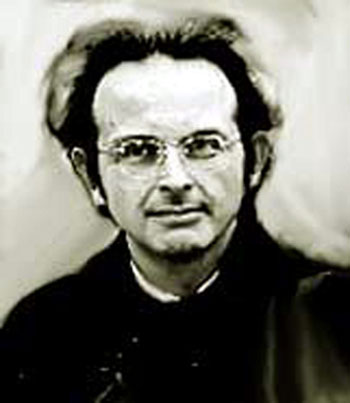
Four articles (and more) of interest to theorists interested in enaction: 1. Tom Froese’s new article in Adaptive Behavior: Critics of the paradigm of enaction have long argued that enactive principles will be unable to account for the traditional domain of orthodox cognitive science, namely “higher-level” cognition and specifically human cognition. Moreover, even many of the…
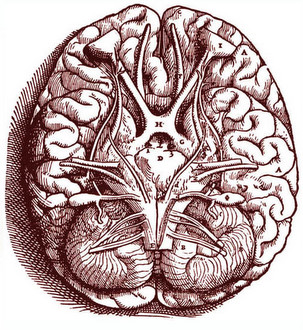
Two articles on that old philosophical chestnut – free will: one from Intelligent Life (neurons v. free will) and one from the sister title, the Economist (Free will and politics). Cognitive scienceFree willIntelligent LifeneurosciencePhilosophy of mind
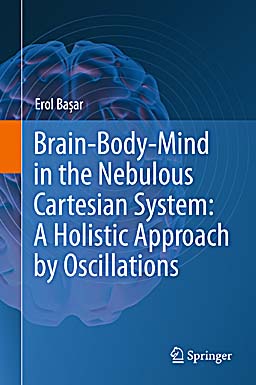
Neuroscientist Erol Basar on Hayek F. A. Hayek’s The Sensory Order must rate as one of the most creative books written on general philosophy of neuroscience. Although Hayek was a Noble-prize winner in economics and was not educated as a neuroscientist, his book opens up a new window on neuroscience, and this window certainly offers…

The ever exuberant Jason Silva on patterns in 1:45 seconds. Jason SilvaPatternRay Kurzweil
 manwithoutqualities