Browse by:

Res Cogitans Extensa: update

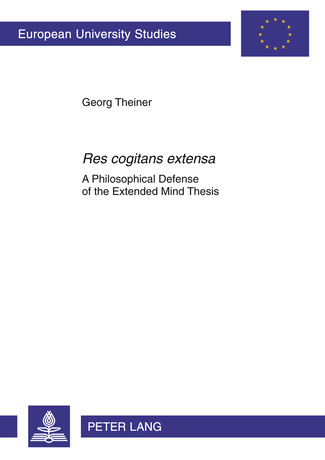
A few weeks ago I trailed the release of Georg Theiner’s Res Cogitans Extensa: A Philosophical Defense of the Extended Mind Thesis. Then there was no page devoted to Georg’s book by the publisher. Well now there is so check out the book’s page here. I have the book in hand – scanning it promises…


Hayek, Weimer, Gibson and Rosch

Here is the flyer from the legendary conference convened by Walt Weimer – the other notables included Gibson, who I’m told snubbed Hayek despite so warmly receiving The Sensory Order and Eleanor Rosch later to find fame as co-author of  The embodied mind: Cognitive science and human experience.  It is amazing that Weimer had (still has I might add!!) such balls…

Stigmergic Bridge

Coherence with concept and algorithm A network bridge which connects multiple points on ground and a subway station. The circulation, structure and enclosure are based on stigmergy algorithm operated on three different scales. Arguments based on stigmergy Articulation of materialization is achieved by orienting components to structure and enclosure “pheromone”. The components gradually change size…

Madary reviews Rowlands

Check out this review (scroll down) by Michael Madary of Mark Rowlands’ The New Science of the Mind: From Extended Mind to Embodied Phenomenology. One of the latest labels to emerge for anti-classical (or non-Cartesian, or post-cognitivist) cognitive science is “4E.” The four Es here are the embodied, embedded, enacted, and extended approaches to cognition. Since there are…

Sameness and Substance Renewed

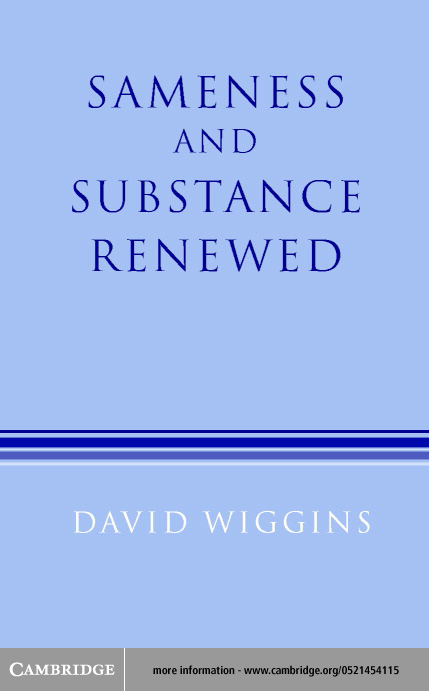
It’s been ten years since the release of David Wiggins’ Sameness and Substance Renewed. I notice that it has gone into a second edition, which is good news. This book must rate as one of my favourite works and I believe is somewhat neglected (I originally read S&S and was impressed that reading S&SR didn’t…

Empirical Arguments for Group Minds: A Critical Appraisal

Look out for Rob Rupert’s forthcoming survey for Philosophy Compass. (Thanks to Rob for the heads up). Abstract This entry addresses the question of group minds, by focusing specifically on empirical arguments for group cognition and group cognitive states. Two kinds of positive argument are presented and critically evaluated: the argument from individually unintended effects and the…