Browse by:

Hayek, Popper, and the Causal Theory of the Mind

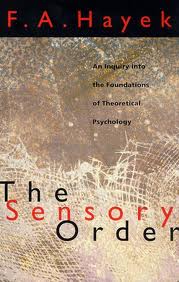
Here is the introduction to Ed Feser’s paper from Hayek in Mind. In late 1952, F. A. Hayek sent his friend Karl Popper a copy of his recently published book The Sensory Order: An Inquiry into the Foundations of Theoretical Psychology. In a letter dated December 2, 1952, Popper acknowledged receipt of the book and…

Hegel and the extended mind

Anthony Crisafi and Shaun Gallagher in AI & Society (Volume 25, Number 1, 123-129): We examine the theory of the extended mind, and especially the concept of the ‘‘parity principle’’ (Clark and Chalmers in Analysis 58.1:7–19, 1998), in light of Hegel’s notion of objective spirit. This unusual combination of theories raises the question of how…

Hayek in Today’s Cognitive Neuroscience

Check out Joaquín Fuster’s recent paper: Only now, more than half a century after the publication of his theoretical book (Hayek, 1952), is the reaction to Hayek’s argument beginning to be heard. And it’s a positive reaction, now supported by facts. He used to say that without a theory the facts are silent. Now, belatedly reacting to…

Can science ever explain consciousness?

Anil Seth, Chris Frith and Barry Smith (of Birkbeck, not Buffalo!) outline the topography in a podcast. Anil SethBarry SmithChris FrithCognitionCognitive neuroscienceCognitive sciencecomplexityconsciousnessEmbodied cognitionMagnetic resonance imagingneurosciencePhilosophy of mindqualia

Review of Menary’s (ed.) The Extended Mind

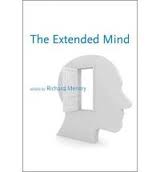
Richard Menary’s long time coming The Extended Mind is reviewed here by  Joseph Ulatowski. CognitionCognitive neuroscienceCognitive scienceEmbodied cognitionExtended MindneurosciencePhilosophy of mindqualia

Remembering Varela

Four articles (and more) of interest to theorists interested in enaction: 1. Tom Froese’s new article in Adaptive Behavior: Critics of the paradigm of enaction have long argued that enactive principles will be unable to account for the traditional domain of orthodox cognitive science, namely “higher-level” cognition and specifically human cognition. Moreover, even many of the…

Views of Hayek, Hebb, and Heisenberg: Toward an Approach to Brain Functioning

Neuroscientist Erol Basar on Hayek F. A. Hayek’s The Sensory Order must rate as one of the most creative books written on general philosophy of neuroscience. Although Hayek was a Noble-prize winner in economics and was not educated as a neuroscientist, his book opens up a new window on neuroscience, and this window certainly offers…

Colin McGinn on Philosophy of Mind

McGinn, one of my favourite philosophers of mind, notwithstanding Dennett’s view of McGinn’s well-known position: In the Critics section of this week’s New Statesman, ten pages of which are devoted to a philosophy special, our Critic at Large is Colin McGinn, professor of Philosophy at the University of Miami, who surveys the current state of…