Qualia – The Movie

I recently brought your attention to the topic of consciousness in literature. I now want to draw your attention to a very ambitious film project – Qualia, the movie. Click here to hear the film’s writer-director, Derek LaPorte and producer, Rukmani Bachal talk about the proposed project. Rukmani tells me:

Qualia deals with the question of the root of consciousness in a very approachable manner. It has been extensively researched by the writer-director, Derek LaPorte, who has taken its key elements and simplified them for the average movie-goer.

It will bring awareness to the audience about the fringes of this science. To those in the know, parts of it will resemble science-fiction, for e.g. the scale they use in the film is capable of weighing down to a yoctogram that currently does not exist. However, those sci-fi elements are possible as soon as a few years down the road and nothing is too far-fetched.

The method described to test dying patients represents a consensus to what would be considered perfect circumstances to conduct such an experiment.

Now there are many ways one can blow $10 on absolute crap – here is an opportunity to back some entrepreneurial folks who want to get beyond the banality of most feature films. If they do secure the requisite funding, the film might well be interesting on a purely entertainment level; it might also be intellectually interesting bringing the somewhat esoteric philosophical debate on qualia to a wider audience, however whimsical the story outline might be:

Greg Jenkins is a neuroscientist and part of a team ‘chasing dragons’ as they conduct an experiment to find the root of consciousness by testing patients at the moment of their deaths.

Hugh Williams, the mastermind, and Jennifer Jenkins, Greg’s wife, form the trio. Greg suffers from seizures which lead to eerie encounters with a ghost and that causes a crisis of faith.

A thrilling, horrifying, mystifying and ultimately joyous drama, Qualia will leave the viewer with a bittersweet sense of hope.

Swarm Theory

Here is an article (admittedly a few years old) and some accompanying photographs from National Geographic.

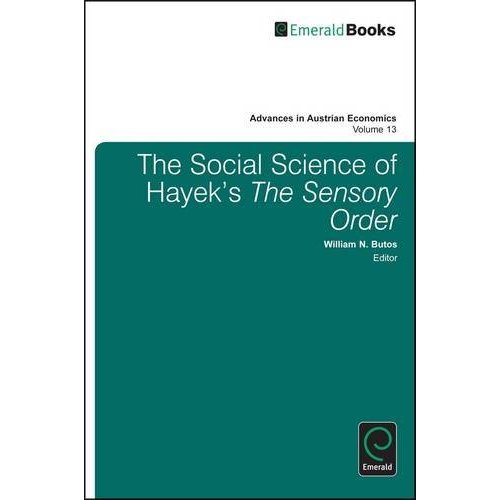
The Social Science of Hayek’s The Sensory Order

Here are the publisher’s details for this soon-to-be released volume that includes my paper “Hayek: cognitive scientist avant la lettre“

How long until robots are running off with someone’s wife?

An article from Silicon.com pitched at a general audience. I love the last photo caption: How long until robots are running off with someone’s wife?

Collective Knowledge and Epistemic Trust

Here is a conference that promises to be one of the highlights of the social epistemology calender this year. Of course, don’t forget EPISTEME ’10 nor indeed the special issue on trust and testimony.

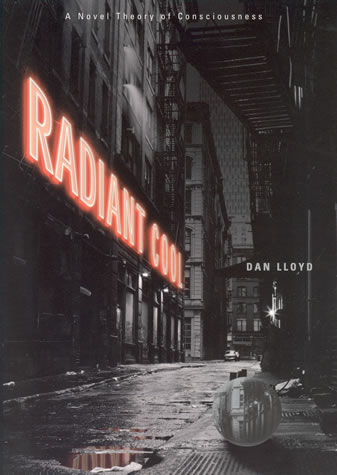
Consciousness in Literature

From time to time I’m asked to recommend a novel that has consciousness as its central concern. Two that I’ve read are David Lodge’s Thinks . . . and Dan Lloyd’s Radiant Cool. The former is light entertaining fluff (the “new” university setting will be especially resonant for British readers; most readers will recognise the Dennett-like protagonist, only in the sense of a philosophical position and perhaps comportment – there are certainly no similarities in terms of private life); the latter, written by a formidable theorist actually working in consciousness studies, is pretty dense and is chock full of philosophy in-jokes. I’d recommend both.

“Stigmergy” Enters the Poetic Imagination

Poet Tim Kahl reads a poem of his entitled “Stigmergy.”

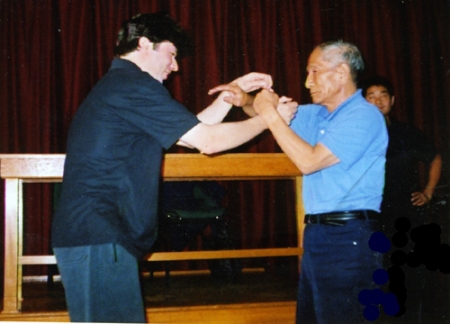
Philosophy and the Martial Arts

I want to plug the call for papers and the conference being put on by Damon Young and Graham Priest. Of all the recent popular philosophy themes that have been floated, this is the one, that in my view, has the most plausibility. Of course I would say that as someone with a foot in both worlds.

Embodied Economics

Here’s a freely available download of an article entitled “Embodied economics: how bodily information shapes the social coordination dynamics of decision-making” from the Philosophical Transactions of the Royal Society. The article references many of the major embodiment theorists and refreshingly there is much on Hayek and of course The Sensory Order.