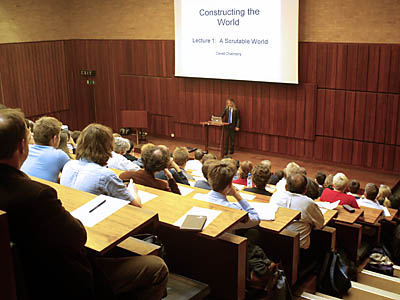
Exhausted Noam Chomsky

Once again, this bit of Onion satire was brought to my attention by my chum David Livingtone Smith.

Jesse Norman, MP

Jesse Norman, a very able philosopher and man of practice, has been elected as the new MP to represent the Hereford and South Herefordshire constituency. Philosophically speaking, Jesse has several strings to his bow. I first came to know him as an Oakeshottian – he edited The Achievement of Michael Oakeshott (Duckworth – unfortunately, no longer in print) – and he provided valuable assistance and good counsel to me in my setting up the Oakeshott Association. Jesse is a bona fide Oakeshottian – unlike others running for public office who have sought to shallowly appropriate the name. I also know Jesse through a shared interest in the Sabre Foundation (donate some $$ now!). Here are Jesse’s academic interests which include his technical work on Pierce. Jesse will bring a touch of class to that most vulgar of all pursuits, politics. I hope that this is the beginning of a distinguished career, that great things lie ahead for him and that his keen intellect and subtlety isn’t corroded or dumbed down. I wish him well.

Embodiment, Stigmergy, and Swarm Intelligence

Here is a chapter from a book by Michael Dawson, Brian Dupuis, and Michael Wilson (all of the Biological Computation Project, University of Alberta) that has just come my way and is entitled From Bricks to Brains: The Embodied Cognitive Science of LEGO Robots. In fact, all the chapters in draft are freely available to be downloaded from the book’s dedicated webpage. This offer will cease on publication of the book – which will be VERY soon. There is also a nicely produced 15 minute mini-documentary on the publisher’s site featuring Dawson and Depuis (click the video tab).

Phony philosophy

We love stories as much as we need them, but a funny thing has happened to departments of literature. The study of literature as an art form, of its techniques for delighting and instructing, has been replaced by an amalgam of bad epistemology and worse prose that goes by many names but can be summed up as Theory. The situation seems to call for a story, and one written in the style of Jorge Luis Borges, the grand chronicler of the tragicomic struggle between humans and logic.

Check out this piece in The New York Times by Rebecca Newberger Goldstein (Mrs. Pinker).  She of course has in mind departments that where a lack of philosophical culture licences uncritical and obscure thinking.

Theo alone insisted that Theory was no hoax but was intended as the most imperialist of cognitive campaigns, having designs on all the disciplines. Culture owns knowledge, and departments of literature own Culture. It follows (at least if logic can be said to hold constant in the face of frenetic Culture) that departments of literature can legitimately claim dominion over us all.

Another Review of “Supersizing”

Here’s another review of Andy Clark’s Supersizing the Mind (Do also check out Rob Rupert’s critical notice here). It helps that Mirko, the blog author, has as his advisors, Andy Clark and Julian Kiverstein. Mirko is also working as co-translator of Supersizing into Italian. Great stuff – this guy is going places.

New Book on Oakeshott

Here’s a new book on Oakeshott by Edmund Neill. Heretofore I haven’t come across Neill’s work but if Noel O’Sullivan says he’s OK, I guess that’s good enough for me. Two quibbles. First, it falls within a series entitled Major Conservative and Libertarian Thinkers – I thought that by now we’d gotten past these unhelpful Procrustean categories. Second, $130 for 160 pages – that’s taking the piss. Here is a review of said book by Till Kinzel. Stay tuned for Paul Franco and my co-edited book.

André Kukla

Here’s an interview with André Kukla plugging his book (see above) from 2006 (which I’ve only just come across). I know Kukla through his technical philosophical work: two titles remain vivid to me. Social Constructivism and the Philosophy of Science and Studies in Scientific Realism. The former was a well-needed tough-minded antidote to the vulgar relativism that was characteristic of the day (no doubt, still is in some quarters). The latter, I recall having to get printed-on-demand. In many ways Kukla reminds me of Colin McGinn (the subject of my last post). Both had psychology and philosophy as a joint interest; both also have a no-nonsense clarity in their approach. I felt honoured to meet Kukla in person in 2006 at the EPISTEME conference at the University of Toronto. Speaking of EPISTEME, Kukla and a talented then-student of his, Joel Walmsley, produced a lovely paper for the issue I was editing entitled “Mysticism and Social Epistemology.”

McGinn on Cognitive Closure

Since I’m very much in “cognitive closure” mode and am immersed in the work of Colin McGinn, I thought I’d post this brief chat. Having read most of McGinn’s philosophy of mind, I couldn’t characterize his work better than Steven Pinker: “McGinn is an ingenious philosopher who thinks like a laser and writes like a dream.” Reading McGinn is akin to the pleasure that one gets from reading Nozick and Clark – fireworks and clarity!

Biomechatronics

For an excellent resource on this and related matters see the What Sorts of People website.

A step in the right direction

Hugh Herr lost his lower legs as a teenager. He has since gone on to become a leading light in the development of artificial limbs

Mar 4th 2010 | From The Economist print edition

“FIFTY years from now I want people to be running to work,” says Hugh Herr, director of the biomechatronics group at the Massachusetts Institute of Technology (MIT). Far from being some kind of motivational guru, Dr Herr hopes to achieve this using technology. His goal is to augment people’s limbs with what he calls a “mobility platform”, akin to a pair of magic trousers, that allows people to move quickly with minimal effort—like riding a bicycle, but without the bicycle. “They won’t need parking lots,” says Dr Herr. “People can run straight into their offices, remove their mobility platform, as if they were undressing, and then hang it right on their coat rack.”

It sounds implausible. Roboticists have struggled for decades to understand bipedal locomotion, and even today’s most sophisticated robots require huge amounts of energy and computer power to walk on two legs. But Dr Herr’s credentials are sound. He is a leading authority on the biomechanics of legs, and in the past decade he has made several advances in the development of artificial legs and assistive walking devices, or “orthoses”, enabling amputees to walk with a more natural gait than was previously possible.

As well as enhancing the lives of disabled people, Dr Herr’s work on exoskeletons—the precursors of his planned mobility platforms—could make life easier for able-bodied people, too. By contrast with the bulky, cumbersome exoskeletons featured in science-fiction movies like “Aliens” and “Avatar”, or those being developed for military use, Dr Herr’s devices are smaller and lighter, and will require much less power. This will, he hopes, allow people to walk and run greater distances, or carry heavier loads, than they would otherwise be able to.

Dr Herr’s interest in the biomechanics of walking stems from his own personal experience. He is a double amputee, having lost both his legs below the knee after a climbing accident in 1982, at the age of 17. At the time he was regarded as one of the best climbers in America. But after ascending a 200-metre wall of ice on Mount Washington, in New Hampshire, Dr Herr and his climbing partner Jeff Batzer found themselves caught in a blizzard. Blinded by the snow, they became lost in the wilderness as they struggled to find their way to safety. By the time they were rescued, more than three days later, they were both suffering from severe hypothermia and frostbite. “We were in pretty bad shape,” Dr Herr recalls. He had both his legs amputated below the knee and Mr Batzer lost a leg, the toes from his remaining foot and all the fingers from his right hand.

“Climbing was my life’s passion,” says Dr Herr. Angry with the mistakes he’d made on Mount Washington, he was determined to rebuild his life and prove to himself that he could climb responsibly once again. Within just a few months he was out climbing once again, wearing a pair of temporary legs made of plaster that could, he was warned, easily fracture. “I think my family saw it as great therapy,” says Dr Herr. “They were probably more frightened that I would become frustrated and depressed if I hadn’t been able to climb again.” He is certain if he hadn’t got back on the rock he would be a very different person today. Driven on by the desire to create better legs for himself he has spent the past three decades turning his loss into a personal gain that has also benefited many others.

Climb every mountain

He began by customising his new artificial limbs so that they were optimised for climbing. “I realised I didn’t need a rock climbing shoe—I could just bond climbing rubber right to the artificial foot,” he says. Convinced that artificial limbs could be improved further, he started to make his own. “I studied tool-and-dye at school so I knew my way around tools,” says Dr Herr. His efforts resulted in a dedicated pair of limbs that could be adjusted for different types of climbing, and could even have their length extended or reduced to match the demands of the wall. As a result he was soon climbing at an even higher standard than before the accident, and certainly better than the vast majority of able-bodied people.

Having created better legs for moving vertically, he turned his attention to ordinary, horizontal locomotion. He studied physics at university, on the basis that it would provide a good foundation for designing prostheses. His first focus was to make artificial limbs more comfortable to wear. By his senior year he had been granted his first patent, for a socket interface that used a series of bladders to compensate for the wide variation in the shapes of different people’s residual limbs. Over the next few years, as he studied for a master’s degree in mechanical engineering at MIT and a PhD in biophysics at Harvard before returning to MIT as a postdoctoral fellow, Dr Herr worked on a novel knee-joint mechanism.

This work, which was eventually commercialised as the Rheo Knee, used a magnetorheological (MR) fluid—a fluid whose viscosity can be controlled by applying a magnetic field—to act as a variable damper, and thus create a more natural knee swing. Traditionally, artificial knee-joints use hydraulic damping, which presents more angular resistance to fast rotational motion than to slow motion. A joint with a computer-controlled “smart” MR fluid, by contrast, can present a more even resistance, allowing for a more natural gait and enabling a prosthetic leg to adapt the knee swing as the wearer’s gait changes. The joint can also be more easily tuned to meet a particular user’s needs.

Having improved upon existing artificial knees, Dr Herr decided that designing radically better prostheses and orthoses required a return to first principles, and a greater understanding of how human limbs work. “It’s surprising to most people that we, the human race, do not yet understand biological walking,” he says. It turns out to be complex and often counter-intuitive. In many respects walking should be an inefficient process, but because of the way the human body is designed, it is quite the opposite, says Dr Herr. Although effort is required to bend a joint or flex a muscle, the body is able to recycle much of the energy expended through spring-like tendons and elegantly arranged muscles. There is a constant shuffling, as potential energy is transformed into kinetic or elastic energy, and then back again. “That’s why, when you walk, it’s so economical and uses so little energy,” he says.

With most prosthetic devices, including the Rheo Knee, much of the energy put into them by the body is lost, rather than being recovered. With this in mind Dr Herr went on to develop, in 2003, the first powered ankle-foot orthosis—a device designed to fit around the ankle joint of someone with walking difficulties, such as a stroke patient. It provides active correction, ensuring that the foot flexes in the right way, and is used to teach a patient how to walk again. Then in 2007 Dr Herr took this a step further by incorporating assistive power into an artificial leg, or prosthesis. The result, the PowerFoot One, will be launched this year by Dr Herr’s spin-out company, iWalk, and will be the first powered artificial leg on the market.

The PowerFoot One uses motors, springs, sensors and an elaborate control system to emulate the energy-transfer mechanisms of the foot and ankle at each stage of a stride. It adapts to different terrain angles and different gaits, can tell whether the user is going up or down stairs, and increases both speed and stability. It will even hang naturally when the user crosses his legs. “Some of our patients actually start to cry when they use it,” says Dr Herr. The powered mechanism, which will require daily recharging, creates a natural gait and ensures that no “metabolic cost” is imposed on the wearer, he says.

An unfair leg-up?

The question of metabolic cost was highlighted by the case of Oscar Pistorius, the South African double-amputee sprinter who runs using blade-like prosthetics made of carbon fibre. In 2007 he was banned from trying to qualify for the 400-metre race at the 2008 Beijing Olympics by the International Association of Athletics Federations. The IAAF argued that his prosthetics gave him an unfair advantage by enabling him to run at a much lower metabolic cost—in other words, with much less effort—than an able-bodied person. Dr Herr was brought in by Mr Pistorius’s legal team to argue against this claim. With less than a month to prepare a defence, Dr Herr and his colleagues Rodger Kram and Peter Weyand carried out tests to demonstrate that Mr Pistorius’s prosthetics, which are not powered, do not enable him to run with less effort. As a result the decision to ban Mr Pistorius was overturned. (In the event, he did not qualify for the South African team and did not compete in Beijing.)

The science is still very immature when it comes to assessing whether prosthetics provide an advantage, says Dr Herr, though the evidence so far suggests that they do not. “We want to get the science done,” he says, “because the next time Oscar or anyone else wants to compete against people with intact limbs, there will be certain people in the world who will claim augmentation—so we need to be prepared for that.” He would like to produce prosthetics that can emulate biological limbs so precisely that they ensure that the likes of Mr Pistorius are neither advantaged nor disadvantaged.

Although Mr Pistorius’s unpowered prosthetics do not provide any metabolic advantage, there is no reason why powered prosthetics, or exoskeletons worn by able-bodied people, cannot do so. Indeed, with his latest work on exoskeletons, Dr Herr is moving in this direction. His latest powered exoskeleton, which in effect helps carry the wearer, has already been shown to reduce the metabolic effort involved in hopping by 30% (the tests for running have not yet been completed). And it does not require much energy to work: in its current form the exoskeleton has just two small clutches which only draw a quarter of a watt of power each. “That’s negligible,” says Dr Herr. He plans to add regenerative capabilities to the exoskeleton, so that it will require little or no power when moving on level ground.

This sort of device is primarily aimed at improving distance rather than speed, says Dr Herr. Wearing it enables you to walk or run with less effort, so it will improve your marathon time (because you will not get tired so quickly over long distances) but will not enable you to sprint any faster than your existing top speed. “Think of it as a bicycle for your legs,” he says. “A bicycle profoundly augments human locomotion in terms of human metabolic rate and speed, and yet it requires zero energy itself.”

Dr Herr plans to add regenerative capabilities to his prosthetic devices, such as the PowerFoot One. After all, one advantage of having artificial limbs is that you can upgrade them. And for Dr Herr, there will always be room for improvement in the speed, stability and energy-efficiency of his legs. “When I’m 80 I want the artificial part of my body to be completely superior to the biological part,” he says. It is a distant goal, but he has already taken several steps in the right direction.