Ghost Blues – The Story Of Rory Gallagher

In 1970 Hendrix was asked by a reporter, “So Jimi, what’s it like to be the best guitarist in the world?” Hendrix answered, “I don’t know. Ask Rory Gallagher.”

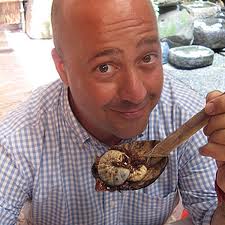
I was invited into Rory’s Fulham apartment (I won’t explain the circumstances) but never actually met the great man. A gentle man of absolute artistic integrity. Rory got me started on wearing checked shirts.

StreamImage.aspx

A shot of Rory’s longterm lover, a 1961 Strat.

Is Physicalism Enough? Can Consciousness be Naturalized? – Owen Flanagan in dialogue with Evan Thompson

Footnotes 2 Plato

Lichtenberg on Mind and Body

Here is an extract from the intro to Georg Christoph Lichtenberg by Steven Tester.

GCL was a thoroughly modern mind in so many ways making writers such as Dennett, Grayling and the like seem rather timid (my previous Lichtenberg posts).

Given Lichtenberg’s interest in self-knowledge, metempsychosis, and personal identity, it is not surprising that he often reflects on the mysteries of mind-body dualism (J 1306). In the Waste Books, he primarily considers two of the dominant views of the period: psychophysical parallelism and physical influx. Through the legacy of Leibniz and the continuation of Leibnizian philosophy in the work of the preeminent German rationalist Christian Wolff (1679–1754), the thesis of psychophysical parallelism came to dominate much of the discussion of dualism in Germany. According to this thesis, there is no causal physical interaction between mind and body; instead, they mirror one another in a pre-established harmony. Physical influx, on the other hand, held that there was some direct causal link between mental and physical phenomena. Lichtenberg finds ample occasion to parody both views and dualism in general. He suggests for example that the soul must have a very detailed map of the body to which it is purportedly related or that one might create a fairytale to describe their interaction. He also questions how a simple soul could be related to a complex physical body or brain and why only a single soul should be related to a single body (F 349, F 189). He even jokingly imagines a machine that would model the behavior of the competing views—perhaps only then would we have grounds for deciding which is best. Because of such problems with dualism, he also considers various alternatives throughout the Waste Books. On a trip to England between 1774 and 1775, Lichtenberg became familiar with materialist theories such as those of David Hartley (1705–1757) and the associationist psychologist Joseph Priestley (1733–1804). In his Observations on Man, His Frame, His Duty, and His Expectations (1749), Hartley argued that all psychological events, perceptions, sensations, and emotions could be explained by material, physical processes, and Priestley furthered these claims in Hartley’s Theory of the Human Mind, on the Principle of the Association of Ideas (1775). Inspired by these ideas, Lichtenberg often offers causal explanations of psychological phenomena in terms of how sensations of external objects are transmitted to the retina through nerve fluids in the eye (F 349, F 1084). He also finds inspiration for his own view in the work of the French materialists, Claude Adrien Helvétius (1715–1771), whose De l’Esprit (On Mind) (1758) argues for a materialist and determinist view of man, and Julien Offray de La Mettrie (1709–1751), whose L’Homme Machine (Machine Man) (1748) famously rejected Cartesian mind-body dualism. At one point, he predicts that psychology itself will eventually arrive at a subtle materialism, but he also considers some potential arguments against materialism (F 425). He is also acutely aware of what  he calls the “tremendous parallax” between our conception of ourselves in terms of materialism and the conception of ourselves gained through introspection. Beginning from introspection, we cannot seem to get at the physical processes that might underlie our thinking, and beginning from the point of view of a physical world, it seems difficult to account for the variety of our thoughts. Moreover, he finds materialism problematic because it implies that human actions are determined by physical processes and that free will is merely an illusion (J 668, E 30). In the philosophy of Spinoza, Lichtenberg discovers another possible alternative to dualism and often proposes that mind and body may in fact be aspects of a single substance or substrate, whether God or nature. Lichtenberg also raises the question of the relationship between mind and body in his writings on physiognomy. Eighteenth-century physiognomists claimed that the character or soul of a person was mirrored in their physical features, particularly the face, so that intelligence, for example, could be inferred from features such as the distance between a person’s eyes or the shape of her head. Physiognomy was taken very seriously by its scholarly adherents; but it also became a wildly popular theory, and in parlors throughout Germany people traced silhouettes of one another in hopes of discerning the deeper characteristics of their souls. In his essay “Über Physiognomik wider die Physiognomen” (“On Physiognomy, against the Physiognomists”) (1777), Lichtenberg attacks this view and its foremost proponent, Johann Kaspar Lavater (1741–1801). And in a later essay, “Fragment von Schwänzen” (“Fragment on Tails”) (1783), he lampoons Lavater by analyzing the silhouettes of various animal and wig tails in order to draw ridiculous conclusions about the soul of the individuals. Similar remarks are found throughout the Waste Books. Against the physiognomists, Lichtenberg argues that we may infer things about the character of a person only on the basis of her acquired features. Thus someone who smiles frequently might have wrinkles around the mouth, and someone who furrows her brow might have distinct wrinkles on the forehead. From this it might legitimately be concluded that the former is often happy and the latter often troubled. Contrary to what the physiognomists had claimed, there is, however, no intrinsic or innate relationship between characteristics such as intelligence and physical features. It is clear also that Lichtenberg would have rejected on this basis the burgeoning anthropological studies that sought to infer the mental characteristics of a race from the physical features of its members. Not only did he find physiognomy epistemically suspect, but he thought it may also lead to a dangerous “physiognomical auto de fe,” a trial by fire in which people would be judged according to physical features for crimes they have not yet committed (F 521). What sets Lichtenberg’s thinking apart on these issues of mind and body is, however, the way he often entertains various points of view, seeking to understand the origin and implications of the philosophical problems. He diagnoses dualism, for example, as a carryover from our unreflective youth, suggesting that we often employ terms such as soul, and perhaps even matter, without a clear understanding of their meaning (J 668, E 30). Or he suggests that we employ such terms in philosophical discussions as the algebraist might insert a variable into an equation as a stand-in for some unknown quantity. The unreflective or vague use of these terms often leads us into philosophical discussions without any clear understanding of what these discussions are about. In such situations, Lichtenberg proposes that we attend to our use of such terms, the hidden theoretical commitments embedded in them, and the consequences these hypotheses or “pictures” of the world have for our actions and will have for further investigations (J 568).

Taking the Super out of the Supernatural

Watching Bryan Magee and Tony Quinton discussing Spinoza (and Leibniz) reminded me of a piece I did several years ago that was very pantheistic in its conclusion. Here is the first half or so.

There’s something horribly plausible about Ralph’s arguments, religion arising out of man’s unique awareness of his own mortality. . . . In fact—when you think about it in this light—the story of Original Sin in Genesis could easily be a myth about the advent of self-consciousness in evolutionary history. Homo sapiens, by virtue of his sudden surge in brain-power, apprehends his own mortality, and is so appalled by the discovery that he makes up a story . . . a story about having offended some power greater than himself, who punished him with death for his transgression—and in later elaborations of the story, offered him a second chance of immortality. . . . In the myth, the forbidden tree is the tree of knowledge. . . . But perhaps in reality the knowledge was of death, and all the existential angst it brought in its train. The fall of man was a fall into self-consciousness, and God a compensatory fiction. (Lodge 2001, 107–8)

The existential angst that is a by-product of consciousness is as good a characterization of the human condition as one will find. Consciousness, one might say, is an encounter with eternity. With this angst comes epistemological and metaphysical musings about humankind’s place in the larger scheme of things. Epistemologically, humans as naturally disposed cause-seeking creatures hypostasize all manner of beliefs where explanation of a long as they enhance survival: “Religious traditions work like the bow of a violin, playing upon the strings of human nature to produce harmonious relations between individuals and their social and physical environments” (p. 1). Put another way, “religious traditions are primarily about manipulating aspects of our universal human nature for the sake of achieving the twin teloi of personal wholeness and social coherence, thereby to maximize the odds favoring human reproductive fitness” (p. 122). Hence, for Rue there is unquestionably an evolutionary story to be told about religion. Religion as an essentially adaptive cognitive phenomenon functional to the evolutionary impulse, is the presupposition that underwrites the explanatory dimension to Rue’s project. In this sense, Rue takes the super out of the supernatural and is what he means when he declares religion to be not about God but about us.

Rue writes that “there is much to be said for the thesis that all theological formulations are dubious for the simple reason that God is inscrutable” (p. 3). Epistemologically speaking, the concept of God does not achieve enough clarity and distinctness to be discussable. When we cite the divine attributes—omniscience, omnipotence, and so on—I do not think we have the least purchase on these ideas, which generate antinomies almost immediately. Such antinomies might well be what feed our conceptual alienation from the natural world, of which we are a part.

A standard objection to scientific inquiry into religion is that whatever scientific benefits accrue, humankind’s imaginative or religious sensibility will be correspondingly impoverished. Rue argues that notions of humility, awe, and delight are not necessarily alien to a scientific sensibility. Indeed, a naturalized religion will generate a new sense of mystery and awe, the object being Mother Nature (p. 17). I thus take Rue to be offering a deflationist metaphysic—that is, he considers the postulation of God to be redundant. Identification of the natural world and scientific method with a unity that may or may not be divine brings into focus some of the issues in the relationship between religion and science, which is known for generating more heat than light. It was with some apprehension, therefore, that I approached the so-called religion-science literature. It became apparent to me that this literature marks a deep philosophical question that in essence revolves around whether or not science is explanatorily closed. This question has a great deal of resonance within the philosophy of mind, my primary area of research. How are epiphenomenal phenomena—mental causation, intentionality, or consciousness—to be reconciled with physicalism? In philosophy of mind parlance, this debate is termed the “explanatory gap.”

Rue’s Feuerbachian slogan that religion is not about God but about us will no doubt alienate many who would be conceptually and perhaps emotionally bereft of the notion of the supernatural. So, before we examine Rue’s positive proposals, it will be useful to say what Rue is not doing. (Rue terms them disclaimers.)

1. Rue is not in the business of proving or disproving the epistemological and ontological claims of the various religious traditions. As a theorist guided by a strict scientific sensibility he can address only that which is open to falsification (pp. 316–18).

2. Rue has no axe to grind with a religious sensibility, the corollary in light of (1) being that neither is Rue an apologist for religion.

3. Rue’s environmentalism cuts across the Left-Right ideological spectrum (p. 355). Environmentalism certainly can be classed as a political ideology. Indeed, it offers no less than a substantive theory of the human good (p. 363).

The ground for any intellectual reconciliation between science and religion is the acknowledgment that there is an evolutionary story to be told about the rise of religion, a story that congeals around three inextricably linked theses:

A. There is such a thing as human nature, a nature whose outline sharpens through the lens of evolutionary theory.

B. Religious traditions are best understood as nurturing cognitive and emotional systems, conduits to personal and social well-being (hence the book’s subtitle “How spiritual traditions nurture our biological nature and what to expect when they fail”).

C. Because religion has lost the intellectual credibility and moral relevance that it once commanded, it is no longer able to attend to B, with the consequence that humanity, behaviorally adrift, has set the conditions for global environmental catastrophe.

Items A and B constitute Rue’s naturalistic explanation. Item C, as already indicated, constitutes Rue’s diagnosis. A diagnosis presupposes a remedy, but for some reason Rue defers an extended discussion to the end of his book.

What does Rue’s conciliatory overture mean? Where on the religion-science axis can we locate him? To answer this question is to work through the details of his position. His conciliatory steps take place against a background that typically has considered religion and science as incongruent, a fault line that gets definition partly through an ahistorical approach to the study of science and philosophy. I offer a brief and highly selective historical outline. We have the Romantics’ rejection of the notions of progress and rationality embodied in the universalizing tendencies of the scientific revolution and the Enlightenment. With the rise of postmodernism in the twentieth century, the leitmotif was again the rejection of objective truth and scientific rationality. Mid-century saw the two-cultures debate and the mid-1990s the debate ignited by the Sokal hoax. Currently, there is a debate between Intelligent Design theorists and the scientific establishment. Against this broad background, Ian Barbour’s fourfold religion-science categorization structures Rue’s discussion (Rue 2005, 319–24). Barbour’s classification, which I reconstruct via Rue, is as follows:

1. Conflict—profoundly different evidential requirements

2. Independence—modal incompatibility

3. Dialogue—there are metaphysical touchstones of shared interest

4. Integration i. scientific order is evidence of a creator ii. science offers resources to reconstruct extant myths iii. science and value achieve a synthesis in a metaphysic

Barbour’s classification is, I believe, pretty exhaustive, but I want to supplement it by emphasizing the morphological possibilities more, a conceptual leakage that would inform the unity Rue is positing: (a) religion as a “form of life” has prioricity; (b) scientific success underwrites its epistemological monopoly; (c) religion is sui generis; (d) science is sui generis; (e) religion and science are conversable.

Note that (b), (c) and (d) are not necessarily conceptually hostile to the religious viewpoint, and (a) is not necessarily conceptually hostile to the scientific viewpoint. For Rue, mythic traditions can foster attitudes toward the natural world in ways that are beneficial to the advancement of science (p. 322) and the corollary “science qua science presents no obstacle to theistic belief ” (pp. 316–17). If by scientism we mean a dilettantish engagement with science, an uncritical ebullience, for Rue scientism is inherently imperialistic—this would constitute a vulgar reading of (b). The conversability of (e) only acknowledges the de facto existence of different idioms of apprehending truth claims, idioms that may or may not agree. It certainly is not being suggested that they should agree given that each idiom has the inherent tendency toward superbia.

However one carves up the religion-science possibilities, many theorists have carelessly generated epistemological infelicities—disjunctions of irrelevance that cannot and should not be resolved within the sociopolitical sphere. This position is not to be taken as approximating Stephen Jay Gould’s widely cited modal view of science and religion as “non-overlapping magisteria” (Rue 2005, 320–21).

Because of Rue’s naturalistic credentials, he has to reject the hermeneutic contention that religious phenomena are culturally specific (p. 5). A diversity of myths may have democratic appeal, but religious pluralism is socially destabilizing (p. 325). No doubt many will take this as a provocation, but Rue is just making the sociological point that the preconditions to social peace tend to be conceptually tied to a culturally homogenized phenomenon is not forthcoming. The religious imagination is preeminent in its ability to consider things not immediately present to the senses and things that do not have a correlate in reality. Metaphysically speaking, philosophical, religious, and scientific thinking has sought to understand the relationship between the material and the nonmaterial (mind or soul). The philosophical, religious, and scientific are all in some sense refracted through the Gordian knot that is consciousness. For some this puzzle, pregnant with meaning, informs a religious or transcendentalist sensibility in that our senses of self and value are intimately tied up with consciousness. For others, a naturalized study of religious phenomena is a study of some important aspect of cognition and is derivative of the larger project of explaining consciousness. For both groups, the final frontier is not deep space but the perplexing universe bounded by our cranium.

Given that evolutionary accounts of consciousness are now legion and that notions such as the “God gene” have of late entered popular discourse, what is distinctive about Loyal Rue’s Religion Is Not About God (2005)? Rue offers a discussion that is as much a sociopolitical diagnostic as it is a scientific explanation; indeed, these are inextricably linked. It is a diagnostic in the sense that humanity is living under an ecological sword of Damocles. The prospect of global environmental catastrophe is tied to an unrelenting danse macabre of wants and satisfactions characteristic of the prevailing consumerist culture. Because environmental problems are for the most part self-inflicted, it stands to reason that the resources to address the problem lie with us as well. Any solution that forestalls or ameliorates global warming and related environmental problems lies with humanity, and this requires a life-affirming religious sensibility to be in tune with scientific insight. Rue’s recommendation therefore requires that the diverse mythic traditions converge on one, if not new, perhaps dormant, myth—a myth that is ecocentric and consonant with natural reality, a pantheistic religious naturalism that has nature as the sacred object of humanity’s ultimate concern (Rue 2005, 366).

To achieve this goal one has to appreciate the evolutionary development of religion. This explanatory dimension to Rue’s discussion is embodied in his proposals for a general naturalistic theory of religion, which lays bare the structural and functional features of religious phenomena as the critical first step on the road to a badly needed intellectual realignment. Such a realignment would facilitate a global response to a global problem—the environmental imperative. For Rue, the intellectual reconciliation between science and religion turns on the perceived plausibility of a given myth’s root metaphor. Science is in the business of plausibility; the seeds of this plausibility may already have been assimilated, to a greater or lesser extent, by some societies (p. 318). Religious traditions maintain plausibility so society. Whatever diverse “adaptive meanings” there are have been underwritten by natural selection. Rue subscribes to a brand of materialism that accepts the notion of the unity of science, even if the relevant bridging laws are currently unknown. The unity of science that he is proposing is not the ebullient positivistic version of seventy years ago in which reduction entailed reduction to physics. For Rue, the absence of such laws does not undermine the generality of scientific materialism; the various domains of science (physics, biophysics, psychology, sociology) offer fully valid levels of description, each running on different methodologies (p. 39). Whatever behavior might be, it is ontologically dependent on some biological materiality (p. 29). Taking inspiration from E. O. Wilson’s Consilience: The Unity of Knowledge (1998), Rue terms this brand of materialism consilient scientific materialism (2005, 14). Because all epistemological and ontological domains jointly and severally constitute an all-encompassing domain, call it Mother Nature, they are in principle part of a metaphysical unity. Rue’s monistic (materialist) or scientific pantheism is the conceptual solvent to the religion-science polarity. Clearly he does not subscribe to a reductive physicalism, a materialism that eliminates or discounts emergent nonphysical properties found at a high levels of description. Insofar as psychological phenomena are concerned, it would seem that Rue’s materialism would have to be a claim for supervenience—the idea, roughly speaking, that causal efficacy and explanatory relevance of mental phenomena are transmitted across levels of description, the mental being supervenient upon the physical.

Science as collective knowledge

Here is the into to Kristina’s article.

In contemporary philosophy of science it has become a truism to claim that scientific knowledge is social knowledge. Yet there is a diversity of views about what is “social” in scientific inquiry and why it is of epistemic interest (Rolin, 2004). One approach to understanding the “social” in science focuses on scientists’ social values, that is, value judgments concerning a desirable social order. A number of philosophers argue that social values are of epistemic interest because they affect, for good and bad, scientists’ assessment of theories and hypotheses (e.g., Anderson, 1995, Anderson, 2004, Kincaid et al., 2007, Lacey, 1999, Longino, 1990, Longino, 1995 and Machamer and Wolters, 2004). Another approach to understanding the “social” in science focuses on social relations among scientists. Some philosophers argue that collaboration among scientists is of epistemic interest because it contributes to the epistemic success of science (e.g., Thagard, 1999, Wray, 2002 and Wray, 2006). Others argue that a division of research effort among scientists is of epistemic interest because it contributes to the epistemic success of science (e.g., Hull, 1988, Kitcher, 1993 and Solomon, 2001). Yet others focus on the epistemic role of trust and testimony in science (e.g., Hardwig, 1991, Kitcher, 1992 and Shapin, 1994). And some philosophers use the notion of distributed cognition to analyze how the social organization of science contributes to its epistemic success (e.g., Giere, 2006). The two approaches to understanding the “social” in science are not exclusive of each other. Some philosophers, most notably Longino, 1990 and Longino, 2002, discuss both social values in science and social relations among scientists.

Gilbert (2000) introduces yet another dimension to this debate. She claims that scientific knowledge is social knowledge in the sense that it includes collective beliefs held by scientific communities. By collective beliefs she means beliefs which cannot be accounted for in a summative way. According to a summative account, a community believes that p if and only if all or most of the members of the community believe that p (Gilbert, 2000, p. 39). For Gilbert such beliefs are not properly speaking collective beliefs because a community believing that p in a summative sense can be reduced to its members believing that p. Collective beliefs in the proper sense of the term cannot be reduced to the members of the community believing that p. As Gilbert explains, “scientific communities do have scientific beliefs of their own” (2000, p. 38).

According to Gilbert, collective beliefs are held by communities as plural subjects. To say that a community as a plural subject believes that p means that the members of the community are jointly committed to believe as a body that p (Gilbert, 2000, pp. 39–41). A joint commitment creates obligations and rights among the community members (Gilbert, 2000, p. 40). A scientist’s participation in a joint commitment of the type in question requires her not to deny that p without qualification (Gilbert, 2000, p. 44). In case she denies that p without qualification, the other members of the community are in the position to call her on it (Gilbert, 2000, p. 40). A plural subject account of collective belief differs from a summative account of beliefs held by communities in an important respect. In a plural subject account of collective belief it is neither a sufficient nor a necessary condition of a community believing that p that all or most of its members believe that p (Gilbert, 2000, p. 39). A community having a collective belief that p involves a consensus but, as Beatty explains, it is a “consensus at a different level”: not agreement concerning p but rather agreement to let p stand as the position of the group (Beatty, 2006, p. 53).

My aim is to explore to what extent scientific knowledge is properly understood as collective knowledge. By knowledge I mean justified true belief or acceptance (see also Wray, 2007). Thus, collective knowledge is justified true belief or acceptance held or arrived at by groups as plural subjects.1 In addressing the question to what extent scientific knowledge is collective knowledge, I focus on the part of the question inquiring to what extent scientific knowledge is held by groups of scientists as plural subjects and leave aside the part of the question inquiring to what extent scientific knowledge is true belief or acceptance. I assume that belief or acceptance has to be justified in some sense to deserve to be called scientific.

In Section 2, I discuss Gilbert (2000) view that scientific knowledge includes collective knowledge held by scientific communities. In Section 3, I discuss Wray (2007) argument for the claim that neither the scientific community as a whole nor the various communities that constitute particular sub-fields are capable of having collective knowledge. Wray (2007) argues contra Gilbert (2000) that merely research teams are capable of having collective knowledge. I argue contra Wray (2007) that collective knowledge is not limited to research teams. As Gilbert (2000) assumes, scientific communities are also capable of having collective knowledge. However, Gilbert’s account of collective knowledge in science is limited because it does not help us answer the question of why scientific communities have an interest in collective knowledge. In Section 4, I introduce a contextualist theory of epistemic justification in order to answer this question. In Section 5, I argue that scientific communities have an interest in collective knowledge because it enables them to establish a context of epistemic justification.

Review of Preservation Hall’s latest

The always thoughtful and eloquent Keith Spera: here is his review of Presevation Hall’s latest, and a very Burkean assessment in the following quote:

The Preservation Hall Jazz Band cannot, and should not, escape or avoid its esteemed and considerable legacy. But a respect for, and connection to, the past should not preclude looking forward. Music, and a musical community, that does not occasionally infuse itself with fresh blood risks being relegated to a museum, or dying. On “That’s It!,” the Preservation Hall Jazz Band sounds more alive than ever.

How to Build a Digital Brain

Jeff Hawkins interview.

Here’s what we do inside Grok: we build this 60,000-neuron neural network that emulates a very small part of one layer of the neocortex. It’s about a thousandth the size of a mouse brain and a millionth the size of a human brain. So: not super-intelligent, but we’re using the principle by which the brain does all the inference and motor behavior. I’m very confident that this sequence memory we use is the core of how all intelligence works. The brain’s taking in streaming data, they’re noisy, they’re constantly changing, and it has to figure out what the patterns are and make predictions from them.

Here is a more detailed interview.

A Confederacy of Dunces – quotes and extracts – 20

I am really quite fatigued as my first working day draws to a close. I do not wish to suggest, however, that I am disheartened or depressed or defeated. For the first time in my life I have met the system face to face, fully determined to function within its context as an observer and critic in disguise, so to speak. Were there more firms like Levy Pants, I do believe that America’s working forces would be better adjusted to their tasks. The obviously reliable worker is completely unmolested. Mr. Gonzalez my “boss,” is rather a cretin, but is nonetheless quite pleasant. He seems eternally apprehensive, certainly too apprehensive to criticize any worker’s performance of duty. Actually, he will accept anything, almost, and is therefore appealingly democratic in his retarded way (p. 65).