Rajakishore Nath’s newly published paper in the Journal of Indian Council of Philosophical Research.
Rajakishore Nath’s newly published paper in the Journal of Indian Council of Philosophical Research.
The fifth in a series of excerpts from Minds, Models and Milieux: Commemorating the Centennial of the Birth of Herbert Simon.
Ron Sun
The notion of rationality is important to many fields in social and behavioral sciences. Herbert Simon’s seminal work on “bounded rationality” and “satisficing” led to broadened conceptions of rationality, which significantly impacted a number of fields in social and behavioral sciences. In this article, I would like to further explore the notion of rationality on the basis of Simon’s work.
First, in this regard, I believe that it may be necessary to go beyond Simon’s notions of “bounded rationality” and “satisficing”, for example, in dealing with limitations and variations in actual human rationality. Furthermore, I believe that it may be necessary to go beyond the notion of rationality as optimization of a utility function. I will argue that we need to take into serious consideration the true human condition in this regard, that is, actual human nature (especially the actual human psychology), in defining or understanding the notion of rationality.
In the 1950’s, Herbert Simon proposed his theory of “bounded rationality” that tried to reflect real human abilities to reason and to make decisions, in relation to his work in economics and organization theory (Simon, 1957, 1991). This notion of a limited kind of rationality of Simon’s might have in some way enabled the social sciences to move beyond the then prevailing theories in economics and in other branches of social sciences. But the questions now are: does it go far enough in “respecting” human reality? What is the true human condition in this regard? Is the true human condition sufficient captured by Simon’s theory of rationality?
It is my belief that the true human condition (human psychology) was, unfortunately, not sufficiently addressed yet in this line of work. This point applies to Simon’s treatment of rationality, and also to Simon’s approach to studying cognition within the realm of cognitive science and artificial intelligence (which paralleled his work in economics and organization theory). In contrast, in this article, what I want to emphasize is exactly such true human condition that I believe has not been sufficiently examined in Simon’s approach. I will do so based on the framework of a comprehensive computational theory of the human mind, that is, a computational cognitive architecture, taking into account some very human facets of human nature.
In this chapter, I will first discuss what rationality means in various contexts (while questioning this very notion). Then I will discuss some findings regarding the unconscious mind, which shows various tendencies that appear to contradict the notion of rationality. I will then present a theoretical framework that addresses all of these facets in mechanistic and process-based way (but not necessarily mathematically). The application of this framework in exploring issues in social, cultural, political, and organizational contexts are then briefly sketched. This discussion will draw upon the ideas from Reber (1989) regarding the unconscious mind, H. Murray (1938) regarding basic needs or desires, as well as others, in addition to Simon’s own ideas.
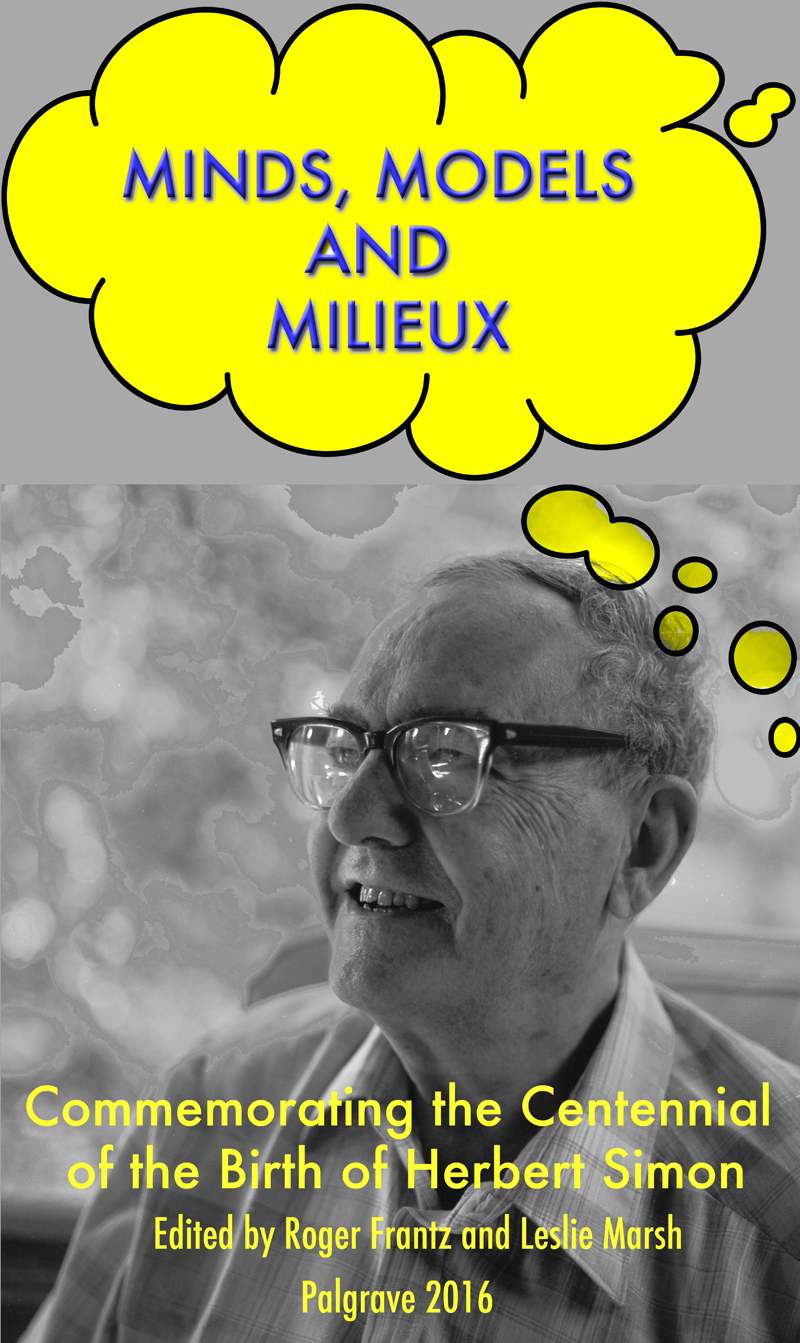
The fourth in a series of excerpts from Minds, Models and Milieux: Commemorating the Centennial of the Birth of Herbert Simon.
Subrata Dasgupta
It is well known that Herbert Simon was a 20th century scientific polymath who made seminal contributions to the social sciences, behavioral sciences, design theory, computer science, and the philosophy of science (Dasgupta, 2003a, 2003b). My interest in Simon in this essay, however, lies in his remarkable and highly original book, The Sciences of the Artificial (Simon, 1996). In this work (henceforth referred to as Sciences), which in a sense unifies his multidisciplinary contributions, Simon dwells on the concept and nature of the human-made or artificial world, the things that populate it – artifacts – and in what sense and how the making of the artificial yields to scientific investigation.
In this chapter I wish to explore a particular consequence of the ideas put forth in Sciences. I wish to show how some of the key concepts advanced in it affords a conceptual framework for a (relatively) new historical discipline for the study of human creativity, the creative tradition, and the intellectual tradition. This discipline is called cognitive history.
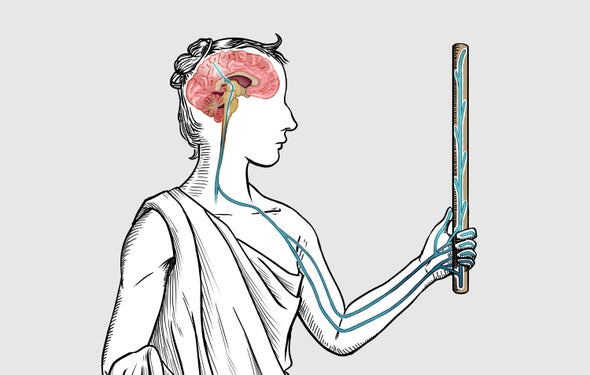
Write up on Miller et al’s recent work in Scientific American.
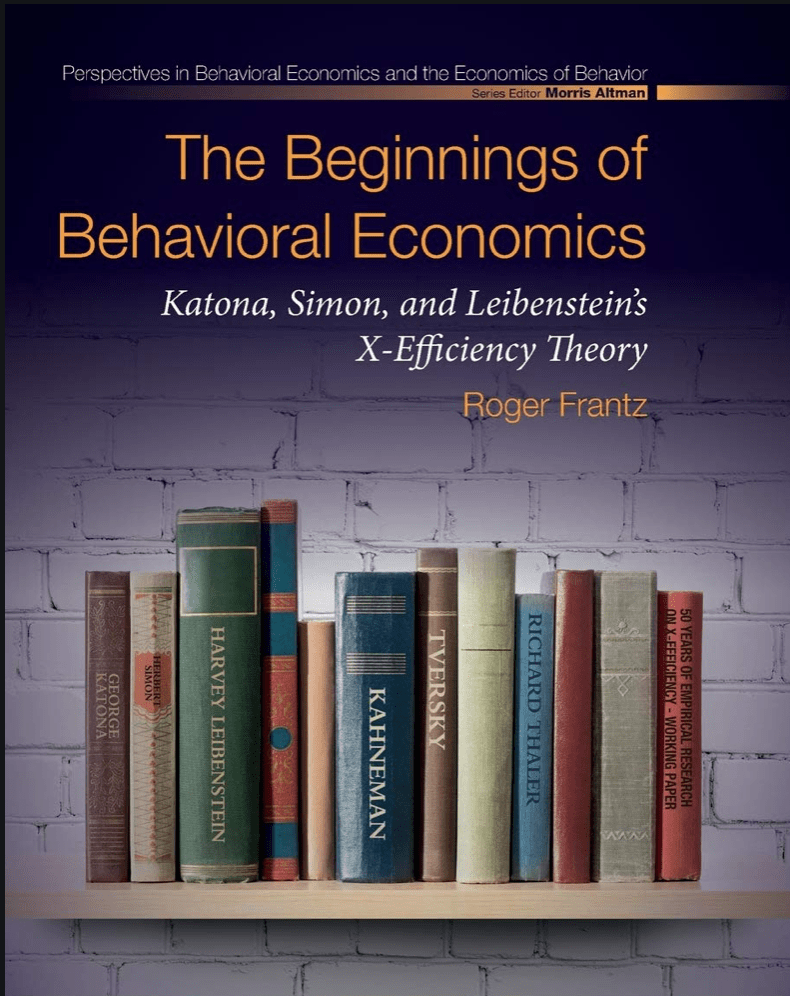
My chum and sometime collaborator Roger Frantz has a new book out.
The third in a series of excerpts from Minds, Models and Milieux: Commemorating the Centennial of the Birth of Herbert Simon.
Gerd Gigerenzer
Herbert Simon left us with an unfinished task: a theory of bounded rationality. Such a theory should make two contributions. For one, it should describe how individuals and institutions actually make decisions. Understanding this process would advance beyond “as-if” theories of maximizing expected utility. Second, the theory should be able to deal with situations of uncertainty where “the conditions for rationality postulated by the model of neoclassical economics are not met” (Simon, 1989, p. 377). That is, it should extend to situations where one cannot calculate the optimal action but instead has to “satisfice,” that is, find either a better option than existing ones or one that meets a set aspiration level. This extension would make decision theory particularly relevant to the uncertain worlds of business, investment, and personal affairs.


Left to Right: Morris Altman, Leslie Marsh, Roger Frantz, Gerd Gigerenzer, Shu-Heng Chen, Shabnam Mousavi
San Francisco January 2016, photographs courtesy Reza Kheirandish


 manwithoutqualities