Bounded Rationality in the Digital Age

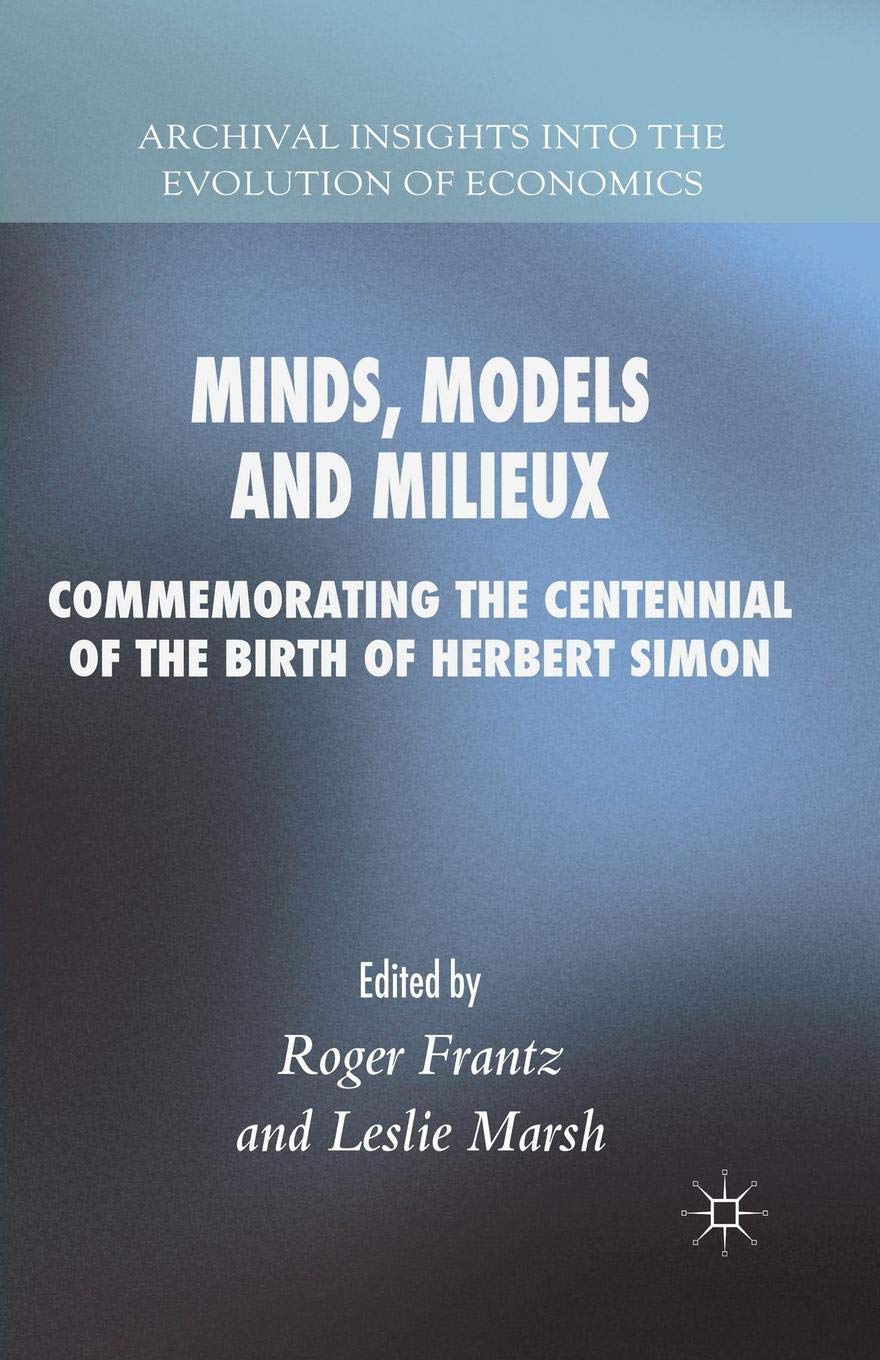
The fifteenth in a series of excerpts from Minds, Models and Milieux: Commemorating the Centennial of the Birth of Herbert Simon.

Peter E. Earl

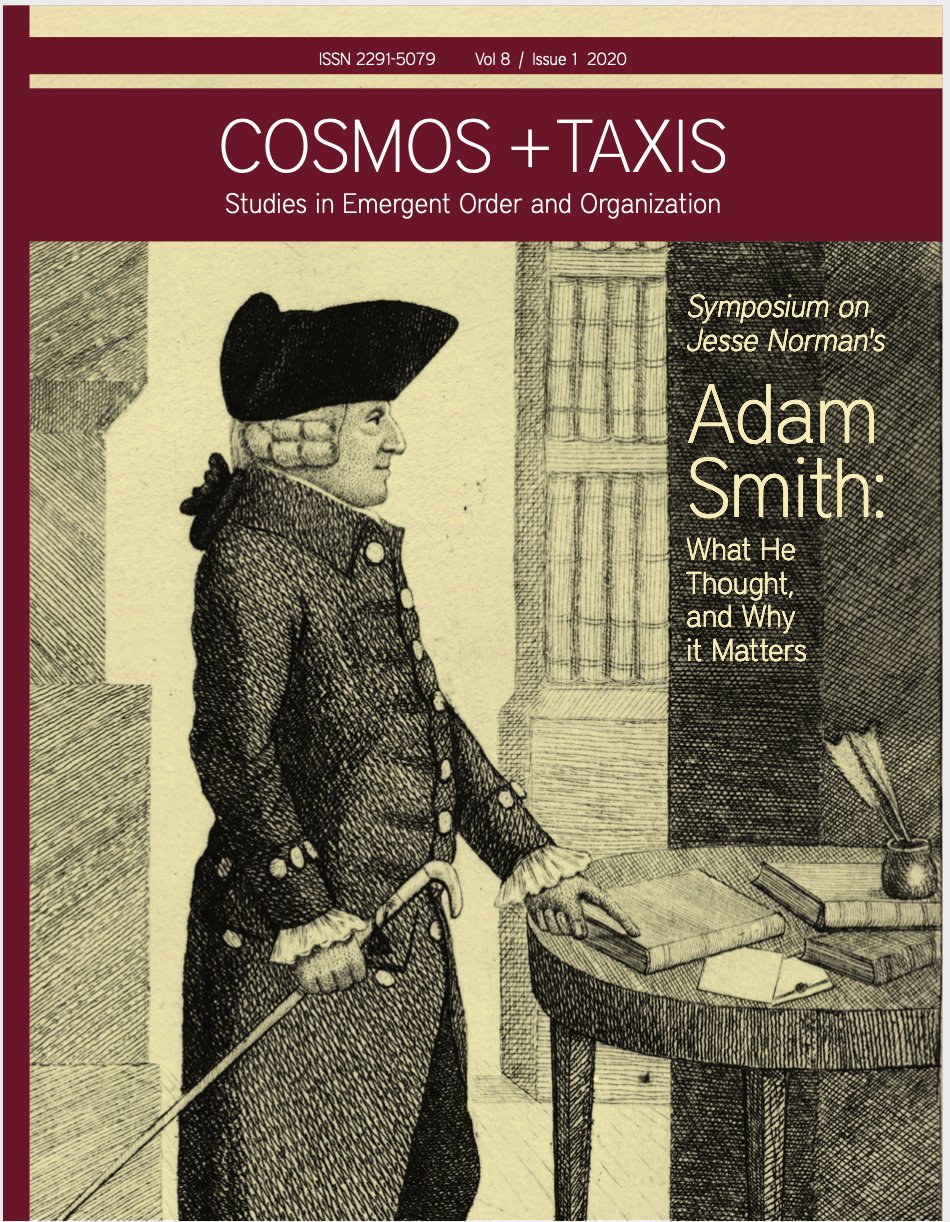
One of the great tragedies in economics in the decades since Simon received the 1978 Alfred Nobel Memorial Prize in Economic Sciences is that the uptake of his ideas within the discipline has been either poor or in a partial manner that does not properly capture his vision (as with mainstream models purporting to address bounded rationality). In this chapter I begin by trying to make sense of this situation and then argue that the digital revolution is making it more imperative than ever that economists take up Simon’s key ideas – not merely his satisficing view of choice in the face of bounded rationality but also his thinking on artificial intelligence and the evolutionary roles of altruism and system design. The modern economy is undergoing supply side upheavals at the heart of which lie the issues of programmability and modularity. On the demand side, buyers now have to contend with choice problems of extraordinary complexity, whose solutions increasingly rely on social inputs.

A recurrent theme in what follows is that, in the digital age, Simon’s (1991, pp. 306–7) Travel Theorem takes on a wider significance. He set out the Theorem with reference to what one can hope to learn about something in a good public library, as opposed to making a journey to study it at first-hand for a short period (for example, as a tourist or business consultant). His contention was that if information is all one hopes to obtain, being there is far less efficient that trying to gather it remotely. Hence, if journeys are actually undertaken, they are/should be for reasons other than the gathering of information. In the world of the Internet, the webcam, smartphones, Skype, virtual reality experiences, and so on, Simon’s Travel Theorem provides a powerful starting point for asking questions about motivation and economic organisation.

61cOM18eAOL

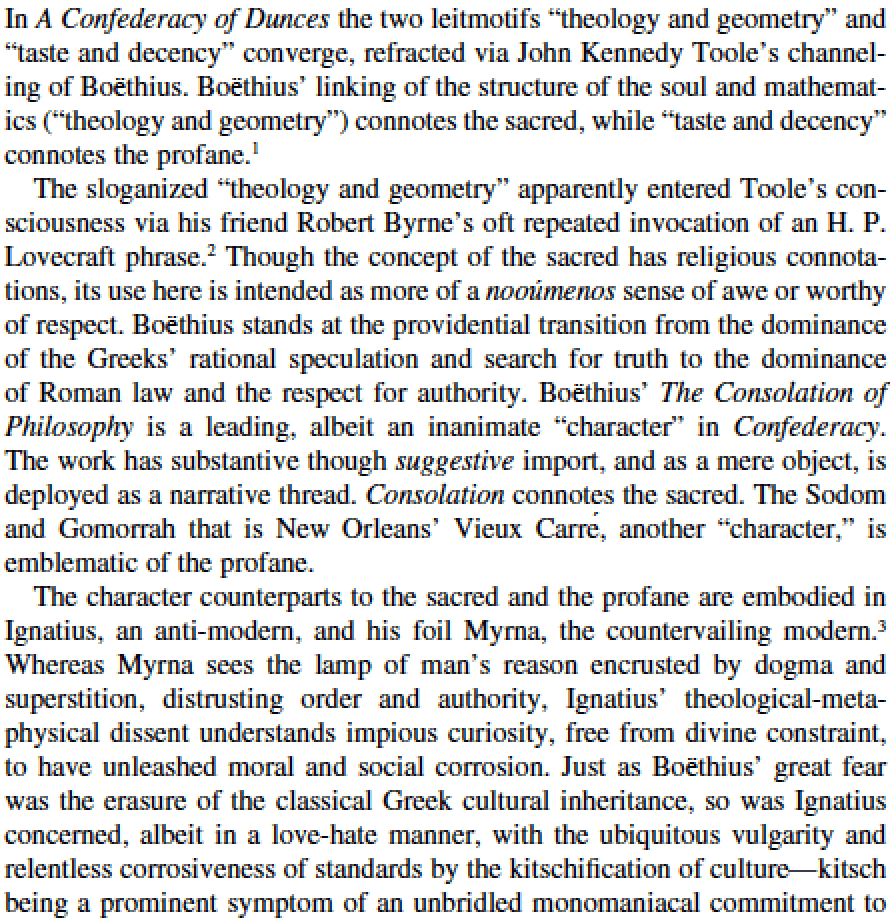
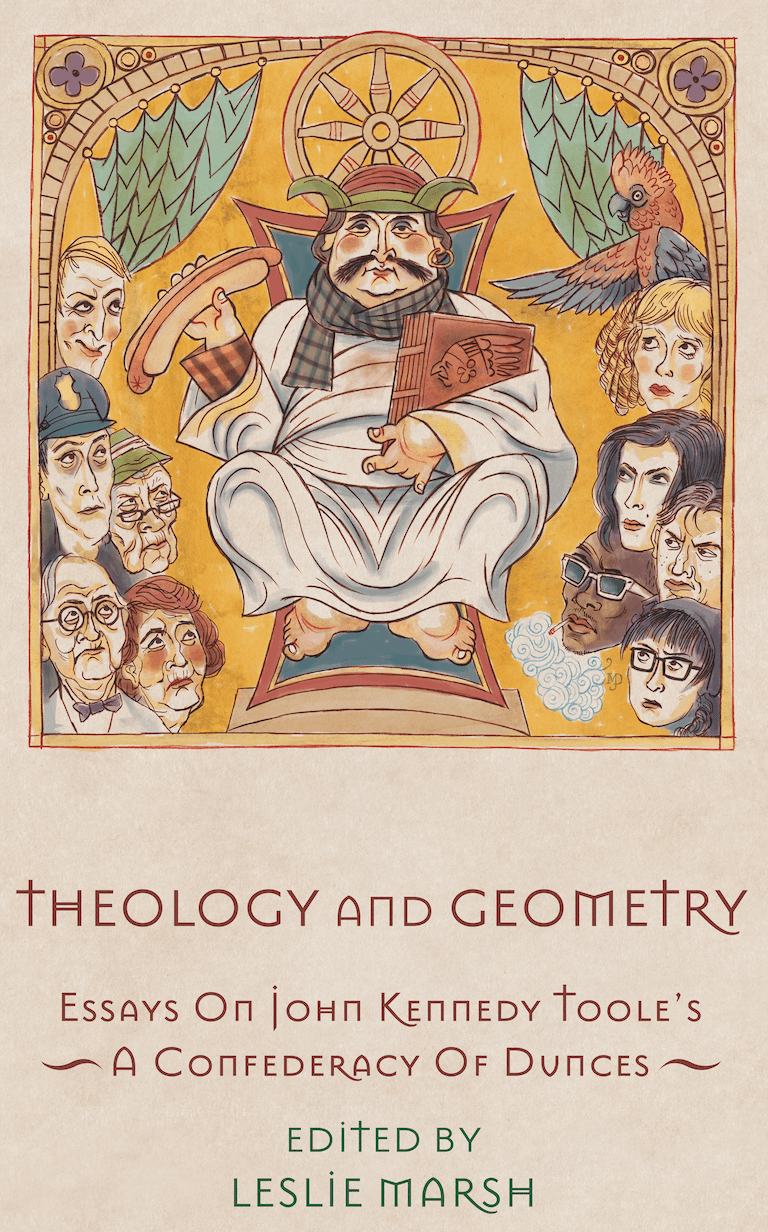
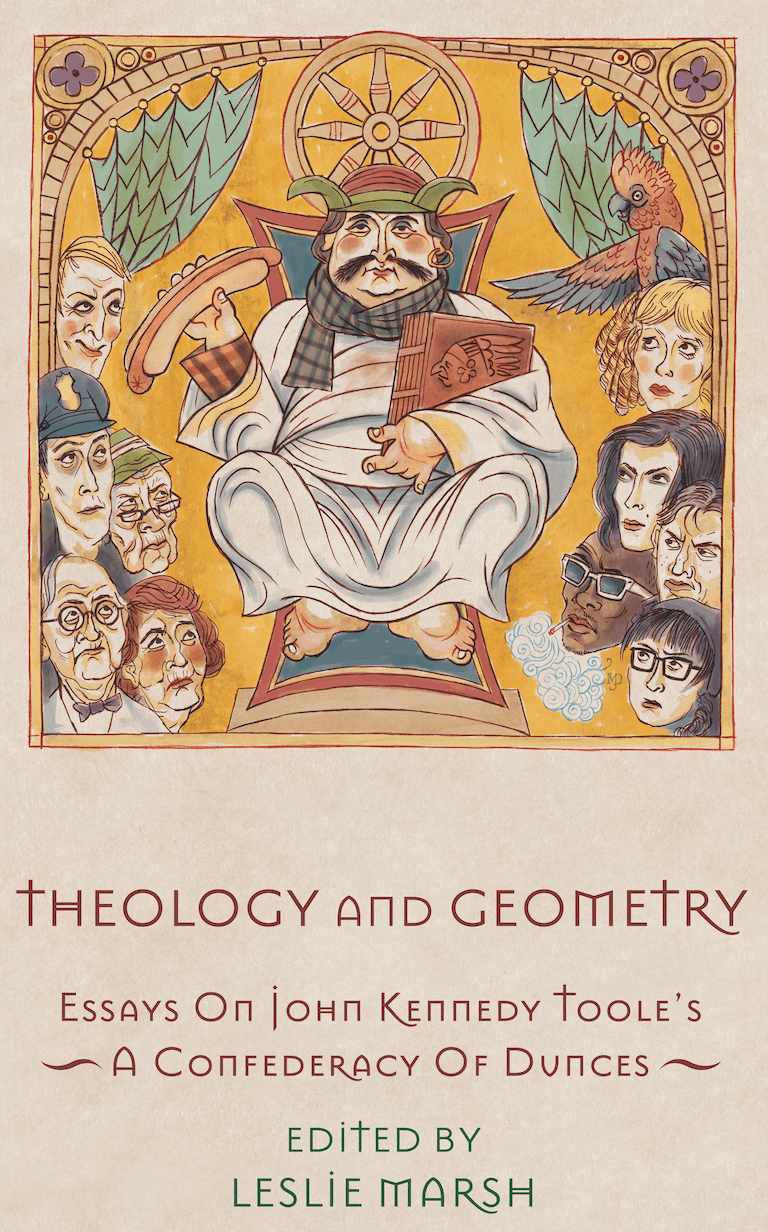
Theology and Geometry and Taste and Decency

Available via Amazon.comAmazon.caAmazon.co.ukBarnes  & Noble — Indigo.caIndi BoundKobo — and last but not least, if you want to take advantage of a 30% discount (available here), go directly to Rowman & Littlefield.

Extract from Chapter 4 — Leslie Marsh

Screen Shot 2020-02-08 at 3.40.00 PM

Screen Shot 2020-02-08 at 3.38.45 PM

screen-shot-2019-10-13-at-12-1.12.35-pm


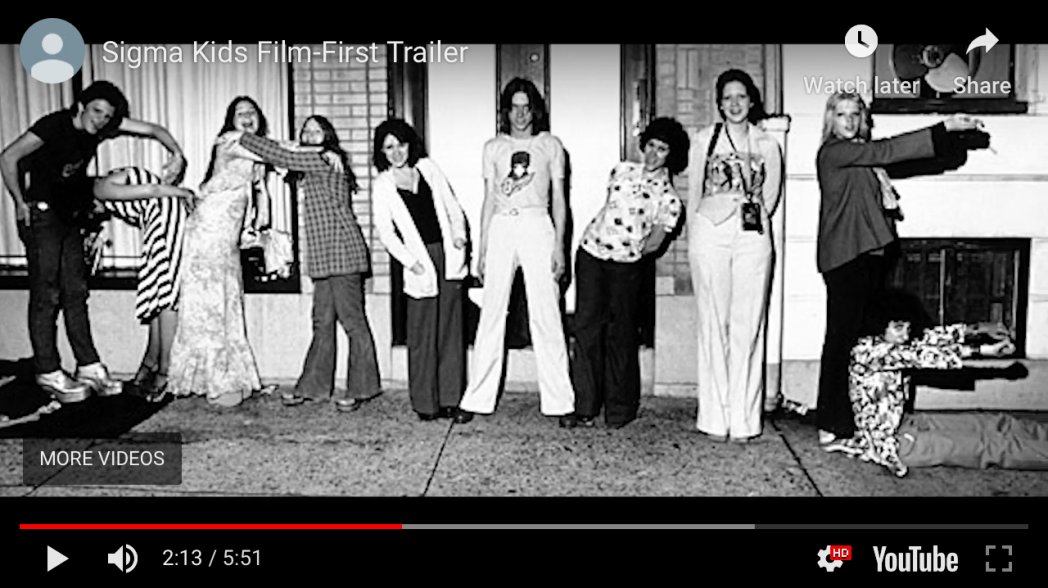
Sigma Kids

March 7th makes the 45th anniversary of the release of Young Americans. While released midway into Bowie’s creative purple patch, for me at least, it doesn’t rank as a first-order Bowie album. Back in the day it was of course a massive surprise and a pleasant one at that, the direction already telegraphed in Diamond Dogs’ 1984. It was the backing vocals led by Luther Vandross along with Ava Cherry and Robin Clark that made the album. A friend of mine under 30 claims YA tops his Bowie list and listening to Carlos and Robin’s Q+A has elevated my respect for YA. In the UK we heard through the grapevine about the Sigma kids. As I’ve said many a time, Bowie never treated his fans as fuckwits and the Sigma Kids story validates this. By the way, the backstory of the cover of YA can be found here (who’d have thought Norman Rockwell?) but for the full story here is an interview with Eric Stephen Jacobs, the cover photographer.

More positive were the Sigma Kids, a band of Bowie fanatics who had camped outside the studio in rain or shine from the moment the band arrived, and were rewarded with an in-studio preview playback at the end of the sessions. “We had been hanging out around the studio for roughly two weeks,” Sigma Kid Patti Brett told Esquire in 2016. “One night when he arrived at the studio he said that if we were there when he came out he’d have a surprise for us. He told us it was unlike anything else he’d done and that he really wanted to get some feedback. They played [the album] for us, and you could tell he was nervous. But at the end someone shouted, ‘Play it again!’ And he got this huge grin on his face and said, ‘Really?’ And everyone screamed, ‘Yes!!’ And he played it again, and that started the party.”

Alomar remembers that moment: “When they asked to hear it again, David became extremely fluid, mixing with them, talking with them, chatting them up, smiling, laughing. If he knew how to high five at that time, he probably would have done it.”

“It was a beautiful moment,” Garson recalls. “It showed a part of him that had a lot of humility… Because this was such new territory for him I guess he didn’t want to feel like a poser or fake.” — Independent

Screen Shot 2020-03-04 at 1.24.39 PM


Bounded Rationality, Shared Experiences, and Social Relationships in Herbert A. Simon’s Perspective

The fourteenth in a series of excerpts from Minds, Models and Milieux: Commemorating the Centennial of the Birth of Herbert Simon.

Stefano Fiori

In his autobiography, Herbert Simon writes: “The most important years of my life as a scientist were 1955 and 1956” (Simon, 1991a, p. 189). In those years he published two important articles that laid the foundations of his theory of bounded rationality: A Behavioral Model of Rational Choice (1955) and Rational Choice and the Structure of the Environment (1956) (henceforth, Simon (1956)). One year later, in 1957, Simon wrote a short story, The Apple, in which he presented in literary form the scientific results of Simon (1956).

The thesis of this article is that The Apple gives interesting insights into Simon’s research and that, because of its literary form, it highlights topics which are less apparent in his scientific papers. Hugo, the protagonist of The Apple, lives in isolation in a castle, and his story represents how a rationally bounded agent interacts with, and learns from, an environment by choosing not optimal but satisficing alternatives. The perspective which inspired both Simon (1956) and The Apple would remain essentially unchanged in the course of time, even when Simon examined bounded rationality in light of artificial intelligence and of simulations performed by means of computer programs.

The question from which we begin concerns the implications of an analysis of (bounded) rationality which removes human relationships, as occurs in Simon’s scientific paper of 1956 and his short story of 1957. In fact, Hugo reminds us of homo œconomicus of the neoclassical approach, that is, an individual who, given environmental constraints, is concerned solely with her/his needs. The difference with Simon’s view is that  in the neoclassical tradition s/he is perfectly rational and maximizes her/his utility, while in Simon’s view s/he is rationally limited and chooses not the best but a satisficing alternative, i.e. an alternative which meets or exceeds certain criteria different from those required by the maximization of utility function.

However, it would be a mistake to state that Simon does not consider social relationships in his work. On the contrary, he took them into account in his early works on administrative and organizational behavior, and even more so in the 1990s, when themes like loyalty, identification with organizational goals, and altruism became topics of new inquiries. These themes were not elaborated in light of artificial intelligence; rather, they remained connected to the theory of organizations, or they were influenced by other approaches, such as the Darwinian view which Simon took into account for his hypotheses on altruism. Although the two perspectives (namely, the one that emerged in the 1950s and was later developed within artificial intelligence and cognitive psychology, which analyses bounded rationality at the individual level; and the other, which deals with bounded rationality within administrative systems and organizations) are basically connected, they partially refer to different theoretical tools and use different languages. Their analysis is the subject-matter of this paper, which is organized as follows: Section 1 compares Simon’s (1956) model of bounded rationality with its literary version; Section 2 examines how bounded rationality, especially in The Apple, is represented by starting from the traditional image of an isolated individual; Section 3 discusses how the paradigm of the isolated individual raises problems relative to the emergence of meanings; Section 4 shows that Simon dealt with relationships between the individual and society in his approaches to organizational and administrative behavior and in his studies of the 1990s. Finally, Section 5 concludes.
61cOM18eAOL

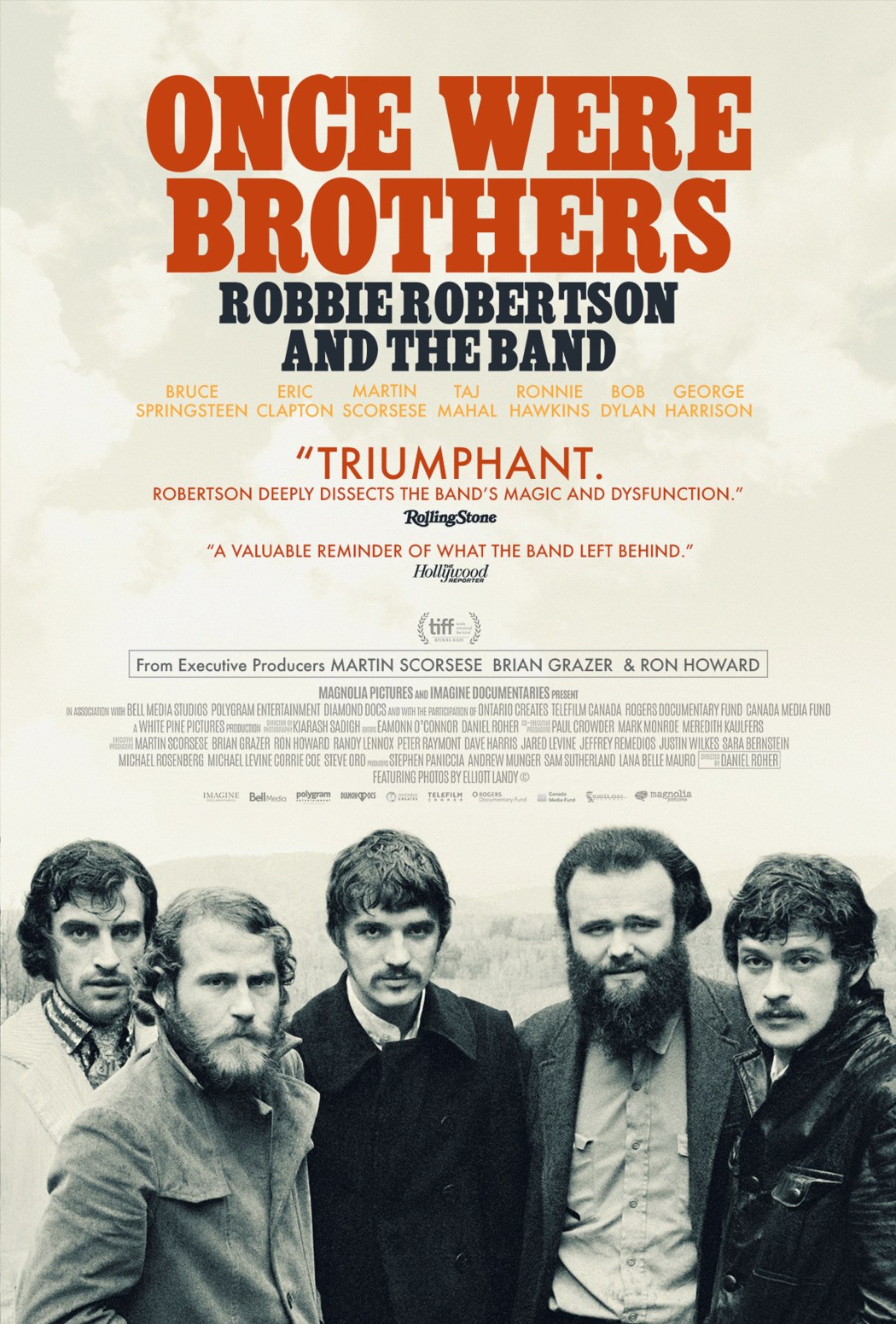
Once Were Brothers: Robbie Robertson and the Band

Reviewed at Roger Ebert. Not withstanding the accusations leveled against Robbie, well-worth checking out. The subtitle though is revealing eh?

OWB_18z_r3_small_1

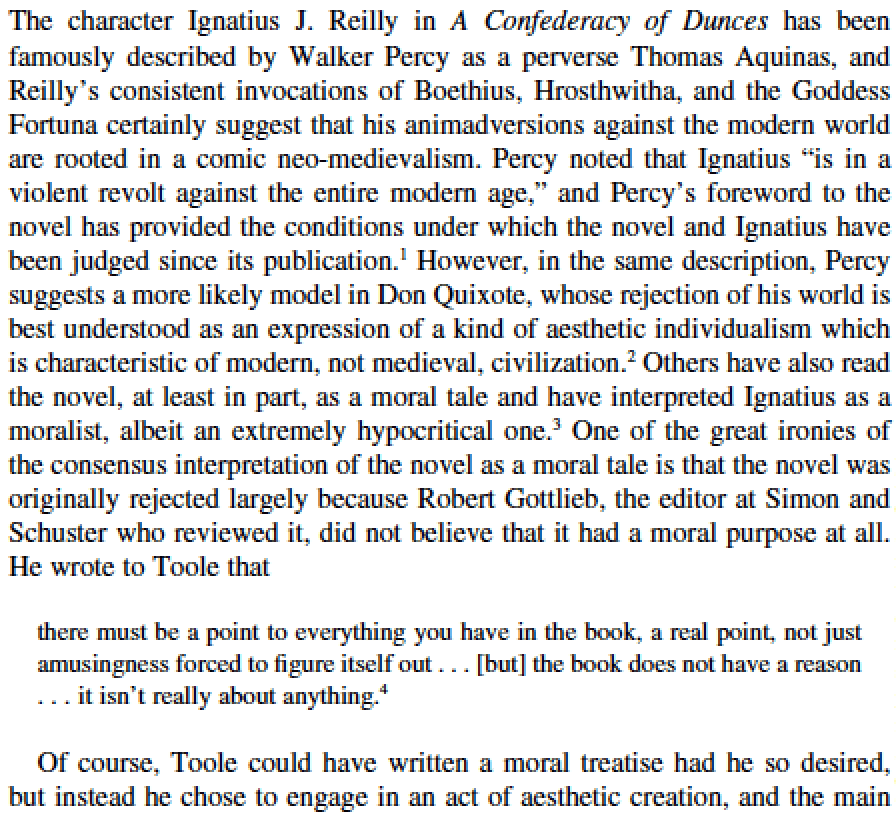
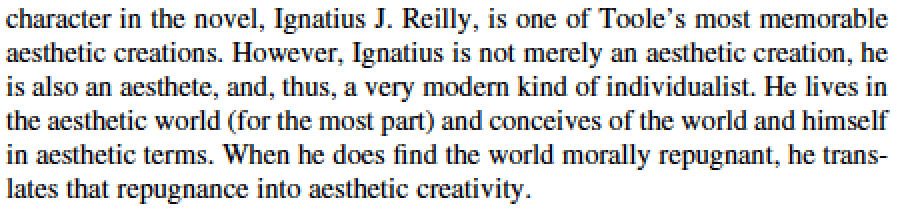
“Amusingness Forced to Figure Itself Out”: Ignatius J. Reilly, Aesthetic Individualism, and the Modernism of Anti-Modernism

Available via Amazon.comAmazon.caAmazon.co.ukBarnes  & Noble — Indigo.caIndi BoundKobo — and last but not least, if you want to take advantage of a 30% discount (code available here), go directly to Rowman & Littlefield.

Chapter 3 — Kenneth B. McIntyre

Screen Shot 2020-02-08 at 3.34.16 PMScreen Shot 2020-02-08 at 3.34.29 PM
screen-shot-2019-10-13-at-12.12.35-pm