Hayek in Mind: Hayek’s Philosophical Psychology

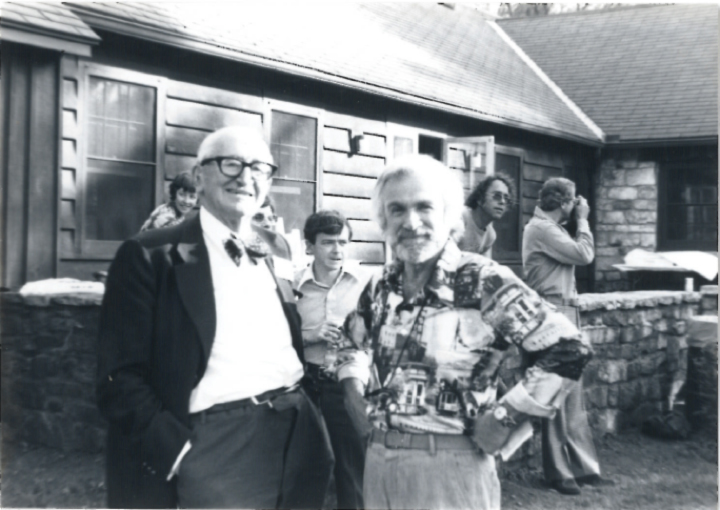
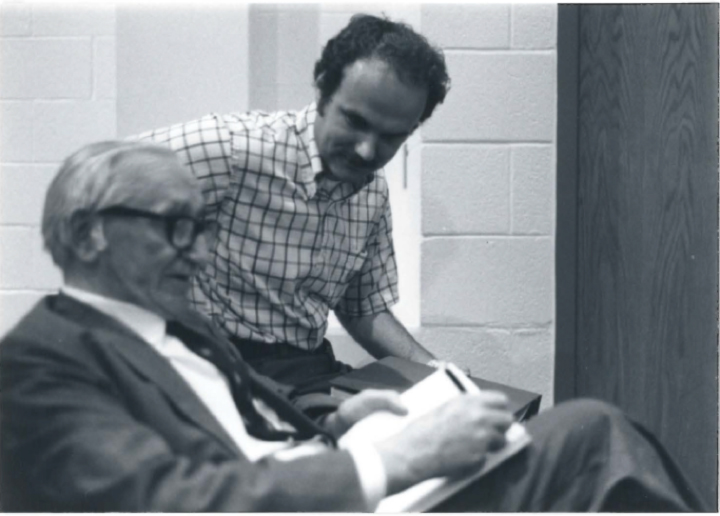
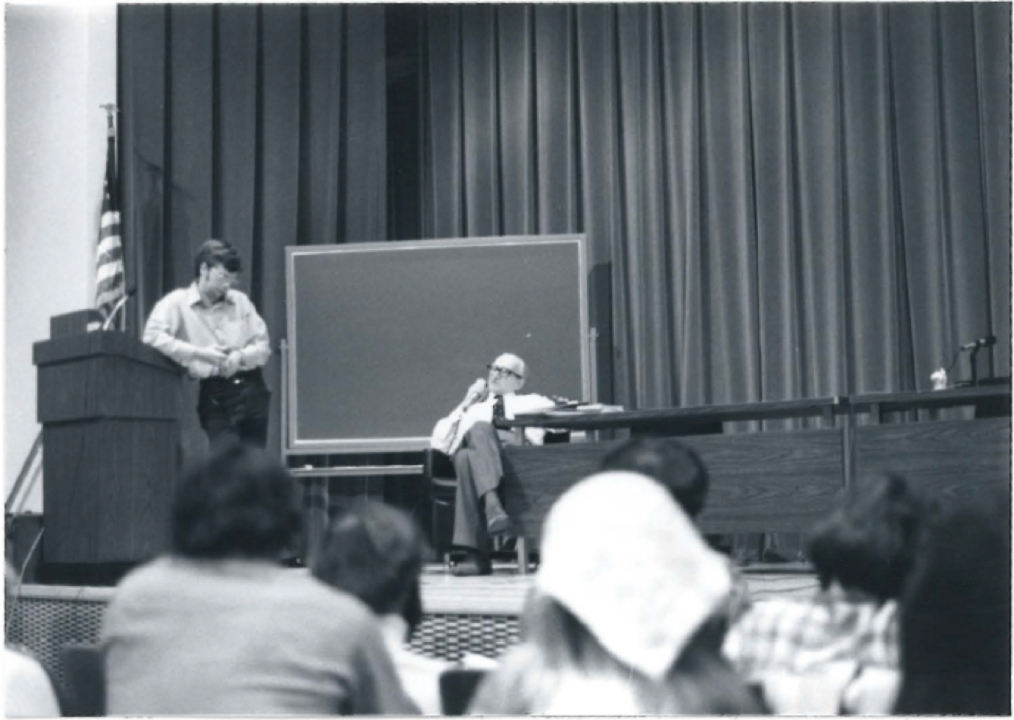
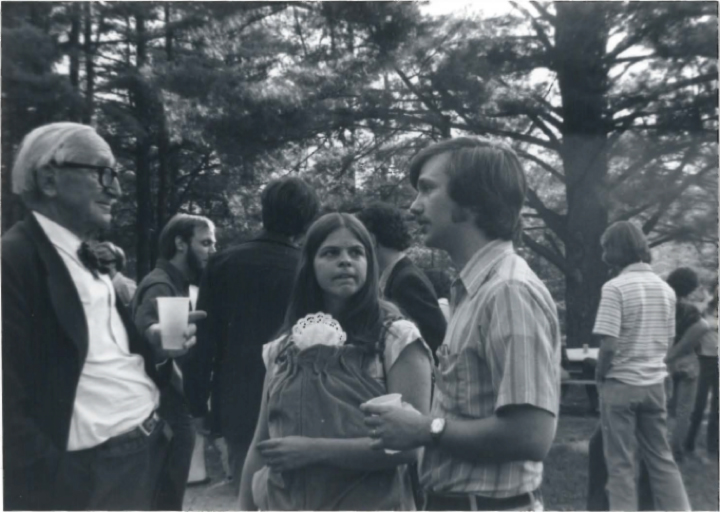
Having just delivered an edited volume entitled Hayek in Mind: Hayek’s Philosophical Psychology to the publisher, this is an opportune time to make widely available, for the first time, some photographs so generously sent to me by Walt Weimer (contact made through the good offices of a few of his students, some featured in the photos below). But before that, the first shameless plug for the volume which amazingly includes a contribution from Weimer himself!

Hayek’s philosophical psychology as set out in his The Sensory Order (1952) has, for the most part, been neglected. Despite being lauded by computer scientist grandee Frank Rosenblatt and by Nobel prize-winning biologist Gerald Edelman, cognitive scientists — with a few exceptions — have yet to discover Hayek’s philosophical psychology. On the other hand, social theorists, Hayek’s traditional disciplinary constituency, have only recently begun to take note and examine the importance of psychology in the complete Hayek corpus.

This volume brings together for the first time state-of-the-art contributions from neuroscientists, philosophers of mind, economists, and social theorists to critically examine many aspects of Hayek’s philosophical psychology.

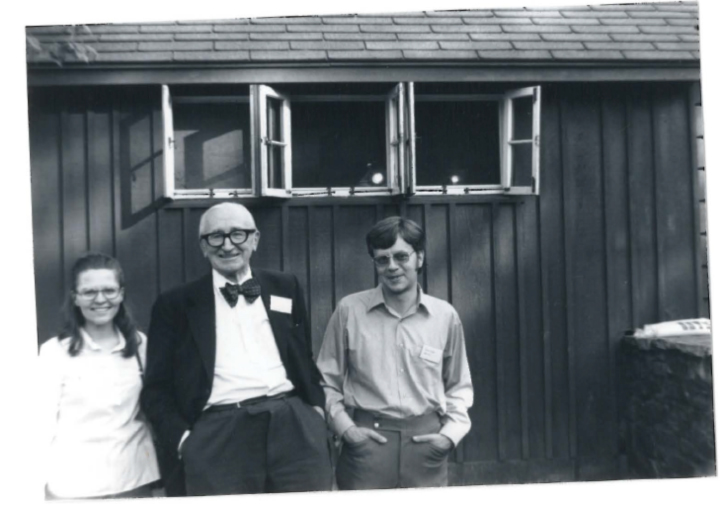
Weimer was the co-convenor along with the late David Palermo of The Second Penn State Conference on Cognition and the Symbolic Processes. Weimer was so instrumental in rehabilitating (or perhaps more accurately, resuscitating) Hayek’s philosophical psychology. Here are my two previous Weimer posts. The photographs below are annoted precisely as Walt did in the hardcopy he sent me. (I have held back a couple of photos of Hayek since there is a dearth of good shots and I would like to have first dibs at using them should the occasion arise.)

Hayek, Mike Mahoney, Karl Pribnam

Denny Proffitt

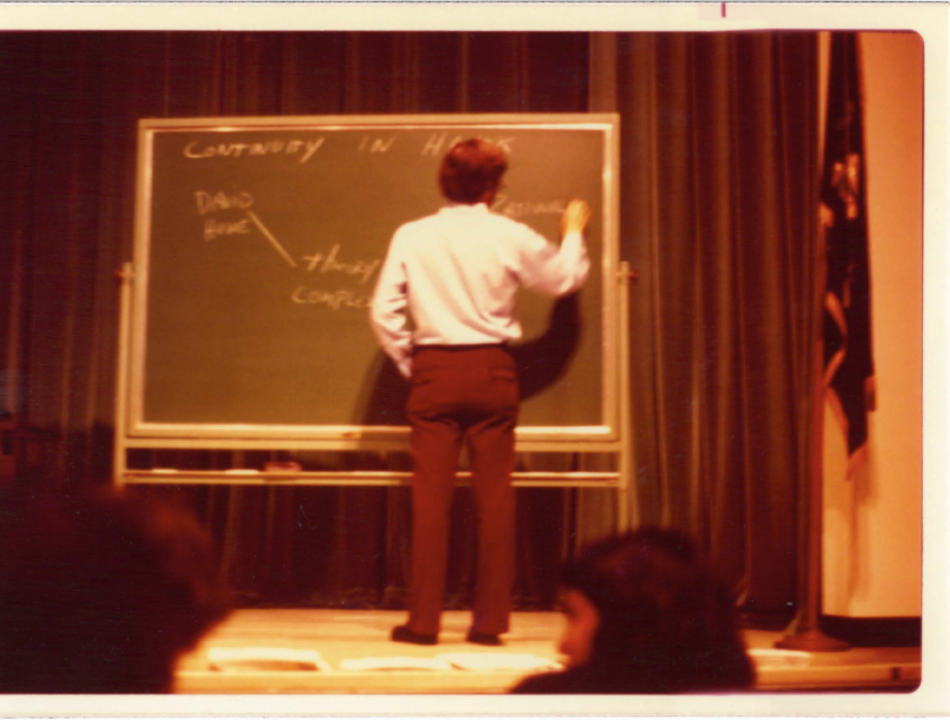
H. answering a question during the discussion –

since he was “deaf to the left” I moderated the session to make sure he heard the questions correctly.

Jim Wible

At the “social” in the cabin-in-the-woods.

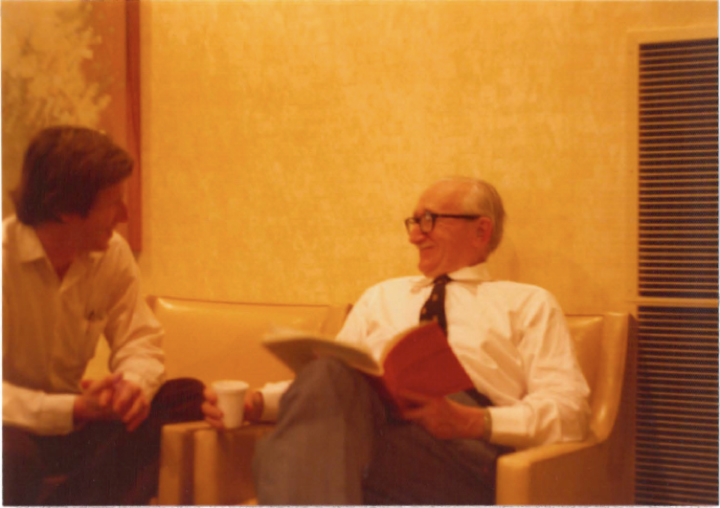
Bill Butos and H.

Obviously my best side.

Schneider’s “The Language of Thought”

Here is another excellent interview from the New Books in Philosophy website.

Stigmergy and City Planning

Here’s an interview conducted by Howard Rheingold with Mark Elliott who like myself has been promoting the virtues of stigmergy. The application of the concept to city planning and consultation is especially interesting since it’s a world I have recently come into contact with.

Cambridge Companion to Philo

I’ve just discovered that there is a Cambridge Companion to Philo that includes contributions from eminent Philonists such as David Runia and David Winston. Runia especially has done some much for Philonic scholarship. Glad to see some “new” names involved. My interest in Philo can be found here.

Thinking Music

Here’s an experiment (I’m assuming it’s legit) brought to my attention by the blog Artificialites.

Being Hume Man

Here’s an article by Elizabeth Radcliffe from TPM on Hume:

He makes the astounding declaration that “Reason is, and ought only to be the slave of the passions, and can never pretend to any other office than to serve and obey them.”

Autopoiesis and Cognition

Maturana and Varela’s classic Autopoiesis and Cognition is freely available here (H/T to Paul Loader).

What makes a living system a living system? What kind of biological phenomenon is the phenomenon of cognition? These two questions have been frequently considered, but, in this volume, the authors consider them as concrete biological questions. Their analysis is bold and provocative, for the authors have constructed a systematic theoretical biology which attempts to define living systems not as objects of observation and description, nor even as interacting systems, but as self-contained unities whose only reference is to themselves. The consequence of their investigations and of their living systems as self-making, self-referring autonomous unities, is that they discovered that the two questions have a common answer: living systems are cognitive systems, and living as a process is a process of cognition. The result of their investigations is a completely new perspective of biological (human) phenomena. During the investigations, it was found that a complete linguistic description pertaining to the ‘organization of the living’ was lacking and, in fact, was hampering the reporting of results. Hence, the authors have coined the word ‘autopoiesis’ to replace the expression ‘circular organization’. Autopoiesis conveys, by itself, the central feature of the organization of the living, which is autonomy.

Sandy Goldberg’s “extendedness” hypothesis

Here is an excellent website I’ve come across called New Books in Philosophy. One of the people behind this enterprise is Robert Talisse whose work I know from two articles in EPISTEME. Robert interviews Sandy Goldberg about his new book.

Here’s an hour long audio discussion.