Browse by:

Dreamless Sleep, Embodied Cognition, and Consciousness: The Relevance of a Classical Indian Debate to Cognitive Science

A terrific talk (see abstract below) by Evan Thompson as a curtain raiser to his forthcoming book from Columbia University Press entitled Waking, Dreaming, Being: New Light on the Self and Consciousness from Neuroscience, Meditation, and Philosophy. In the meantime check out the expansive review of his Mind in Life: Biology, Phenomenology, and the Sciences of…
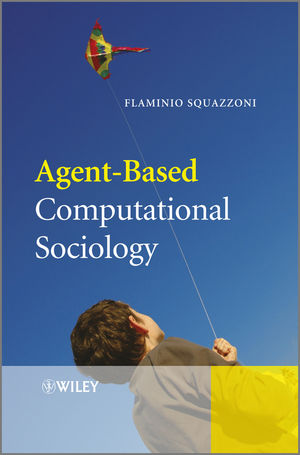

Agent-Based Computational Sociology

Check out this new book I’ve just come across – Wiley’s lists, across disciplines, is certainly looking very strong these days. Also check out two colleagues’ excellent Wiley offerings – Ted Lewis’ Network Science and of course Ken Aizawa’s and Fred Adams’ The Bounds of Cognition. Agent-based modelCognitionCognitive sciencecomplexityComputational SociologyExtended MindFred AdamsKen AizawaNetwork ScienceSimulationsocial epistemologySocial…

From Ants to Economies

Readers with some familiarity with the eclectic content found on this website will be aware that the humble ant features strongly. Here is an article that offers a brief and accessible discussion of an excellent symposium to be found in Behavioral Ecology that features Mark Moffett’s work. AntAnt colonyBehavioral EcologyLaurent KellerMark W. Moffett

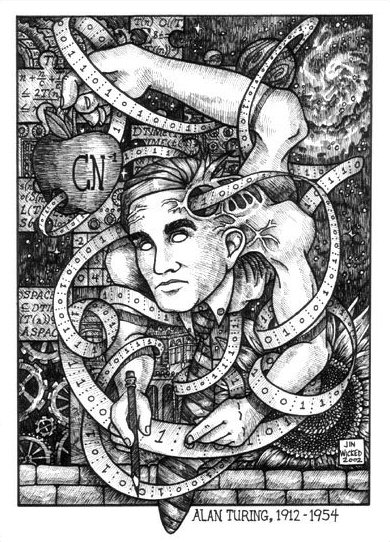
Turing Centenary

Conference page. Here is also one of Turing’s most famous papers: I propose to consider the question, “Can machines think?” This should begin with definitions of the meaning of the terms “machine” and “think.” The definitions might be framed so as to reflect so far as possible the normal use of the words, but this…

Complexity and Extended Phenomenological-Cognitive Systems

A freely available piece from Topics in Cognitive Science. With the keywords complexity; dynamical systems; extended cognition; consciousness – who could resist. In fact the whole issue is freely available from this relatively new title published under the auspices of the Cognitive Science Society. The complex systems approach to cognitive science invites a new understanding of…